Want a regional phone & address? Pick your area.
Dryer Repair, Maintenance & Troubleshooting
Dryer repair guides for no-heat, long cycles, and error codes. Covers gas and electric models, vent safety, and thermal fuse diagnosis.
A dryer that takes two cycles to dry a load or shuts off mid-cycle is more than an inconvenience — it wastes energy, wears out clothes faster, and in the case of gas dryers, can signal a safety hazard. Our troubleshooting guides start with the most statistically likely cause for each symptom: no heat is a thermal fuse 60% of the time, long dry times point to a blocked vent in 70% of service calls, and a drum that tumbles but produces no warmth usually means a failed heating element or gas valve coil.
We break down diagnosis separately for gas and electric dryers because the repair process differs at every step. Gas dryers require igniter and flame sensor testing with a multimeter, while electric dryers need element continuity checks and high-limit thermostat diagnosis. Each guide includes the specific resistance readings you should expect and the exact replacement part numbers for the five most common models we service in the Sacramento and Bay Area markets.
Dryer venting deserves its own section in every guide because lint-clogged vents cause an estimated 2,900 house fires per year in the US. California building codes require rigid metal ducts (not foil flex) for new installations, and our maintenance guides walk you through a full vent inspection with the tools most homeowners already own.
703 articles

Kenmore Dryer Tripping the Circuit Breaker
Most likely something has shorted to ground: on electric Kenmore dryers a grounded heating element is the top cause, followed by a shorted motor or a burnt terminal block. Gas models trip mostly from an overloaded shared circuit. Here is how to isolate the fault safely and why you must never upsize the breaker.
angela-thompson·6 min read

Kenmore Dryer Display Not Working: Causes & Fix
Most likely: a 60-second power-cycle clears a glitched display, and if it does not, the failed part depends on the build — a UI board or ribbon cable on a 110, a display flex cable on a 796, or a dried-out display-board capacitor on a 417. Rule out lost power first, then match the fix to your platform…
angela-thompson·6 min read
Kenmore Dryer Too Hot: Causes and Fixes
Most likely: a restricted vent — it traps hot exhaust and overheats the drum in more than half of cases, even when every internal part is fine. A cycling thermostat stuck closed (110) or a drifted thermistor (796) are next. This is a fire-safety issue: stop and unplug the dryer, then clear the vent first…
angela-thompson·6 min read
Kenmore Dryer Taking Too Long? Causes & Fix
A Kenmore dryer that runs for hours is a venting problem four times out of five — a restricted vent, a filmed lint filter, or a fouled moisture sensor. The 80/20 rule, a no-vent test, and the platform differences between 110 and 796 series.
angela-thompson·6 min read
Kenmore Dryer No Heat or Not Enough Heat: Causes
Kenmore dryer no heat? Complete guide for electric and gas models across 110 (Whirlpool), 796 (LG), and 417 (Electrolux) platforms with part numbers.
angela-thompson·5 min read

Kenmore Dryer Vibrating/shaking — Solved
Kenmore dryer vibrating or shaking? Diagnose load balance, leveling, worn drum rollers, and glides by platform — 110 and 796 series fixes. Causes, costs, fixes.
angela-thompson·6 min read
Kenmore Dryer Error Codes — Causes & Fix
Kenmore dryers use three different code systems depending on who built them. Read your model number first, then decode the F, E, or letter code and its fix.
angela-thompson·5 min read
Kenmore Dryer Leaking — Causes & Fix
A standard vented Kenmore dryer has no water line, so a "leak" is usually vent condensation or a steam-model line. Here is how to find the real source by platform.
angela-thompson·6 min read
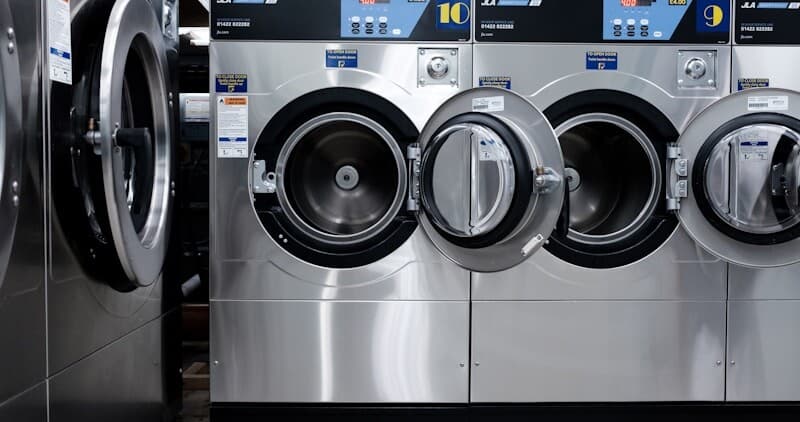
Hotpoint Dryer Making Noise Repair Guide
Hotpoint dryer making noise? Expert diagnosis of common causes, model-specific fixes, and repair costs for Hotpoint dryers. Book same-day repair.
james-washington·4 min read
Is Your Hotpoint Dryer Not Spinning?
A Hotpoint dryer is a GE inside a cheaper cabinet, so GE parts fit and cost less. A drum that won't turn is usually the belt — and the sound it makes tells you which repair.
james-washington·5 min read
Hotpoint Dryer Not Heating — DIY or Pro?
Hotpoint dryer not heating? Expert diagnosis of common causes, model-specific fixes, and repair costs for Hotpoint dryers. Book same-day repair.
james-washington·5 min read
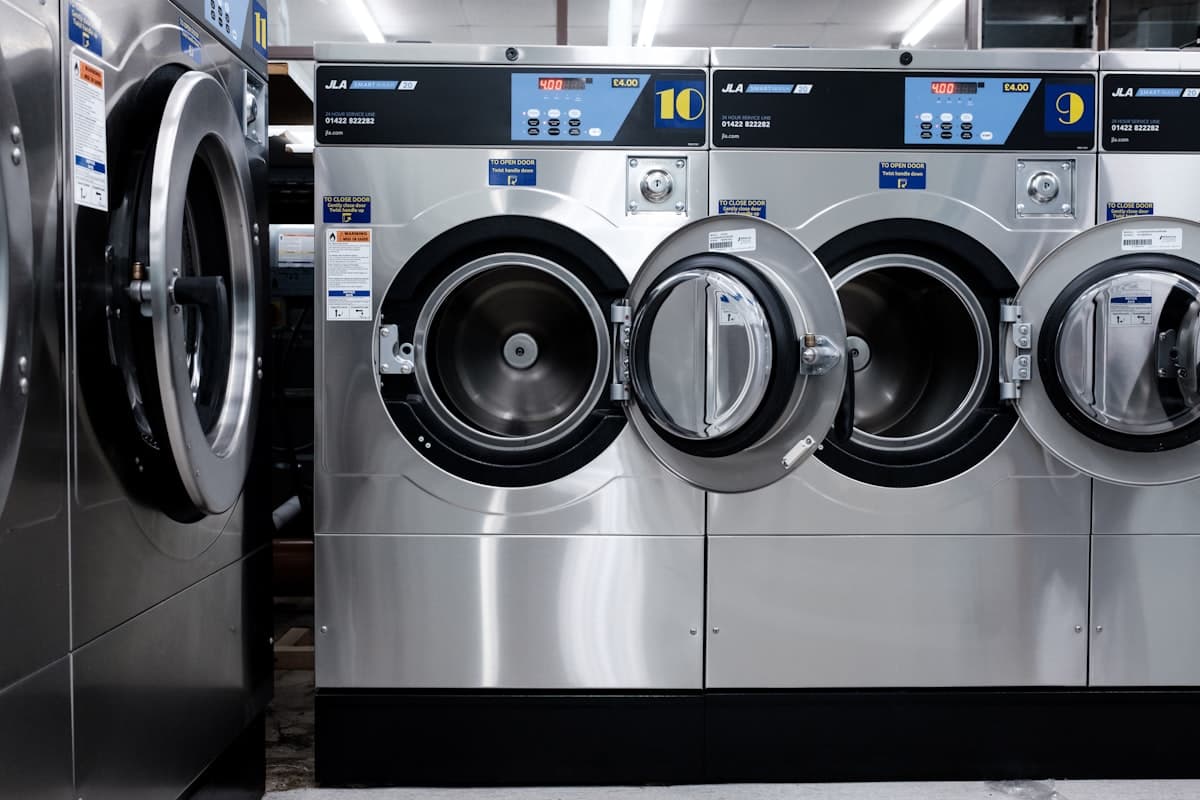
Whirlpool Dryer Not Heating: 7 Causes & Fixes
Whirlpool dryer not heating? Diagnose and fix the 7 most common causes, from blown thermal fuses to bad heating elements. Step-by-step repair guide.
Sarah Chen·8 min read
Whirlpool Dryer Not Heating: 7 Causes & Fixes
Whirlpool dryer not heating? Diagnose and fix the 7 most common causes, from blown thermal fuses to bad heating elements. Step-by-step repair guide.
Sarah Chen·8 min read
GE Dryer Won't Start Repair Guide
GE dryer won't turn on? Diagnosis of thermal fuse, door switch, and control board failures on GE GTD/GFD series dryers. Get expert diagnosis and repair costs.
james-washington·4 min read
GE Dryer Will Not Start — Diagnosis and Fixes
A GE dryer that won't start is most often a worn door switch, a blown thermal fuse, or lost power to the machine. Here are the causes ranked by likelihood, the GE part numbers involved, and the DIY checks that solve most cases.
james-washington·7 min read
GE Dryer Won't Stop Running
GE dryer runs endlessly? Diagnose dirty Sensor Dry bars, timer motor failure, thermistor faults, and control board relay issues on GFD and GTD.
james-washington·6 min read
GE Dryer Vibrating or Shaking? Causes & Fix
A GE dryer vibrating or shaking is most often worn drum support rollers, then a worn idler pulley and belt, an imbalanced blower wheel, an unlevel dryer, or worn rear glides. What holds and spins the drum, ranked causes, and DIY checks.
james-washington·6 min read
GE Dryer Running Too Hot
Most likely: a cycling thermostat stuck closed or a restricted exhaust is letting the heat climb, because both keep the element or gas burner firing when it should be resting. On a GE dryer the temperature is supposed to wave up and down as the thermostat and thermistor (WE04X25929) trade signals;…
james-washington·4 min read
GE Dryer Tripping the Circuit Breaker — Causes
Most likely: the 240V heating element (WE11M10001) has shorted to ground and dumps a current spike when heat is called. A shorted motor winding (WE17X10010), or a chafed wire or scorched terminal that trips even with the dryer off, are the others. Sort out when it trips to name the circuit.
james-washington·4 min read
GE Dryer Motor Runs But Drum Will Not Turn
Most likely the drive belt has snapped: the motor hums but the drum sits dead. On GE dryers a worn set of front bearing slides — a GE-specific part — can also drag the drum to a stop with a good belt, and seized rollers or a frozen idler round out the list. Spin the drum by hand: zero resistance means a broken belt.
james-washington·4 min read
GE Dryer Temperature Not Right: Causes and Fixes
Most likely: the thermistor (WE04X25929) or cycling thermostat has drifted, so your GE dryer overshoots on some loads and stays cool on others. Clear a lint-choked vent before condemning any part — trapped heat skews every temperature reading and can log an E5 over-temp…
james-washington·4 min read
GE Dryer Timer Won't Advance: Causes & Fix
Most likely: on an automatic cycle the moisture-sensing bars are fouled or the vent is restricted, so your GE dryer never senses "dry" and the timer holds instead of counting down. A drifting thermistor (WE04X25929) or a failed timer motor can do the same on a timed dial…
james-washington·5 min read
GE Dryer Door Latch Failure: Causes & Fix
A GE dryer won't start until the door switch confirms closed. A failed switch (part WE4M415) or an E3 code is the usual cause of a no-start with the door shut. EasyBear guide.
james-washington·6 min read
GE Dryer Drum Not Turning: Does the Motor Hum?
A GE dryer drum that won't turn: a humming motor means a snapped drive belt (WE12M29); no hum means the motor or the door switch. Idler and rollers fill in the rest. EasyBear.
james-washington·6 min read
GE Dryer Error Code Displayed: Causes & Fix
GE dryer showing an error code? E1-E5 point at the thermistor, heating, or control. Decode the common codes and see which you can clear yourself.
james-washington·4 min read
GE Dryer Rust and Corrosion
Rust on GE dryer? Diagnose drum surface corrosion, cabinet paint failure from humidity, and interior moisture from vent condensation. Repair guide with costs.
james-washington·6 min read
GE Dryer Cycle Not Completing? Causes & Fix
A GE dryer that quits before clothes are dry is usually reacting to a blocked vent, a misreading moisture sensor, or lost heat. The clothes' state — hot-damp vs cold-damp — points the way.
james-washington·6 min read
GE Dryer Leaking Water
GE dryer leaking water? Diagnose steam valve (Profile models), exhaust condensation from long vent runs, and blocked condensate drain issues.
james-washington·6 min read
GE Dryer Display Not Working: Causes & Fixes
A GE dryer display that's dark or unresponsive is usually a power-supply problem, a failed control or user-interface board, or a loose ribbon cable. This guide walks the checks for GFD and GTD models, including how to enter diagnostic mode.
james-washington·3 min read
GE Dryer Takes Too Long? Causes & Fix
A GE dryer taking too long is most often a lint-restricted exhaust vent, then a weak heating element, a mis-cycling thermostat, a fouled moisture sensor, a partly-blown thermal fuse, or a gas-valve fault. Electric-vs-gas diagnosis with Service Mode codes and safe checks.
james-washington·7 min read