Reviewed by Vladyslav Z., BHGS-certified technician
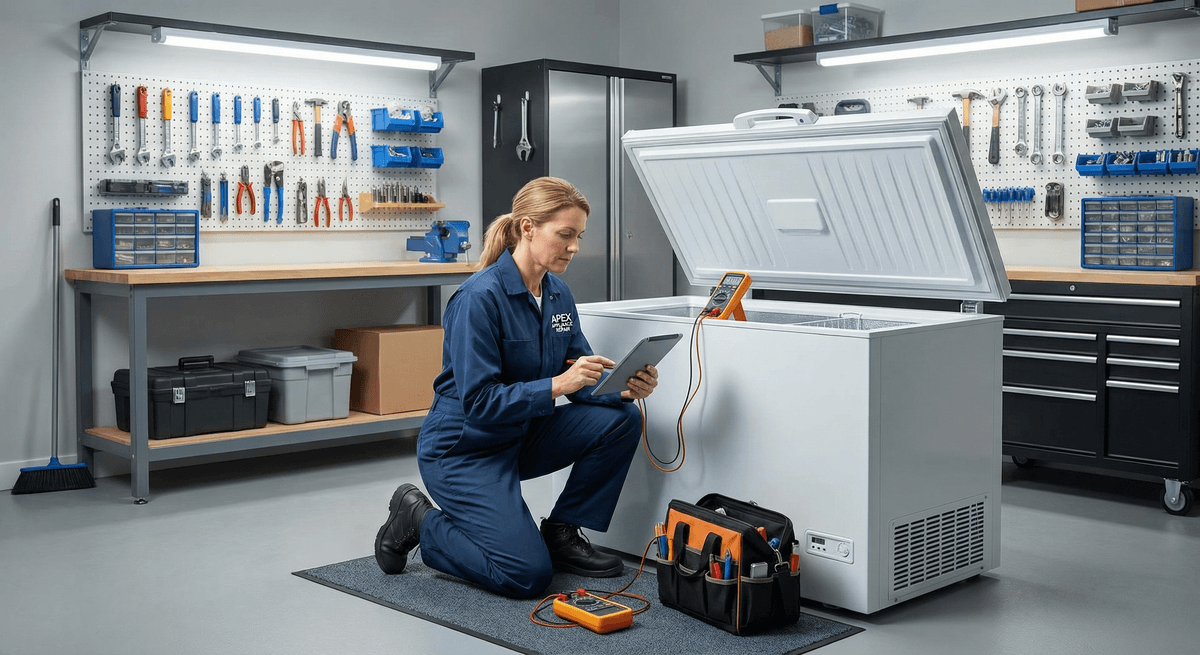

Freezer Repair
Professional freezer repair service across San Francisco and Bay Area
Same-Day Service
90-Day Warranty
Fixed or It's Free
Typical Cost: $120-$500
Book a Free Diagnostic Visit — Fully Online
Same-day freezer repair across San Francisco and Bay Area
Book a Free Diagnostic VisitOr Call NowAvailable 24/7 — call or text
Free DiagnosisSame-Day Service90-Day Warranty
How Much Does Freezer Repair Cost?
Freezer repair cost depends on the specific fault and whether the unit is standalone or built-in. Thermostat and defrost system repairs are the most common. Compressor replacement is the most involved but often saves thousands versus replacing the unit. Book a free diagnostic for an exact quote.
- Thermostat replacement
- Defrost system repair — most common fix
- Evaporator fan motor replacement
- Door seal / gasket replacement
- Compressor replacement — the most involved repair
What Are the Most Common Freezer Problems?
Not freezing
Excessive frost buildup
Leaking water
Won't run
Strange noises
Door seal problems
Running constantly
Free Freezer diagnostic — book now
Our licensed technician diagnoses your freezer on-site and gives you an exact quote. Same-day appointments in San Francisco and Bay Area if available. You only pay if we fix it.
or call (415) 795-7300Available 24/7 — call or text
Licensed & Insured · 90-Day Warranty · Same-Day Service
What Freezer Issues Do We Fix?
Freezer Not Freezing
high priorityWhen your freezer can't maintain freezing temperatures, you risk losing hundreds of dollars in frozen food. A failed compressor, a leaking sealed system, or a defective thermostat are common causes. Our technicians provide urgent repairs to save your food.
Failed compressorLeaking sealed systemDefective thermostat
Cost: $200-$500Time: 60-120 minutes
Freezer Excessive Frost Buildup
medium priorityHeavy frost accumulation inside your freezer reduces storage space and forces the compressor to work harder. A failed defrost heater, a defective defrost timer, or a damaged door gasket allows moisture in and frost to build up. We restore proper defrost cycling.
Failed defrost heaterDefective defrost timerDamaged door gasket
Cost: $175-$400Time: 45-90 minutes
Freezer Running Constantly
medium priorityA freezer that never cycles off wastes energy and wears out the compressor. Poor door seals, dirty condenser coils, or a failing thermostat can all prevent the unit from reaching temperature and cycling off. We identify the cause and restore efficient operation.
Poor door sealDirty condenser coilsFailing thermostat
Cost: $150-$400Time: 45-90 minutes
Freezer Making Strange Noises
medium priorityKnocking, buzzing, or clicking sounds from your freezer can indicate compressor, fan, or defrost timer issues. While some sounds are part of normal operation, persistent or loud noises usually signal a failing component that needs attention.
Failing evaporator fan motorCompressor starting issuesDefrost timer clicking
Cost: $125-$350Time: 30-75 minutes
Freezer Leaking Water
high priorityWater pooling around or under your freezer can damage flooring and indicates a drainage or defrost problem. A clogged defrost drain, a cracked drain pan, or a leaking water inlet valve are common causes. We stop the leak and prevent water damage.
Clogged defrost drainCracked drain panLeaking water inlet valve
Cost: $125-$300Time: 30-75 minutes
Freezer Temperature Fluctuating
high priorityTemperature swings in your freezer compromise food quality and safety. Fluctuations can result from a faulty thermistor, a failing compressor, or frequent door opening. We test the temperature management system and stabilize your freezer for consistent cold.
Faulty thermistorFailing compressorDefective temperature control board
Cost: $150-$400Time: 45-90 minutes
Freezer Door Not Sealing
medium priorityA freezer door that doesn't seal properly lets warm air in, causing frost buildup, temperature fluctuations, and increased energy usage. Worn gaskets, misaligned hinges, or a warped door are common causes. We replace gaskets and adjust hardware for a perfect seal.
Worn door gasketMisaligned hingesWarped door
Cost: $100-$250Time: 30-60 minutes
Freezer Not Turning On
high priorityA completely unresponsive freezer puts all your frozen food at risk. A faulty start relay, a failed compressor, or an electrical issue could be the cause. Time is critical — our technicians provide priority service to minimize food loss.
Faulty start relayFailed compressorDefective overload protector
Cost: $150-$450Time: 45-120 minutes
Get Your Freezer Fixed Today
Free diagnosis when you book online
Book a Free Diagnostic VisitOr Call NowAvailable 24/7 — call or text
Free DiagnosisSame-Day Service90-Day Warranty
Why Choose EasyBear?
Same-Day Service
Most repairs completed same day
90-Day Warranty
Comprehensive coverage
No Diagnostic Fee
Free inspection
No fix, no fee.
Book a free freezer diagnostic — honest quote up front, 90-day warranty, and you only pay if we repair it.
or call (415) 795-7300Available 24/7 — call or text
Licensed & Insured · 90-Day Warranty · Same-Day Service
Book a Free Diagnostic Visit — Fully Online
Book a Free Diagnostic VisitOr Call NowAvailable 24/7 — call or text
Free DiagnosisSame-Day Service90-Day Warranty
Frequently Asked Questions
How much does freezer repair cost?
Freezer repair costs range from $150-$500, averaging $300. Common repairs include compressor replacement ($300-$500), defrost system ($150-$300), and evaporator fan ($150-$250).
Why is my freezer not freezing?
Common causes include temperature set too high, faulty evaporator fan, defrost system malfunction, damaged door seal, or compressor failure. Ensure temperature is set to 0°F and door seal is intact.
How much does freezer repair cost?
Freezer repairs typically cost between $150 and $500, with the average around $300. Thermostat replacement costs $100–$250, compressor repairs run $300–$600, and defrost system repairs cost $150–$350. Chest freezers generally cost less to repair than upright models due to simpler construction.
Why is my freezer not freezing?
Common causes include a faulty thermostat, a failing compressor, dirty condenser coils, or a defective evaporator fan. Check that the temperature is set to 0°F, the vents aren't blocked by food, and the door seal is intact. If the compressor runs but the freezer won't cool, it may indicate a refrigerant leak or compressor failure.
Why is my freezer building up too much frost?
Excessive frost buildup indicates a problem with the auto-defrost system: a faulty defrost timer, a burned-out defrost heater, or a defective defrost thermostat. Frequently opening the door or a worn door gasket also introduces humid air that freezes. Defrost system repairs cost $150–$300 and resolve the issue permanently.
How long does a freezer repair take?
Most freezer repairs take 1–2 hours. Thermostat and defrost component replacements take about 1 hour. Compressor replacement takes 2–3 hours and may require a follow-up visit. About 75% of freezer repairs are completed in a single visit when common parts are in stock.
Why is my freezer making loud humming or clicking noises?
Continuous loud humming may indicate a struggling compressor or a faulty evaporator fan motor. Clicking every few minutes suggests the compressor is trying to start but failing — this is a serious issue requiring prompt attention. Buzzing near the back usually indicates a worn condenser fan. Compressor-related repairs cost $300–$600.
How long does food stay frozen in a broken freezer?
A full freezer keeps food frozen for about 48 hours, while a half-full freezer maintains temperature for about 24 hours — as long as the door stays closed. After that, perishable food above 40°F for more than 2 hours should be discarded. Consider using dry ice (25 lbs per 10 cubic feet) to extend the time.
Should I repair or replace an old chest freezer?
Chest freezers can last 15–20 years. If yours is under 12 years old and the repair costs less than $300, repairing is worthwhile. For freezers over 15 years, replacement is usually better — newer models use 20–30% less energy. A new chest freezer costs $200–$700 depending on size.
Why is my freezer running constantly?
A freezer running nonstop is usually caused by dirty condenser coils, a faulty door gasket, a thermostat set too low, or a failing compressor. This can increase energy costs significantly. Clean the coils first, check the door seal with a dollar bill test (it should hold a bill firmly when closed), and verify the thermostat setting is 0°F.
Can you fix a freezer with a broken door seal?
Yes, door gasket replacement is a straightforward repair costing $50–$200 depending on the model. A worn gasket lets warm air in, causing frost buildup, increased energy use, and temperature fluctuations. You can test your seal by closing the door on a dollar bill — if it slides out easily, the gasket needs replacement.
Why does my freezer have water pooling at the bottom?
Water at the bottom of a freezer is typically caused by a clogged defrost drain, a cracked drain pan, or excessive frost that melts during the defrost cycle. The defrost drain can be cleared by flushing it with warm water and a turkey baster. If the problem recurs, the drain heater may need replacement ($100–$200).
How do I maintain my freezer to prevent breakdowns?
Clean condenser coils every 6 months, vacuum dust from around the unit, check the door gasket annually, and defrost manual-defrost freezers when ice reaches 1/4 inch thick. Keep the freezer at least 3/4 full for optimal efficiency. Avoid placing hot food directly in the freezer. Check the temperature monthly with a thermometer.
What temperature should my freezer be set to?
The ideal freezer temperature is 0°F (-18°C) as recommended by the FDA. This temperature safely preserves food and prevents bacterial growth. Temperatures above 0°F can reduce food quality and shelf life. Use a freezer thermometer to verify, as the built-in thermostat dial markings are often approximate.
Can you repair a freezer that trips the circuit breaker?
Yes, a freezer tripping the breaker usually indicates a faulty compressor, a short in the wiring, a defective defrost heater, or a failing start relay. The issue could also be an overloaded circuit (freezers should be on a dedicated circuit). Don't keep resetting the breaker — this can cause a fire hazard. Call for professional diagnosis.
Is it normal for the outside of my freezer to feel warm?
Yes, it's normal for the exterior walls and especially the area near the door seal to feel warm. Modern freezers have anti-condensation heaters built into the walls to prevent moisture and sweating. If the exterior is extremely hot, the condenser coils may be dirty or the compressor is overworking and needs attention.
Why does my freezer smell bad?
Bad smells in a freezer usually come from spoiled food (due to a power outage or temperature issue), freezer-burned items, or spilled liquids that froze before being cleaned. Remove all expired items, clean interior surfaces with a baking soda solution, and place an open box of baking soda inside. If the smell persists, the drip pan underneath may need cleaning.
Can you repair a chest freezer that won't close properly?
Yes, chest freezer lid issues are typically caused by a bent or misaligned hinge, a worn gasket, or a broken lid support. Hinge replacement costs $50–$150, while gasket replacement runs $75–$200. A lid that won't stay open may need a new lid support strut ($30–$80). These are simple repairs that prevent significant energy waste and frost buildup.
Need Freezer Repair?
Book your same-day repair service now
Book a Free Diagnostic VisitOr Call NowAvailable 24/7 — call or text
Free DiagnosisSame-Day Service90-Day Warranty
Content verified 2026-05-20