Most Likely Cause#
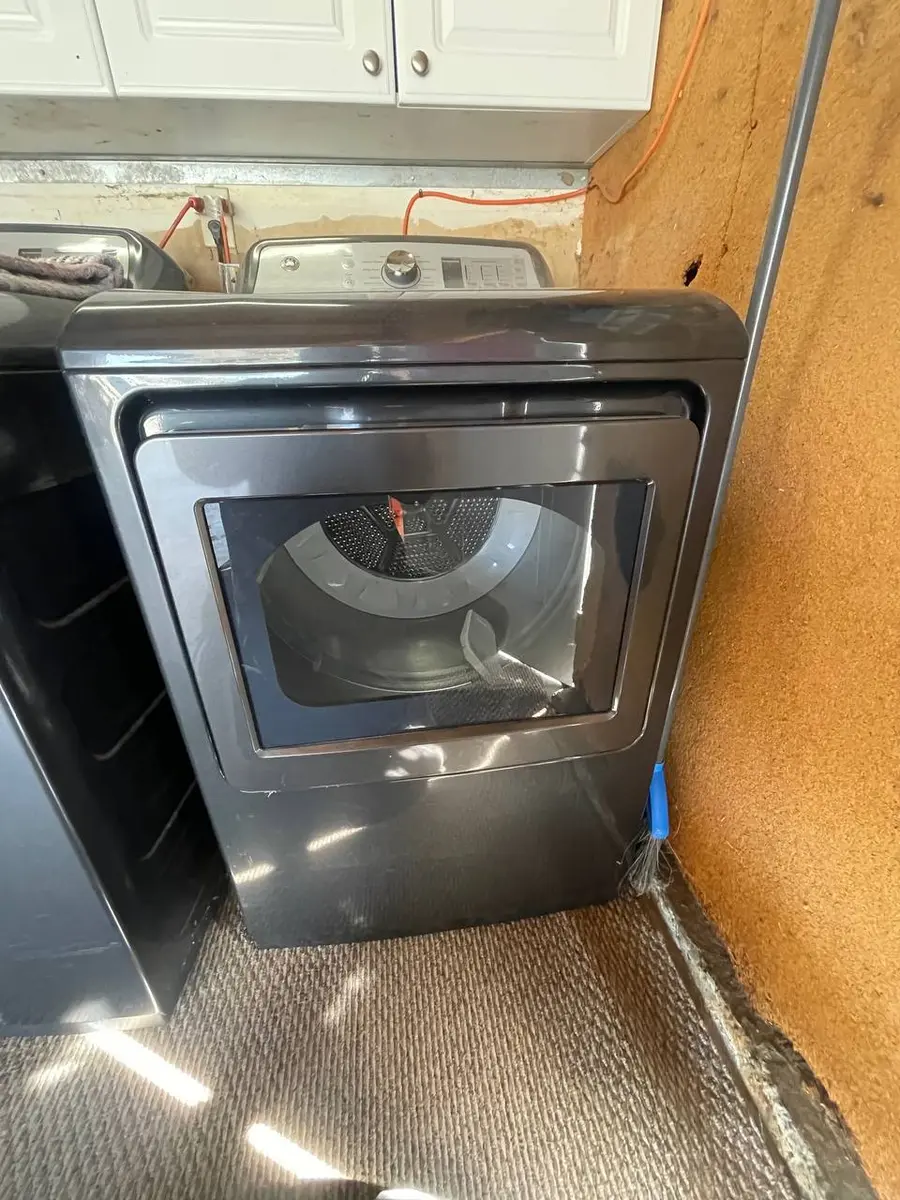
A GE dryer that will not stop — running past the end of the cycle, or refusing to shut off until you open the door — is usually a sensing or control fault, not a mechanical one. The most common reason is coated Sensor Dry bars: once fabric-softener film glazes the two metal strips inside the drum, the auto-dry cycle never registers the load as dry and simply keeps running. A drifting thermistor and, more seriously, a welded control-board relay are the other prime suspects.
Symptom-to-Cause Table#
| What you notice | Most likely cause | First check |
|---|---|---|
| Auto cycles run to maximum, clothes bone dry | Sensor Dry bars coated (most common) | Clean the two metal bars in the drum |
| Runs long, temperature seems off | Thermistor drifting (E1 or E2) | Diagnostic mode; read the thermistor codes |
| Keeps running even at cycle end | Control-board relay welded closed | Confirm sensors good, then the board |
| Never ends on a set time | Timed Dry set very long | Switch to Auto or a shorter Timed setting |
| Motor won't cut when the door opens | Door switch not signaling open | Test the door switch (WE4M415) |
Do You Have the Right Tools?
Gas leak detector ($130), thermal fuse tester ($95), belt tension gauge, and vent inspection camera ($180). Our technician arrives with $3,000+ in professional tools — your diagnostic is free.
Licensed & Insured · 90-Day Warranty · Same-Day Service
Auto Dry vs Timed Dry#
This distinction explains most no-stop complaints. On Timed Dry the dryer runs the clock you set, so a long setting simply feels like it never ends. On Auto or Sensor Dry, the machine runs until the Sensor Dry bars read the load as dry — and if those bars are glazed with softener residue, they keep reporting damp and the dryer runs to its maximum every single time. Cleaning the bars is the first and most common fix, and it costs nothing.
The Causes in Detail#
The Sensor Dry bars lead: two parallel metal strips in the drum measure dampness by conductivity, and a film of fabric softener insulates them so the load always reads wet. A thermistor that drifts (part WE04X25929) can leave the control chasing a temperature it never confirms, sometimes flagging E1 for an open circuit or E2 for a short. The most genuine no-stop fault is a control-board relay welded closed, which keeps the motor or heat energized even when the cycle should end — that is a board replacement. On the simpler side, the machine may just be set to a long Timed Dry. And a door switch (WE4M415) that fails to signal open can let the motor keep running when it should cut.
Safety First — Know the Risks
Gas dryers carry carbon monoxide and explosion risk. Even electric dryers involve 240V circuits that can deliver a fatal shock. Our techs are licensed and insured — let them handle the risk.
Licensed & Insured · 90-Day Warranty · Same-Day Service
Safety First#
- On an electric GE dryer, unplug it from the 240V outlet before any work — that is a lethal voltage.
- On a gas GE dryer, shut the gas supply valve and unplug the unit.
- Lint is highly flammable, so clean the screen and inspect the vent before any repair.
- Never bypass a thermal fuse or safety thermostat just to keep a dryer running.
How to Narrow It Down#
- Confirm which mode you are using — a long Timed Dry is not a fault; switch to Auto to compare behavior.
- Clean the Sensor Dry bars with fine sandpaper and rubbing alcohol, then run an auto cycle and see if it ends normally.
- Enter Service Mode (hold Delay Start and My Cycle for three seconds) and read any stored codes such as E1 or E2.
- If the dryer runs even after the display reaches the end, suspect a welded board relay rather than the sensors.
- Test the door switch (WE4M415) to confirm it cuts the motor the moment the door opens.
The Real Cost of DIY
Average DIY attempt: $150-400 in tools you may use once, plus the risk of further damage. Our diagnostic visit costs $0 — we find the problem and give you an honest quote.
Licensed & Insured · 90-Day Warranty · Same-Day Service
Repair or Replace?#
Cleaning the sensor bars or changing a Timed Dry setting costs nothing, and a thermistor or door switch is an inexpensive part on an otherwise sound dryer — so a no-stop fault rarely justifies replacement. Only a failed control board is a larger outlay, and even that usually beats buying new. EasyBear can read the codes, test the board and sensors, and settle it in one visit — book now.
Prevent It Coming Back#
- Clean the Sensor Dry bars monthly with fine sandpaper and alcohol so auto-dry reads accurately.
- Go easy on liquid fabric softener, which is what glazes the bars in the first place.
- Clean the lint screen every load and the vent run yearly so the dryer is not fighting poor airflow.
- Use Auto or Sensor Dry rather than a long Timed Dry so the machine stops when the load is actually dry.
Senior Gas Appliance Specialist · 18 years experience
AGA-certified gas appliance specialist with 18 years of experience in residential and commercial oven, range, and cooktop repairs.