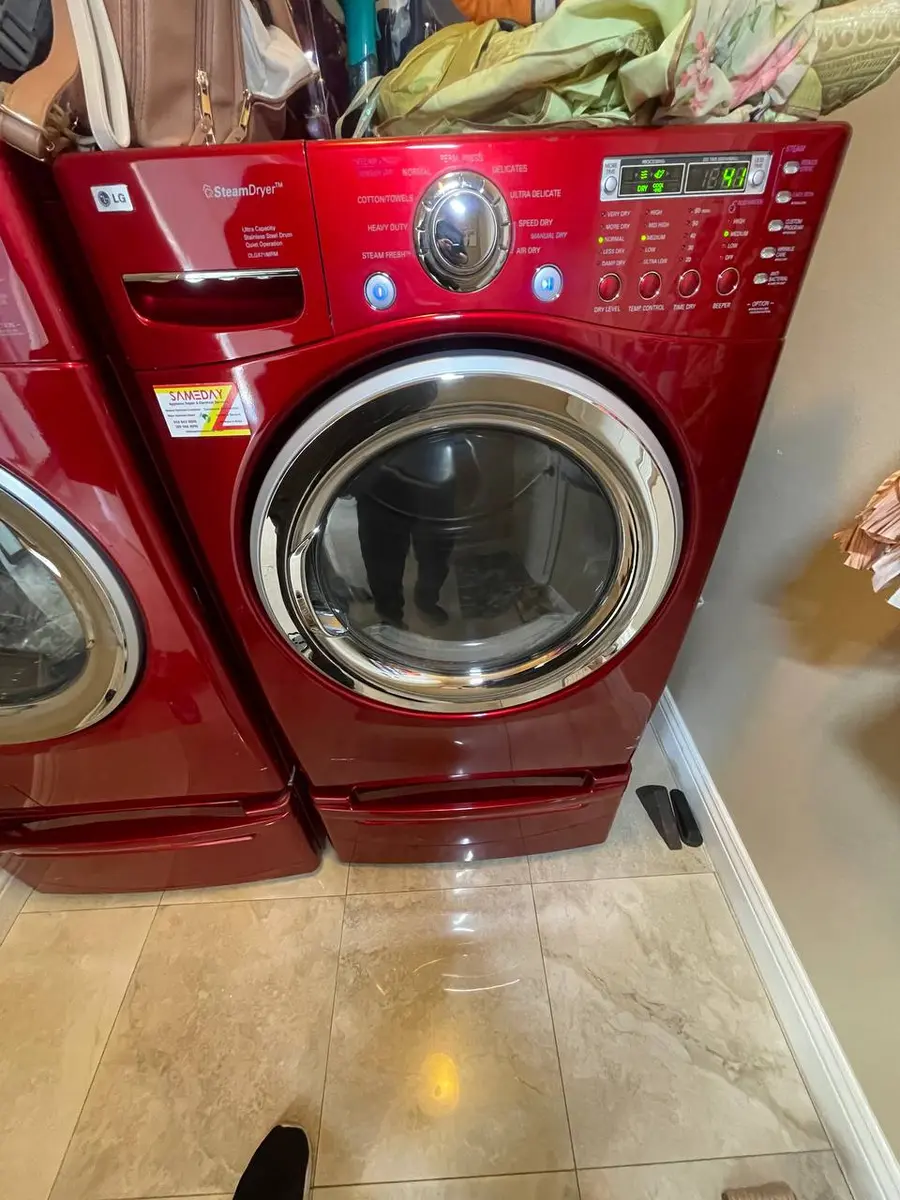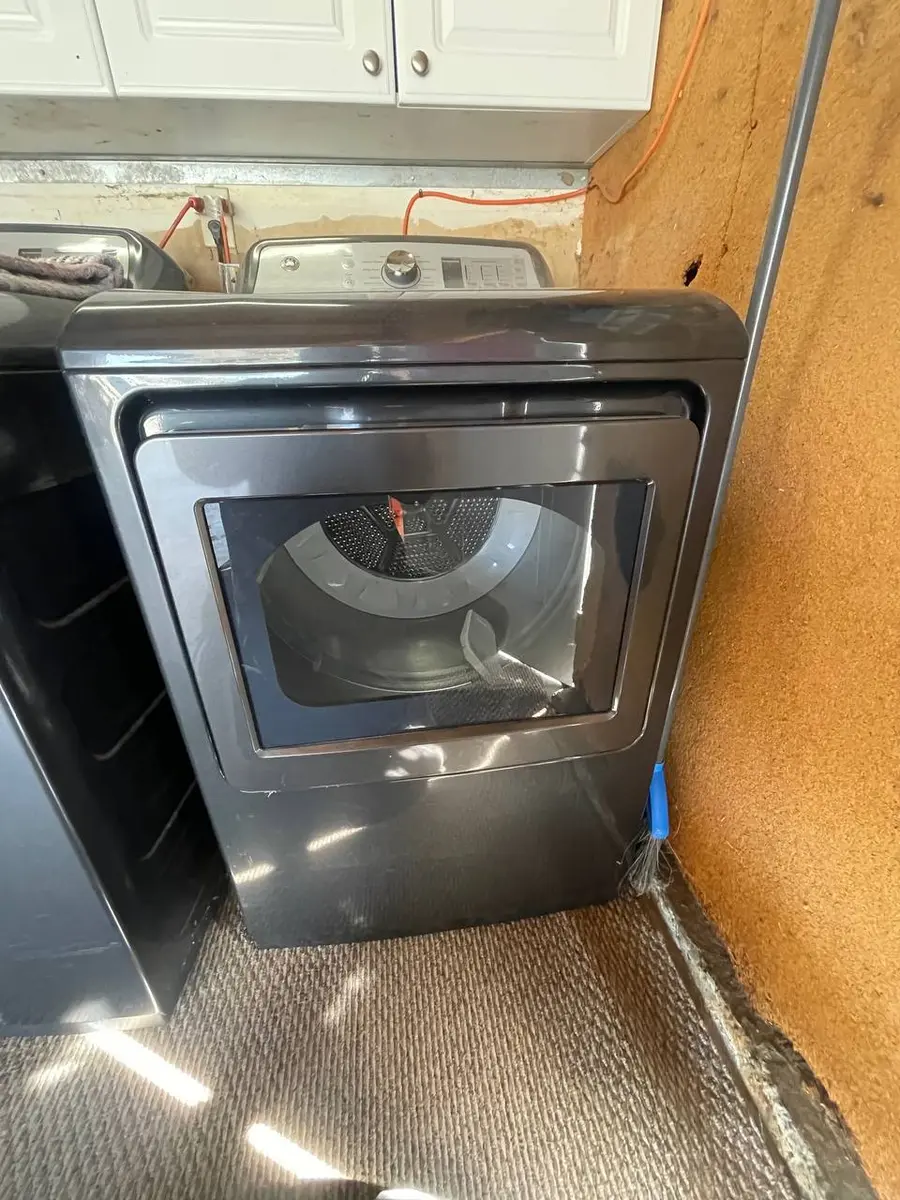
Quick Answer: Clear the Vent Before You Test Parts#
Most likely: the vent is restricted. When hot, moist exhaust cannot leave efficiently, heat backs up inside the drum and the air overheats no matter what the temperature controls do — and a blocked vent is the single biggest cause at about 55% of "too hot" cases. Because a dryer running too hot is a fire risk, stop and unplug it first, and if you smell burning, look for lint packed around the heating element or blower housing, which is a direct ignition source. Kenmore splits by platform: a 110 is a Whirlpool build with a mechanical cycling thermostat, while a 796 is an LG build with an electronic thermistor, and they regulate temperature in fundamentally different ways.
Immediate Safety Steps#
Stop the dryer immediately and unplug it. Do not restart until the cause is identified and resolved. If you smell burning, inspect for lint accumulation around the heating element housing or inside the blower wheel housing — lint that has bypassed the filter and settled on the heating element is a direct fire ignition source.
Do You Have the Right Tools?
Gas leak detector ($130), thermal fuse tester ($95), belt tension gauge, and vent inspection camera ($180). Our technician arrives with $3,000+ in professional tools — your diagnostic is free.
Licensed & Insured · 90-Day Warranty · Same-Day Service
Likely Causes at a Glance#
| Cause | Likelihood | What to check |
|---|---|---|
| Restricted vent system | 55% | Run a short cycle with the vent disconnected; normal temp off-vent but hot on-vent confirms a blockage |
| Cycling thermostat stuck closed (110 / Whirlpool) | 20% | Heat the thermostat and confirm it opens; stuck-closed keeps the element on |
| Thermistor drift (796 / LG) | 15% | Should read about 10,000 ohms (10K) at 77 degrees F; a low reading overshoots the target |
| Heater relay welded on the control board | 5% | Set "No Heat" / "Fluff Air"; if it still heats, the board relay is stuck |
Walking Through the Diagnosis#
With the dryer unplugged, test the vent first because it causes most overheating. Disconnect the vent from the exhaust port and run a short timed-dry cycle: if the dryer runs at a normal temperature off-vent but overheats with the vent connected, the vent is restricted and needs cleaning end to end. Long attic runs, crushed flexible foil duct, and multiple elbows all add restriction (each 90-degree elbow counts as several equivalent feet), and the recommended maximum is about 25 equivalent feet before lint is even factored in. Replace flexible duct with rigid 4-inch aluminum supported every few feet, and clean the full run to the exterior cap.
If the vent is clear, the fault is internal and depends on the platform. On a Whirlpool 110, the mechanical cycling thermostat on the blower housing normally opens the heat circuit near 155 degrees F and closes again near 135 degrees F; if it sticks closed the element runs continuously and the drum climbs until the high-limit thermostat catches it near 250 degrees F. Test it with the dryer unplugged — it should show continuity at room temperature and open when heated with a heat gun; continuity that never breaks means it is stuck closed (Whirlpool part 3387134). On an LG 796, an NTC thermistor reports exhaust temperature to the board as a resistance; at 77 degrees F it should read about 10,000 ohms (10K), and a reading well below 10K tells the board the air is cooler than it is, so it overshoots (LG part 6323EL2001B). The rare and most dangerous failure is a heater relay welded closed on the control board: set the dryer to No Heat or Fluff Air and start it — any heat means the relay is stuck on, and only the high-limit thermostat and thermal fuse stand between that and a fire. Understanding the safety chain sets the urgency: the cycling thermostat or thermistor regulates normal temperature (auto-resetting), the high-limit thermostat is the backup near 250 degrees F (auto-resetting on most models, part 3977767 on the 110 or 6931EL3004B on the 796), and the thermal fuse is the one-time last resort near 300 degrees F (part 3392519 on the 110 or 6931EL3003D on the 796) that must be replaced once it blows.
Safety First — Know the Risks
Gas dryers carry carbon monoxide and explosion risk. Even electric dryers involve 240V circuits that can deliver a fatal shock. Our techs are licensed and insured — let them handle the risk.
Licensed & Insured · 90-Day Warranty · Same-Day Service
Repair or Replace? The Short Version#
Most fixes are cheap or free — vent cleaning costs nothing but a brush kit and prevents more overheating than any part swap, and a cycling thermostat, thermistor, high-limit, or thermal fuse are all inexpensive. Even a control board with a welded relay stays well under the price of a new dryer. But because this is a fire-safety fault, do not keep running the dryer with any temperature irregularity while you wait — clear the vent, fix the failed control, and if it still overheats, have it diagnosed — book an EasyBear technician.
Frequently Asked Questions#
Why is my Kenmore dryer getting too hot?#
More than half the time it is a restricted vent trapping heat, so clear the full duct run first — a quick test is running a short cycle with the vent disconnected. If it is normal off-vent, the vent was the problem. If it still overheats, the cycling thermostat (110) or thermistor (796) has failed, or, rarely, the heater relay is welded on the control board.
Is it safe to keep using a Kenmore dryer that runs too hot?#
No. A dryer that scorches clothes, has a hot cabinet, or smells like burning is a fire risk — stop and unplug it, and do not run it again until the cause is fixed. If it is running hot but still working, the cycling control has failed and only the high-limit thermostat is catching it; if that also fails, only the thermal fuse prevents ignition of trapped lint.
How do I know if it's the vent or an internal part?#
Disconnect the vent from the exhaust port and run a short timed-dry. If the drum stays a normal temperature off-vent but overheats once the vent is reconnected, the vent is restricted. If it overheats even with the vent off, the fault is internal — a cycling thermostat stuck closed on a 110, a drifted thermistor on a 796, or a welded heater relay on the board.
Appliance Repair Technician · 11 years experience
Experienced technician with 11 years specializing in Frigidaire and Electrolux refrigerator and dryer repair with a focus on safety.