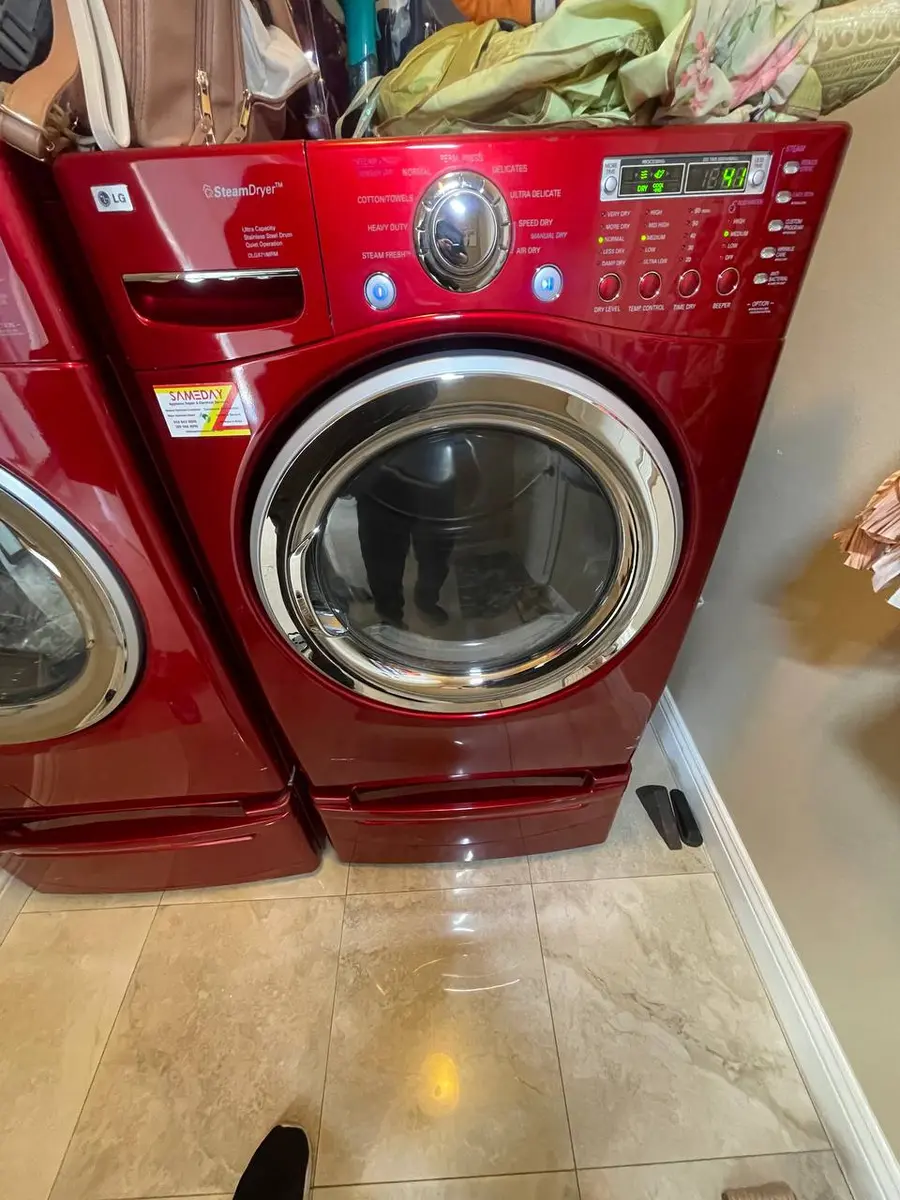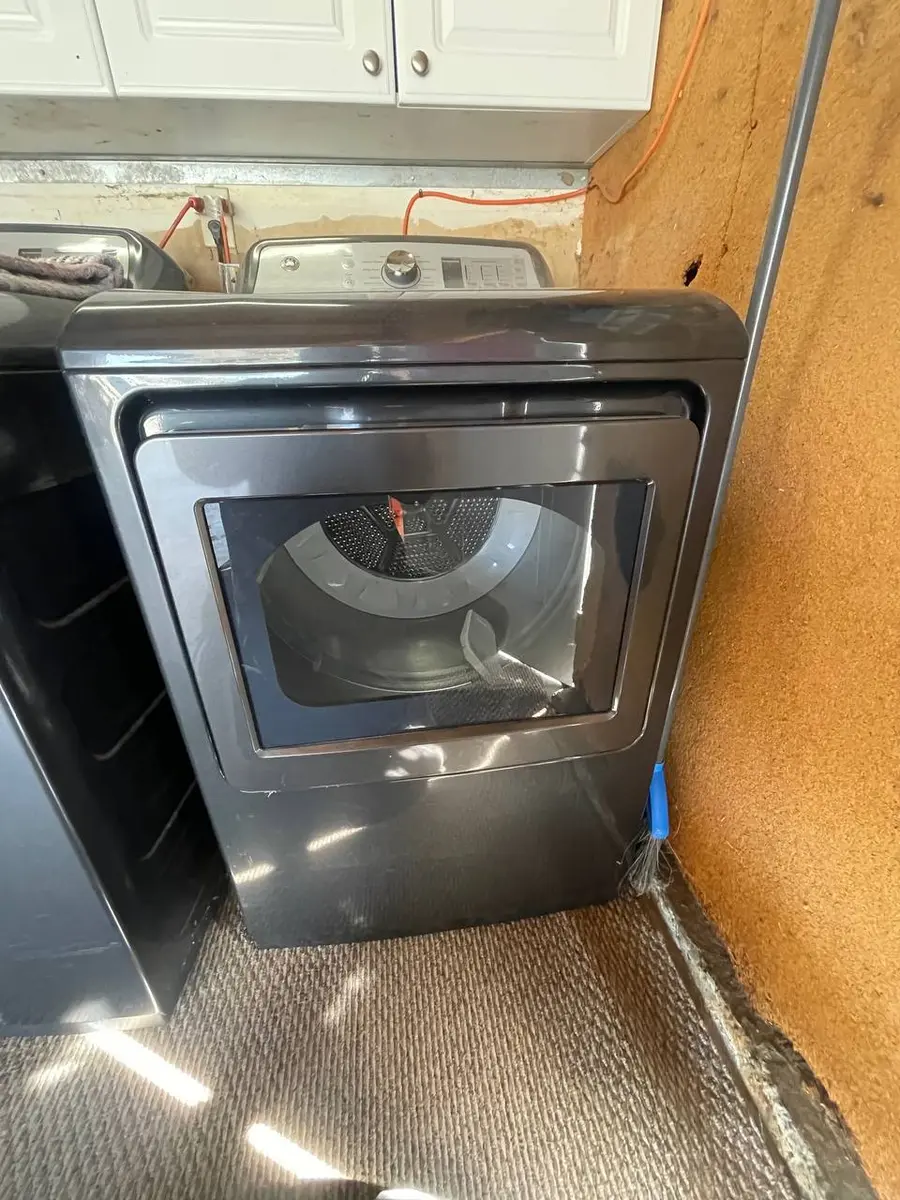
Kenmore Dryer Taking Too Long? Causes & Fix
Most likely your vent system is restricted — a clogged run, a filmed lint filter, or a long duct with too many elbows — because a dryer that takes two or three hours instead of 45 to 60 minutes almost always has an airflow problem, not a heating problem. Internal component failures are the minority.
The 80/20 rule for long dry times#
About 80% of long-dry-time cases come from a restricted vent, a clogged lint filter, or a poor vent installation. The other 20% are internal: a fouled moisture sensor, or on rare occasions a partially failed heating element. Start with airflow, because it is both the most likely cause and the cheapest to fix.
Causes at a glance#
| Likely cause | What you'll notice | Share of cases | First move |
|---|---|---|---|
| Restricted vent system | Clothes damp, long cycles, hot drum | Most of the 80% | Run a no-vent test |
| Filmed lint filter | Slow drying despite a clean-looking screen | 15% | Wash the filter mesh |
| Moisture sensor fouled | Auto cycles end wet (110 series) | 10% | Clean the sensor bars |
| Partial heating element | Weak heat, very long times | 5% | Test the element |
Do You Have the Right Tools?
Gas leak detector ($130), thermal fuse tester ($95), belt tension gauge, and vent inspection camera ($180). Our technician arrives with $3,000+ in professional tools — your diagnostic is free.
Licensed & Insured · 90-Day Warranty · Same-Day Service
Working through the causes#
Restricted venting (most of the 80%). The heating element makes heat and the blower pushes it through the clothes and out the vent; restrict that path and moist air cannot leave, so drying drags on. Sacramento-area homes commonly have runs over 25 equivalent feet through the attic and multiple 90-degree elbows that each add resistance. Test it by disconnecting the vent hose and running a 20-minute timed cycle exhausting into the room — if that dries fast, the vent is the problem. Filmed lint filter (15%). A screen that looks clean can still be blocked by an invisible film of dryer-sheet residue. Test it by pouring water through the screen; if the water pools instead of running through, wash the mesh with soap and a brush. Moisture sensor fouled (10%). Whirlpool-platform 110-series Kenmore dryers read dryness from metal sensor bars in the drum, and dryer-sheet residue coats them so the dryer thinks the load is still wet and keeps running. Wipe the bars clean with a little rubbing alcohol. On LG-platform 796-series units, the Flow Sense warning only trips near 80% blockage, so a vent 50 to 70% restricted can slow drying without any alert. Partial heating element (5%). Rarely, an element shorts against its housing and still makes heat but at reduced output, stretching cycles. It is tested for a partial short and replaced if confirmed.
Confirm it is airflow#
- Clean the lint screen and wash off any dryer-sheet film.
- Disconnect the vent hose from the back of the dryer.
- Run a small load on a 20-minute timed cycle with the dryer exhausting into the room.
- If that load dries quickly, the vent run is restricted and needs cleaning or rerouting.
- If it is still slow with no vent attached, look at the moisture sensor or heating element.
Safety First — Know the Risks
Gas dryers carry carbon monoxide and explosion risk. Even electric dryers involve 240V circuits that can deliver a fatal shock. Our techs are licensed and insured — let them handle the risk.
Licensed & Insured · 90-Day Warranty · Same-Day Service
Do not overload#
A packed drum cannot tumble, so hot air never circulates between items and cycles run long — a behavioral cause that mimics a fault. Dry rated loads with room to move, and expect a properly vented small load in 30 to 40 minutes versus 60 to 80 minutes on a 50% restricted vent.
Preventing a repeat#
- Clean the lint screen every load, and wash off the dryer-sheet film every few weeks.
- Have the full vent run cleaned once a year, more often with a long attic route to the roof.
- Keep the vent run as short and straight as possible and minimize 90-degree elbows.
- Dry rated loads with room to tumble instead of packing the drum full.
- Watch for climbing dry times as an early warning that the vent is restricting again.
Dryer running for hours? Our technicians service Kenmore dryers same-day across Sacramento and the Bay Area. Book your repair.
Appliance Repair Technician · 11 years experience
Experienced technician with 11 years specializing in Frigidaire and Electrolux refrigerator and dryer repair with a focus on safety.