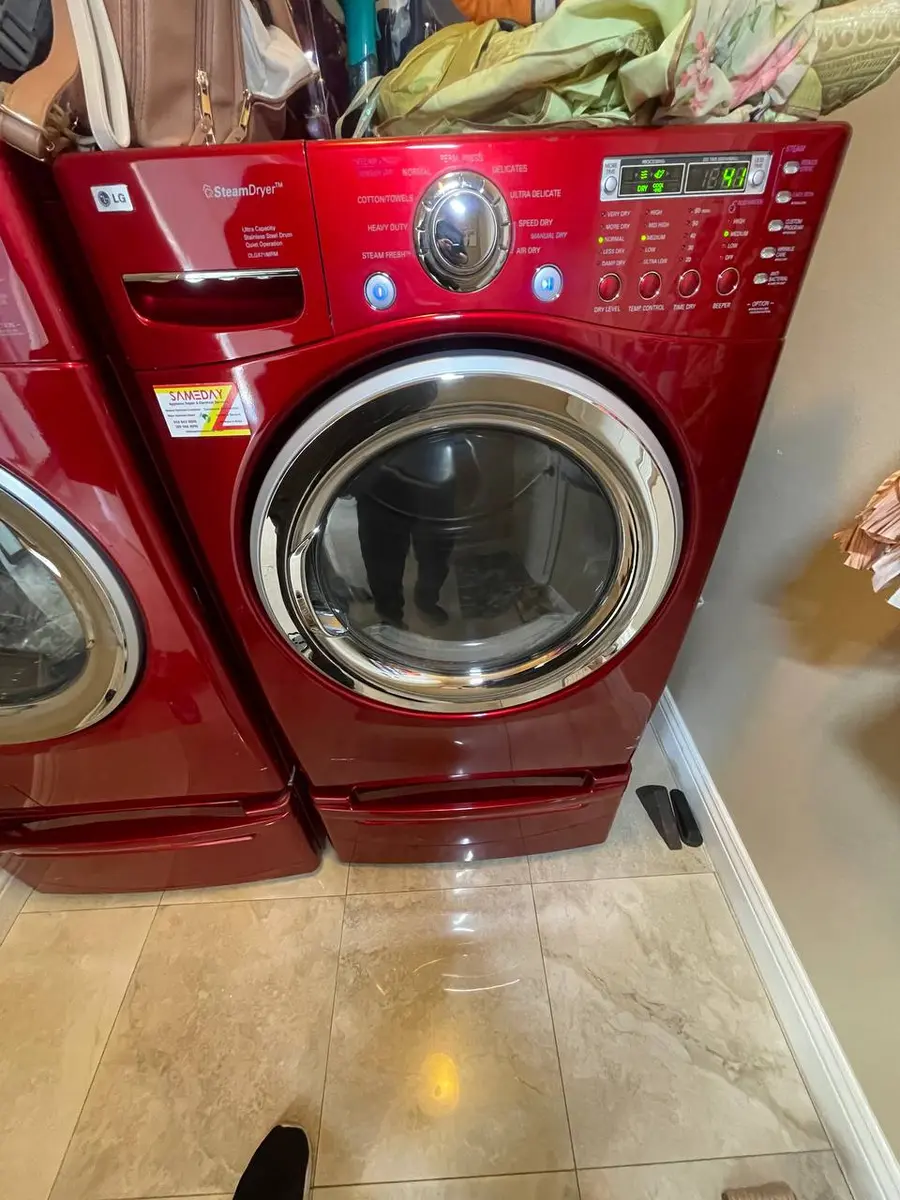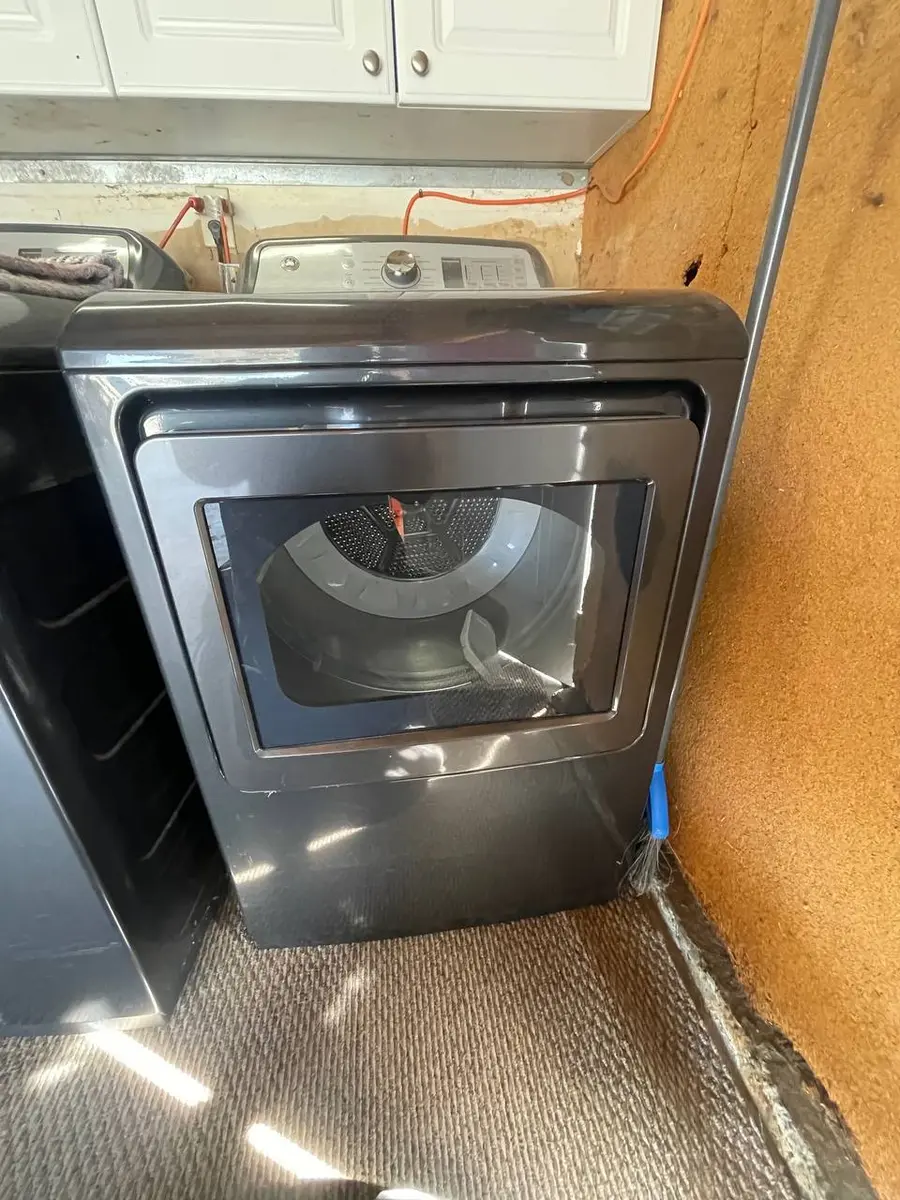
A standard vented Kenmore dryer has no water supply, so before chasing a part, the first question is whether the water is even coming from the dryer. Most "dryer leaks" turn out to be vent condensation, a steam-model water line, or an external source mistaken for the dryer — and the platform (110-series Whirlpool or 796-series LG) narrows it further.
Most Likely Cause#
Most likely: vent condensation, the top cause at around 40%. When the exhaust vent runs through a cold space, hot moist air condenses inside the pipe and the water drips back out at the dryer connection — it looks like a leak but the dryer itself is dry.
Do You Have the Right Tools?
Gas leak detector ($130), thermal fuse tester ($95), belt tension gauge, and vent inspection camera ($180). Our technician arrives with $3,000+ in professional tools — your diagnostic is free.
Licensed & Insured · 90-Day Warranty · Same-Day Service
Ranked Causes#
| Cause | Share | What you notice | Fix |
|---|---|---|---|
| Vent condensation | 40% | Water at the vent connection, worse in winter | Insulate or shorten the vent run |
| Steam-model water line (796) | 25% | Water near a steam dryer's supply | Check the steam inlet and hose |
| Condensation inside the drum/vent | 20% | Damp spots after long cycles | Improve airflow and venting |
| External source mistaken for the dryer | 10% | Water tracks from nearby | Trace the true origin |
First: Is the Water Actually Coming From the Dryer?#
Dry the floor completely, run a cycle, and watch where water reappears. Drips at the vent collar mean condensation; water near a steam model's supply points at that line; and water that tracks in from a laundry sink, a nearby washer, or a wall is not the dryer at all. This one check settles most Kenmore "leak" calls.
Safety First — Know the Risks
Gas dryers carry carbon monoxide and explosion risk. Even electric dryers involve 240V circuits that can deliver a fatal shock. Our techs are licensed and insured — let them handle the risk.
Licensed & Insured · 90-Day Warranty · Same-Day Service
Kenmore Steam and Platform Notes#
- 796-series (LG-built) steam models have an actual water inlet for the steam feature — a leak there is the hose or the steam valve, not condensation.
- 110-series (Whirlpool-built) vented dryers have no water line, so any water is condensation or external.
- Ventless condenser models (rare on Kenmore) collect water and can overflow if the tank or pump fails.
Step-by-Step Checks#
- Prove the source. Trace each drip to the vent collar, the steam line, or an outside source before assuming a fault.
- Insulate the vent. Condensation in a cold run is fixed by insulating or shortening the ducting, especially through unheated spaces.
- Check a steam line. On a 796 steam model, inspect the inlet hose and valve for the actual water leak.
- Clear the vent run. A restricted vent traps moisture that then condenses; clean the full run to the outside hood.
- Rule out neighbors. Confirm a nearby washer, sink, or wall is not the true source of the water.
The Real Cost of DIY
Average DIY attempt: $150-400 in tools you may use once, plus the risk of further damage. Our diagnostic visit costs $0 — we find the problem and give you an honest quote.
Licensed & Insured · 90-Day Warranty · Same-Day Service
Prevention#
- Insulate vent ducting that passes through cold, unheated areas.
- Keep the vent run short and clear so moisture exits instead of condensing.
- On steam models, inspect the steam inlet hose periodically.
Repair or Replace?#
Vent insulation and duct cleaning are maintenance, and a steam-line hose is a minor part — none argues for a new dryer. A diagnosis confirms the true source and gives an upfront quote. Schedule service if water returns after you insulate the vent and rule out external sources.
Don't Void Your Warranty
Opening your appliance yourself may void the manufacturer warranty. Our repair comes with a 90-day guarantee, and we document everything for warranty compliance.
Licensed & Insured · 90-Day Warranty · Same-Day Service
Frequently Asked Questions#
What should I do if my Kenmore dryer is leaking water?#
First confirm the water is actually from the dryer. Dry the area, run a cycle, and watch where it returns — most "leaks" are vent condensation at the connection or, on steam models, the steam water line, not a failed part.
Why does my Kenmore dryer only "leak" in winter?#
Cold weather chills the vent run, so hot exhaust condenses more heavily inside the duct and drips back at the dryer. Insulating or shortening the run through unheated spaces usually stops the seasonal drip.
Is it worth repairing a Kenmore dryer that leaks?#
Usually the fix is maintenance — insulating the vent or clearing the run — which costs little. On a steam model, a hose or valve is a modest part. A diagnosis confirms the source so you are not paying for the wrong repair.
Appliance Repair Technician · 11 years experience
Experienced technician with 11 years specializing in Frigidaire and Electrolux refrigerator and dryer repair with a focus on safety.