Want a regional phone & address? Pick your area.
Dryer Repair, Maintenance & Troubleshooting
Dryer repair guides for no-heat, long cycles, and error codes. Covers gas and electric models, vent safety, and thermal fuse diagnosis.
A dryer that takes two cycles to dry a load or shuts off mid-cycle is more than an inconvenience — it wastes energy, wears out clothes faster, and in the case of gas dryers, can signal a safety hazard. Our troubleshooting guides start with the most statistically likely cause for each symptom: no heat is a thermal fuse 60% of the time, long dry times point to a blocked vent in 70% of service calls, and a drum that tumbles but produces no warmth usually means a failed heating element or gas valve coil.
We break down diagnosis separately for gas and electric dryers because the repair process differs at every step. Gas dryers require igniter and flame sensor testing with a multimeter, while electric dryers need element continuity checks and high-limit thermostat diagnosis. Each guide includes the specific resistance readings you should expect and the exact replacement part numbers for the five most common models we service in the Sacramento and Bay Area markets.
Dryer venting deserves its own section in every guide because lint-clogged vents cause an estimated 2,900 house fires per year in the US. California building codes require rigid metal ducts (not foil flex) for new installations, and our maintenance guides walk you through a full vent inspection with the tools most homeowners already own.
703 articles
Help! LG Dryer Drum Not Turning
LG dryer drum not turning? Top 4 causes ranked by likelihood with step-by-step fixes. Learn about common problems, estimated repair costs, and when to call a...
mike-rodriguez·7 min read
LG Dryer Temperature Not Right: Causes & Fix
An LG dryer running too hot or too cold is usually a drifting thermistor or a failed cycling thermostat, and very often a restricted exhaust vent. Use the ranked table and DIY checks to find whether the sensor, the thermostat, or the airflow is off.
mike-rodriguez·3 min read
LG Dryer Overheating — Top Causes
Most likely: a severely restricted exhaust vent — it causes half of all overheating and is the leading cause of dryer fires, because a blocked duct traps hot, humid air until the drum and cabinet climb past safe temperatures. On LG's DLEX and DLE models the FlowSense indicator exists specifically…
mike-rodriguez·4 min read
Fix LG Dryer Timer Will Not Advance
Most likely: contaminated moisture-sensor bars are the cause — on a Sensor Dry cycle the "timer" is really an estimate the board revises from those bars, and if fabric-softener film makes them read "wet," the board keeps extending the cycle and the clock stalls. A restricted vent produces the same…
mike-rodriguez·4 min read
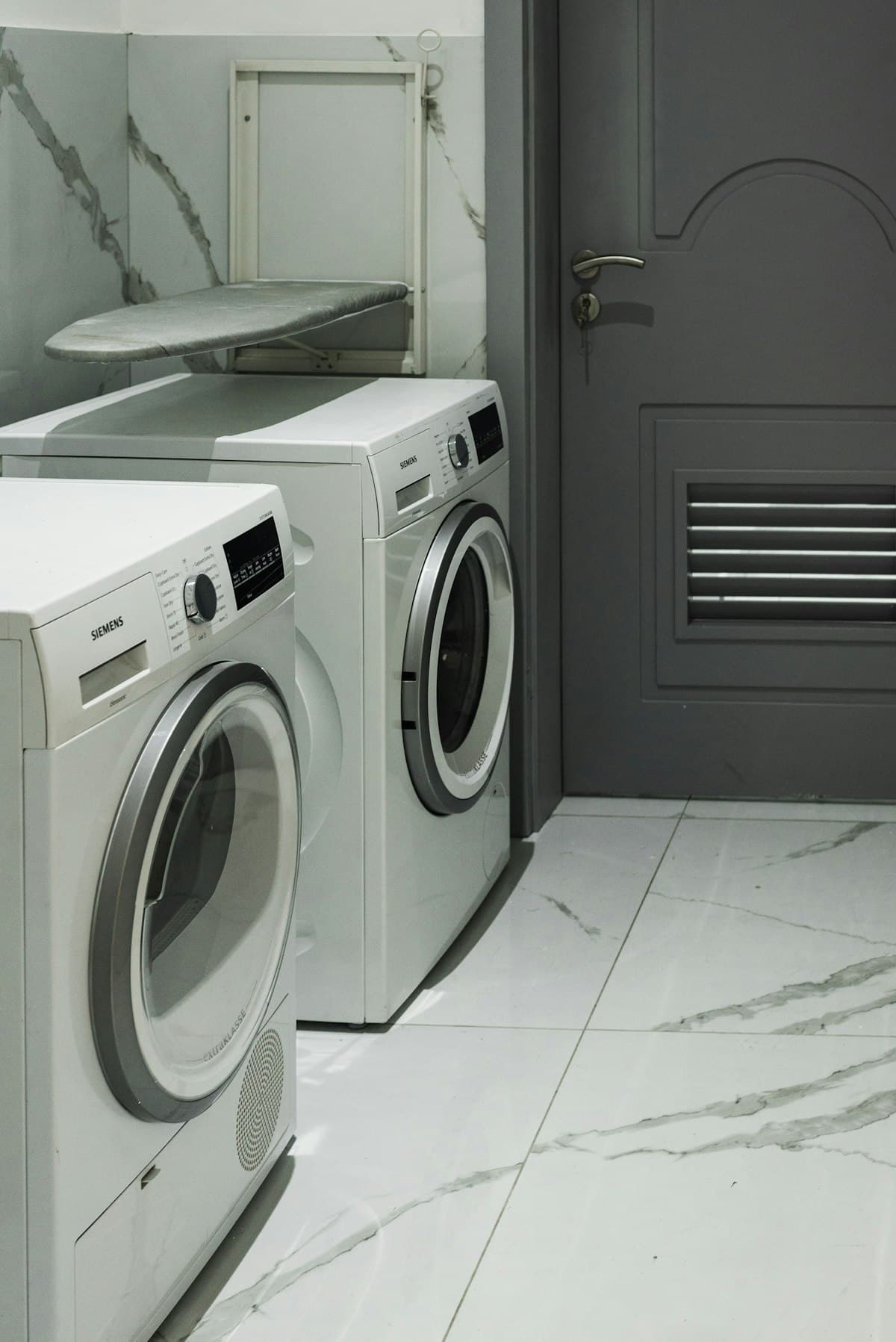
LG Dryer Tripping Circuit Breaker: Causes & Fix
An LG dryer that trips the breaker is most often a shorted heating element, then a shorted motor or a wiring fault. Ranked causes, why you shouldn’t keep resetting the breaker, and safe checks before an electrical repair.
mike-rodriguez·4 min read
LG Dryer Vibrating and Shaking? Causes & Fix
Most likely the dryer is not level or you are drying a single heavy item that unbalances the drum. On these LG DLEX front-loaders those two easy causes lead; after them come worn rear drum rollers, a stretched drive belt, and loose internal hardware. A stacked, unlevel washer underneath amplifies it all. Start by leveling all four legs.
mike-rodriguez·5 min read
LG Dryer Won't Start: Causes and Fixes
Most likely: the door isn't registering closed (a "dE" code) or Start wasn't pressed and held — LG requires a 1-2 second hold, not a tap. If the panel is dark instead, check both legs of the 240V supply and the thermal fuse. Whether the display lights tells you where to look…
mike-rodriguez·5 min read
LG Dryer Not Spinning? Causes & Fix
An LG dryer that hums but won't turn the drum is most often a broken drive belt or a failed idler pulley, sometimes seized drum rollers, a bad motor, or a door switch not registering. The causes ranked for DLEX and DLE models, with the Smart Diagnosis tip.
mike-rodriguez·6 min read
Fix LG Dryer Makes Noise
LG dryer makes noise? Top 4 causes ranked by likelihood with step-by-step fixes. Learn about common problems, estimated repair costs, and when to call a...
mike-rodriguez·6 min read
LG Dryer No Heat or Not Enough Heat? Causes & Fix
LG dryer not heating? A restricted vent is the top cause, then a blown thermal fuse, a burned-out element on DLEX models, or a weak igniter on DLGX gas dryers. Ranked causes and how to test each.
mike-rodriguez·6 min read
LG Dryer Error Codes — Causes & Fix
LG dryer codes point straight at the failed part or condition. Here is what dE, tE and the heater codes mean, how FlowSense works, and how to clear each fault.
mike-rodriguez·7 min read
Help! LG Dryer Cycle Not Completing
LG dryer cycle not completing? Top 8 causes ranked by likelihood with step-by-step fixes. Learn about common problems, estimated repair costs.
mike-rodriguez·7 min read
LG Dryer Burning Smell: Causes and Fixes
Most likely: lint built up in the exhaust duct scorching against hot air — the leading cause and a genuine fire risk. A rubber smell is a slipping belt or seized idler; an electrical smell is the motor or wiring; a gas smell means leave and call the gas company. Stop the dryer, and if you see smoke do not open the door…
mike-rodriguez·6 min read
LG Dryer Damaging Clothes: Causes & Fix
LG dryer tearing, scorching, or staining clothes? The five damage types ranked, from worn drum seals and baffles to a grease-leaking roller and chipped enamel.
mike-rodriguez·6 min read
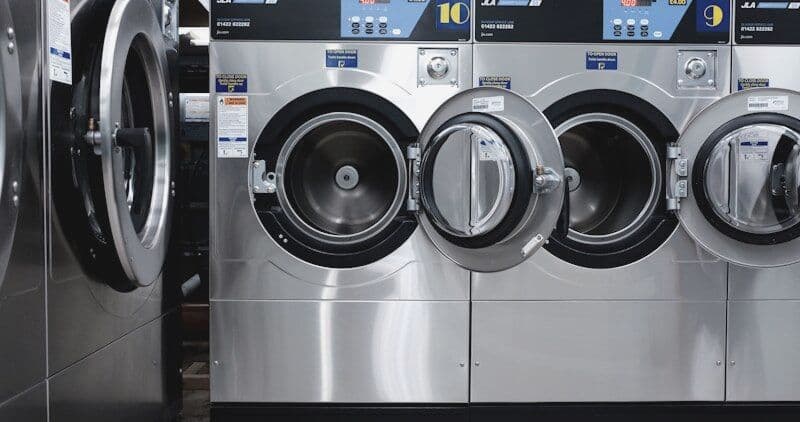
KitchenAid Dryer Not Heating — Expert Tips
KitchenAid dryer cold? Diagnosis of heating element, gas valve coils, and thermal fuse — same Whirlpool platform components with KitchenAid part numbers.
angela-thompson·4 min read

Kenmore Dryer Won't Start? Here's Why
Kenmore dryer won't turn on? Diagnosis of thermal fuse, door switch, and belt switch failures across Kenmore 110 (Whirlpool) and 417 (Electrolux) dryer...
angela-thompson·4 min read

Kenmore Dryer Cycle Not Completing Explained
Kenmore dryer cycle not completing? Platform-specific guide covering 110 (Whirlpool), 796 (LG), and 417 (Electrolux) causes and fixes. Repair guide with costs.
angela-thompson·6 min read

Fix Kenmore Dryer Damaging Clothes
Kenmore dryer damaging clothes? Identify snags, scorches, grease stains by platform — 110 (Whirlpool), 796 (LG), 417 (Electrolux) fixes. Expert tips and costs.
angela-thompson·6 min read

Kenmore Dryer Makes Noise — Solved
Kenmore dryer making noise? Diagnose thumping, squealing, grinding, and scraping by sound type — platform-specific parts and fixes. Repair guide with costs.
angela-thompson·6 min read
Kenmore Dryer Not Draining Explained
Kenmore dryer not draining? Diagnose condenser reservoir issues, vent condensation, and water accumulation — platform-specific fixes. Repair guide with costs.
angela-thompson·6 min read
Kenmore Dryer Rust/corrosion — Solved
Kenmore dryer rust and corrosion? Platform-specific guide for drum coating failure, cabinet rust, and bearing corrosion across 110, 796, and 417 models.
angela-thompson·6 min read
Kenmore Dryer Won't Start: Go by What Still Works
Completely dead, lit but silent, and a drum that turns without heating are three different faults. One of them is a double-pole breaker that only tripped on one side, which looks nothing like a tripped breaker from the laundry room.
angela-thompson·13 min read
Kenmore Dryer Won't Stop Running: Causes & Fixes
A Kenmore dryer that won't shut off has a welded timer contact or stuck control-board relay keeping the motor powered, or a moisture sensor stuck on "wet." The fix depends on whether yours is a mechanical-timer or electronic model — this guide splits both.
angela-thompson·3 min read
Kenmore Dryer Burning Smell? Causes & Fix
A Kenmore dryer burning smell is most often lint built up on the heating element of a 110-series Whirlpool-built machine — a real fire risk — but worn drum glides, a frayed belt, a failing motor bearing, or a melted object can each be the cause. Platform-aware diagnosis and safety steps.
angela-thompson·9 min read
Kenmore Dryer Temperature Not Right? Causes & Fix
A Kenmore dryer running too hot or too cool is usually a failed cycling thermostat or a drifted thermistor, with a restricted vent or a tripped high-limit also in play. How 110-series (mechanical) and 796-series (electronic) platforms differ, and how to test each part.
angela-thompson·6 min read
Kenmore Dryer Not Spinning Repair Guide
Most likely: a broken drive belt — it accounts for more than half of no-spin calls, and the giveaway is a drum that turns freely by hand while the motor hums. Seized drum support rollers are next, dragging the drum until the motor's thermal overload trips within 5-10 seconds. Because Kenmore…
angela-thompson·4 min read
Kenmore Dryer Overheating — Vent First
Most likely: a restricted vent trapping heat past the design temperature across every Kenmore platform. Then the regulation parts — a cycling thermostat that no longer opens, a failed high-limit. Because Kenmore badges several makers, a 110-Series is Whirlpool-built and a 796-Series is LG.
angela-thompson·4 min read
Kenmore Dryer Door Latch Failure: Causes & Fix
A Kenmore dryer door that won’t stay shut depends on the platform — Whirlpool 110 strike-and-catch, LG 796 magnetic catch, or Electrolux 417 integrated latch. Which part fails on each, and safe checks before replacing the latch.
angela-thompson·3 min read
Kenmore Dryer Drum Not Turning: Causes & Fix
A Kenmore dryer that hums but won’t turn the drum is a broken drive belt in about half of cases, then worn rollers or a seized motor. Ranked causes, the platform differences, and safe checks before a belt or roller repair.
angela-thompson·3 min read
Kenmore Dryer Timer Not Advancing? Causes & Fix
Most likely, on a mechanical-timer Kenmore, the timer is fine and the heater is the problem: on auto-dry the timer only advances while the element is on, so a blown thermal fuse or dead element makes it stall. The quickest test is a timed-dry cycle. If it advances there, fix the heating system; if not, the timer motor has failed.
angela-thompson·5 min read