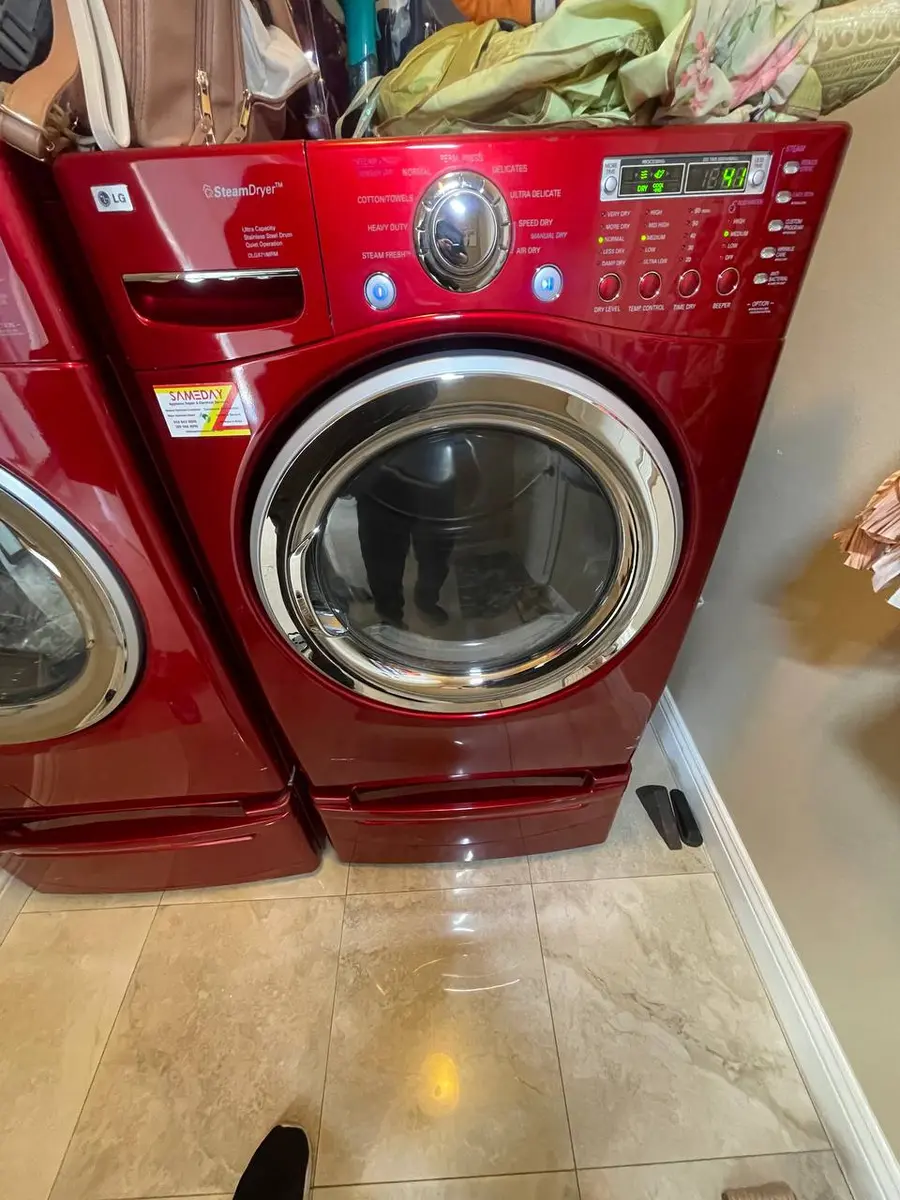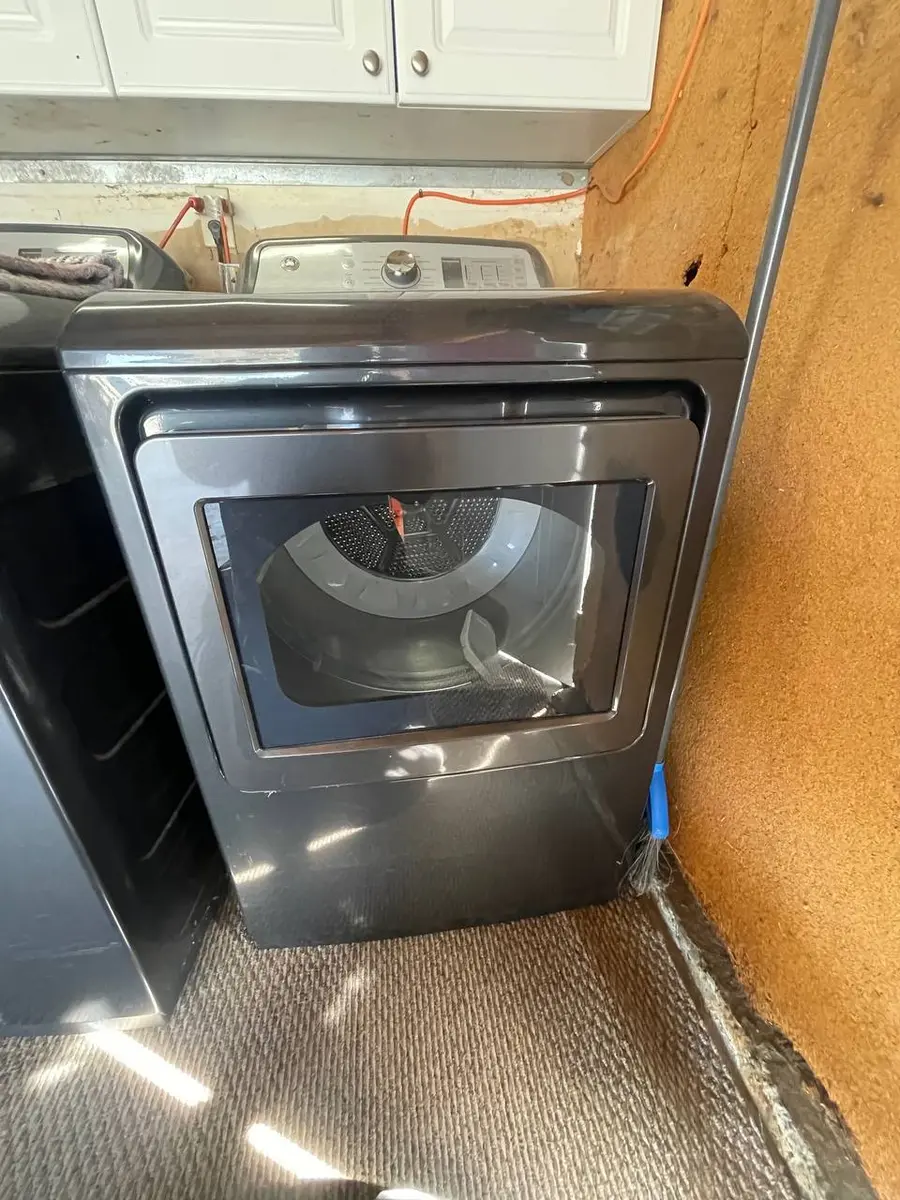
A Kenmore dryer that tumbles but won't heat — or runs cooler than it should — almost always has a failed heat-path component, and which one depends on whether it's electric or gas. Kenmore sells Whirlpool (110), LG (796), and Electrolux (417) platforms, so this guide splits the diagnosis by electric vs gas.
The likely culprit#
Most likely (electric): a burned-out heating element. The coiled element glows to make heat, and over time the wire develops thin spots and breaks into an open circuit — no heat at all while the drum keeps turning. On gas models the equivalent first suspect is the gas valve coils. If the electric element tests good, check the thermal fuse next.
Do You Have the Right Tools?
Gas leak detector ($130), thermal fuse tester ($95), belt tension gauge, and vent inspection camera ($180). Our technician arrives with $3,000+ in professional tools — your diagnostic is free.
Licensed & Insured · 90-Day Warranty · Same-Day Service
Safety first#
Unplug the dryer (or switch off the breaker) before testing the element or fuses; the heating element runs at 240V on electric models — a shock hazard when powered.
Do not bypass any thermal protection device, and never run the dryer if you smell burning.
Electric Kenmore dryers — no heat#
| Likely cause | How common | What you'll notice / what to check |
|---|---|---|
| Heating element burned out | 40% of electric cases | Drum turns, no heat; the element reads open on a meter. |
| Thermal fuse blown | 25% of electric cases | No heat after an overheat; a one-time fuse that's opened — clean the vent too. |
| 240V half-voltage | 10% of electric cases | Tumbles but never dries; one breaker leg lost, only 120V reaching the element. |
Heating element burned out (40% of electric cases)#
The element is a coiled resistance wire that glows red-hot to dry the load, and years of cycling develop thin spots until the wire breaks — an open circuit and no heat. Unplug the dryer, access the element (rear panel on 110-series, lower front on 796-series), disconnect a lead, and test for continuity. No continuity means the element is open and needs replacing.
Thermal fuse blown (25% of electric cases)#
The thermal fuse is a one-time safety device that opens when the dryer overheats, cutting power to the element (or the whole dryer on some models). A blown thermal fuse is always a symptom of another problem — usually a restricted vent — so after replacing it you must clean the vent system or it will blow again. Test the fuse for continuity with the dryer unplugged.
240V half-voltage (10% of electric cases)#
Electric dryers need 240V from a double-pole breaker; if one leg trips or a connection fails at the outlet, the dryer gets only 120V — the motor runs and the drum turns, but the element can't make heat, so clothes never dry. Use a multimeter to check voltage at the outlet. If you read 120V, reset both breaker poles and inspect the outlet wiring.
Safety First — Know the Risks
Gas dryers carry carbon monoxide and explosion risk. Even electric dryers involve 240V circuits that can deliver a fatal shock. Our techs are licensed and insured — let them handle the risk.
Licensed & Insured · 90-Day Warranty · Same-Day Service
Gas Kenmore dryers — no heat#
| Likely cause | How common | What you'll notice / what to check |
|---|---|---|
| Gas valve coils failed | 35% of gas cases | Igniter glows, gas lights briefly, then goes out after a few seconds and won't relight. |
| Igniter failure | 25% of gas cases | A weak or cracked glow-bar igniter that never gets hot enough to open the gas circuit. |
| Flame sensor failure | 15% of gas cases | The board doesn't detect flame and shuts the gas off as a safety measure. |
Gas valve coils failed (35% of gas cases)#
Electromagnetic coils on the gas valve open it to let gas reach the burner, and they weaken with heat cycling over thousands of loads. The classic sign is the igniter glowing, gas lighting for a few seconds, then the flame dying and not relighting — the coils can't hold the valve open. Replacing the coil set restores steady heat.
Igniter failure (25% of gas cases)#
The flat glow-bar igniter heats to about 2,500 degrees to light the gas, and as it weakens it may glow but not get hot enough to open the safety circuit, or it may crack and fail outright. Watch the igniter through the lower front panel — if it glows brightly but the gas never lights, or it doesn't glow at all, the igniter is the suspect. It's a common, relatively inexpensive part.
Flame sensor failure (15% of gas cases)#
The flame sensor tells the board the burner is lit, and if it fails the board doesn't see flame and shuts off the gas as a safety measure even when the burner works. This shows up as brief heating that cuts out. Test the sensor for continuity and replace it if it's open.
The short version#
- Electric — heating element (40%), thermal fuse plus a vent cleaning (25%), 240V half-voltage (10%).
- Gas — gas valve coils (35%), igniter (25%), flame sensor (15%).
The Real Cost of DIY
Average DIY attempt: $150-400 in tools you may use once, plus the risk of further damage. Our diagnostic visit costs $0 — we find the problem and give you an honest quote.
Licensed & Insured · 90-Day Warranty · Same-Day Service
When to call a professional#
Call a technician if an electric element or thermal fuse needs replacing (240V testing is a shock hazard), if a gas model's valve coils, igniter, or flame sensor is involved, or if the thermal fuse keeps blowing — that means an unresolved vent restriction. The cost depends on the part and whether it's electric or gas plus labor, and a tech can confirm first.
No heat? Book an EasyBear technician — we service Kenmore dryers across the Whirlpool, LG, and Electrolux platforms, electric and gas.
Appliance Repair Technician · 11 years experience
Experienced technician with 11 years specializing in Frigidaire and Electrolux refrigerator and dryer repair with a focus on safety.