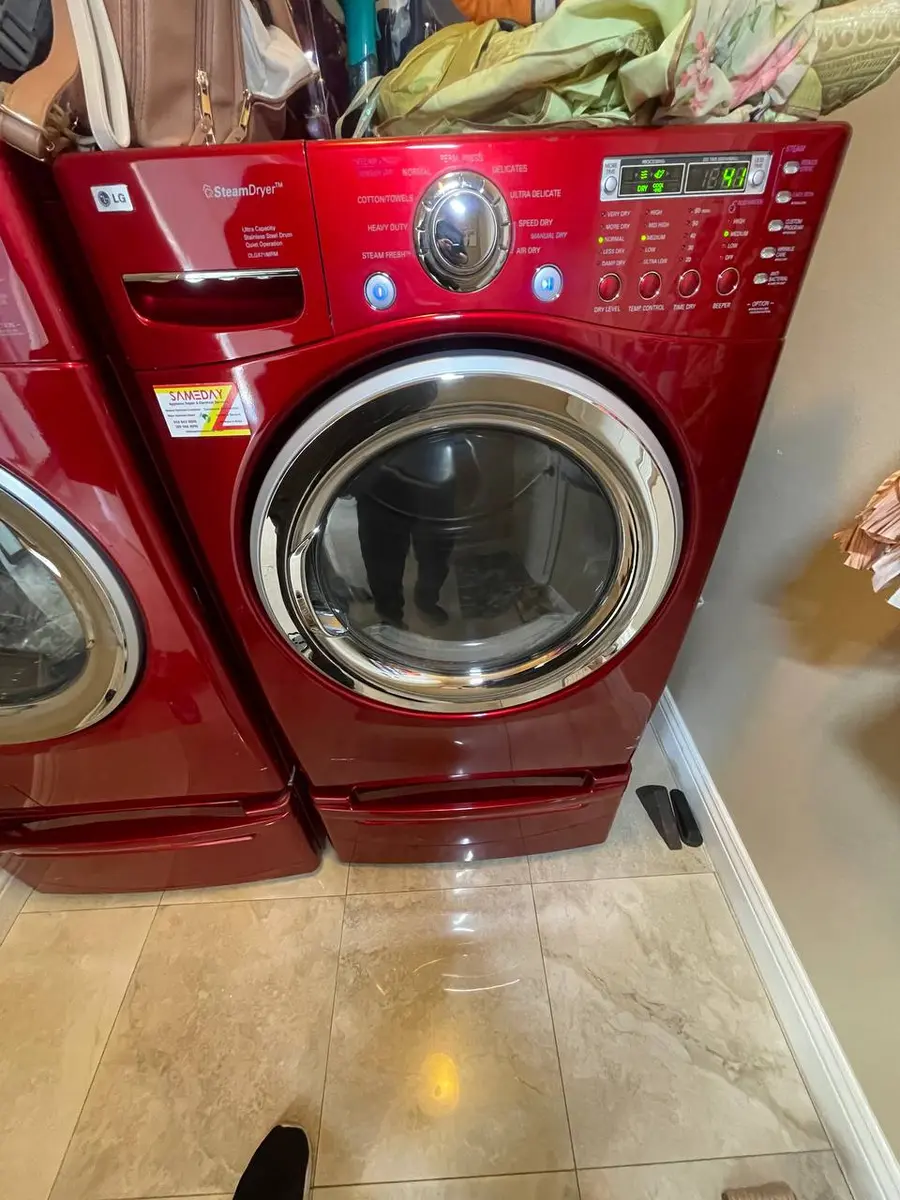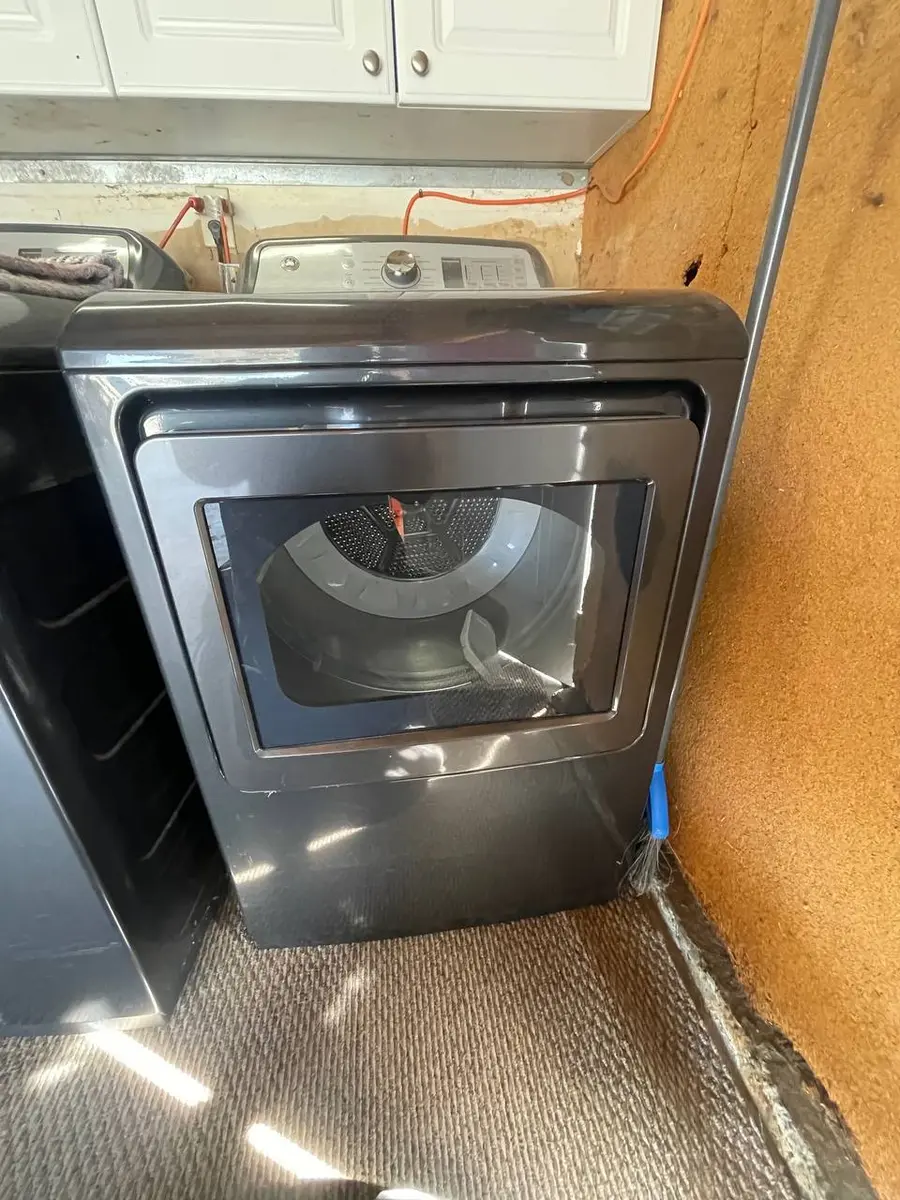
A Kenmore dryer that vibrates or shakes is usually telling you about balance and leveling first, and worn drum-support parts second. Because Kenmore sells rebadged Whirlpool and LG machines, the mechanical fix depends on which platform you have — this guide sorts it out in order.
The likely culprit#
Most likely: an unbalanced load. A single heavy item — a comforter, bath mat, or weighted blanket — bunches to one side of the drum and throws it off balance, producing violent shaking, especially in the first minutes before the load redistributes. Open the door, spread the load evenly, and restart; if the shaking stops it was balance, not a mechanical failure. If the load is even and it still shakes, check leveling next.
Do You Have the Right Tools?
Gas leak detector ($130), thermal fuse tester ($95), belt tension gauge, and vent inspection camera ($180). Our technician arrives with $3,000+ in professional tools — your diagnostic is free.
Licensed & Insured · 90-Day Warranty · Same-Day Service
Safety first#
Do not overload the dryer — excess weight accelerates roller and glide wear and increases startup torque on the belt.
Ranked causes at a glance#
Start at the top — the first three are quick, no-tools checks; the last two are the mechanical failures, split by platform:
| Likely cause | How common | What you'll notice / what to check |
|---|---|---|
| Unbalanced load | Most common | Violent shaking early in the cycle that settles once a bunched item redistributes. |
| Not level / feet not seated | Very common | Rocks on the floor; a spirit level shows it off side-to-side or front-to-back. |
| Soft or uneven floor | Common | Vibration amplified on carpet, plywood, or cracked concrete and transmitted through the house. |
| 110-series (Whirlpool platform) worn drum rollers | 30% of mechanical cases | Rumble that rises with speed; play at the rear support rollers on their shafts. |
| 796-series (LG platform) worn drum rollers | 25% of mechanical cases | The same rumble on an LG-built Kenmore; rollers 4581EL2002C worn as a pair. |
Safety First — Know the Risks
Gas dryers carry carbon monoxide and explosion risk. Even electric dryers involve 240V circuits that can deliver a fatal shock. Our techs are licensed and insured — let them handle the risk.
Licensed & Insured · 90-Day Warranty · Same-Day Service
Working through each cause#
1. Unbalanced load (most common)#
One heavy or bunched item shifts the drum's center of mass and the machine shakes hard until the tumble redistributes it. Stop the cycle, open the door, and spread the load around the drum evenly. If the vibration disappears on restart, nothing is broken — it was simply an uneven load.
2. Leveling and the feet#
All four feet must sit firmly on the floor with the dryer level side-to-side and front-to-back. Set a spirit level on top and check both directions. On many 110-series models the rear feet are self-adjusting: tilt the dryer forward about 4 inches (lift the front and let the rear drop), then set it back down so the rear feet reseat. Adjust the front feet by hand and lock their nuts.
3. Floor surface#
A soft or uneven surface — carpet, a plywood subfloor, cracked concrete — amplifies and transmits vibration through the house structure. Move the dryer onto a solid, level base if you can. A set of four dense rubber or urethane anti-vibration pads under the feet noticeably cuts the vibration passed into the floor.
4. 110-series Whirlpool-platform drum rollers (30% of mechanical cases)#
Whirlpool-built Kenmore dryers carry the drum on two to four support rollers turning on fixed shafts at the rear, and some add front rollers. Each roller is a nylon or rubber tire on a hub with a bushing; years of use wear the bushings, letting the roller wobble on its shaft and the drum shake. The Whirlpool roller kit is part 349241T — replace rollers as a set even if only one looks worn, and check the belt and idler while you are in there.
5. 796-series LG-platform drum rollers (25% of mechanical cases)#
LG-built Kenmore dryers use two rear drum-support rollers, LG part 4581EL2002C. The diagnosis is the same — spin the rollers by hand with the belt off and feel for drag or play — and you replace both as a pair. Uneven or gritty rotation is the sign the tires and bearings are done.
Also worth a look#
Beyond the rollers, worn drum glides (the plastic pads the front of the drum rides on) let the drum drop and knock, and a stretched belt or a failing idler pulley adds its own thump. If the noise is a periodic thump rather than a steady rumble, inspect the glides and belt tension.
The Real Cost of DIY
Average DIY attempt: $150-400 in tools you may use once, plus the risk of further damage. Our diagnostic visit costs $0 — we find the problem and give you an honest quote.
Licensed & Insured · 90-Day Warranty · Same-Day Service
The short version#
- Unbalanced load — most common; redistribute a bunched item and restart.
- Leveling — very common; level both directions, reseat the self-adjusting rear feet with a 4-inch forward tilt.
- Floor surface — common; a solid base plus anti-vibration pads.
- 110-series rollers — 30% of mechanical; worn bushings, Whirlpool kit 349241T, replace as a set.
- 796-series rollers — 25% of mechanical; LG 4581EL2002C, replace both.
What the repair usually involves#
A vibration repair starts with the free checks — balance, level, floor — and only then opens the cabinet to inspect the rollers, glides, belt, and idler. Worn support parts are replaced in sets so the drum runs true, and the machine is run empty to confirm the shake is gone before the job is called done.
Don't Void Your Warranty
Opening your appliance yourself may void the manufacturer warranty. Our repair comes with a 90-day guarantee, and we document everything for warranty compliance.
Licensed & Insured · 90-Day Warranty · Same-Day Service
Keeping it from coming back#
Split large or heavy loads so nothing bunches, keep the dryer level after you move it, and don't overload the drum — the same habit that stresses the belt also grinds the rollers and glides. Catching a rumble early keeps a cheap roller job from turning into drum and bearing damage.
Is it worth fixing?#
In most cases yes, especially if the dryer is under 8-10 years old — a single worn support set costs far less than a comparable new unit, and Kenmore machines are built to keep running once the wear part is replaced. A professional diagnostic confirms whether repair or replacement is the smarter call.
Is It Worth Your Time?
A dryer not heating could be the element, thermal fuse, gas valve, igniter, or timer. Average DIY diagnosis: 3-4 hours with no guarantee of finding the issue. Our technician diagnoses the issue in about 30 minutes — same-day appointments available.
Licensed & Insured · 90-Day Warranty · Same-Day Service
When to call a professional#
Call a technician if the shaking continues after balancing and leveling, if the fix means pulling the drum to reach rollers, glides, or the belt, or if the dryer is still under warranty. The cost tracks with which support parts are worn and your platform, and a tech can confirm the figure before starting.
When in doubt, book a same-day diagnosis — an EasyBear tech who knows both the Whirlpool and LG Kenmore platforms can pin the cause and quote the repair on the spot.
Appliance Repair Technician · 11 years experience
Experienced technician with 11 years specializing in Frigidaire and Electrolux refrigerator and dryer repair with a focus on safety.