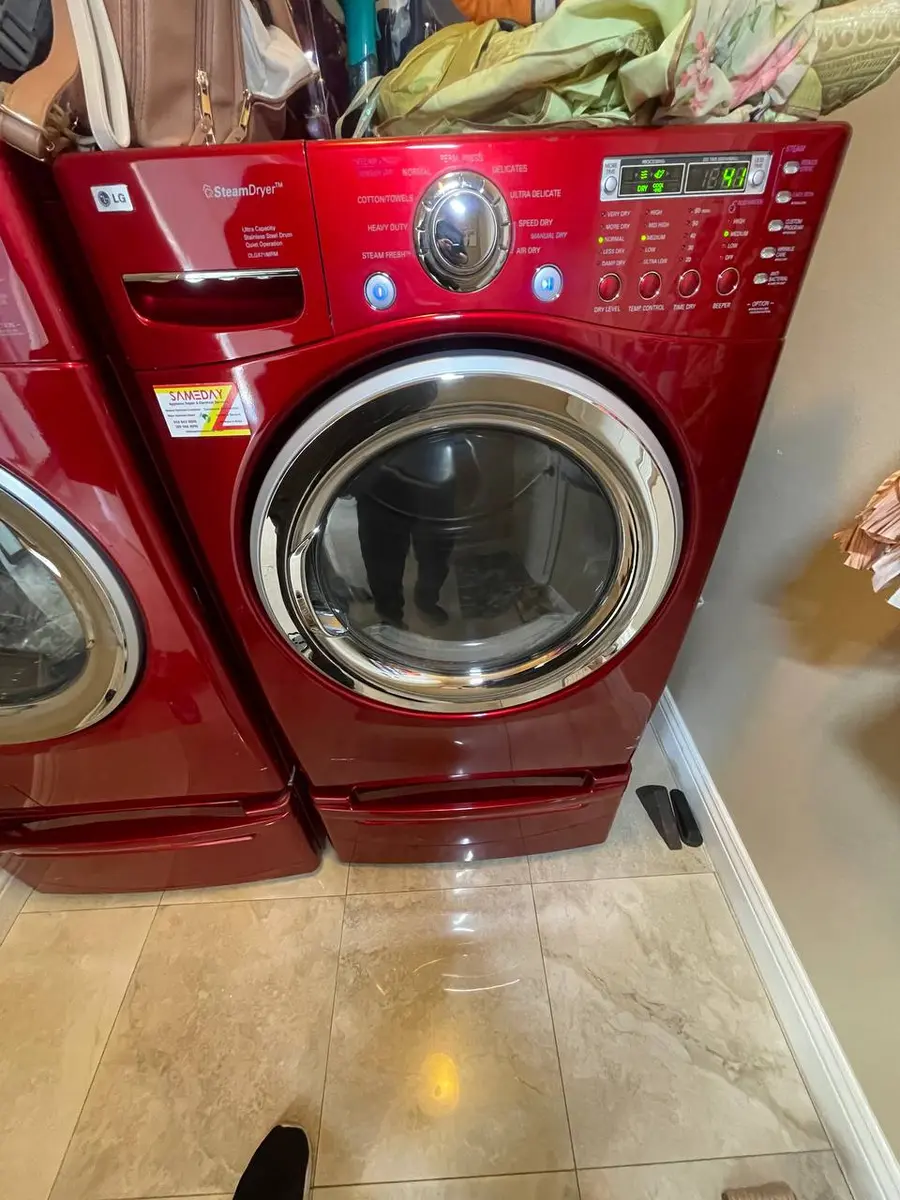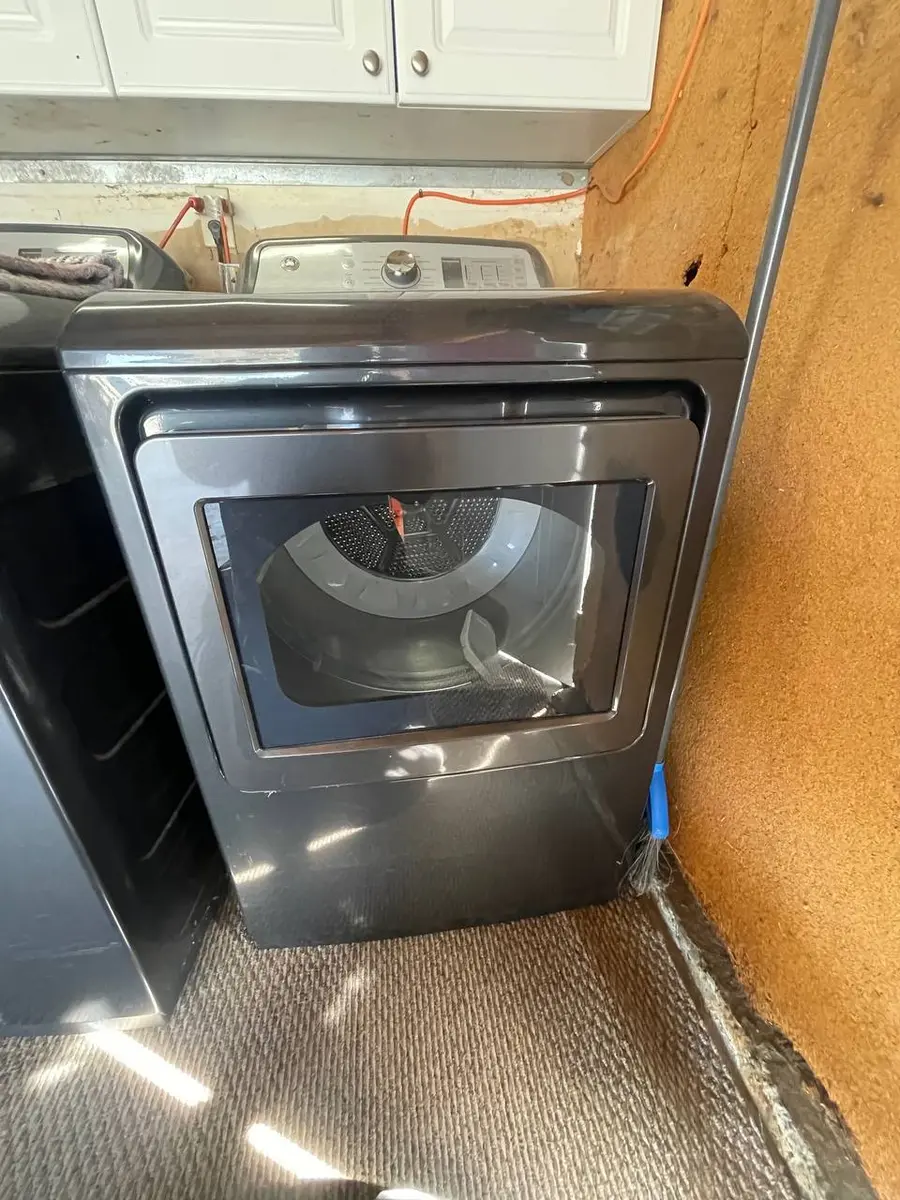
Quick Answer: Why Your Kenmore Dryer Trips the Breaker#
Most likely: something has shorted to ground and the breaker is protecting your wiring. On electric Kenmore dryers — wired to a dedicated 240-volt, 30-amp circuit — the number-one cause is a grounded heating element, where the coil breaks and touches its metal housing. A shorted drive motor or a burnt terminal block is next. Gas models run on a 120-volt, 15- or 20-amp circuit, draw far less current, and usually trip only from a motor short, an igniter-circuit fault, or an overloaded shared circuit. One safe test isolates it: reset once, then run a no-heat cycle before a heated one to see which stage trips.
Likely Causes at a Glance#
| Cause | Likelihood | What to check |
|---|---|---|
| Heating element grounded (electric) | Most likely | continuity from an element terminal to the metal housing |
| Drive motor winding short | Common | insulation resistance from a motor lead to the housing |
| Terminal block burnt or loose | Common | blackened terminals or melted cord insulation at the rear |
| Door switch internal short | Occasional | breaker trips the instant the door closes |
| Overloaded shared circuit (gas) | Common on gas | other laundry devices on the same 120-volt line |
Do You Have the Right Tools?
Gas leak detector ($130), thermal fuse tester ($95), belt tension gauge, and vent inspection camera ($180). Our technician arrives with $3,000+ in professional tools — your diagnostic is free.
Licensed & Insured · 90-Day Warranty · Same-Day Service
Walking Through the Diagnosis#
Work safe. Unplug the dryer and reset the breaker before opening anything; on a gas model close the gas valve first, and Bay Area or Sacramento homeowners on PG&E should know where that valve is. Two rules matter most: never swap in a higher-rated breaker to stop the tripping — a 30-amp breaker is sized to protect the ten-gauge wire in your wall, and upsizing risks a fire — and if the breaker trips immediately every time, do not keep resetting it, because each trip pushes real short-circuit current and creates an arc-flash risk.
Kenmore is a badge over several platforms, so identify yours first: 110-series dryers ride the Whirlpool platform, 796-series the LG platform, and 417-series the Electrolux platform. On an electric model, start at the heating element behind the rear panel (four screws on the 110-series). Inspect the coil for a break or a spot where it sags onto the housing, then meter each element terminal to the metal housing — any continuity there is a ground fault, and that is what trips the breaker. The LG 796-series element (part 5301EL1001J) is reached from the lower front but tests the same way. Replace a grounded element rather than nursing it.
If the element is clean, test the motor. Disconnect the motor leads and measure insulation resistance from each lead to the housing; anything under one megohm means the winding insulation has broken down and the motor is shorting — often only after it warms up, so the trip may arrive a few minutes in. Then inspect the terminal block where the power cord lands: loose screws and corrosion build heat, which chars the block and eventually arcs. Blackened terminals or melted insulation mean the block, and probably the cord, need replacing. A shorted door switch is rarer but trips the moment the door closes.
For a gas dryer, current draw is small, so start with the circuit itself: gas dryers often share a 120-volt line with a washer, lights, or an iron, and the combined load — not the dryer — trips the breaker. If the dryer is alone on its circuit, suspect a motor short or a short in the igniter wiring, either of which can spike a 15-amp breaker at start.
To pin the fault without guesswork: reset the breaker and plug in without starting — an immediate trip points to the cord or terminal block. If it holds, run a no-heat or fluff cycle; a trip there means the motor. If the motor runs clean on no-heat, switch to a heated cycle; a trip now means the heating element is grounded.
Repair or Replace? The Short Version#
Rule of thumb: if the repair runs under about half the price of a comparable new dryer and yours is under eight to ten years old, fixing it wins — a grounded element, a terminal block, or a cord is an inexpensive, targeted repair. Only stacked failures on an older machine tip toward replacement. Our technicians carry Kenmore elements, motors, and terminal blocks for the 110, 796, and 417 platforms and confirm the short with a meter first — book a repair.
Safety First — Know the Risks
Gas dryers carry carbon monoxide and explosion risk. Even electric dryers involve 240V circuits that can deliver a fatal shock. Our techs are licensed and insured — let them handle the risk.
Licensed & Insured · 90-Day Warranty · Same-Day Service
Frequently Asked Questions#
Can I just install a bigger breaker to stop the tripping?#
No — never upsize the breaker. It is sized to protect the wire in your wall; a 30-amp breaker guards ten-gauge wiring, and fitting a larger one risks the wiring overheating into a fire. Fix the short instead.
How do I tell whether it is the element or the motor?#
Isolate by cycle. Reset, then run a no-heat cycle: a trip there points to the motor. If it holds and only a heated cycle trips, the heating element is grounded.
Why does my gas Kenmore dryer trip but an electric one would not?#
Gas dryers draw only a few amps and share a 120-volt circuit, so the trip is often an overloaded circuit rather than the dryer. Move other devices off that line, and if it still trips, suspect the motor or igniter wiring.
Is it safe to keep resetting the breaker while I wait for a repair?#
No. Each reset sends short-circuit current through the fault and stresses the breaker. Reset once to confirm the symptom, then leave it off and unplug the dryer until it is repaired.
Appliance Repair Technician · 11 years experience
Experienced technician with 11 years specializing in Frigidaire and Electrolux refrigerator and dryer repair with a focus on safety.