GE Dryer Takes Too Long? Causes & Fix
Most likely a lint-restricted exhaust vent is the reason your GE dryer takes too long — it's the number-one cause by a wide margin — but a weak heating element, a mis-cycling thermostat, a fouled moisture sensor, a partly-blown thermal fuse, or a gas-valve fault can each stretch dry times, so clean the full vent run…
Electric or gas: how a GE dryer makes heat#
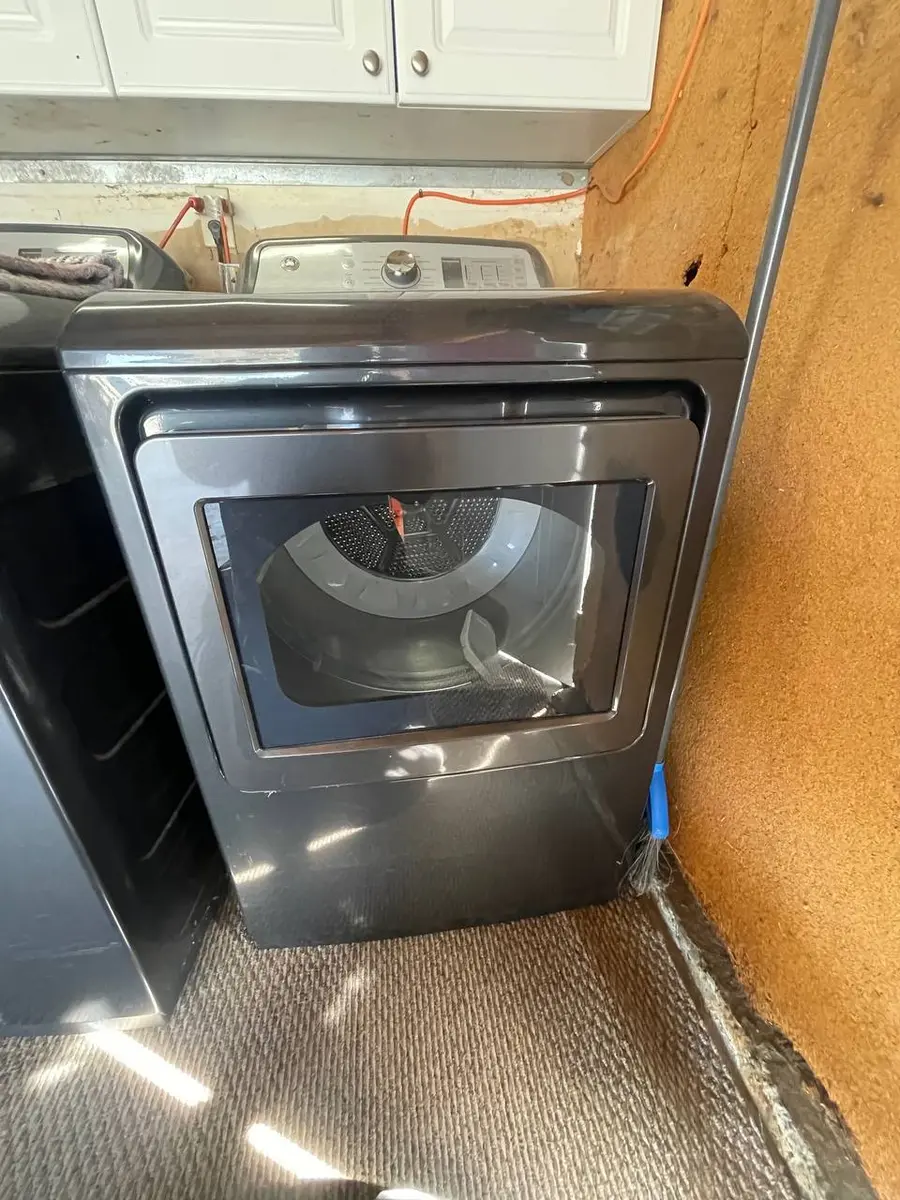
GE dryers share one drum drive — belt WE12M29, idler pulley WE12X10014, and motor WE17X10010 — but differ in heat. GFD electric models use a 240-volt heating element (WE11M10001) behind the rear panel, guarded by a thermal fuse (WE04X10120) and a cycling thermostat. GTD gas models burn gas through an igniter, flame sensor, and valve solenoids (WE14X215) on a standard 120-volt plug. Both use the Sensor Dry system — two metal bars in the drum that read moisture and end the cycle — so a slow dry can come from heat, airflow, or sensing.
Work safely#
- Electric (GFD): unplug from the 240-volt outlet — that is lethal voltage.
- Gas (GTD): shut the gas supply valve and unplug.
- Either way, dryer lint is highly flammable — clean the screen and inspect the vent before any work.
- Never bypass the thermal fuse or safety thermostats.
Do You Have the Right Tools?
Gas leak detector ($130), thermal fuse tester ($95), belt tension gauge, and vent inspection camera ($180). Our technician arrives with $3,000+ in professional tools — your diagnostic is free.
Licensed & Insured · 90-Day Warranty · Same-Day Service
Causes at a glance#
| Likely cause | What you'll notice | Share of cases | First move |
|---|---|---|---|
| Restricted exhaust vent | Long dry, hot damp drum | 45% | Clean the full vent run |
| Weak heating element | Warm, not hot; slow dry | 20% | Test the element resistance |
| Cycling thermostat off | Heat cuts out early | 12% | Test the cycling thermostat |
| Fouled moisture sensor | Auto cycles end too soon/late | 10% | Clean the Sensor Dry bars |
| Partly-blown thermal fuse | Little or no heat | 8% | Test the thermal fuse |
| Gas valve fault (GTD) | Weak or intermittent flame | 5% | Check the valve solenoids |
Working through the causes#
Restricted exhaust vent (45%). This is the top cause by far. Lint builds in the duct between the dryer and the outside vent, choking airflow, so the element still heats but the hot, moist air cannot escape and clothes dry slowly. Clean the entire run — not just the lint screen — from the dryer to the exterior hood, and confirm the flap opens freely. Long attic or wall runs common in Sacramento homes clog fastest.
Weak heating element (20%, electric). A 240-volt element (WE11M10001) that is partially open puts out less heat, so the drum feels warm rather than hot and dry times stretch. Test its resistance — a healthy element reads roughly 8 to 15 ohms; a much higher or open reading means it is failing.
Cycling thermostat off (12%). The cycling thermostat regulates temperature by switching the element on and off. One that opens too early cuts heat short, so the load never fully dries. Test it for correct switching; a thermostat stuck open leaves the dryer with no heat at all.
Fouled moisture sensor (10%). The Sensor Dry bars read moisture to end the cycle, and fabric-softener film on them fools the reading, ending Auto cycles early or running them long. Clean the two bars with fine sandpaper and rubbing alcohol to restore accurate sensing.
Partly-blown thermal fuse (8%). The thermal fuse (WE04X10120) is a one-shot safety on the blower housing; if a restricted vent overheated it, it may cut heat entirely or intermittently. Test it for continuity, replace if blown — and fix the vent restriction that blew it, or the new one follows.
Gas valve fault (5%, gas). On GTD models, weak or intermittent solenoids (WE14X215) give a flame that lights late or drops out, so heat is inconsistent and drying drags. Watch the burner cycle and test the solenoids if the flame is unreliable.
Safety First — Know the Risks
Gas dryers carry carbon monoxide and explosion risk. Even electric dryers involve 240V circuits that can deliver a fatal shock. Our techs are licensed and insured — let them handle the risk.
Licensed & Insured · 90-Day Warranty · Same-Day Service
Read the codes#
GE's Service Mode narrows it fast: with the dryer in standby, hold Delay Start and My Cycle for three seconds until the display shows "88" then "t1," and press Start to step through the element, thermistor, motor, moisture-sensor, and drum tests. Codes are E1 (thermistor open), E2 (thermistor short), E3 (door switch), and E5 (exhaust high temp) — E5 in particular points back at a restricted vent.
Preventing a repeat#
- Clean the lint screen before every load and wash it monthly to clear dryer-sheet film.
- Have the vent professionally cleaned yearly, especially on runs over about 15 feet.
- Clean the Sensor Dry bars monthly so Auto cycles judge dryness correctly.
GE dryer taking forever? Our technicians diagnose vents, elements, and sensors same-day across Sacramento and the Bay Area. Book your repair.
Senior Gas Appliance Specialist · 18 years experience
AGA-certified gas appliance specialist with 18 years of experience in residential and commercial oven, range, and cooktop repairs.