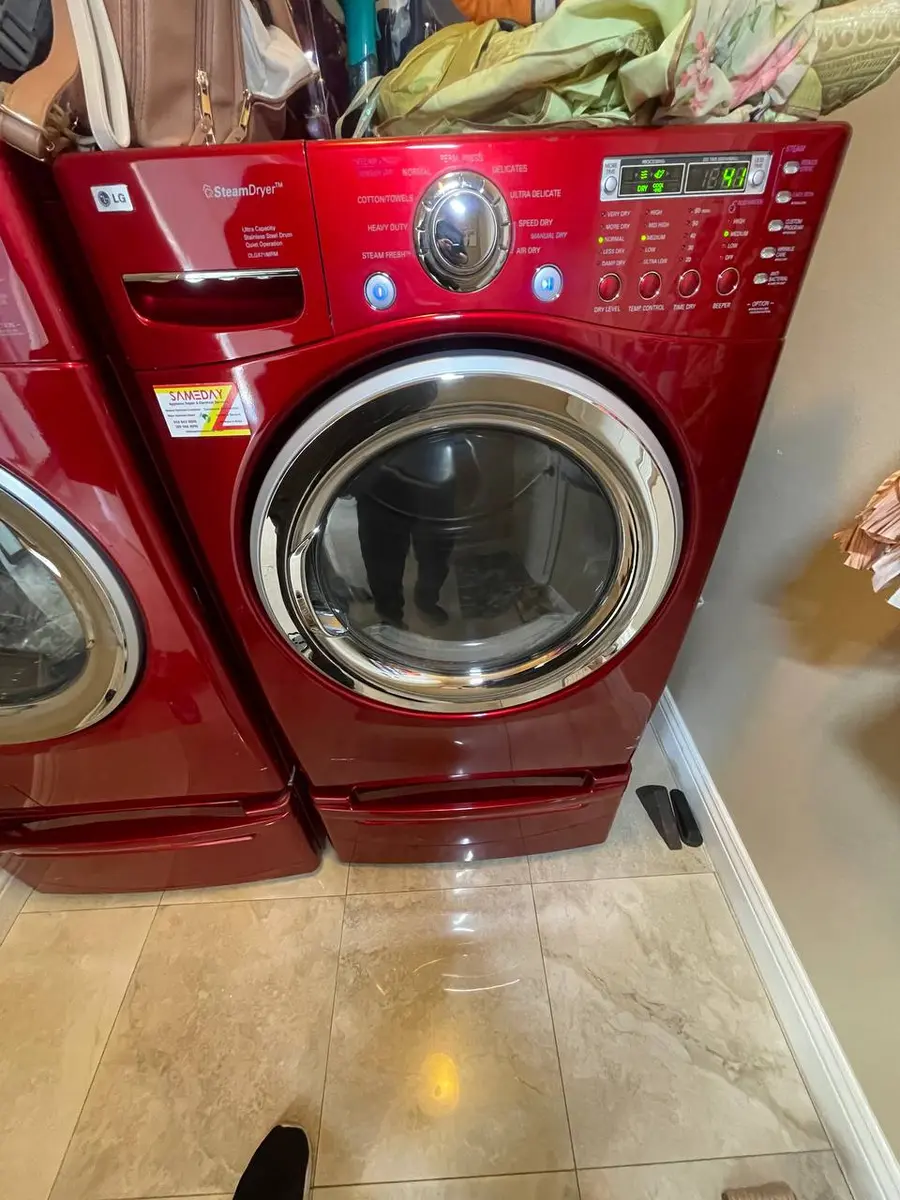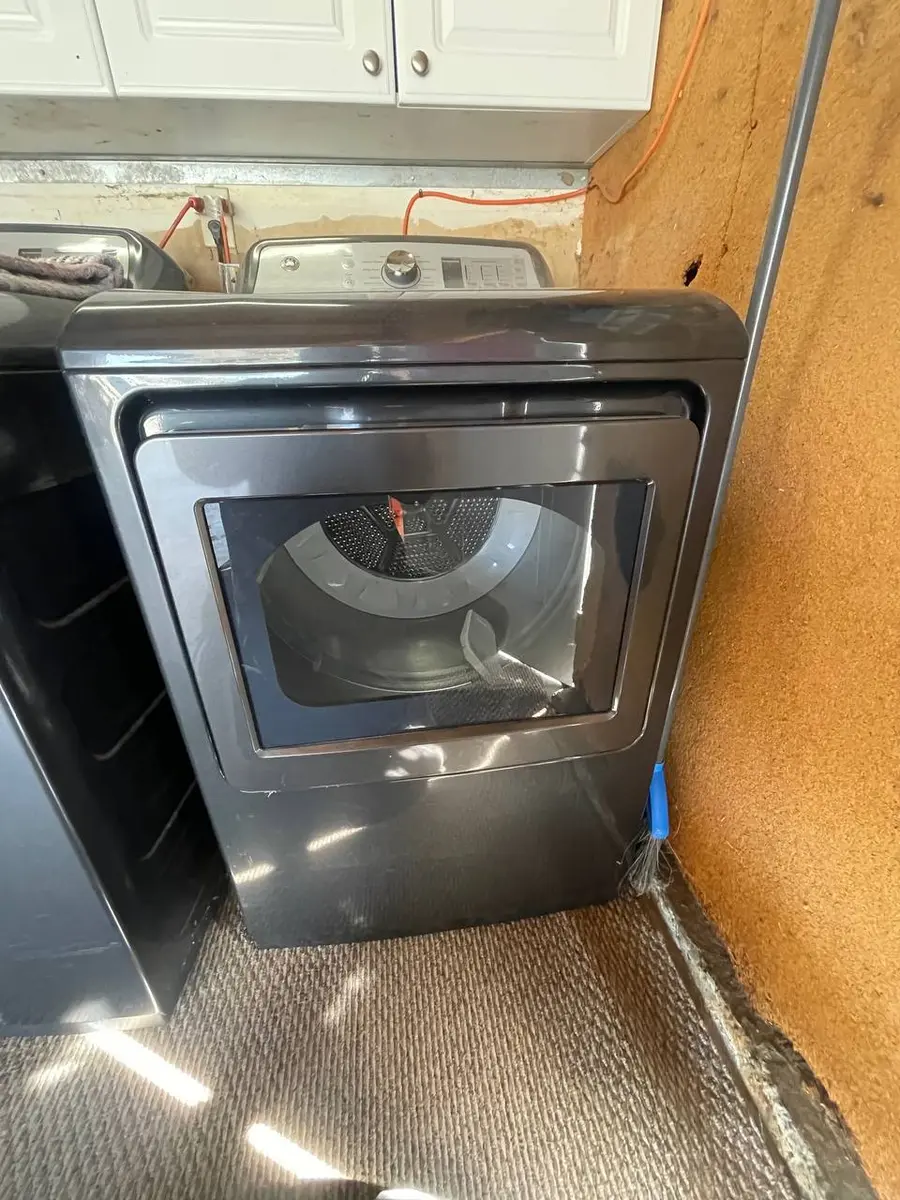
Quick Answer: Why Your Kenmore Dryer Timer Will Not Advance#
Most likely: on a mechanical-timer Kenmore (the 110-series Whirlpool build), the timer is fine and the HEATER is the problem. On an auto-dry setting the timer only advances while the heating element is actually on, so a blown thermal fuse, a dead element, or a gas dryer that will not ignite makes the timer sit still — it is waiting for heat that never comes. The quickest test settles it: switch to a TIMED-dry cycle. If the timer advances there, the timer works and you should chase the heating system; if it stalls on timed-dry too, the timer motor itself has failed.
Likely Causes at a Glance#
| Cause | Likelihood | What to check |
|---|---|---|
| Heating fault (stalls only on auto-dry) | Most likely | does it advance on a timed-dry cycle |
| Timer motor failed (stalls on both) | Common | no faint clicking from the timer while running |
| Worn timer contacts | Occasional | it always stalls at the same point in the cycle |
| Electronic-control model (no timer) | Note | a digital display means the board runs the cycle |
Do You Have the Right Tools?
Gas leak detector ($130), thermal fuse tester ($95), belt tension gauge, and vent inspection camera ($180). Our technician arrives with $3,000+ in professional tools — your diagnostic is free.
Licensed & Insured · 90-Day Warranty · Same-Day Service
Walking Through the Diagnosis#
First, know which dryer you have. This applies to Kenmore 110-series machines built on the Whirlpool platform with a physical dial timer; the newer electronic-control models — late 110-series, the 796-series LG, and the 417-series Electrolux — have no mechanical timer at all, and a stuck cycle there is a control-board or sensor matter instead. Unplug the dryer before removing the control panel, and on a gas model close the gas valve first.
Now the key test, because it prevents the most common wasted repair. The mechanical timer is a cam-and-motor assembly, and on AUTO-dry its motor is wired through the heating circuit: it advances only when the cycling thermostat hands it power as the element runs. So if the element never fires — a blown thermal fuse, a burned-out element, or no gas ignition — the timer freezes, looking broken while it is actually starving for the heat signal. Switch to a TIMED-dry cycle, where the timer advances continuously regardless of heat. If it now marches along normally, the timer is good and the real fault is in the heating system, so test the element, the thermal fuse, and, on gas, the igniter and valve coils.
If the timer will not advance on EITHER setting, the timer motor has failed. Listen while it runs — a healthy timer motor makes a faint, steady click — and silence confirms a dead motor. It is built into the timer, so the fix is the complete assembly (a Whirlpool WP3976576 or the model-specific equivalent): unplug, pull the control panel, photograph every wire, and transfer them one at a time to the new timer to avoid a miswire. A timer that advances through most of the cycle but always stalls at the SAME point instead has a worn contact set, and since individual contacts are not serviceable, that too means replacing the timer assembly.
The single most common mistake here is buying a timer when a thermal fuse or element is the real culprit — always run the timed-dry test first.
Repair or Replace? The Short Version#
Rule of thumb: if the repair comes in under about half the price of a comparable new dryer and yours is under eight to ten years old, repair it — a thermal fuse or element is cheap, and even a full timer assembly is a modest part. Because Kenmore timers are relabeled Whirlpool parts, cross-reference the Whirlpool number, which is usually cheaper for the identical piece. Our technicians carry Kenmore heating parts and timers and run the timed-dry test first — book a repair.
Safety First — Know the Risks
Gas dryers carry carbon monoxide and explosion risk. Even electric dryers involve 240V circuits that can deliver a fatal shock. Our techs are licensed and insured — let them handle the risk.
Licensed & Insured · 90-Day Warranty · Same-Day Service
Frequently Asked Questions#
How do I know if it is the timer or the heater?#
Run a timed-dry cycle. If the timer advances there, it works fine and the fault is in the heating system, because the auto-dry timer only advances while the element is actually on. If it stalls on timed-dry too, the timer motor has failed.
Why does the timer move on timed-dry but not on auto-dry?#
On auto-dry the timer advances only when the heating element is firing, so if the element is not running — a blown thermal fuse or a dead element — the timer waits and appears stuck. Fix the heating system, not the timer.
Can I replace just the timer motor or the worn contacts?#
No. The motor and contacts are built into the timer assembly and are not serviceable on their own, so a failed motor or a worn contact set means replacing the whole timer.
My Kenmore dryer has a digital display — does this apply?#
No. Electronic-control Kenmore dryers have no mechanical timer; the control board runs the cycle. A cycle that will not progress there is a board or sensor issue, not a timer.
Appliance Repair Technician · 11 years experience
Experienced technician with 11 years specializing in Frigidaire and Electrolux refrigerator and dryer repair with a focus on safety.