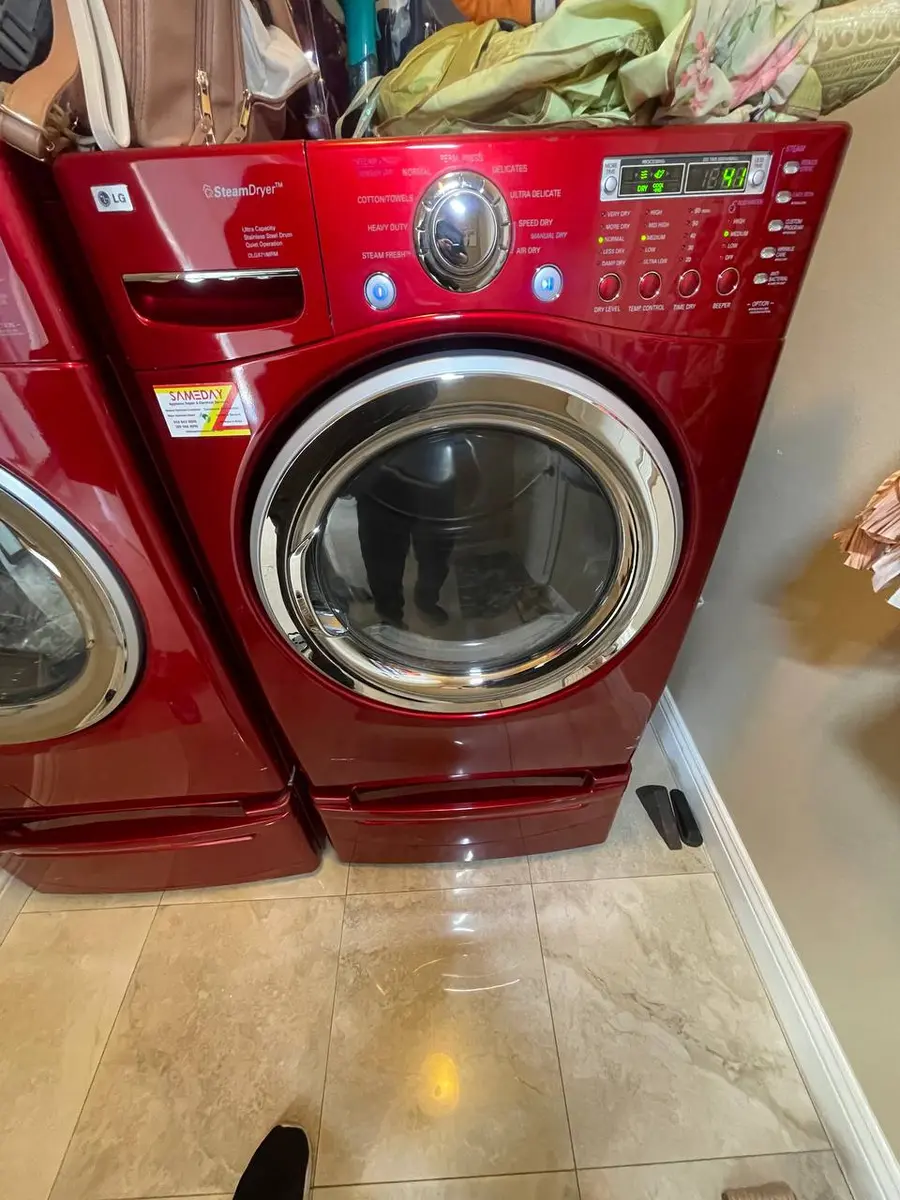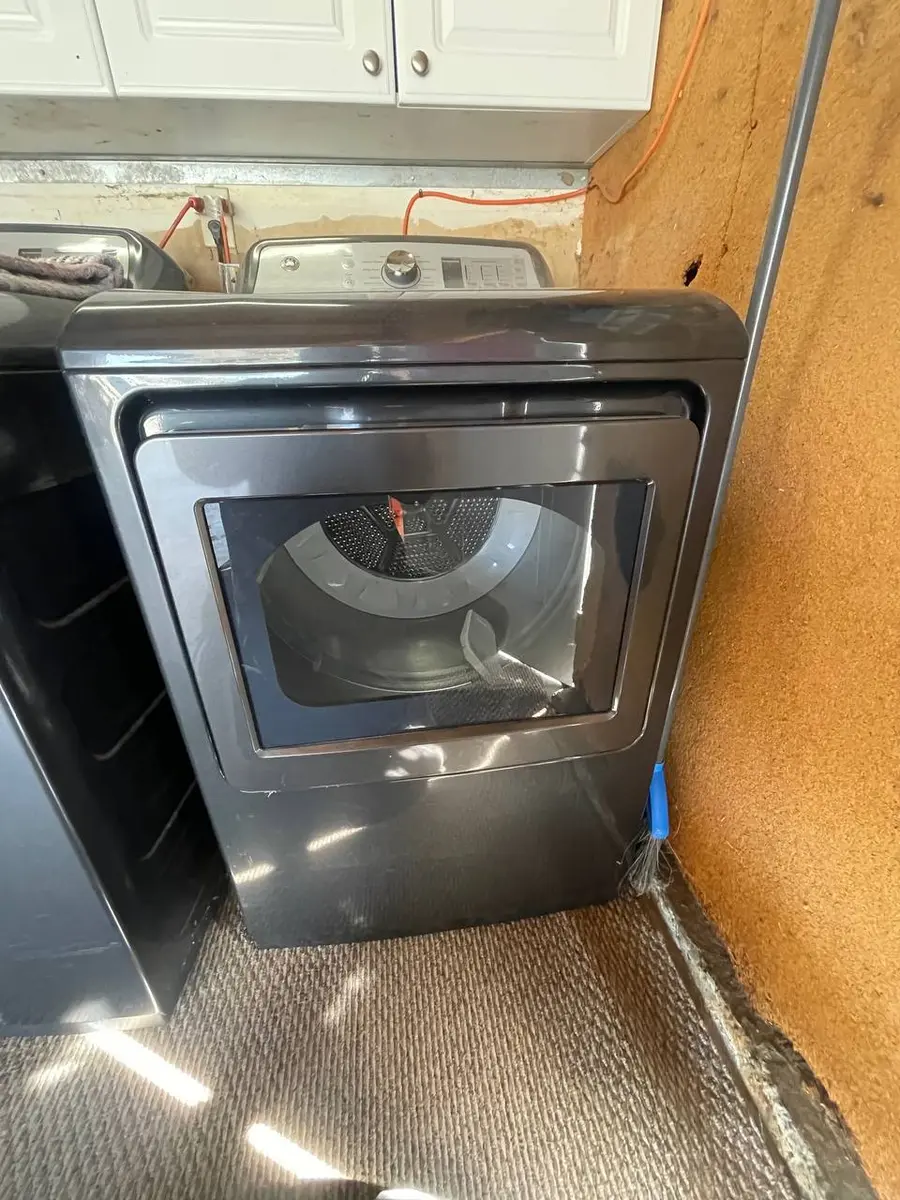
Quick Answer: Why Your LG Dryer Is Overheating#
Most likely: a severely restricted exhaust vent — it causes half of all overheating and is the leading cause of dryer fires, because a blocked duct traps hot, humid air until the drum and cabinet climb past safe temperatures. On LG's DLEX and DLE models the FlowSense indicator exists specifically to warn of this, flashing d90 or d95 as the restriction worsens. A cycling thermostat stuck closed is the next cause, letting the heat run without pause. If clothes come out painfully hot or you catch a burning smell, stop using the dryer and clear the vent before anything else.
Warning Signs#
Clothes emerge extremely hot, the cabinet is hot to the touch, the lint filter is unusually hot when removed, or you see FlowSense showing d90/d95 — any of these, especially with a burning smell or scorched synthetics, means stop and diagnose.
Do You Have the Right Tools?
Gas leak detector ($130), thermal fuse tester ($95), belt tension gauge, and vent inspection camera ($180). Our technician arrives with $3,000+ in professional tools — your diagnostic is free.
Licensed & Insured · 90-Day Warranty · Same-Day Service
Likely Causes at a Glance#
| Cause | Likelihood | What to check |
|---|---|---|
| Severely restricted exhaust vent | Most likely (~50%) | FlowSense d90/d95, long dry times, little lint on the filter (it stayed in the duct) |
| Cycling thermostat stuck closed | Common (~25%) | the element never cycles off; on electric models it glows continuously |
| Clogged internal lint pathway | Occasional (~15%) | lint packed around the blower, motor, and element inside the cabinet |
| Control board heat relay welded | Occasional (~10%) | the element stays on even in air-dry or after the cycle ends |
Walking Through the Diagnosis#
Airflow is the first and most important check. Disconnect the dryer from the duct and brush the entire run clean, clear the exterior cap of lint and debris, and replace any crushed or kinked flex hose with rigid four-inch metal duct — LG recommends rigid for FlowSense accuracy and caps the run at roughly 25 feet with deductions for each elbow. Run a timed cycle afterward and confirm FlowSense clears.
If the vent is genuinely clear and the dryer still overheats, move to the thermostat. Locate the cycling thermostat on or near the blower housing; at room temperature it should read continuity (its normal closed state), but if it stays closed when it should open at its rated temperature, it is stuck and needs replacing. On a healthy LG dryer you can hear or see the element cycle every few minutes — an element that never rests confirms the fault. Persisting heat after that points inward: pull the top, front, and rear panels to vacuum internal lint from the filter channel, blower, and element housing, and inspect the felt drum seals for gaps. Finally, an element that runs even in tumble-only or refuses to shut off until you unplug the dryer means the control board's heat relay has welded closed.
Remember that LG stacks four thermal safeguards — cycling thermostat, high-limit thermostat, one-shot thermal fuse, and FlowSense — and all four can be defeated by severe restriction, which is why the vent comes first.
Safety First — Know the Risks
Gas dryers carry carbon monoxide and explosion risk. Even electric dryers involve 240V circuits that can deliver a fatal shock. Our techs are licensed and insured — let them handle the risk.
Licensed & Insured · 90-Day Warranty · Same-Day Service
Repair or Replace? The Short Version#
A vent cleaning or a thermostat is low-cost work that sits far below any repair-or-replace line, and it directly removes a fire risk. Only a welded control board approaches a bigger spend, and even then it is a targeted part on an otherwise sound dryer. If tearing panels off to chase internal lint is not appealing, our technicians clean the system and test the safety chain in one visit — schedule a visit.
Frequently Asked Questions#
My LG dryer has a burning smell — should I stop using it?#
Yes, stop immediately. A burning smell means lint is being heated toward ignition or a component is overheating, so clean the vent system and internal lint pathway before resuming.
My LG dryer's thermal fuse keeps blowing — what's wrong?#
The fuse blows because the dryer is overheating, and the root cause is almost always a restricted exhaust vent. Clean the vent completely; if the fuse still blows with a confirmed-clear vent, a cycling thermostat stuck closed is causing continuous heating.
What does the FlowSense d90 or d95 warning mean?#
FlowSense monitors vent restriction, and d80 means clean soon while d90 or higher means clean now. Rigid metal duct keeps its readings accurate, which is why LG recommends it over flexible hose.
How often should I clean the vent?#
Clean the lint filter every single load and the exhaust vent at least annually, or every six months for long runs. Heavy-use households benefit from a professional interior cleaning every two to three years.
Senior Appliance Repair Technician · 15 years experience
EPA-certified technician with 15 years of experience specializing in refrigerator and cooling system repairs.