LG Dryer Damaging Clothes: Causes & Fix
Match the damage to the part. Tears and snags — the most common — come from a worn drum seal, a cracked baffle, or a stray metal object; brown scorch marks come from restricted airflow concentrating heat; random grease spots come from a leaking drum roller; static pilling comes from over-drying on dirty sensors; and…
The five damage types and their causes#
| Damage you see | Most likely cause | How common |
|---|---|---|
| Tears and snags | Worn drum seal, cracked baffle, or a metal object lodged at the drum edge | 40% of cases |
| Brown scorch marks | Restricted airflow concentrating heat in one spot | 25% of cases |
| Grease or oil spots | A drum roller leaking bearing grease onto the drum | 20% of cases |
| Static and pilling | Over-drying from contaminated moisture sensors | 10% of cases |
| Rust stains | Chipped drum enamel exposing bare steel | 5% of cases |
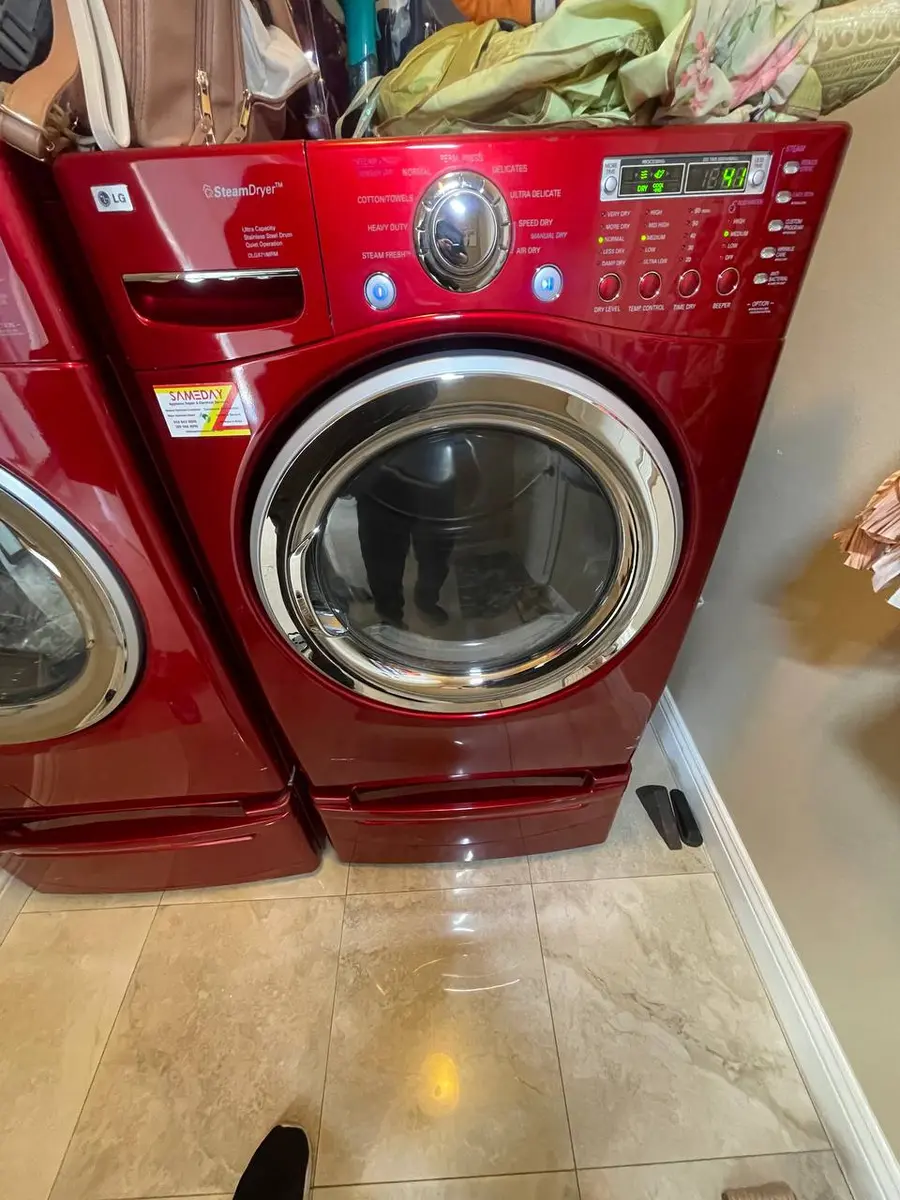
Tears and snags (start here): LG front-loaders (DLEX series) seal the drum front and rear with felt glides that wear and open a gap where fabric catches and tears. Run a hand slowly around the drum with a flashlight, feeling for rough edges and gaps; check the baffles for cracks; and look for a paperclip or underwire lodged at the drum edge. Worn seals are replaceable — the common front felt is 4036EL2004A and the rear is 4036EL2003A.
Scorching: brown marks that land in the same spot each time mean heat is concentrating, almost always from restricted airflow. Clean the exhaust duct first, then check the heating-element housing for lint and the blower wheel for damage; a cycling thermostat stuck closed will also run the element without cutting off. On heat-pump models (DLHX) scorching is rare and points to the refrigerant system.
Grease and rust: random oily spots that don't sit at a fixed drum position usually come from a rear drum roller whose shaft seal is seeping bearing grease — replace the roller kit (4581EL2002C) and wipe the drum with isopropyl alcohol. Rust-colored stains mean the enamel drum has chipped; touch up small chips with high-heat appliance paint.
Static: clingy, pilled synthetics usually mean the load is over-dried because the moisture sensor bars are dirty. Clean the bars with isopropyl alcohol, drop to a lower heat setting, and don't overload.
Do You Have the Right Tools?
Gas leak detector ($130), thermal fuse tester ($95), belt tension gauge, and vent inspection camera ($180). Our technician arrives with $3,000+ in professional tools — your diagnostic is free.
Licensed & Insured · 90-Day Warranty · Same-Day Service
Check it yourself#
- With the dryer off, run a hand and flashlight around the drum for catch points and seal gaps.
- Inspect the baffles for cracks and the drum edge for lodged metal objects.
- Wipe the drum with a white cloth — transferred oil points to a leaking roller.
- Clean the exhaust duct and the moisture-sensor bars.
- Look over the drum surface for enamel chips or rust spots.
Repair or replace?#
Drum seals, a baffle, a roller kit, or a sensor cleaning are all modest fixes on an otherwise good LG dryer, so repair is nearly always worth it — especially under 8 to 10 years old. The one exception is a badly rusted drum, where replacement often isn't economical; a diagnostic visit confirms which case you're in.
Safety First — Know the Risks
Gas dryers carry carbon monoxide and explosion risk. Even electric dryers involve 240V circuits that can deliver a fatal shock. Our techs are licensed and insured — let them handle the risk.
Licensed & Insured · 90-Day Warranty · Same-Day Service
Frequently asked questions#
My LG dryer started snagging clothes after years of fine use — what changed?#
Most likely a felt drum seal has worn through and opened a gap that catches fabric, or a drum roller has begun leaking grease. Both are wear items that typically fail after five to eight years, and both are replaceable parts.
Is it safe to keep using my LG dryer if it's snagging clothes?#
You can keep drying rugged items like towels, but delicate fabrics will keep tearing and the worn edge or gap only gets worse each cycle. It's best to fix the seal or baffle promptly before more clothes are damaged.
Why are there greasy spots on clothes from my LG dryer?#
Random oily spots that don't land in the same place usually come from a rear drum roller whose shaft seal is seeping bearing grease onto the drum. Replacing the roller kit and cleaning the drum with isopropyl alcohol clears it.
Senior Appliance Repair Technician · 15 years experience
EPA-certified technician with 15 years of experience specializing in refrigerator and cooling system repairs.