Most Likely Cause#
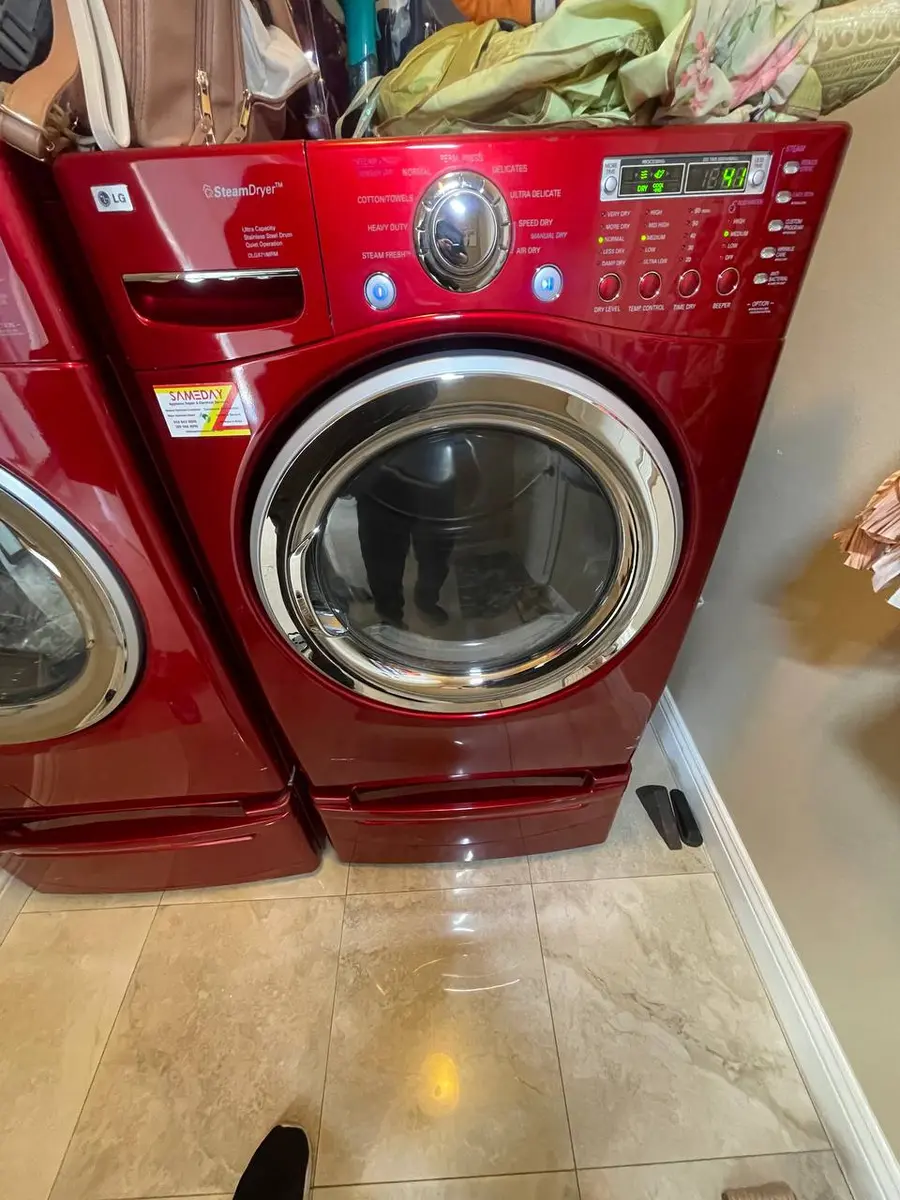
When an LG dryer runs too hot or too cold, the temperature-regulation loop is off somewhere. The most common cause is the thermistor drifting out of calibration, followed by a failed cycling thermostat and — very often overlooked — a restricted exhaust vent that traps heat and drives the drum temperature the wrong way.
LG's DLEX and DLE dryers regulate drum heat with an NTC thermistor and a cycling thermostat. A sensor reading low makes the dryer run hot; a sensor reading high makes it run cold; a stuck thermostat pushes it to an extreme. Knowing which behavior you have narrows the part before you open the cabinet.
Why an LG Dryer's Temperature Drifts#
| Behavior | Cause | Share of cases |
|---|---|---|
| Consistently too hot or too cold | Thermistor drift or failure | 30% |
| Overheats on all settings, or no heat at all | Cycling thermostat stuck closed or open | 25% |
| Runs hot, long dry times, fluctuates | Exhaust vent restriction | 25% |
| Runs below the selected temperature | Heating element partially failed | 15% |
| Wrong temperature with sensors testing good | Control board fault | 5% |
Do You Have the Right Tools?
Gas leak detector ($130), thermal fuse tester ($95), belt tension gauge, and vent inspection camera ($180). Our technician arrives with $3,000+ in professional tools — your diagnostic is free.
Licensed & Insured · 90-Day Warranty · Same-Day Service
How LG Dryers Hold a Temperature#
The NTC thermistor changes resistance as drum-air temperature changes, and the board uses that reading to fire or rest the heating element; the cycling thermostat is the mechanical backstop that opens and closes to cap temperature. When the thermistor drifts, the board acts on a wrong number and the temperature settles off-target. When the cycling thermostat sticks closed, the element never rests and the dryer overheats; stuck open, the element never fires. A restricted vent recirculates hot air so the thermostat trips more often, producing fluctuating rather than steady heat. Each mechanism leaves a different pattern you can read.
Check It Yourself First#
- Clear the vent first. Before condemning any part, disconnect and clean the entire exhaust duct. A clogged vent is the single most common cause of temperature complaints and the easiest to fix.
- Test the thermistor. Measure the NTC thermistor (part 6323EL2001B on many models) and compare its resistance to the service value for room temperature; a reading well off spec means it has drifted.
- Check the cycling thermostat. At room temperature the thermostat should read closed. Compare against its rated opening temperature — stuck closed causes overheating, stuck open causes no heat.
- Measure the element. A healthy heating element reads roughly 10 to 20 ohms. A higher reading means a partially broken element producing weak heat, so the dryer runs cool despite firing continuously.
- Suspect the board last. If the vent is clear and the thermistor, thermostat, and element all test good, the control board is the remaining suspect for wrong heating behavior.
Safety First — Know the Risks
Gas dryers carry carbon monoxide and explosion risk. Even electric dryers involve 240V circuits that can deliver a fatal shock. Our techs are licensed and insured — let them handle the risk.
Licensed & Insured · 90-Day Warranty · Same-Day Service
Repair or Replace?#
A vent cleaning is free, and a thermistor or cycling thermostat is an inexpensive part. A heating element is moderate; a control board is the costly exception — get a firm quote before replacing a board, and weigh it against the age of the dryer.
When to Call a Pro#
Call for service if the vent is clear and the sensors test good, pointing to the element or board, or if you are not comfortable measuring resistance. Element and board work benefits from proper meters and the LG service values.
The Real Cost of DIY
Average DIY attempt: $150-400 in tools you may use once, plus the risk of further damage. Our diagnostic visit costs $0 — we find the problem and give you an honest quote.
Licensed & Insured · 90-Day Warranty · Same-Day Service
Prevent Temperature Problems on Your LG Dryer#
Most temperature complaints start at the vent, so make duct maintenance a habit. Clean the lint screen every load and have the full exhaust duct cleared once a year, or more often with a long run or many turns — a restricted vent both raises drum temperature and shortens the life of the element and thermostat by making them cycle harder. Keep the area behind the dryer open so the exhaust is not pinched, and if you notice dry times creeping up, check the vent before the drying feels off, since airflow loss shows up as time before it shows up as wrong heat.
LG dryer running too hot or too cold? Book an EasyBear technician — we test thermistors, thermostats, and elements on DLEX and DLE dryers.
Senior Appliance Repair Technician · 15 years experience
EPA-certified technician with 15 years of experience specializing in refrigerator and cooling system repairs.