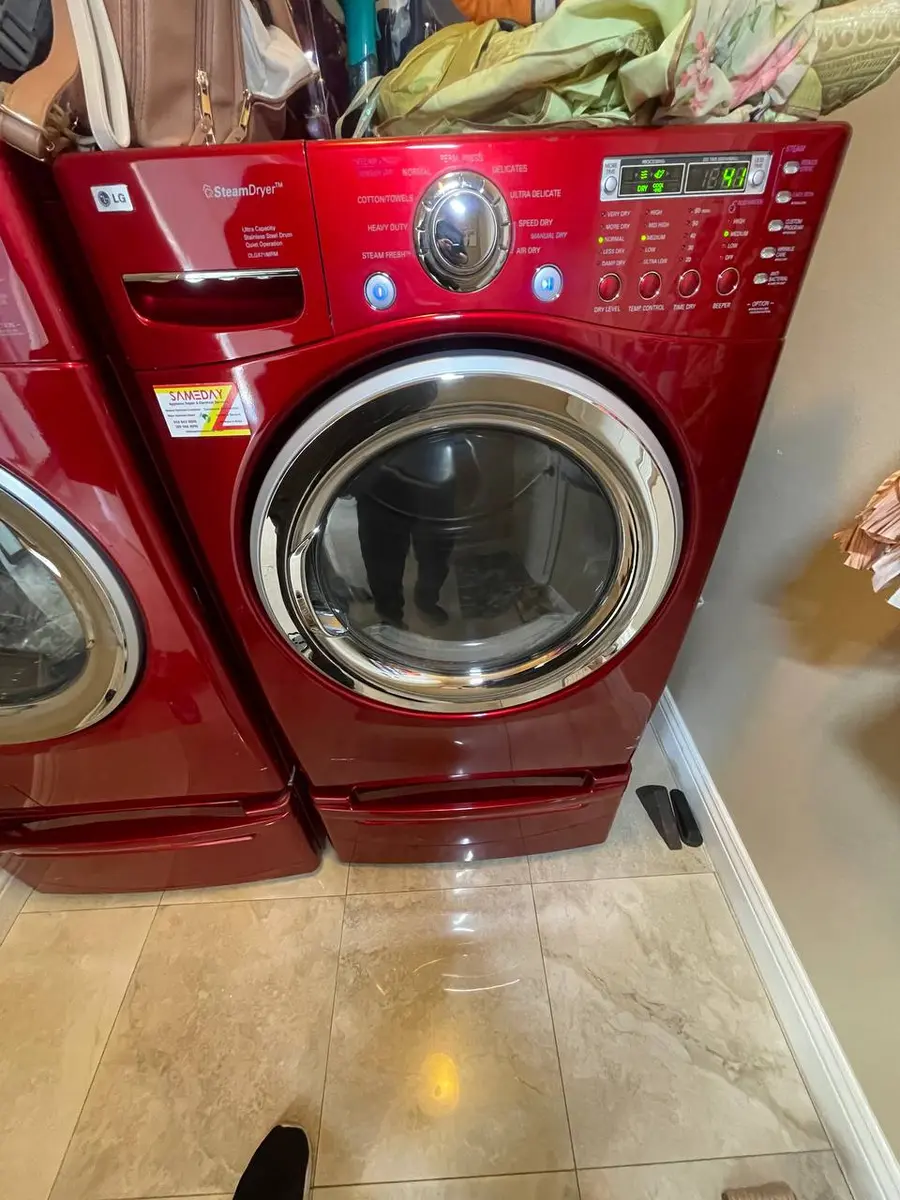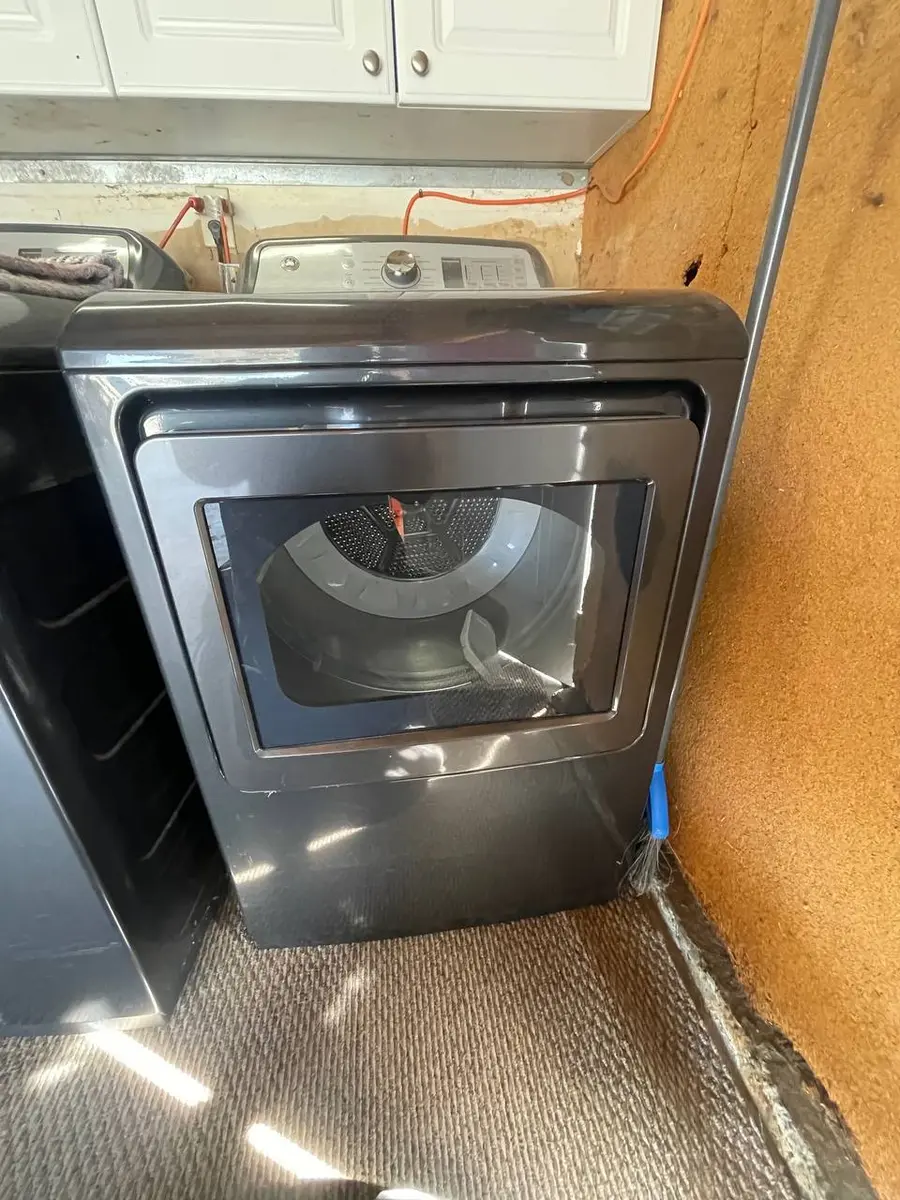
Kenmore Dryer Burning Smell? Causes & Fix
Most likely lint has built up on the heating element — the classic and genuinely dangerous fire risk on 110-series Whirlpool-built Kenmore dryers — so stop the dryer now; but worn drum glides, a frayed belt, a failing motor bearing, or a melted foreign object can each smell of burning, and which one it is depends…
Stop the dryer right now#
A burning smell is not something to run out. Stop the cycle immediately — do not let it finish:
- Press Stop/Cancel and open the door.
- Unplug the dryer or switch off its breaker.
- On a gas dryer, also shut the gas supply valve behind the unit.
- Look inside the drum for anything caught on the element housing or wedged between the drum and front bulkhead.
Dryer fires cause roughly 2,900 house fires a year, and a burning smell means heat is reaching something that should not be hot. Investigate before you run another load.
Identify your platform#
Kenmore rebadges three builders, and each hides lint differently:
- 110.xxxxx — Whirlpool: the heating element sits in a rear cylindrical can directly in the airflow, so lint collects right on the element coils. This platform carries the highest lint-fire risk.
- 417.xxxxx — Electrolux: the element is in an open frame behind the drum, and lint gathers around the element wire.
- 796.xxxxx — LG: the element lives in a duct housing, which is less prone to lint building on the element itself.
Do You Have the Right Tools?
Gas leak detector ($130), thermal fuse tester ($95), belt tension gauge, and vent inspection camera ($180). Our technician arrives with $3,000+ in professional tools — your diagnostic is free.
Licensed & Insured · 90-Day Warranty · Same-Day Service
Causes at a glance#
| Likely cause | Smell / sign | Share of cases | First move |
|---|---|---|---|
| Lint on heating element (110) | Hot, acrid smell when heat cycles | 35% | Disassemble and vacuum the element can |
| Worn drum glides / felt | Burning with a scraping sound | 25% | Inspect glides and rear felt seal |
| Frayed drive belt | Rubber-burning smell | 15% | Check the belt for glazing/fraying |
| Failing motor bearing | Hot-metal smell, whine | 10% | Test the motor for roughness |
| Melted foreign object | Plastic-burning smell | 8% | Check the drum and element housing |
| Thermostat / wiring fault | Electrical smell | 4% | Inspect wiring and thermostats |
Working through the causes#
Lint on the heating element (35%, 110-series). This is both the most common and the most dangerous cause. On the Whirlpool platform the nichrome element coils sit in a rear can in the airflow path, and over years lint that slips past or around the screen coats those coils. When enough builds up, it ignites as the element cycles on — an acrid, hot smell that recurs every heat cycle. Many 110-series units are 15 to 20 years old and have never had interior lint removed beyond the screen. This calls for disassembling and vacuuming the element can, blower housing, and internal lint paths.
Worn drum glides or felt (25%). The drum rides on plastic glides and a felt seal at the front and rear. As they wear through, the drum's metal edge scrapes bare metal, producing a hot friction smell usually paired with a scraping or squealing sound. Inspect the glides and felt for wear-through and replace them so the drum stops metal-on-metal contact.
Frayed drive belt (15%). The belt (part 349241T on Whirlpool-platform models) wraps the drum and can glaze or fray as it ages, and a slipping or overheating belt gives off a distinct rubber-burning smell. Check it for a shiny, glazed surface or exposed fibers and replace it if it is worn.
Failing motor bearing (10%). A drive-motor bearing that has dried out runs hot and gives a hot-metal smell, often with a whine or hum that grows louder. Spin the motor by hand with the belt off; roughness or resistance means the bearing is going and the motor needs attention.
Melted foreign object (8%). A crayon, pen, or bit of plastic that got past into the drum or lodged near the element can melt and smell sharply of burning plastic. Check the drum interior and the element housing for melted residue and clear it.
Thermostat or wiring fault (4%). A failing thermostat or a scorched wire connection can produce an electrical burning smell without visible lint. Inspect the high-limit and cycling thermostats and their wiring for discoloration or heat damage.
Safety First — Know the Risks
Gas dryers carry carbon monoxide and explosion risk. Even electric dryers involve 240V circuits that can deliver a fatal shock. Our techs are licensed and insured — let them handle the risk.
Licensed & Insured · 90-Day Warranty · Same-Day Service
Diagnostic flowchart#
Narrow it fast by pattern. Is the smell only during tumbling, or constant? During tumbling points to drum glides, the belt, or a foreign object; constant points to lint on the element or a vent blockage. Is there a scraping sound? Yes means drum glides. Does the exterior vent have strong airflow? Weak airflow means a blocked vent trapping heat; strong airflow with a smell sends you to lint on the element or a thermostat. Then use your platform: a 110-series unit gets the element can inspected first.
Why the 110-series carries extra risk#
The Whirlpool-built 110-series has been the subject of multiple safety advisories tied to lint-fire risk, and the reason is structural: the heating element sits in a rear cylindrical can directly in the airflow, so lint that escapes the screen settles right on the hot coils. Many of these dryers have been in Sacramento-area homes for 15 to 20 years or more and have never had the interior cleaned beyond the lint screen, so decades of buildup sit inches from an element that glows on every cycle. That combination — old machine, element in the airflow, never deep-cleaned — is what turns a normal amount of stray lint into a recurring burning smell and, eventually, a fire hazard. If you own a 110-series unit that has never been opened and vacuumed inside, treat a burning smell as the warning it is and have the interior serviced before the next load, not after.
The Real Cost of DIY
Average DIY attempt: $150-400 in tools you may use once, plus the risk of further damage. Our diagnostic visit costs $0 — we find the problem and give you an honest quote.
Licensed & Insured · 90-Day Warranty · Same-Day Service
Preventing a repeat#
- Have the interior lint professionally removed — the element can, blower housing, and every internal lint path, not just the screen.
- Clean the lint screen before every load and wash it monthly to clear dryer-sheet film.
- Have the full vent duct brushed and vacuumed yearly.
Burning smell from your Kenmore dryer? Stop using it and have it checked — our technicians service every Kenmore platform same-day across Sacramento and the Bay Area. Book your repair.
Appliance Repair Technician · 11 years experience
Experienced technician with 11 years specializing in Frigidaire and Electrolux refrigerator and dryer repair with a focus on safety.