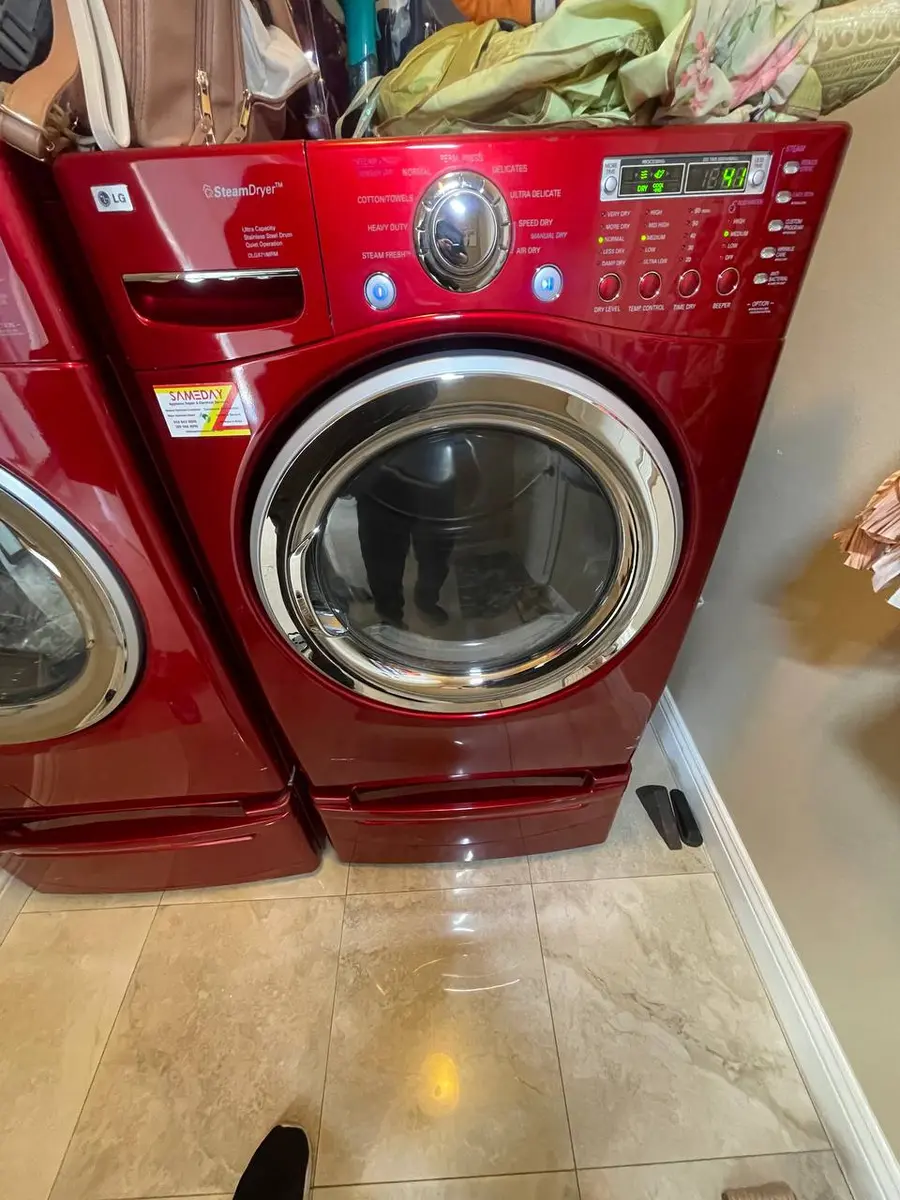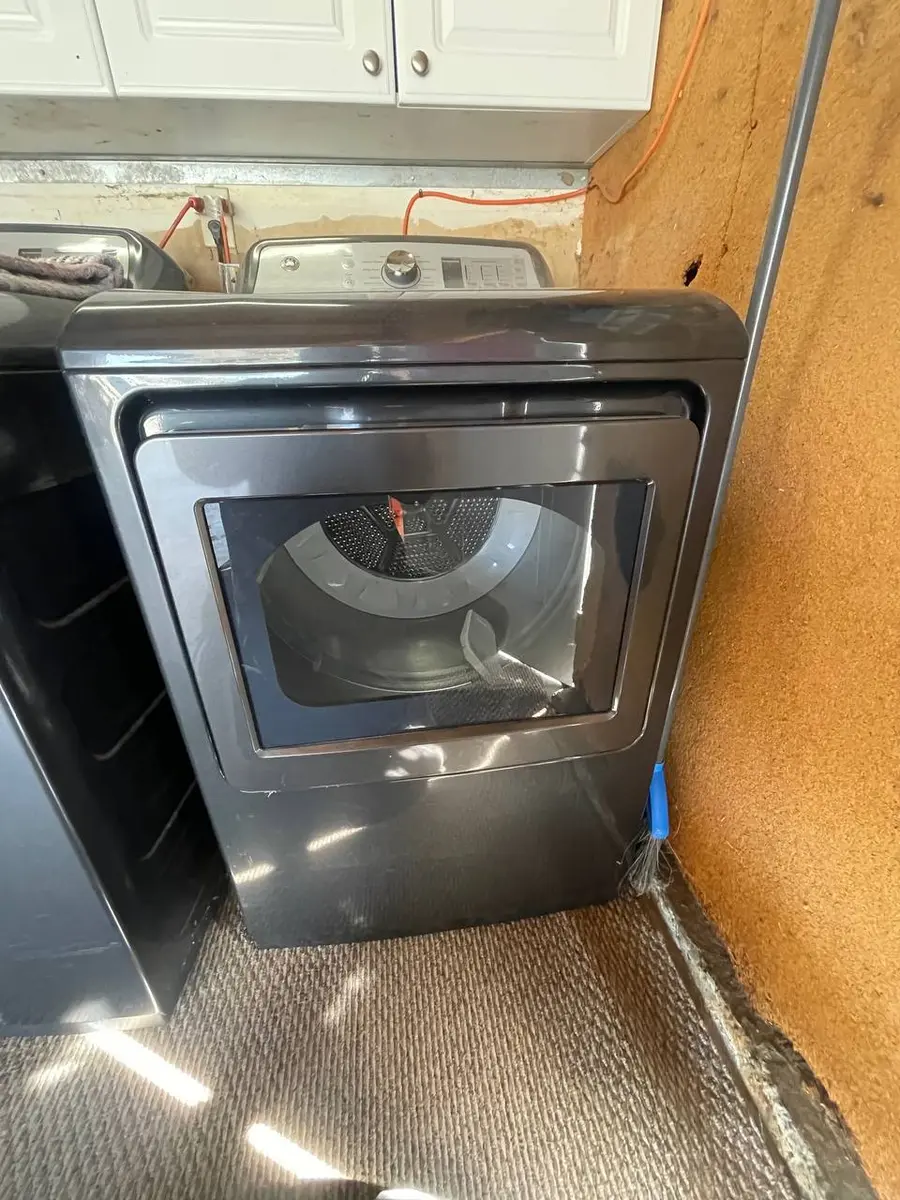
Diagnosing why a Kenmore dryer is not draining requires checking a few key areas — this guide walks through each one. If you are searching for "Kenmore dryer not draining," you likely have one of two situations: a condensation/ventless dryer model that collects water in a reservoir, or you are experiencing water accumulation that seems like a drainage problem but is actually a venting or condensation issue.
Quick Answer#
Diagnosing why a Kenmore dryer is not draining requires checking a few key areas — this guide walks through each one.
Do You Have the Right Tools?
Gas leak detector ($130), thermal fuse tester ($95), belt tension gauge, and vent inspection camera ($180). Our technician arrives with $3,000+ in professional tools — your diagnostic is free.
Licensed & Insured · 90-Day Warranty · Same-Day Service
Identify Your Dryer Type#
| Dryer type | How it removes moisture | Drainage system |
|---|---|---|
| Standard vented (most Kenmore) | Hot air evaporates moisture, exhaust goes through vent to outside | No water drain — moisture exits as vapor |
| Condenser (compact 24" models) | Hot air evaporates moisture, condenser cools vapor back to water | Water collects in reservoir or drains via pump |
| Heat pump (rare in Kenmore) | Same as condenser but recycles heat | Water reservoir or gravity drain |
| Steam-equipped (796-series option) | Has water supply for steam feature | No drainage needed — water supply, not drain |
Condensation Dryer — Reservoir Full or Pump Failed#
If you have a compact Kenmore condenser dryer (typically 24-inch wide, stackable, no exterior vent connection), it uses a condensation system that converts exhaust moisture back to liquid water. This water either collects in a removable reservoir (pull-out drawer, usually at the top of the unit) or drains via a small pump through a drain hose.
Reservoir Full (50% of Condenser Dryer Cases)#
The reservoir must be emptied after every 1–2 loads. If it fills up, the dryer stops the cycle. Check the reservoir indicator light (if equipped) and empty the tray.
Our repair teams consistently find wear on the primary failure component as the leading trigger for this issue on Kenmore appliances.
Drain Pump Failure (25% of Condenser Dryer Cases)#
Models with an auto-drain pump route water through a small hose to a floor drain or utility sink. If the pump fails or the hose kinks, water backs up and the dryer may display an error or stop.
Diagnosis: Disconnect the drain hose and check for kinks or clogs. Listen for the pump running — you should hear it cycle briefly during or after the drying cycle. No pump noise = pump failure.
Parts Cost: (drain pump)
Condenser Coils Clogged (25% of Condenser Dryer Cases)#
The condenser heat exchanger must be cleaned regularly. Lint buildup on the condenser fins reduces cooling efficiency, meaning less moisture is extracted from the air and the dryer appears to not "drain" properly (clothes stay damp and the reservoir does not fill as expected).
Fix: Remove the condenser unit (typically accessible from the lower front of the dryer) and rinse under running water. Let it dry completely before reinstalling.
Safety First — Know the Risks
Gas dryers carry carbon monoxide and explosion risk. Even electric dryers involve 240V circuits that can deliver a fatal shock. Our techs are licensed and insured — let them handle the risk.
Licensed & Insured · 90-Day Warranty · Same-Day Service
Vented Dryer — Water Accumulation Is a Venting Problem#
If your standard vented Kenmore dryer (110-series, 796-series, or 417-series) has water pooling inside the drum, dripping from the vent connection, or accumulating on the floor — this is a venting issue, not a drainage issue.
Condensation in the Vent Run (40% of Cases)#
Hot, moist exhaust air condenses when the vent runs through a cold space (attic, exterior wall, unheated garage). The condensed water flows back down the vent pipe and collects at the lowest point — often the dryer connection or a sag in the vent hose.
[Sacramento](/sacramento/sacramento)-area homes with attic-routed vents experience this primarily from November through March when nighttime temperatures drop into the 40s while the dryer exhaust is 150+ degrees F.
Fix:
- Insulate vent runs through unconditioned spaces with foil-faced duct insulation
- Eliminate sags in the vent run — water pools at every low point
- Replace flexible duct with rigid 4-inch aluminum supported every 4 feet
- Ensure continuous downslope toward the exterior cap
Vent Terminated Indoors (15% of Cases)#
Some installations improperly terminate the dryer vent inside the attic, crawlspace, or garage. All moisture from every dryer load dumps into this space, causing condensation on surfaces, mold growth, and water accumulation that eventually runs back toward the dryer or drips onto the ceiling below.
This is a building code violation. The vent must terminate to the exterior of the building through a proper wall or roof cap with a damper.
Vent Cap Blocked (10% of Cases)#
The exterior vent cap can become blocked by lint accumulation, bird nests, or a stuck damper flap. When exhaust cannot exit, moisture condenses inside the vent and runs back into the dryer.
Fix: Inspect the exterior cap from outside the house. The damper flap should open freely when pushed. Clear any obstructions and replace the cap if the damper is stuck or broken.
When "Not Draining" Means "Not Drying"#
Many homeowners describe a dryer that does not dry clothes as "not draining" because they associate moisture removal with drainage. If your dryer tumbles and heats but clothes remain damp:
- Clean the lint filter — a clogged lint filter dramatically reduces airflow and drying efficiency.
- Check the vent for restriction — disconnect the vent at the dryer and run a timed cycle. If clothes dry normally with the vent disconnected, the vent system is restricted.
- Test the heating element — see our "no heat" guide for platform-specific heating system diagnosis.
Your Kenmore dryer issue is likely a straightforward repair. Our Sacramento and Bay Area technicians can diagnose it today. Schedule your repair
When Should You Call a Professional?#
Contact a certified appliance repair technician if:
- The issue persists after the basic troubleshooting steps above
- You notice electrical burning smell, sparking, or any sign of electrical damage
- The repair involves gas connections or high-voltage components
- Your Kenmore dryer is within warranty — professional diagnosis preserves warranty coverage
- You are uncomfortable working with electrical or gas-connected appliances
EasyBear technicians carry Kenmore OEM parts and model-specific diagnostic tools on every service call, eliminating return visits for parts ordering.
Prevention Tips for Your Kenmore Dryer#
Regular maintenance reduces the likelihood of unexpected breakdowns and extends the life of your Kenmore dryer:
- Clean the lint filter after every load — lint buildup reduces airflow and creates a fire hazard.
- Have the dryer vent duct professionally cleaned annually to prevent clogs and overheating.
- Inspect the exhaust vent flap outside your home to confirm it opens when the dryer runs.
Following these maintenance steps can help avoid costly repairs and keep your Kenmore dryer running efficiently for years.
The Real Cost of DIY
Average DIY attempt: $150-400 in tools you may use once, plus the risk of further damage. Our diagnostic visit costs $0 — we find the problem and give you an honest quote.
Licensed & Insured · 90-Day Warranty · Same-Day Service
Frequently Asked Questions#
What should I do if my Kenmore dryer not draining?#
Standard vented Kenmore dryers do not have a drain system — they exhaust moisture as vapor through the vent. If you are searching for "Kenmore dryer not draining," you likely have one of two situations: a condensation/v
How much does Kenmore dryer not draining repair cost?#
Kenmore dryer not draining repair cost varies depending on the specific issue, parts needed, and labor. The diagnostic fee is waived when you proceed with the repair. OEM Kenmore parts may be at the higher end of the range. EasyBear provides an upfront quote after diagnosis with no hidden fees.
Is it worth repairing a Kenmore dryer with not draining?#
In most cases, yes — especially if your Kenmore dryer is under 8-10 years old. Repair costs are significantly less than replacement cost for a new unit. Kenmore appliances are built to last, and a single component failure does not mean the entire unit is failing. A professional diagnostic confirms whether repair or replacement is the better investment.
Appliance Repair Technician · 11 years experience
Experienced technician with 11 years specializing in Frigidaire and Electrolux refrigerator and dryer repair with a focus on safety.