Want a regional phone & address? Pick your area.
Washing Machine Repair & Troubleshooting Guides
Washing machine repair guides covering error codes, drum bearing noise, drainage failures, and DIY fixes for Samsung, LG, and Maytag models.
A broken washing machine stalls your entire household routine. Clothes pile up, trips to the laundromat burn time and money, and ignoring a small leak can cause hundreds of dollars in water damage to your subfloor. These guides help you diagnose the problem accurately — whether it is a drum bearing grinding, a drain pump failing to evacuate water, or an error code flashing on the control panel — so you can decide between a targeted repair and a full replacement.
Front-load washers dominate Bay Area homes and come with their own failure patterns: door boot seal tears that cause slow leaks, spider arm corrosion on the rear drum (especially in Samsung models manufactured 2011-2016), and mold buildup in the gasket that no amount of cleaning tablets fully prevents. Our guides for top-load machines cover the agitator-vs-impeller debate, lid switch failures that halt mid-cycle, and the common transmission issues on Maytag and Whirlpool direct-drive units.
Water hardness varies significantly across California — Sacramento averages 5-7 grains per gallon while parts of the East Bay exceed 15 — and this directly impacts detergent dosing, inlet valve scale buildup, and heater element lifespan. We factor these conditions into every troubleshooting guide.
912 articles
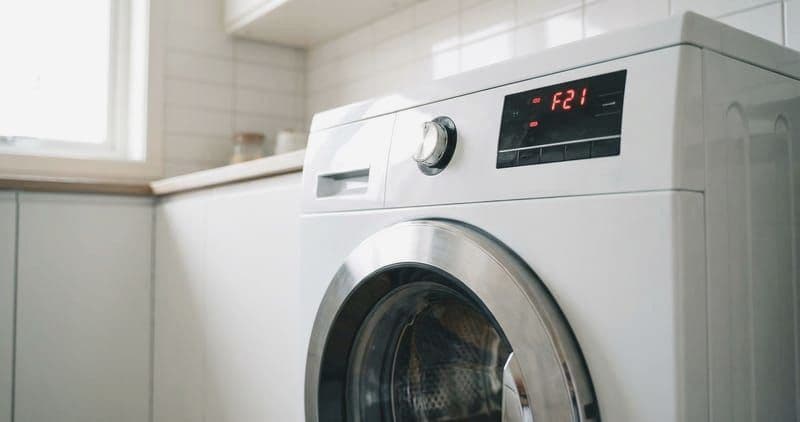
How to Repair Whirlpool Washer Pressure Sensor
An F3 E1 or F3 E2 code on a Whirlpool washer is the water-level pressure sensor — but check the air hose first. Diagnostic entry, hose inspection, sensor test, and swap.
angela-thompson·7 min read
How to Maintain a Whirlpool Washing Machine
A month-by-month maintenance schedule for Whirlpool WFW and WTW washers: monthly Affresh clean cycle and bellow wipe, quarterly filter and hose checks, annual shock and rod tests.
sarah-chen·7 min read
How to Repair a Whirlpool Washing Machine
Repair a Whirlpool washer by fault code: drain pump, door lock, shock absorbers, MCU, and bellow swaps with tech-sheet part numbers and diagnostic-mode testing.
angela-thompson·7 min read
How to Replace a Whirlpool Washer Component
The tech-sheet-driven method for swapping any Whirlpool washer part — carbon brushes, pump, MCU, door lock, or shocks. Read the code, find the folded tech sheet, and work the WFW or WTW access path with the right drivers.
sarah-chen·7 min read
Electrolux Washer-Dryer Combo Error Codes: Fixes
Complete guide to Electrolux washer-dryer combo error codes E10–E52, EH0, EF0, dE1. Covers EWFLW and compact European-size combo units.
Sarah Chen·11 min read
Electrolux Washer-Dryer Combo Error Codes: Fixes
Complete guide to Electrolux washer-dryer combo error codes E10–E52, EH0, EF0, dE1. Covers EWFLW and compact European-size combo units.
Sarah Chen·11 min read
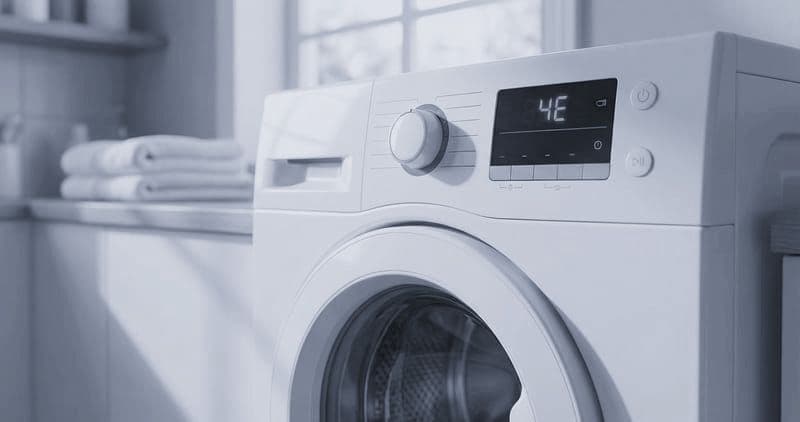
How to Replace Samsung Washer Control Board
Before condemning the board on a WF-series front-loader, reseat every harness — a loose connector imitates board failure exactly. Then it is a 30 to 45 minute swap, photographs first.
angela-thompson·3 min read
How to Replace a Samsung Washer Pressure Switch
PE or OE codes, water out of the detergent dispenser, or a drum that barely fills — the pressure switch or its air tube. Check the tube before you buy the switch.
sarah-chen·4 min read
Samsung Front-Load Suspension Springs: Causes
Thumping in spin and a tub that sits visibly low means the upper suspension springs have stretched. Replace the straps as a set before the tub wears the base frame.
sarah-chen·4 min read

Samsung Washer tE Error: Causes & Fix
tE, tE1 and tE2 codes on a Samsung front-loader point at the temperature sensor in the tub wall. Meter it at room temperature before ordering the model-matched part.
angela-thompson·4 min read
Samsung Washer Vibration and UE Errors: Causes
Samsung washer walking across the floor or throwing DC and UE codes? Separate load and levelling problems from worn shock absorbers DC66-00470A and a failed balance ring.
angela-thompson·4 min read
How to Replace Samsung Top-Load Washer Lid Switch
Fix a Samsung WA-series top-loader that will not start or stops mid-cycle by replacing the lid switch. Covers continuity testing, console access, and the Active WaterJet lid.
david-kim·7 min read
How to Unclog a Samsung Washing Machine
Clear a 5E drain error on a Samsung front-load washer by servicing the debris filter, freeing the drain-pump impeller (DC31-00054A), and flushing the drain hose.
sarah-chen·7 min read
Samsung Washing Machine Won't Drain: How to Fix
Trace a Samsung washer drain failure from the easy clog checks to metering the DC31-00054A pump motor, so you confirm the fault before buying parts. Covers the 5E drain error.
david-kim·8 min read
How to Replace a Samsung Top-Load Washer Clutch
Replace the clutch/brake assembly on Samsung WA-series top-load washers. Fixes spin cycle failures, grinding noises during transition from wash to spin.
sarah-chen·8 min read
How to Replace Samsung Washer Suspension Rods
Banging, walking, or a DC/UE unbalance code on a Samsung washer means worn tub dampers — suspension rods (top-load) or shock absorbers (DC66-00470A). Replace all four.
sarah-chen·11 min read
How to Replace a Samsung Washer Stator and Rotor
Replace the direct-drive motor (stator and rotor) on a Samsung WF/WA washer after a 3E or 8E motor code. Covers hall-sensor checks, rotor bolt removal, stator swap, and a diagnostic spin test.
angela-thompson·8 min read
How to Troubleshoot Samsung Washing Machine Drain
Diagnose a Samsung washer 5E/SE drain fault, standing water, or slow drain: check the drain filter and pump first, then meter components before ordering a part.
angela-thompson·7 min read
How to Replace a Samsung Washer Filter Housing
A Samsung front-loader leaking at the filter cap or throwing a 5E drain error may have a cracked or stripped drain filter housing. Access it, swap it, and leak-test before reassembly.
david-kim·3 min read
How to Disassemble a Samsung Front-Load Washer
Complete disassembly guide for Samsung WF-series front-load washers. Covers top panel, front panel, drum removal, spider arm access, and control board...
sarah-chen·10 min read
How to Remove and Move a Samsung Washing Machine
Disconnect and move a Samsung front-load washer without damage — power, water, and drain disconnection, draining the pump, and reinstalling the three transit bolts before transport.
angela-thompson·7 min read
How to Replace Samsung Washer Direct-Drive Motor
Replace a failed Samsung digital inverter drive motor — rear-panel access, break the 17mm center bolt, slide the motor off the drum shaft, align the shaft key, and test-spin.
david-kim·8 min read
How to Replace Samsung Washing Machine Door Lock
Fix a Samsung washer dE error by replacing the door lock (part DC64-01538A). Covers confirming the failure, boot-seal access without full front-panel removal, and testing.
angela-thompson·8 min read
How to Replace Samsung Washing Machine Boot Seal
Replace a torn or moldy Samsung front-load door boot seal (DC64-00802A) — release the inner and outer clamps, align the drain holes at 6 o'clock, and test for leaks.
angela-thompson·8 min read
How to Fix a Samsung Washing Machine
Route by symptom on a Samsung WF-series front-loader: error codes, VRT Plus vibration, front leaks, weak spin or odour. Includes the spider arm failure that stains clothes rust-orange.
david-kim·4 min read
Samsung Washer Maintenance: Causes & Fix
A Samsung-specific schedule built around the two progressive failures that actually get expensive — spider arm corrosion and boot seal mould. Monthly, quarterly and annual tasks.
david-kim·4 min read
How to Replace Samsung Washer Carbon Brushes
Replace worn carbon brushes on an older brushed-motor Samsung washer (pre-2014). Covers brush access, the wear limit, commutator inspection, and the break-in period.
angela-thompson·7 min read
Samsung Washing Machine Inlet Valve Swap
Clear a 4E or 4C fill error on a Samsung front-load washer by cleaning the inlet screens and, if needed, replacing the dual-solenoid inlet valve from the top of the machine.
sarah-chen·7 min read
How to Replace a Samsung Washer Inlet Valve
Replace the water inlet valve on a Samsung WF front-load or WA top-load washer when it will not fill or throws 4C or 4E. Covers solenoid testing and matching the right part.
david-kim·7 min read
How to Replace Samsung Washer Common Parts
The shared workflow for replacing Samsung WF-series washer parts — boot seal, drain pump, shock absorbers, spider arm, door lock. Covers panel access, connectors, and part-specific fitting tips.
angela-thompson·3 min read