Samsung Washing Machine Inlet Valve Swap
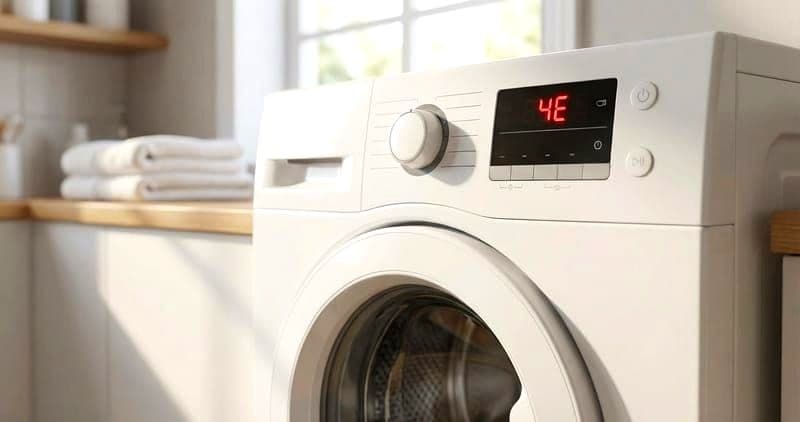
A Samsung washer that throws 4E or 4C, fills slowly, or will not stop filling usually needs its inlet screens cleaned or its inlet valve replaced. Budget about 30 to 45 minutes at an intermediate level, and always try the free screen fix first.
The free fix comes first#
When the board calls for water it energizes one or both solenoids to open a port, and a failed valve shows up as a 4E or 4C code (no water sensed within the timeout), a slow fill, or water that keeps coming when it should stop. But Samsung's inlet ports each have a built-in mesh screen, and a scaled screen mimics a dead valve. Cleaning the screens costs nothing and clears the fault surprisingly often, so start there before you buy a valve.
Before you start#
| Category | What you need |
|---|---|
| Tools | Phillips #2 screwdriver, pliers, multimeter, towels, small bucket |
| Part | Model-specific dual-solenoid inlet valve assembly |
| Time and level | 30 to 45 minutes, Intermediate |
Safety warning: Turn off water supply valves AND disconnect power. Water will be in the hoses — have towels ready.
Do You Have the Right Tools?
Bearing puller set ($120), drum spider wrench ($85), multimeter ($85), and diagnostic software. Our technician arrives with $3,000+ in professional tools — your diagnostic is free.
Licensed & Insured · 90-Day Warranty · Same-Day Service
Step-by-step#
1 - Clean the screens, then test. Shut both supply valves, pull the fill hoses off the rear ports, and inspect the mesh screens inside. If they are scaled, clean them with a toothbrush and vinegar, reconnect, and retest; if the 4E clears, you are done. If it persists, unplug the machine, take off the top panel (3 Phillips at the rear, slide back and lift), and test each solenoid coil with the multimeter: about 400 to 900 ohms is healthy, while an open or near-zero reading condemns the valve.
2 - Remove the old valve. With the machine unplugged, unplug both solenoid connectors, noting which goes where since they may not interchange. Pull the fill hoses from the rear ports over a towel, back out the 2 or 3 Phillips mounting screws, and release the spring clamps on the internal outlet hoses with pliers, again noting which outlet feeds which hose so hot and cold do not swap. Lift the valve out.
3 - Fit the new valve. Set it in the same orientation with the inlet ports aligned to the rear-panel openings and secure the screws without overtightening the plastic body. Reconnect the internal outlet hoses to the matching ports with their clamps, reconnect the solenoid connectors, and thread the external fill hoses on hand-tight plus a quarter turn.
4 - Test and verify. Refit the top panel, open both supply valves slowly while watching for seeps, and tighten anything that weeps. Run a Normal cycle and confirm it fills to level in about 5 to 8 minutes, throws no 4E or 4C, delivers the right hot and cold temperatures, stops when full, and stays dry at every joint through the whole cycle.
Why the valve fails#
Most failures begin at the screen. Sediment and hard-water scale choke the mesh, the solenoid overheats as it strains to force water through, and the coil eventually opens. That is why cleaning the screens is both the cheapest fix and the best way to make a valve last, and why a brand-new valve can fail early if the incoming water carries a lot of grit. Once the diaphragm inside the valve body is worn or stuck, though, no cleaning will recover it and the assembly has to be replaced.
Safety First — Know the Risks
High-voltage components and pressurized water lines create flood and shock risk. A single loose fitting can cause thousands in water damage. Our techs are licensed and insured — let them handle the risk.
Licensed & Insured · 90-Day Warranty · Same-Day Service
Troubleshooting after the swap#
- 4E persists with a new valve: check supply pressure, since Samsung needs at least 14 PSI at each inlet; low pressure trips the timeout even with a good valve.
- Loud buzz during fill: normal on a new solenoid at low pressure and it settles after a couple of fills; if not, bleed air from the lines.
- Hot and cold reversed: the outlet hoses are on the wrong ports. Swap them.
- Will not stop filling: the new valve is not closing or the board is commanding continuous fill. Unplug at once and check the wiring before suspecting a board relay.
Lead Appliance Repair Technician · 12 years experience
Experienced technician with 12 years specializing in washing machine and dryer repairs across all major brands.