How to Maintain a Samsung Washing Machine: Preventive Care Schedule
Samsung front-load washing machines are built to last 10-15 years, but their lifespan depends heavily on consistent preventive maintenance. The two Samsung-specific failure modes that maintenance prevents are spider arm corrosion (DC97-16509A) and boot seal mold colonization — both are progressive conditions that start small and become expensive repairs if ignored. This maintenance guide provides a Samsung-specific schedule based on the unique engineering of WF-series washers.
Unlike generic washer maintenance guides, this schedule accounts for Samsung's VRT Plus balance system, the Self-Clean+ cycle intervals, AddWash door seals on equipped models, and the particular vulnerability of Samsung's aluminum spider arm to detergent residue accumulation.
Before You Start
- Tools needed: Phillips #2 screwdriver, microfiber cloths, soft toothbrush, bubble level, flashlight
- Supplies needed: White vinegar, baking soda, HE detergent, pipe cleaners
- Time required: 20-45 minutes per session (varies by schedule)
- Difficulty: Beginner
- Safety warning: Disconnect power for any task involving internal component access.
Do You Have the Right Tools?
Multimeter ($85), vacuum pump ($250), diagnostic software, and specialized hand tools. Our technician arrives with $15K+ in professional tools — your diagnostic is free.
Licensed & Insured · 90-Day Warranty · Same-Day Service
Monthly Maintenance Schedule
Self-Clean+ Cycle (Every 40 Washes)
Samsung's Self-Clean+ cycle is the cornerstone of preventive maintenance. This cycle heats water to 60C and runs an extended high-speed spin designed to flush detergent residue from internal surfaces. When the Eco Drum Clean notification appears on your display, do not delay — run the cycle within 48 hours.
Press Temp + Rinse simultaneously until the display shows Cln, then press Start. Do not add detergent, clothes, or cleaning tablets to this cycle. Samsung engineered it to work with hot water and mechanical action alone. The cycle takes approximately one hour.
After the Self-Clean+ cycle completes, open the door immediately and wipe the boot seal dry with a microfiber cloth. The heated cycle loosens residue that may be deposited on the seal surface during the drain phase.
Boot Seal Inspection and Cleaning
Pull back the outer fold of the door boot seal (DC64-00802A) and inspect the entire circumference once per month. Look for any accumulation of dark residue, small objects trapped in the folds, or early signs of mold growth. Spray any accumulation with a 50/50 vinegar-water solution, scrub with a soft toothbrush, and wipe dry.
Check for any cracks, tears, or deformation in the rubber. Early detection of boot seal damage prevents water damage to your floor. If you find deterioration, schedule replacement before a leak occurs.
Drain Pump Filter Check
Open the lower-left access door. Place towels and a shallow pan underneath. Slowly twist the filter cap counterclockwise to drain residual water in a controlled manner. Remove the cap and extract any debris — coins, hair ties, lint, and small fabric items are common.
Inspect the pump impeller visible inside the filter housing. Spin it with your finger to confirm it rotates freely. Any resistance or grinding indicates debris lodged behind the impeller or early pump bearing wear. Reinstall the cap and verify no dripping occurs.
Quarterly Maintenance Schedule
Dispenser Drawer Deep Clean
Every three months, remove the dispenser drawer completely (press center release tab while pulling). Disassemble all removable inserts. Soak in warm vinegar water for 15 minutes. Scrub all surfaces and ports with a toothbrush. Use pipe cleaners to clear the narrow fabric softener siphon tube.
Inside the empty dispenser cavity, wipe the inlet nozzles at the top with a damp cloth. Hard water deposits accumulate on these nozzles and reduce water flow. If you notice white mineral scale, soak a cloth in vinegar and drape it over the nozzles for 10 minutes before wiping.
Inlet Hose Screen Inspection
Turn off both water supply valves. Disconnect the hot and cold fill hoses from the rear of the machine. Inspect the small mesh screens inside each hose connection point — there are screens on both the hose end and the machine inlet. Remove any mineral deposits or debris with a toothbrush under running water. Reconnect hoses and restore water supply.
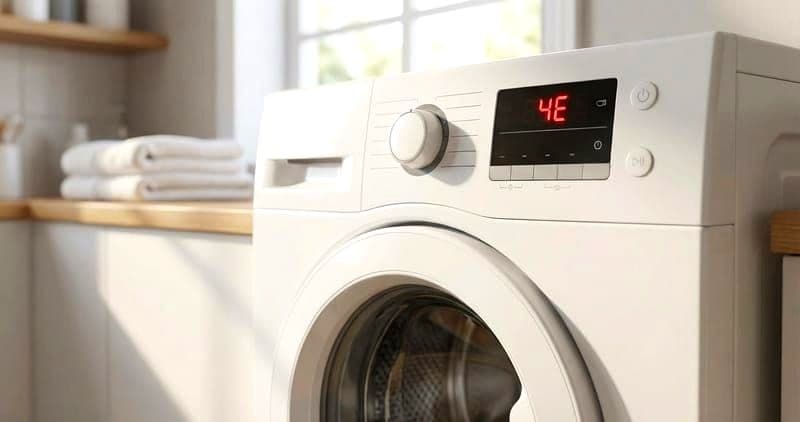
Blocked inlet screens cause slow-fill conditions that eventually trigger 4E water supply error codes. Quarterly cleaning prevents this progression.
Machine Leveling Verification
Place a bubble level on top of the washer in both left-right and front-back orientations. Even minor leveling drift causes increased vibration that accelerates shock absorber wear and stresses the VRT Plus balance ring. Adjust the front leveling feet until the bubble centers in both directions, then tighten the jam nuts against the base to lock position.
Samsung's VRT Plus system can compensate for minor imbalance, but it works within a limited range. Keeping the machine perfectly level maximizes the effective life of both the balance ring and shock absorbers.
Safety First — Know the Risks
Appliances involve high voltage (120-240V), pressurized water, gas lines, and chemical refrigerants. Over 400 DIY repair injuries are reported yearly. Our techs are licensed and insured — let them handle the risk.
Licensed & Insured · 90-Day Warranty · Same-Day Service
Annual Maintenance Schedule
Shock Absorber Condition Assessment
Once per year, remove the lower front kick panel (two Phillips screws) to access a visual inspection of the shock absorbers. Look for any signs of fluid leakage (oily residue on the shock body), bent shafts, or worn mounting bushings. Press down firmly on the outer tub and release — it should return to center position smoothly without bouncing. Multiple bounces indicate shock absorber degradation.
Samsung shock absorbers (DC66-00470A) typically last 5-7 years under normal use. If your machine is approaching 5 years and you notice any increase in vibration during spin cycles, proactive replacement prevents escalation to tub damage.
Spider Arm Visual Inspection
Shine a flashlight through the drum perforations and look at the three-armed aluminum casting visible at the rear of the drum. Look for any white powdery residue (aluminum oxide corrosion), discoloration, or visible crack lines on the arms or where they meet the center hub.
Spider arm corrosion is the most notorious Samsung-specific failure. It progresses from surface oxidation to through-cracks over approximately 2-3 years once it begins. Early detection allows planned repair scheduling rather than emergency service when the arm breaks during a spin cycle.
Drain Hose Inspection
Pull the machine out and inspect the drain hose for kinks, cracks, or hardening of the rubber. Check the standpipe connection for proper air gap (the hose should not be sealed into the pipe, but inserted with space around it for air break). A degraded drain hose can collapse internally, causing intermittent drain failures that are difficult to diagnose without hose inspection.
Detergent Best Practices for Samsung Washers
Samsung front-load washers require HE (High Efficiency) detergent exclusively. The maximum recommended amount is 2 tablespoons per standard load. Excess detergent is the single largest contributor to spider arm corrosion, boot seal mold, and internal odor problems.
Avoid liquid fabric softener in the dispenser — it leaves heavy residue that clogs the siphon tube and contributes to drum buildup. Use dryer sheets instead, or Samsung's own recommendation of vinegar in the softener compartment for natural fabric softening.
Never use regular (non-HE) detergent in a Samsung front-loader. The high suds production overwhelms the drain system and leaves heavy residue on all internal surfaces.
The Real Cost of DIY
Average DIY attempt: $150-400 in tools you may use once, plus the risk of further damage. Our diagnostic visit costs $0 — we find the problem and give you an honest quote.
Licensed & Insured · 90-Day Warranty · Same-Day Service
Troubleshooting Maintenance-Related Issues
- If the Eco Drum Clean notification will not clear after running Self-Clean+, hold the Delay End button for 3 seconds. Some models require this manual acknowledgment step
- If the drain filter cap is difficult to turn, the rubber o-ring has dried out. Apply a thin layer of petroleum jelly to the o-ring after cleaning to keep it supple
- If vibration worsens after leveling adjustment, verify the transit bolts (rear panel, three large bolts with red plastic spacers) are removed. New installations sometimes overlook one bolt
- If you smell gas or burning rubber during spin, stop the machine immediately. A failing drive component under the VRT Plus ring or a jammed shock absorber can create friction heating
Same-Day Appliance Repair
Fixed or It's Free
$89 → $0 Service Call & Diagnosis — offer ends May 25
When to Call a Professional
Schedule professional maintenance service if:
- Spider arm inspection reveals visible corrosion or cracking — this requires drum removal and professional assessment of whether the arm can last another year or needs immediate replacement
- Annual shock absorber check reveals fluid leakage from multiple shocks — replacement of all four as a set is recommended and involves supporting the tub during service
- The boot seal has deteriorated to the point of visible holes or tears — replacement requires careful clamp work that can damage a new seal if performed incorrectly
- You hear grinding from the rear bearing area during spin — bearing replacement is a professional-level repair requiring specialized tools
Don't Void Your Warranty
Opening your appliance yourself may void the manufacturer warranty. Our repair comes with a 90-day guarantee, and we document everything for warranty compliance.
Licensed & Insured · 90-Day Warranty · Same-Day Service
Cost Comparison: DIY Maintenance vs Professional Service
| DIY | Professional | |
|---|---|---|
| Supplies | $10-20/year | Included in service |
| Labor | $0 | $120-200/visit |
| Frequency | Monthly self-service | Annual professional check |
| Risk | Minimal | Warranty on work |
Need Professional Help?
Is It Worth Your Time?
The average DIY appliance repair takes 4-6 hours of research, troubleshooting, and parts ordering — with no guarantee of a correct diagnosis. Our technician diagnoses the issue in about 30 minutes — same-day appointments available.
Licensed & Insured · 90-Day Warranty · Same-Day Service
FAQ
Q: How often should I run Samsung Self-Clean+ cycle? A: Every 40 wash cycles (approximately monthly). Samsung will display the Eco Drum Clean reminder notification when maintenance is due. This is the single most important preventive measure for Samsung front-load washers.
Q: Does leaving the door open prevent mold in Samsung washers? A: Yes. Samsung explicitly recommends leaving the door and dispenser drawer slightly ajar between wash cycles. This allows air circulation that prevents mold growth in the boot seal folds and drum interior.
Q: How do I prevent spider arm corrosion on my Samsung washer? A: Use the correct amount of HE detergent (2 tablespoons maximum per load), run Self-Clean+ monthly, avoid liquid fabric softener (use dryer sheets instead), and wipe the boot seal dry after each use.
Q: When should I replace Samsung washer shock absorbers preventively? A: Samsung shock absorbers typically last 5-7 years. If your washer is 5+ years old and you notice gradually increasing vibration during spin, proactive replacement of all four shocks (DC66-00470A) prevents escalation to tub and bearing damage.
Need a certified technician? Book same-day repair