How to Replace a Samsung Washer Inlet Valve
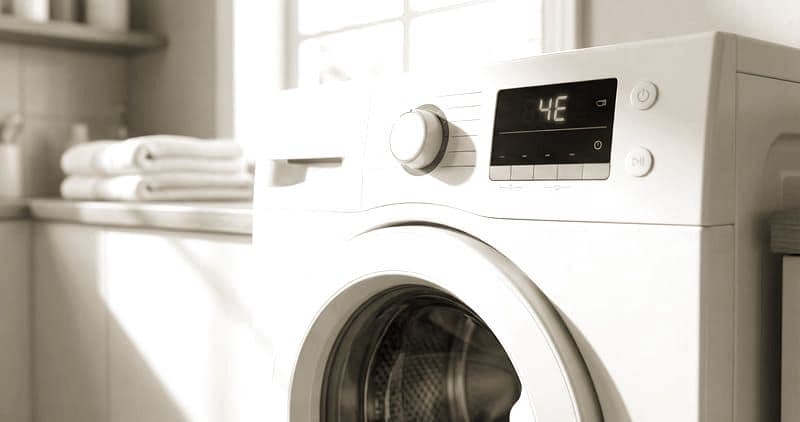
A Samsung washer that will not fill, fills slowly, or flashes 4C or 4E has a supply problem or a failed water inlet valve. Once you have cleared the hoses and screens, replacing the valve — DC62-00142G on WF front-loaders, DC62-00311A on WA top-loaders — is a 30-45 minute job under the top panel.
Samsung's inlet valve is a multi-solenoid block: separate coils meter hot, cold, and sometimes a prewash or bleach feed, and the board pulses them to mix the fill. When one solenoid burns out or a screen clogs, the machine cannot complete the fill in time and posts a 4C or 4E fill fault (older models may show 4E1 or 4E2). Confirm which solenoid is dead before you condemn the whole valve, though the valve is replaced as an assembly.
Do not skip the cheap checks that mimic a dead valve. The inlet screens in the hose couplings clog with sediment and rust washed down from the household lines, and a partly closed tap or a kinked hose starves the fill exactly as a bad solenoid would. Unthread each hose, hold the little screen to the light, and rinse it clear before you open the machine — plenty of 4C and 4E faults vanish right there, and proving the screens are clean makes the meter reading on the solenoids trustworthy when you do get inside.
Tools and parts#
Gather a Phillips #2 screwdriver, a 10mm socket wrench, needle-nose pliers, a multimeter, a bucket, and towels. For the part, match your machine: DC62-00142G for a WF front-load triple-solenoid valve, or DC62-00311A for a WA top-load dual-solenoid valve — verify against your model number.
Do You Have the Right Tools?
Bearing puller set ($120), drum spider wrench ($85), multimeter ($85), and diagnostic software. Our technician arrives with $3,000+ in professional tools — your diagnostic is free.
Licensed & Insured · 90-Day Warranty · Same-Day Service
Safety#
Unplug the washer and turn off both hot and cold water supply valves. Residual water will drain when hoses are disconnected.
Replace the valve#
- Shut off water and disconnect the fill hoses. Close both supply taps, unthread the hot and cold hoses at the back (bucket ready), and check their inlet screens — a clogged screen alone can cause a 4C or 4E.
- Remove the top panel. Back out the rear screws and slide the top panel off to expose the inlet valve mounted just inside where the hoses entered.
- Test the valve solenoids. With power off, meter each solenoid coil across its terminals; a good coil reads a sensible resistance, while an open reading marks a dead solenoid and confirms the valve.
- Disconnect internal hoses and wiring. Release the clamp on each outlet hose and unplug the wiring connectors, labeling which coil is hot and which is cold so the new valve goes back the same way.
- Remove the valve. Take out the mounting screw or the tab holding the valve body to the cabinet and lift it free.
- Install the new valve. Fit the matching replacement, reconnect each outlet hose to its correct port, seat the wiring, and secure the mount.
- Reassemble and test. Refit the top panel, reconnect the fill hoses, open the taps, and run a rinse — watch for a full, timely fill with no leaks and no return of the fill code.
Safety First — Know the Risks
High-voltage components and pressurized water lines create flood and shock risk. A single loose fitting can cause thousands in water damage. Our techs are licensed and insured — let them handle the risk.
Licensed & Insured · 90-Day Warranty · Same-Day Service
When to call a pro#
If the valve, screens, and hoses are all good but the fill fault continues, the water-level sensor or main board may be misreading, which is a technician's diagnosis. A machine that also shows other codes together may have a broader fault than the inlet valve.
Appliance Repair Technician & Diagnostics Specialist · 10 years experience
Electronics and diagnostics specialist with 10 years of experience in modern smart appliance repair, specializing in LG and Samsung.