Want a regional phone & address? Pick your area.
Appliance Repair Tips & Guides
Expert advice, troubleshooting guides, and maintenance tips for all your appliances
5,493 articles
Or call (415) 795-7300
Appliance MaintenanceBuying GuideConsumer GuideConsumer ProtectionCooktopDishwasherDryerEmergency GuideFreezerGarbage DisposalGas StoveGeneralIce MakerIndustry NewsKitchen AppliancesLegal GuideLocalLocal GuideMicrowaveOvenPillarRange HoodRefrigeratorSavingsSeasonalWasherWine CoolerError CodesRecallsSafety GuideSmart HomeVacuum
Oven3 min read
Whirlpool Oven Smells Like Gas: Causes & Fix
A Whirlpool oven that smells like gas needs a safety response first, then diagnosis — usually a weak bake igniter letting gas flow before it lights, a loose connection, or a seeping safety valve. This guide covers the safe steps and the ranked causes.
2026-05-22Read More →
Oven3 min read
Whirlpool Oven Temperature Wrong: Read the Code
A Whirlpool oven baking off-temperature usually has a drifted temperature sensor (often flagged by an F3E2 code) or a calibration offset. This guide shows how to read the fault, check the sensor's resistance, and recalibrate through Settings.
2026-05-22Read More →
Refrigerator3 min read
Whirlpool Refrigerator Door Won't Stay Closed
A Whirlpool refrigerator door that won't latch is usually a worn lower-hinge cam roller, a sagging hinge, or a deformed gasket. This guide ranks the causes, covers French-door mullion misalignment, and shows the level-and-align checks to try first.
2026-05-22Read More →
Oven8 min read
Whirlpool Oven Not Heating? Causes & Fix
A Whirlpool oven making no heat is usually a broken bake element on electric models or a weak igniter on gas, though a blown thermal fuse, an open sensor (F3E1), the control board, a stuck door lock (F5E1), or burned wiring can all be to blame. Ranked causes and safe checks.
2026-05-22Read More →
Oven8 min read
Whirlpool Oven Temperature Not Right? Causes
A Whirlpool oven that runs hot, cold, or swings usually has a drifted temperature sensor (F3E1/F3E2), but a failed element, weak gas igniter, control board, door-lock/self-clean fault (F5E1), thermal fuse, or heat-damaged wiring can all be to blame. Ranked causes and safe checks.
2026-05-22Read More →
Oven4 min read
Help! Whirlpool Oven Element Will Not Heat
Most likely: a failed oven temperature sensor or a burned-out heating element. Whirlpool's AccuBake control reads that sensor (about 1080 ohms at room temperature) and cycles the bake or broil element to hold temperature, so a sensor reading open or shorted throws an F3E1 or F3E2 and the board…
2026-05-22Read More →
Oven4 min read
Whirlpool Oven Gas Igniter Glows but Won't Light
A Whirlpool oven igniter that glows but never lights the flame is almost always drawing too little current to open the gas safety valve. Ranked causes, the current threshold to test, F-code pointers, and safe checks.
2026-05-22Read More →
Oven8 min read
Whirlpool Oven Noisy: Causes and Fixes
Most likely: worn convection fan bearings — a grinding or squealing from the rear cavity is the classic abnormal oven noise. But first tell normal from abnormal: relay clicks as AccuBake cycles the element and metal expansion pops on preheat are normal. Match the sound to the source before opening anything…
2026-05-22Read More →
Oven8 min read
Whirlpool Oven Will Not Start: Causes and Fixes
Most likely: a failed oven temperature sensor — the board needs a valid reading before it will heat, and an open or shorted sensor (F3E1 or F3E2) stops the cycle. A burned-out element, a weak gas igniter, or a surge-damaged control board are next. Whirlpool requires every safety input to report ready before it starts…
2026-05-22Read More →
Oven7 min read
Whirlpool Oven Won't Turn Off: Causes and Fixes
Most likely: a welded relay on the control board (W10834736) that keeps feeding the element power no matter what the display says — a fire hazard. A temperature sensor shorted to ground, which commands maximum heat, is the other main cause. Kill power at the breaker first, then test the sensor before restoring power…
2026-05-22Read More →
Refrigerator6 min read
Whirlpool Refrigerator Doors Misaligned: Causes
Most likely: a loaded door has sagged on its lower hinge — the leading cause, and on French-door models the fix is a hinge-height adjustment, not a part. An unlevel cabinet, a bent hinge pin, or worn bushings are the other causes. Tell vertical sag from a twist first, because they adjust in different places…
2026-05-22Read More →
Oven8 min read
Whirlpool Gas Oven Burner Won't Light? Causes
A Whirlpool gas oven burner that won't light is most often a weak hot-surface igniter that no longer draws enough current to open the gas valve. Electric-oven no-heat causes and safety codes are ranked too, with the 240V and gas safety steps first.
2026-05-22Read More →
Oven6 min read
Whirlpool Oven Doesn't Bake Evenly: Causes & Fix
Most likely: the oven temperature sensor has drifted so AccuBake is regulating on a wrong reading, or the bake element has a dead section. Diagnosis for the sensor, bake element, gas igniter, and control board on Whirlpool ovens.
2026-05-22Read More →
Oven8 min read
Whirlpool Oven Door Repair: Causes & Fix
Whirlpool oven door sagging, not sealing, or stuck locked? The ranked door causes from weak hinge springs to a self-clean latch, with safe checks and an F5E1 tip.
2026-05-22Read More →
Oven8 min read
Whirlpool Oven Not Heating When Baking: Causes
Whirlpool oven barely heating on bake? A drifting temperature sensor, a failed bake element, or a weak gas igniter top the list. Ranked causes and F-codes.
2026-05-22Read More →
Oven8 min read
Whirlpool Oven Door Won’t Unlock: Causes & Fix
A Whirlpool oven door stuck locked or locking on its own usually means the self-clean lock, a temperature sensor, or the control board. Here is the ranked fault tree.
2026-05-22Read More →
Oven8 min read
Whirlpool Oven Error Code Displayed: Causes & Fix
Whirlpool oven codes group by subsystem: F3 is the sensor, F5E1 the door lock, F2E1 a stuck key, F1 the board. Match the code to its family, then repair. EasyBear guide.
2026-05-22Read More →
Oven8 min read
Whirlpool Oven Not Self-Cleaning: Causes & Fix
Self-clean won't run until the door lock, sensor, door switch, and board all confirm readiness. When it won't start, one link failed — usually the door lock (F5E1). EasyBear.
2026-05-22Read More →
Oven20 min read
Whirlpool Oven Too Hot: Does It Stop on Cancel?
One of these causes is a safety problem and the rest are not, and a single question separates them. An oven that keeps heating after Cancel needs the breaker now; one that stops is a sensor reading or a calibration number.
2026-05-22Read More →
Oven8 min read
Whirlpool Oven Tripping the Breaker: Real Short
A Whirlpool oven tripping the breaker is an electrical fault — a grounded heating element, a shorted board, or a shorted lock motor. Unlike a sensor fault, which posts a code. EasyBear.
2026-05-22Read More →
Oven8 min read
Whirlpool Oven Turns Off on Its Own: Causes & Fix
A Whirlpool oven shutting off mid-cook is usually an intermittent temperature sensor, a heat-sensitive board relay, or a tripped safety. Read the F-codes and the clock. EasyBear.
2026-05-22Read More →
Refrigerator5 min read
Whirlpool Refrigerator Cycle Not Completing
Whirlpool refrigerator cycle not completing? Top 8 causes ranked by likelihood with step-by-step fixes. Get expert diagnosis and repair costs.
2026-05-22Read More →
Emergency Guide7 min read
Weekend Appliance Emergency? What to Do
Your appliance broke on a Saturday night. Here's your complete action plan: which problems can wait until Monday, which need emergency service, and how to minimize damage right now.
2026-05-21Read More →
Dryer4 min read
Whirlpool Dryer Burning Smell: Stop It
Burning lint, burning rubber, hot electrical or melted plastic — each smell from a Whirlpool dryer points at a different part. Stop the machine first; lint is the fire risk.
2026-05-21Read More →
Dryer3 min read
Whirlpool Dryer Cycle Not Completing? Causes
One test splits every Whirlpool dryer stopping fault in half. Timed dry works but Auto does not means the AccuDry bars. Timed fails too means fuse, thermostat, belt or motor.
2026-05-21Read More →
Gas Stove4 min read
Whirlpool Gas Stove Keeps Clicking: Causes & Fix
Whirlpool gas stove igniter keeps clicking after burner is lit? Diagnosis of moisture, stuck switches, and spark module faults. Expert repair guide by EasyBear.
2026-05-21Read More →
Gas Stove5 min read
Whirlpool Gas Stove Smells Like Gas: Causes & Fix
Whirlpool gas stove or range smells like gas? Emergency diagnosis of gas leaks, faulty valves, and connection problems. Get expert diagnosis and repair costs.
2026-05-21Read More →
Gas Stove5 min read
Whirlpool Gas Stove Burner Won't Ignite: Causes
A Whirlpool burner that won't light is usually the igniter, the spark module, or the gas valve. Whether it clicks is the first clue — and because Whirlpool builds half the market, parts are everywhere.
2026-05-21Read More →
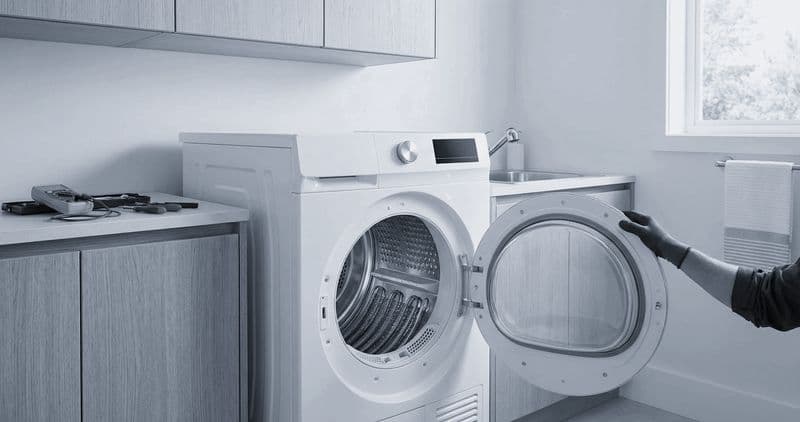
Dryer4 min read
Whirlpool Dryer Takes Too Long to Dry — Fix It
A Whirlpool dryer that takes too long is almost always a restricted exhaust vent, a coated moisture sensor, or a weak heating element. Start at the vent — here are the causes ranked by likelihood with quick DIY checks.
2026-05-21Read More →
Gas Stove4 min read
Whirlpool Gas Stove Burning Unevenly? Causes
An uneven or yellow flame on a Whirlpool gas stove is usually clogged burner ports or a cap that isn't seated flat. Yellow flames mean too little air — and possible carbon monoxide, so fix them promptly.
2026-05-21Read More →

Can't Fix It Yourself?
Let our professional technicians help. Same-day service available.