Want a regional phone & address? Pick your area.
Washing Machine Repair & Troubleshooting Guides
Washing machine repair guides covering error codes, drum bearing noise, drainage failures, and DIY fixes for Samsung, LG, and Maytag models.
A broken washing machine stalls your entire household routine. Clothes pile up, trips to the laundromat burn time and money, and ignoring a small leak can cause hundreds of dollars in water damage to your subfloor. These guides help you diagnose the problem accurately — whether it is a drum bearing grinding, a drain pump failing to evacuate water, or an error code flashing on the control panel — so you can decide between a targeted repair and a full replacement.
Front-load washers dominate Bay Area homes and come with their own failure patterns: door boot seal tears that cause slow leaks, spider arm corrosion on the rear drum (especially in Samsung models manufactured 2011-2016), and mold buildup in the gasket that no amount of cleaning tablets fully prevents. Our guides for top-load machines cover the agitator-vs-impeller debate, lid switch failures that halt mid-cycle, and the common transmission issues on Maytag and Whirlpool direct-drive units.
Water hardness varies significantly across California — Sacramento averages 5-7 grains per gallon while parts of the East Bay exceed 15 — and this directly impacts detergent dosing, inlet valve scale buildup, and heater element lifespan. We factor these conditions into every troubleshooting guide.
912 articles
Kenmore Washer Cycle Not Completing Explained
Kenmore washer stops mid-cycle? Cause depends on your platform: timer contacts on 110-series vs control board logic on 796-series. Repair guide with costs.
angela-thompson·8 min read
Kenmore Washer Won't Latch? Causes & Fix
A Kenmore washer that won't lock is usually a worn 110 lid-lock motor or a burned-out PTC lock on a 796/417 front-loader. The right part depends on your model prefix.
angela-thompson·5 min read
Kenmore Washer Tripping the Breaker? Causes & Fix
A Kenmore washer that trips the breaker has a component shorting to ground — and the moment it trips points at which one. This is a safety fault; don't keep resetting and retrying.
angela-thompson·6 min read
Kenmore Washer Timer Won't Advance: Causes & Fix
A Kenmore washer stuck at one point in the cycle usually has a burned-out timer motor or welded timer contacts, sometimes a pressure switch holding it in fill. This guide ranks the causes for mechanical-timer models and shows what to check before replacing the timer.
angela-thompson·3 min read
Fix Kenmore Washer Temperature Not Right
Most likely: a fill problem on the hot side — a failed hot inlet-valve solenoid, a clogged inlet screen, or simply a house water heater that is not delivering. The critical fact most owners miss is that all 110-series and most 417-series Kenmore washers have no internal heater; they take whatever…
angela-thompson·4 min read
Kenmore Washer Rust and Corrosion: Causes & Fix
Kenmore washer rust depends on who built it — Electrolux 417, LG 796, or Whirlpool 110. Where corrosion shows up on each platform, what is cosmetic versus structural, and when spider-arm or bearing corrosion means replacement.
angela-thompson·3 min read
Kenmore Washer Shakes and Walks Across the Floor
Most likely the part that absorbs spin vibration has worn out, and which part depends on your platform: a snubber ring on 110 top-loaders, or shock absorbers, a broken spring, or unremoved shipping bolts on 796 and 417 front-loaders. Start by checking level and, on a front-loader, those shipping bolts.
angela-thompson·5 min read
Kenmore Washer Filling When Not in Use: Causes
Most likely: the water inlet valve isn't sealing shut — sediment, an eroded diaphragm, or a fatigued spring lets water seep in with the machine off. It's a flood risk, so shut the supply valves at the wall first, then replace the valve for your platform…
angela-thompson·4 min read
Kenmore Washer Making a Loud Noise: Causes & Fix
Most likely: the sound plus your build platform pins the cause. Grinding on spin is a tub or transmission bearing; rhythmic thumping on agitate is worn agitator dogs; banging is a loose counterweight or worn shock. Kenmore is Whirlpool (110), LG (796), or Electrolux (417) inside, so identify the platform first…
angela-thompson·5 min read
Kenmore Washer Display Not Working: Causes & Fix
Most likely: the power line (noise) filter has blown on LG-platform Kenmore washers, cutting all power to the display, or a UI board or ribbon cable has failed. Diagnosis across Kenmore 110, 796, and 417 washer platforms.
angela-thompson·6 min read
Kenmore Washer Overflowing: Stop the Water
Most likely: an inlet valve stuck open if it overflows even when off, or a pressure switch / air-dome fault if it only overflows during fill. Emergency steps plus the 110/796/417-platform fault tree for Kenmore washers.
angela-thompson·5 min read
Kenmore Washer Leaking? Causes & Fix
Kenmore washer leaking? Because Kenmore washers are built by Whirlpool, LG, Electrolux, and Samsung, the leak point depends on your platform. Decode the model prefix and match the leak to the fix.
angela-thompson·9 min read
Kenmore Washer Not Heating? Causes & Fix
Kenmore washer not heating water? Most Kenmore washers have no internal heater — they use your household hot water. So it’s usually a failed hot inlet solenoid, a closed valve, or a clogged screen.
angela-thompson·5 min read
Kenmore Washer Drains but Won’t Spin? Causes
Kenmore washer pumps the water out but won’t spin? The drive system is the fault. A sheared coupling on 110-series, a hall sensor on 796 LG models — ranked causes and how to tell them apart.
angela-thompson·5 min read
Speed Queen Error Codes: Find Your Control Platform Before the Code
A Speed Queen shows E:XX, a plain-text code, or nothing at all — and which one it is tells you the control platform, the diagnosis route, and whether the 7-year warranty still covers it.
Sarah Chen·15 min read
Speed Queen Error Codes: Find Your Control Platform Before the Code
A Speed Queen shows E:XX, a plain-text code, or nothing at all — and which one it is tells you the control platform, the diagnosis route, and whether the 7-year warranty still covers it.
Sarah Chen·15 min read
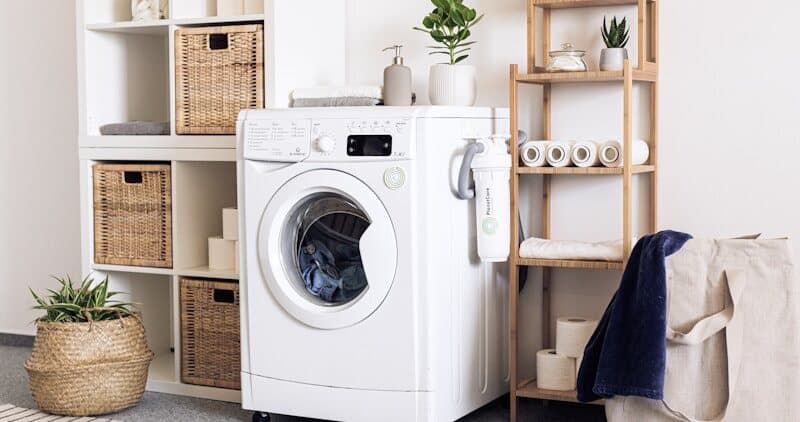
Hotpoint Washer Making Noise: Causes & Fix
A noisy Hotpoint washer: grinding is worn bearings, banging is shocks or springs, scraping is a trapped object, squealing is the belt. Hotpoint is GE's value line. EasyBear guide.
james-washington·5 min read
How to Fix Hotpoint Washer Won't Spin
Hotpoint washer won't spin? Expert diagnosis of common causes, model-specific fixes, and repair costs for Hotpoint washers. Book same-day repair.
james-washington·4 min read
Hotpoint Washer Won't Start: Causes & Fix
A Hotpoint washer that won't start is usually a door/lid lock, a control board, or a power issue. Hotpoint is GE's value line, so GE parts fit. EasyBear repair guide.
james-washington·5 min read
Haier Washer-Dryer Combo Not Draining
Haier combo unit water not draining? Diagnosis of drain pump failures, clogged filters, and kinked hose issues on Haier HLC1700AXW and QFW150SSNWW combo...
mike-rodriguez·4 min read
Haier Washer-Dryer Combo Not Drying
Haier combo washer-dryer clothes still wet after dry cycle? Diagnosis of condenser blockage, heating element failure, and ventilation issues on Haier...
mike-rodriguez·5 min read
Hisense Washer Leaking Water — Top Causes
Hisense washer leaking water? Expert diagnosis of common causes, model-specific fixes, and repair costs for Hisense washers. Book same-day repair.
mike-rodriguez·5 min read
Is Your Hisense Washer Making Noise?
Hisense washer making noise? Expert diagnosis of grinding, banging, and buzzing causes, model-specific fixes, and repair costs. Book same-day repair.
mike-rodriguez·5 min read
Hisense Washer Not Draining — DIY or Pro?
Hisense washer not draining? Expert diagnosis of common causes, model-specific fixes, and repair costs for Hisense washers. Book same-day repair.
mike-rodriguez·4 min read
Hisense Washer Won't Start: Causes & Fix
Hisense washer won't start? One look splits the diagnosis: a dark panel means power — GFCI, breaker, or a blown thermal fuse; a lit panel that ignores Start means the door lock, control board, or an active child lock. Here is how to work each path.
mike-rodriguez·5 min read
Hisense Washer Won't Spin? Causes & Fix
A Hisense washer that won't spin is usually a lid switch or door lock cutting the command, or a failed belt, coupling, or clutch. Whether the drum tries to spin tells you which.
mike-rodriguez·4 min read
GE Washer Error Code Displayed: Causes & Fix
GE washer showing an error code? E-codes point at drain, fill, lid lock, or motor faults. Decode the common ones and see which you can clear yourself.
james-washington·6 min read
GE Washer Not Filling or Filling Slowly: Causes
GE washer won't fill or fills slowly? Match the pattern first — no fill at all, slow fill on both temps, or one temperature missing each points to a different part. Clogged inlet screens are the top cause, and Service Mode test t02 fires each valve so you can hear which one works.
james-washington·7 min read
GE Washer Making Loud Noise: Causes & Fix
A loud GE washer: rumble is the tub bearing, drain buzz is the pump, thump is a trapped object, squeal is worn shocks. Use GE service mode to isolate it. GFW vs GTW. EasyBear.
james-washington·7 min read
GE Washer Door or Lid Won't Open: Causes & Fix
A GE washer door or lid that won't open is usually a lock that never released. Use the GFW or GTW tool-free emergency release, then fix the wax motor, relay, or drain. EasyBear.
james-washington·5 min read