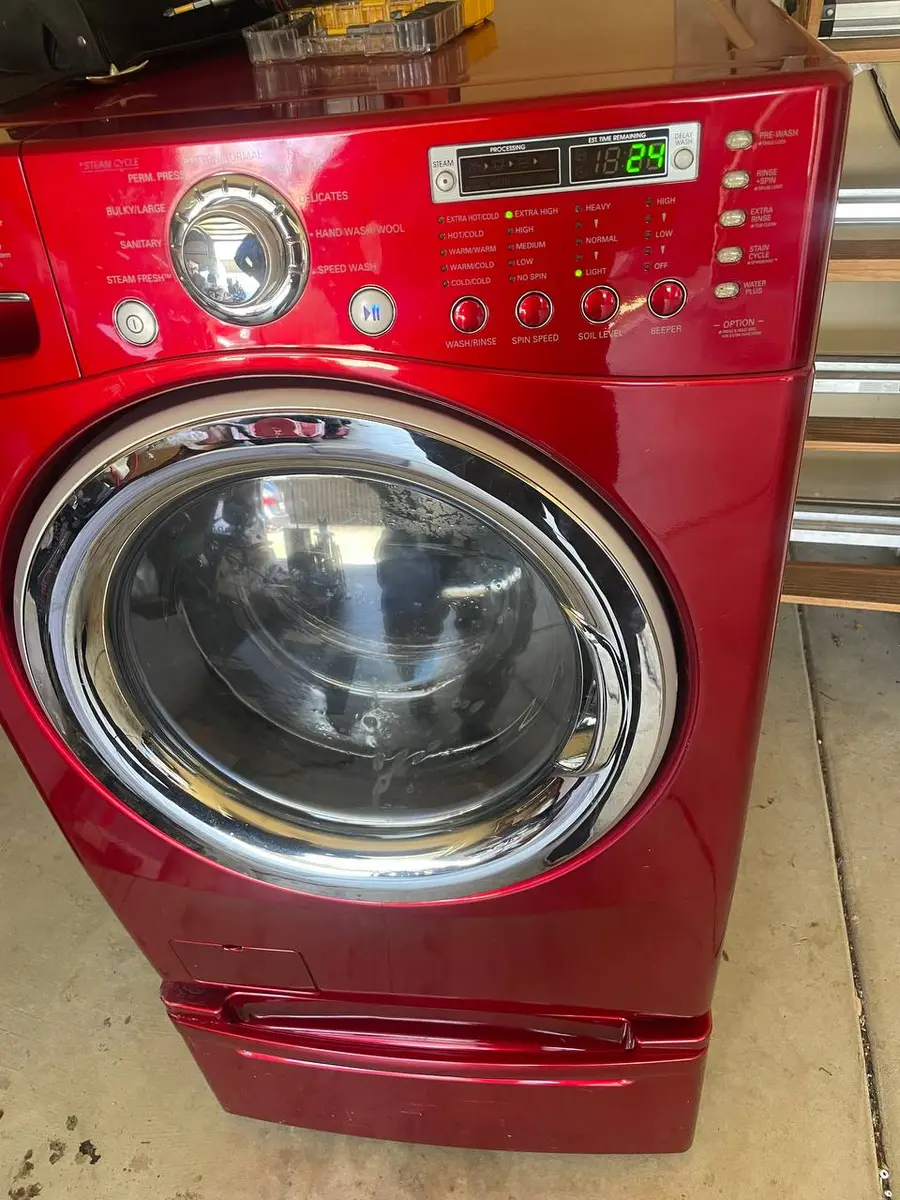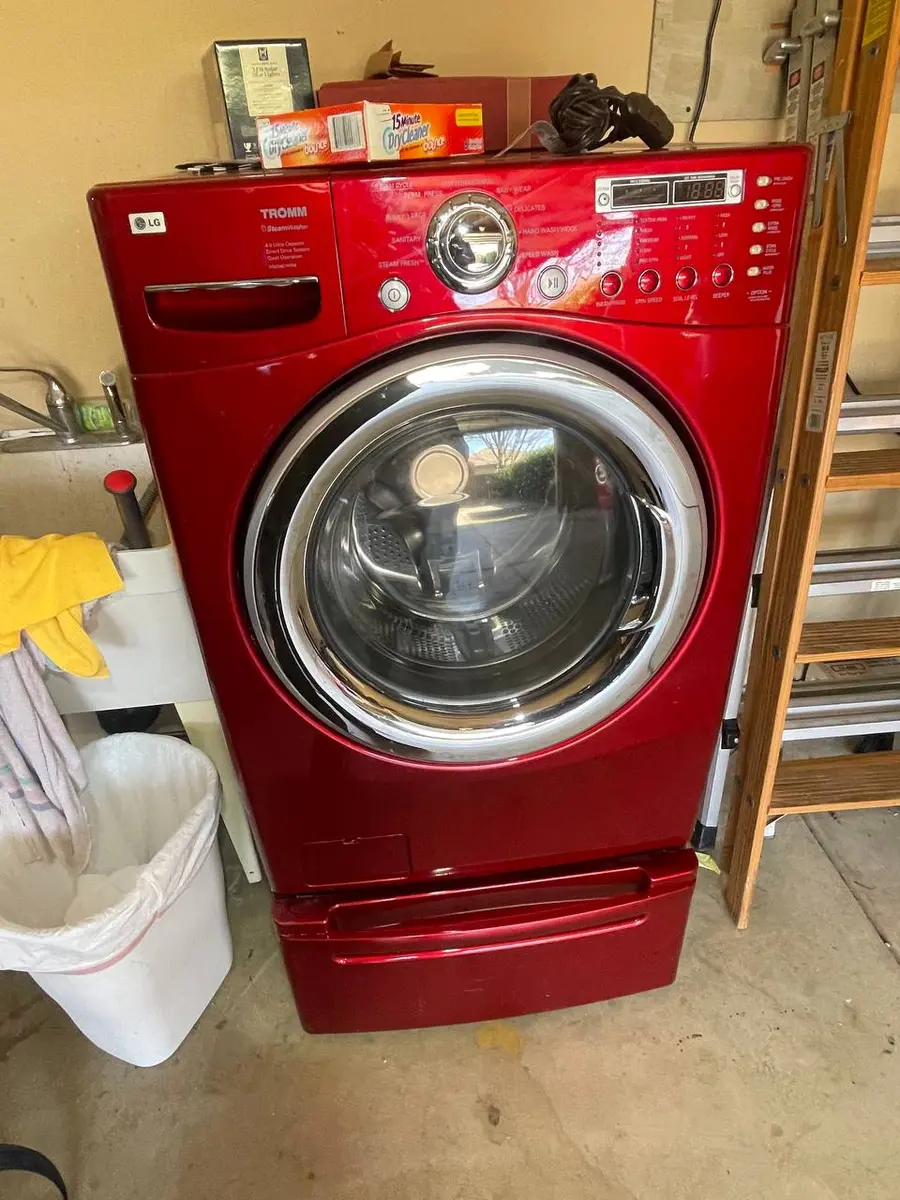
Quick Answer: The Line Filter Is Cheap — Check It First#
Most likely, a Kenmore washer with a dead display has a blown power line filter — the noise (EMI/RFI) filter at the power entry point on LG-platform Kenmore washers, which fails easily after a surge and cuts all power to the control boards so the display goes completely dark. Because that part (LG number 6201EC1006U) is inexpensive and acts almost like a fuse for surges, it is the first thing to check before replacing an expensive main or UI board. Note that older 110-series top-loaders with mechanical timers have no display at all — just indicator LEDs — so "display not working" on those means the LEDs are dark.
Cause-by-Symptom Table#
| What you see | Most likely cause | Platform |
|---|---|---|
| Completely dead display | Power line (noise) filter blown | LG-platform |
| Partial segments, flicker, dead buttons | UI board failed | 417 series |
| Intermittent display loss | Ribbon cable worked loose | 796 series |
| Dark display, line voltage present | Main-board power section failed | all electronic |
| No lights, a click when plugged in | Board low-voltage section | all electronic |
Do You Have the Right Tools?
Bearing puller set ($120), drum spider wrench ($85), multimeter ($85), and diagnostic software. Our technician arrives with $3,000+ in professional tools — your diagnostic is free.
Licensed & Insured · 90-Day Warranty · Same-Day Service
Why the Filter Blows#
The noise filter sits right at the power cord entry to smooth electrical interference, and it takes the hit when a surge comes down the line — when it fails, zero power reaches the control boards and everything downstream, including the display, goes dead. That is exactly why a washer whose display went dark right after a power outage is far more likely to have a blown filter than a fried main board. Remove the top panel, find the small cylindrical filter near where the cord enters, and test it before spending on a board. It is the single most cost-saving check on this symptom.
Board, UI, and Ribbon Faults#
If the filter is good, the display path itself is next. The user-interface board can fail on its own — moisture from a humid laundry room or steam drifting from a nearby dryer vent corrodes its traces, producing partial segments, unresponsive buttons, or flicker — and this is common on 417-series units. The flat ribbon cable between the UI board and the main board can work loose from vibration, especially on 796-series models where it routes through a tight channel behind the panel, causing intermittent display dropouts, so reseat every flat-cable connection you can reach. Finally, the main board has a power-supply section that converts the incoming 120-volt AC to the low-voltage DC that runs the display and logic; if a fuse, transformer, or rectifier in that section fails, the display goes dark even though line voltage reaches the board.
Safety First — Know the Risks
High-voltage components and pressurized water lines create flood and shock risk. A single loose fitting can cause thousands in water damage. Our techs are licensed and insured — let them handle the risk.
Licensed & Insured · 90-Day Warranty · Same-Day Service
Quick Resets and a Telling Click#
Before disassembly, try a reset matched to the platform: unplug for ten minutes on 796 models, or sixty seconds on 110 and 417 models, then restore power. And listen for a clue — if a 110-series washer has no lights at all but you hear a click when you plug it in, that click is the lid lock trying to cycle, which means power is reaching the machine but not the indicator LEDs, pointing to a blown fuse or failed transformer in the board's low-voltage section rather than a total power loss. Matching the symptom to the platform keeps you from replacing the wrong board.
Prevent the Next Surge#
Since the noise filter and the boards most often die from power surges, the single best preventive step is a surge protector on the washer's circuit — it takes the hit the filter otherwise absorbs and spares the expensive main board behind it. Beyond that, control the environment the electronics live in: a humid laundry room, or steam drifting from a nearby dryer vent, corrodes the UI board's traces over time, so ventilate the space and keep the washer's control area dry. And leave the lid or door open between washes to let the drum and gasket dry, which reduces the overall moisture load. These steps do not repair a blown filter, but on the replacement they are what keep the same surge or moisture failure from recurring.
The Real Cost of DIY
Average DIY attempt: $150-400 in tools you may use once, plus the risk of further damage. Our diagnostic visit costs $0 — we find the problem and give you an honest quote.
Licensed & Insured · 90-Day Warranty · Same-Day Service
Repair or Replace?#
A dead display is very repairable and often cheap — the line filter is a low-cost part, reseating a ribbon costs nothing, and a UI board is far less than a full control board, so it rarely justifies replacing the washer. The money-saver is order of operations: filter first, then ribbon and UI board, then the main board's power section. When the main control board is genuinely gone, book a Kenmore washer repair and have the right board identified for your platform.
Appliance Repair Technician · 11 years experience
Experienced technician with 11 years specializing in Frigidaire and Electrolux refrigerator and dryer repair with a focus on safety.