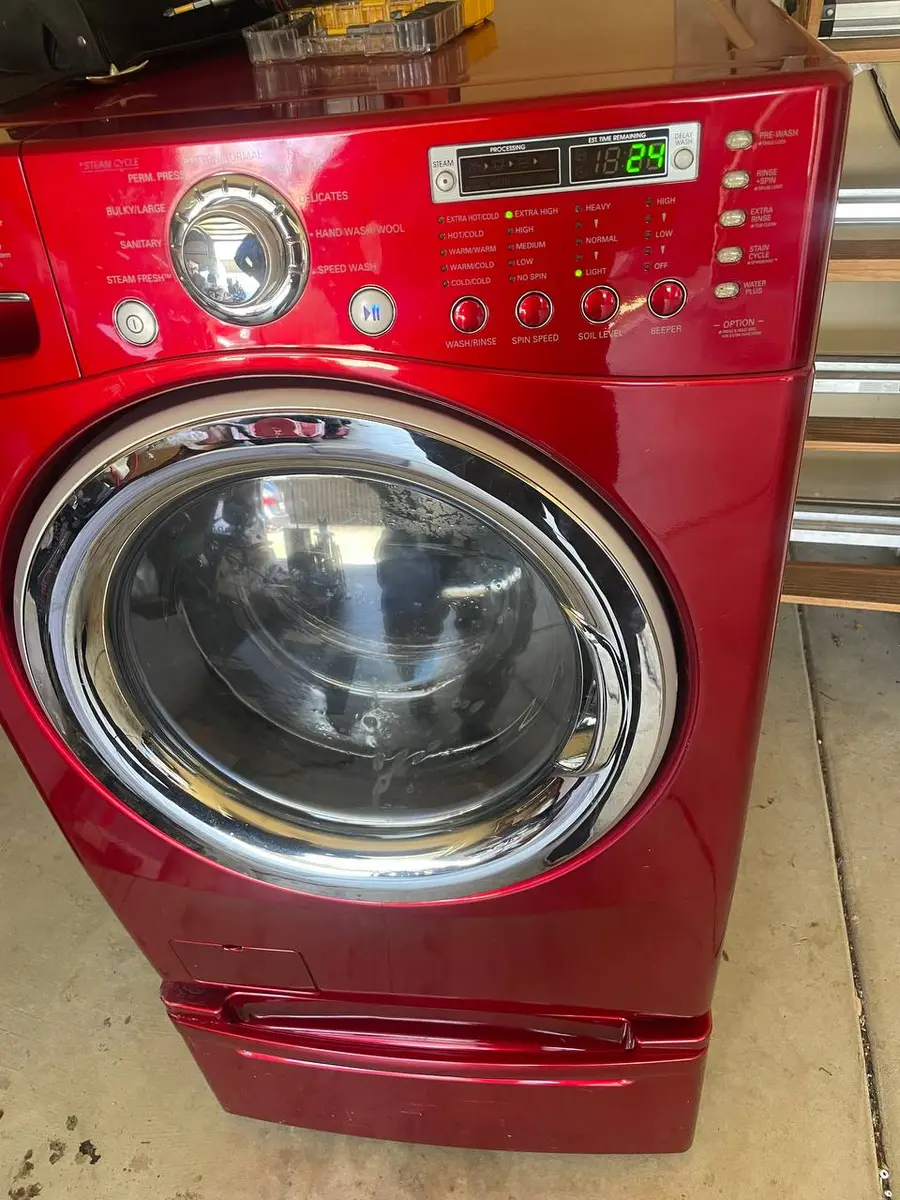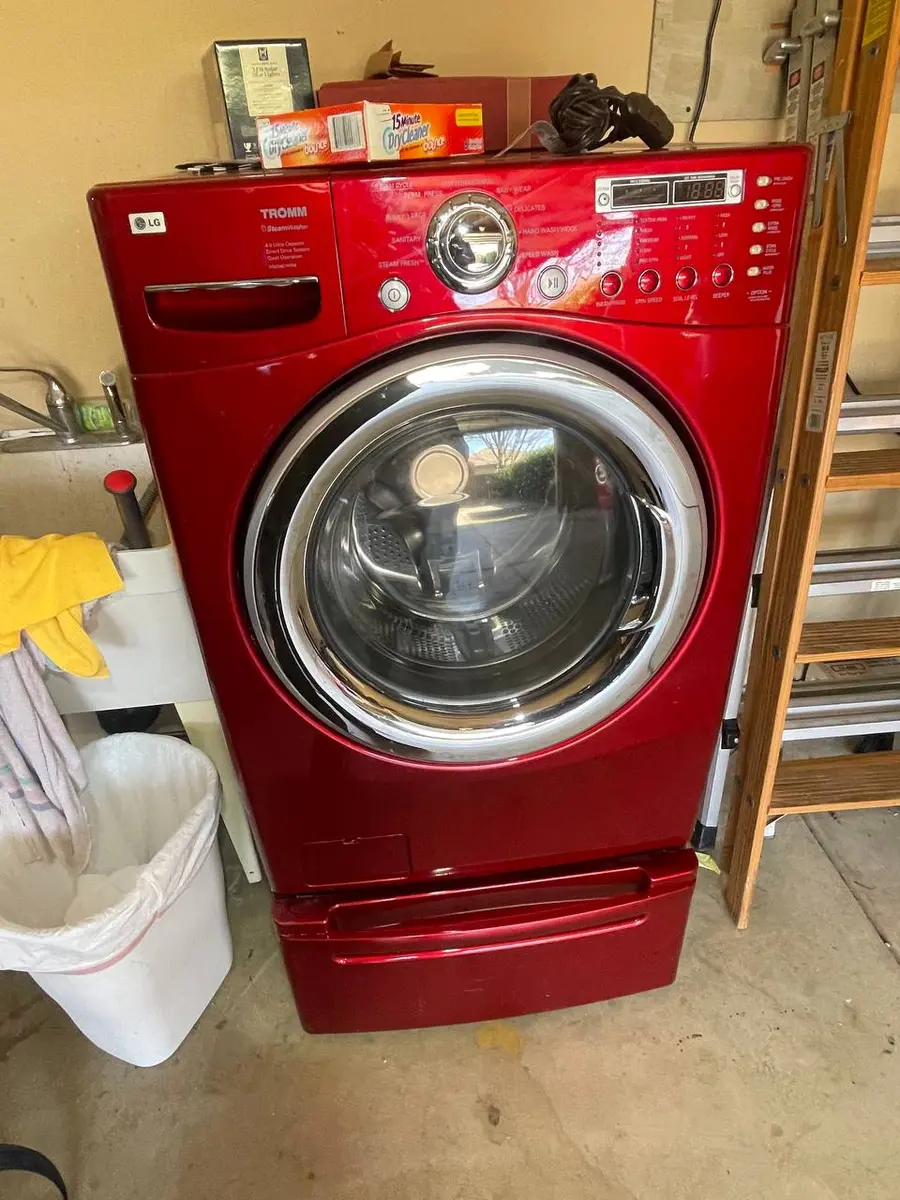
The first thing to check on a Hisense washer that won't start is whether the control panel lights up at all. A completely dark panel is a power problem — a tripped GFCI, a breaker, or a blown thermal fuse. A panel that lights up normally but ignores the Start button is a signal problem — most often the door lock, but sometimes the control board or an active child lock. That one observation decides which half of this guide you need.
Panel Dark: Follow the Power#
If nothing lights up and the washer makes no sound, it is not getting power, and there are three usual reasons.
GFCI Tripped (15% of cases)#
Modern laundry rooms often use a GFCI-protected outlet, and moisture around the washer can trip it, killing power entirely. Press the reset button on the outlet firmly, and also check the electrical panel for a tripped breaker. Because Hisense washers draw roughly 10 to 15 amps during spin, they can trip a circuit shared with other appliances — a dedicated 20A circuit is the reliable fix if nuisance trips keep happening.
Thermal Fuse Blown (20% of cases)#
The thermal fuse is a one-time safety device that cuts power when the motor or control area overheats, and when it blows the washer is completely dead — no lights, no sounds. On Hisense washers it sits on the wiring harness near the drive motor or on the control-board housing. Test it for continuity; an open reading means it is blown. Always find out why it blew — a blocked vent, worn motor bearings, or loose wiring — before simply replacing it, or the new one will blow too.
Do You Have the Right Tools?
Bearing puller set ($120), drum spider wrench ($85), multimeter ($85), and diagnostic software. Our technician arrives with $3,000+ in professional tools — your diagnostic is free.
Licensed & Insured · 90-Day Warranty · Same-Day Service
Panel Lit: Follow the Start Signal#
If the panel lights up but pressing Start does nothing, the machine has power and is waiting on a condition it never receives.
Child Lock Active (10% of cases)#
Check for a lock icon on the display first, because it is the fastest thing to rule out. Hisense washers have a child lock that disables every button, and when it is on, Start does nothing. Deactivate it by pressing and holding the designated button or button combination — often Lock, or two buttons together for about three seconds — per your model's manual. This is not a fault, but it accounts for roughly one in ten no-start calls.
Door Lock Mechanism Failure (30% of cases)#
This is the single most common real fault. Hisense front-loaders use an electronically controlled door lock with a wax-motor actuator, and when the wax element burns out the lock will not engage, so the board never gets its door-locked confirmation and refuses to start. You may hear a buzz from the lock area as it tries and fails. The lock sits behind the front gasket — peel back the boot seal near the latch to reach it. Its connector has several wire terminals; test for voltage there when you press Start. Voltage present but no lock means the lock assembly is bad; no voltage means the fault is upstream in the wiring or the board, not the lock itself.
Main Control Board Failure (25% of cases)#
The main board reads your inputs and runs every function, and power surges and moisture are the leading reasons it fails on these washers. Typical signs are a display that lights but never starts a cycle, or a washer that starts then stops immediately. The board lives behind the top rear panel; inspect it for swollen capacitors, burn marks, or corroded connectors. Power-cycling by unplugging for five minutes clears a temporary glitch, but a physically damaged board needs replacement.
Why the Panel Test Works#
Splitting the diagnosis by whether the panel lights up works because the two failure classes never overlap. Anything that kills the display — a tripped GFCI, an open breaker, a blown thermal fuse — cuts power before the electronics ever wake, so the machine is silent and dark. Anything that lights the panel but blocks Start is downstream of power, in the logic waiting on a door-lock signal or held by a child lock. Sorting these first keeps you from testing a door lock on a washer that simply has no power, or resetting a breaker on one that clearly does.
Safety First — Know the Risks
High-voltage components and pressurized water lines create flood and shock risk. A single loose fitting can cause thousands in water damage. Our techs are licensed and insured — let them handle the risk.
Licensed & Insured · 90-Day Warranty · Same-Day Service
Troubleshooting Order#
Disconnect power before any internal inspection.
- Note the panel — dark sends you to power (GFCI, breaker, thermal fuse); lit sends you to the start signal (child lock, door lock, board).
- Rule out child lock — look for the lock icon before touching anything.
- Identify your model from the serial plate to match parts and the child-lock combination.
- Test the door lock for voltage when pressing Start to separate a bad lock from a wiring or board fault.
- Restore power and run a test cycle, watching for 10 to 15 minutes.
When to Call a Professional#
Resetting a GFCI, clearing a child lock, and checking an accessible door lock are all do-it-yourself. Call a technician if the washer stays dead after basic troubleshooting, if you notice a burning smell, sparking, or electrical damage, if the repair reaches high-voltage components or internal wiring, or if the washer is under warranty, since professional diagnosis preserves that coverage. A blown thermal fuse in particular deserves a real root-cause check before it is replaced.
Still having issues with your Hisense washer? Book an EasyBear technician for expert Hisense [washer repair](/bay-area/services/washer-repair). Our technicians carry OEM parts and brand-specific diagnostic equipment on every service call.
Senior Appliance Repair Technician · 15 years experience
EPA-certified technician with 15 years of experience specializing in refrigerator and cooling system repairs.