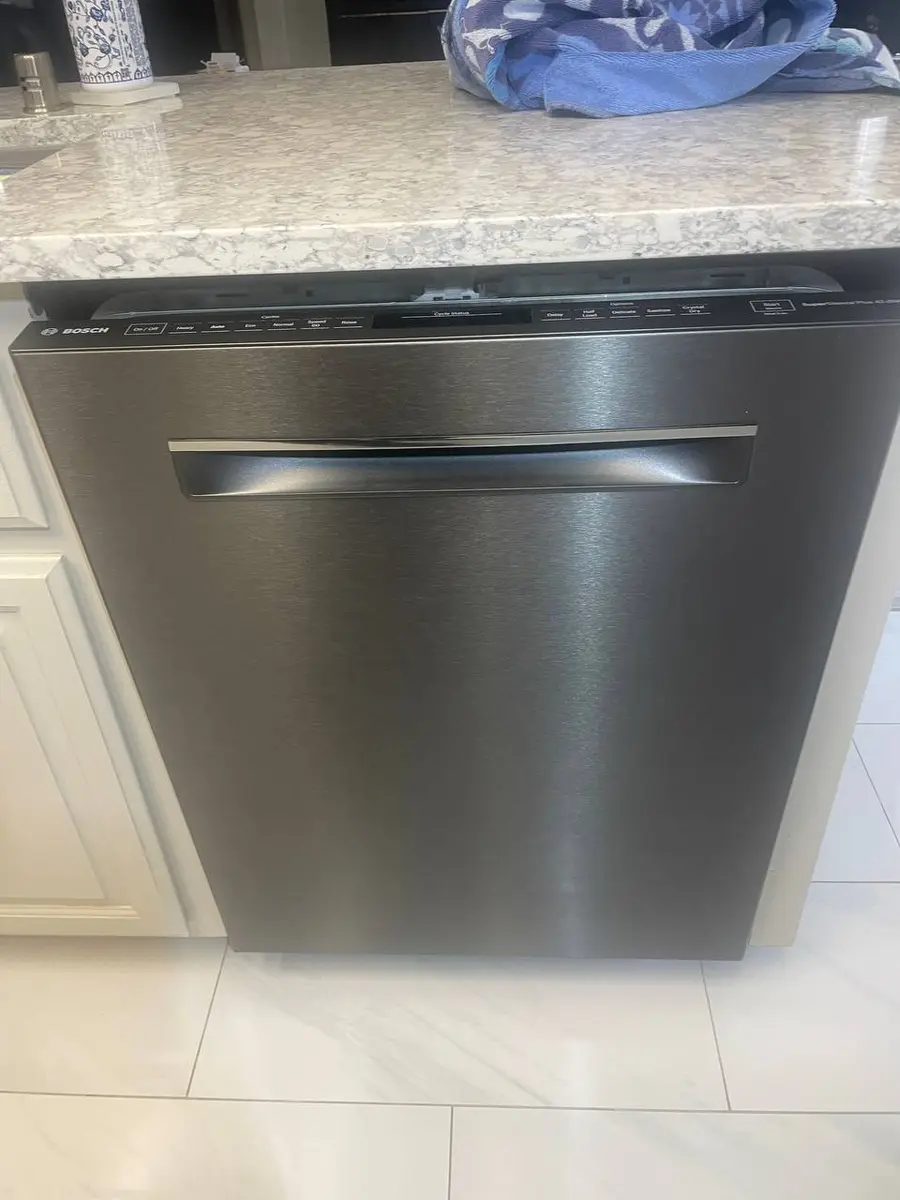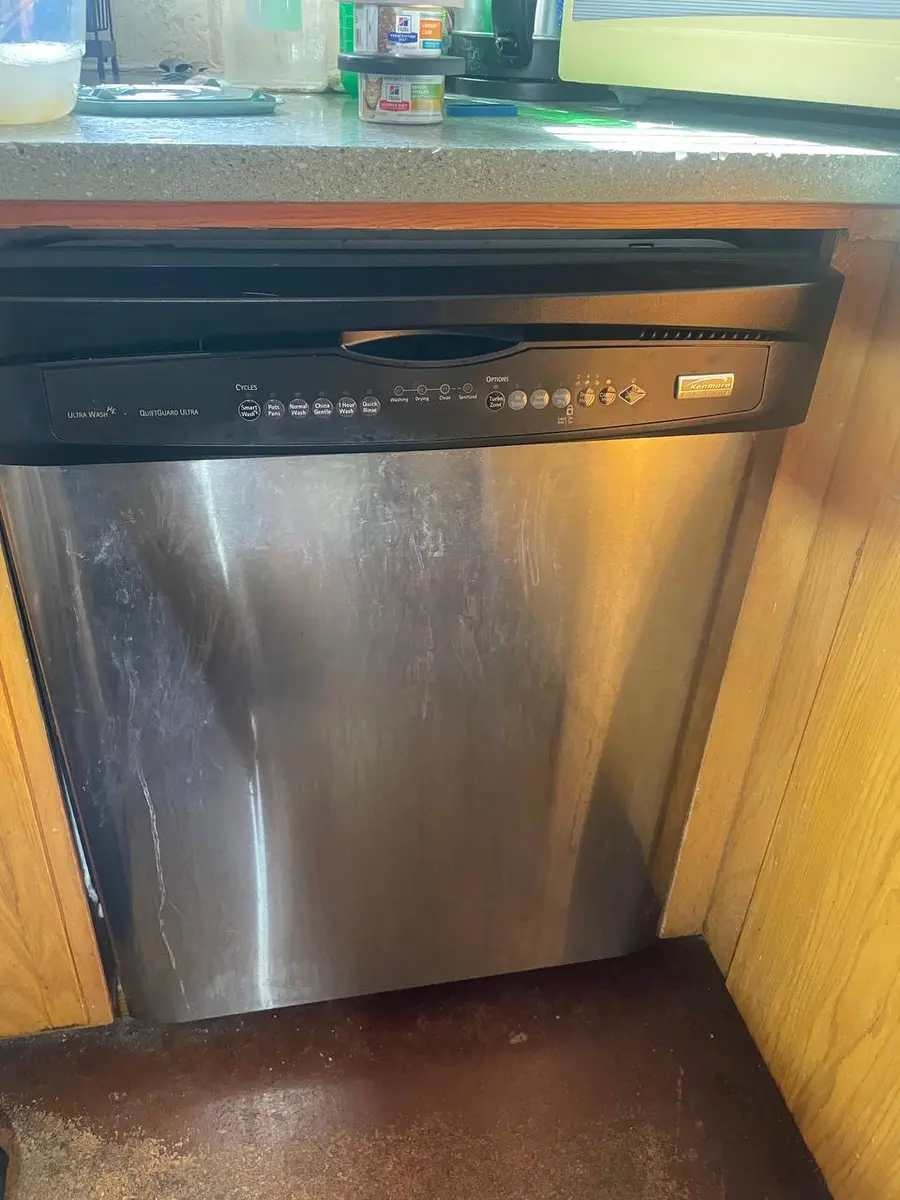
When a Whirlpool [dishwasher](/blog/repair-or-replace-dishwasher) stops partway through, the fastest clue is any F#E# code it shows, because Whirlpool maps each to a subsystem. On WDT700 and WDF500 series units the Sensor Cycle checks door closure and drainage at multiple points, so the machine will halt itself if a safety input drops out or the water does not clear. The common causes are overheating protection, a marginal door latch, and a drain failure — and reading the code turns a guessing game into a targeted check.
Safety protocol#
Disconnect power at the circuit breaker before any physical inspection of internal components, and close the water supply valve under the sink if the symptom involves water or leaking. Do not bypass any safety switch — the F#E# codes exist to protect the machine and you, so the goal is to find why a switch tripped, not to defeat it.
Do You Have the Right Tools?
Water pressure gauge ($60), spray arm tester, float switch multimeter ($85), and drain inspection camera. Our technician arrives with $3,000+ in professional tools — your diagnostic is free.
Licensed & Insured · 90-Day Warranty · Same-Day Service
Quick Answer#
Quick answer: Most likely a thermal overprotection device — a thermal fuse or high-limit thermostat — has cut power to protect against overheating, stopping the cycle with water still in the tub. A marginal door latch dropping its signal mid-cycle, or a drain-pump failure flagged F8E1, are the next most common causes.
Before you act on any of that, collect two things and collect them in this order, because a breaker reset destroys both. Read whatever code is on the display, exactly as it reads. Then look at the bottom of the tub and note whether there is standing water. Those two observations are the ones this page keeps coming back to, and crossing them against each other is what turns six candidates into one or two. The table below does the crossing.
Cross the code against the water level#
Read the display first, look in the tub second, reset third. Find the row where your two answers meet.
| Code shown | Water left in the tub? | What that combination points at |
|---|---|---|
| A drain code such as F8E1 | Yes, standing | The drain itself: filter, sump, pump. The machine stopped because it could not hand off to the next phase |
| A drain code such as F8E1 | No, tub is empty | The drain completed and the code is stale — read it as history from an earlier run, not as the reason it stopped now |
| A memory code such as F1E2 | Either | The board lost its place. A five-minute breaker reset is the right response, and a code that returns after a clean reset is a failing board |
| No code at all | Yes, standing, and the tub feels hot | Thermal protection tripped and cut power before the drain could run — the classic thermal signature |
| No code at all | No, and the machine paused rather than quit, sometimes resuming by itself | The door latch dropping its signal as the door flexes under spray pressure |
| No code, random panel lights, cycle state lost | Either | A supply event rather than a fault: a brown-out, or a heavy appliance sharing the circuit |
The second row is worth reading carefully. A code sitting on a Whirlpool display is not necessarily the reason this cycle stopped, and an empty tub under a drain code is the clearest evidence of that.
Where these rows come from: the six ranked causes already listed on this page — thermal overprotection, door-latch signal loss, motor overload, drain-pump failure, power interruption, and control-board memory — crossed against the two observations the page itself names as decisive, namely the F#E# code and whether water is left standing. Only the two code families the page names, F8E1 for the drain and F1E2 for board memory, appear here; Whirlpool's full code map is longer and no attempt is made to reproduce it. The percentages in the ranked table order those six causes against one another and are not repeated as rates here.
Safety First — Know the Risks
Live 120V wiring in a wet environment is one of the most dangerous DIY scenarios. Water + electricity = serious shock risk. Our techs are licensed and insured — let them handle the risk.
Licensed & Insured · 90-Day Warranty · Same-Day Service
Most Likely Causes, Ranked#
| Cause | What you'll notice | How likely |
|---|---|---|
| Thermal overprotection | Stops mid-cycle, water left in tub | 25% |
| Door-latch signal loss | Random pauses, may resume | 22% |
| Motor overload protection | Stops when the wash motor overheats | 18% |
| Drain-pump failure (F8E1) | Stops at a drain, tub won't empty | 15% |
| Power interruption / voltage drop | Random lights, loses cycle state | 12% |
| Control-board memory fault (F1E2) | Stops, cannot resume the program | 8% |
Thermal protection and the door latch#
A thermal fuse or high-limit thermostat detects excessive temperature and cuts power to protect components, which stops the cycle immediately without completing the drain, so the tub is left with water. Separately, the door-latch microswitch can develop intermittent contact — good enough to start a cycle but losing connection as the door vibrates during spray-arm operation — and because the Sensor Cycle verifies door closure at multiple points, a momentary drop pauses or cancels the run. A stop that happens randomly and sometimes resumes points at the latch.
The Real Cost of DIY
Average DIY attempt: $150-400 in tools you may use once, plus the risk of further damage. Our diagnostic visit costs $0 — we find the problem and give you an honest quote.
Licensed & Insured · 90-Day Warranty · Same-Day Service
Motor overload, drain, and power#
The wash motor has internal thermal protection, and if it overheats from a stalled impeller (a debris jam), seized bearings, or high current draw, it shuts down mid-cycle to save the winding. At the drain transitions the board watches whether the tub empties; if the drain pump fails there, the cycle stops and typically posts F8E1. Momentary power interruptions — brown-outs, or a heavy appliance on the same circuit — can make the board lose its cycle state, so the dishwasher stops and may show random lights.
Control-board memory#
The control board's memory can corrupt during a power event, losing track of which phase to run next, so the board simply stops — and an F1E2 memory error confirms it. A hard reset (a five-minute breaker disconnect) sometimes clears a one-time glitch, but a recurring F1E2 points at a failing board. Reading the exact code before you reset preserves the evidence a technician needs.
Don't Void Your Warranty
Opening your appliance yourself may void the manufacturer warranty. Our repair comes with a 90-day guarantee, and we document everything for warranty compliance.
Licensed & Insured · 90-Day Warranty · Same-Day Service
How to check it yourself#
- Read the F#E# code before disconnecting power — it maps to the subsystem.
- Check for water left in the tub (thermal or drain) versus a random pause (latch).
- Clean the filter and clear the sump to relieve a straining wash motor.
- Wiggle-test the door latch for a marginal contact.
- Try a five-minute breaker reset for a suspected one-time power glitch.
Let the code and the water level guide you#
Two quick observations turn a mid-cycle stop from a mystery into a targeted repair. First, read any F#E# code before you cut power, because Whirlpool maps each to a subsystem and it will often name the fault outright — a drain code, a memory error, a thermal event. Second, note whether water is left standing in the tub: a stop that leaves water points at thermal protection or a drain failure, while a random pause that sometimes resumes on its own points at a marginal door latch dropping its signal. Those two data points alone usually separate the six possible causes into one or two. From there, cleaning the filter and clearing the sump relieves the most common motor and drain issues, and a five-minute breaker reset clears a one-time power glitch. Recording the code and the water state before you start keeps you from chasing the wrong subsystem.
Is It Worth Your Time?
Dishwasher issues overlap between drain pump, wash motor, inlet valve, and control board. DIY diagnosis averages 3-5 hours. Our technician diagnoses the issue in about 30 minutes — same-day appointments available.
Licensed & Insured · 90-Day Warranty · Same-Day Service
DIY or call a pro?#
Clearing a drain restriction, cleaning the filter, checking the door latch, and doing a breaker reset are approachable owner steps that resolve several of these stops. A tripped thermal device, a motor overheating, a failed drain pump, or a recurring board memory fault is a repair for a technician. If the dishwasher keeps stopping after the drain and latch checks, book a diagnostic and we will confirm the failed part before ordering it.
Lead Appliance Repair Technician · 12 years experience
Experienced technician with 12 years specializing in washing machine and dryer repairs across all major brands.