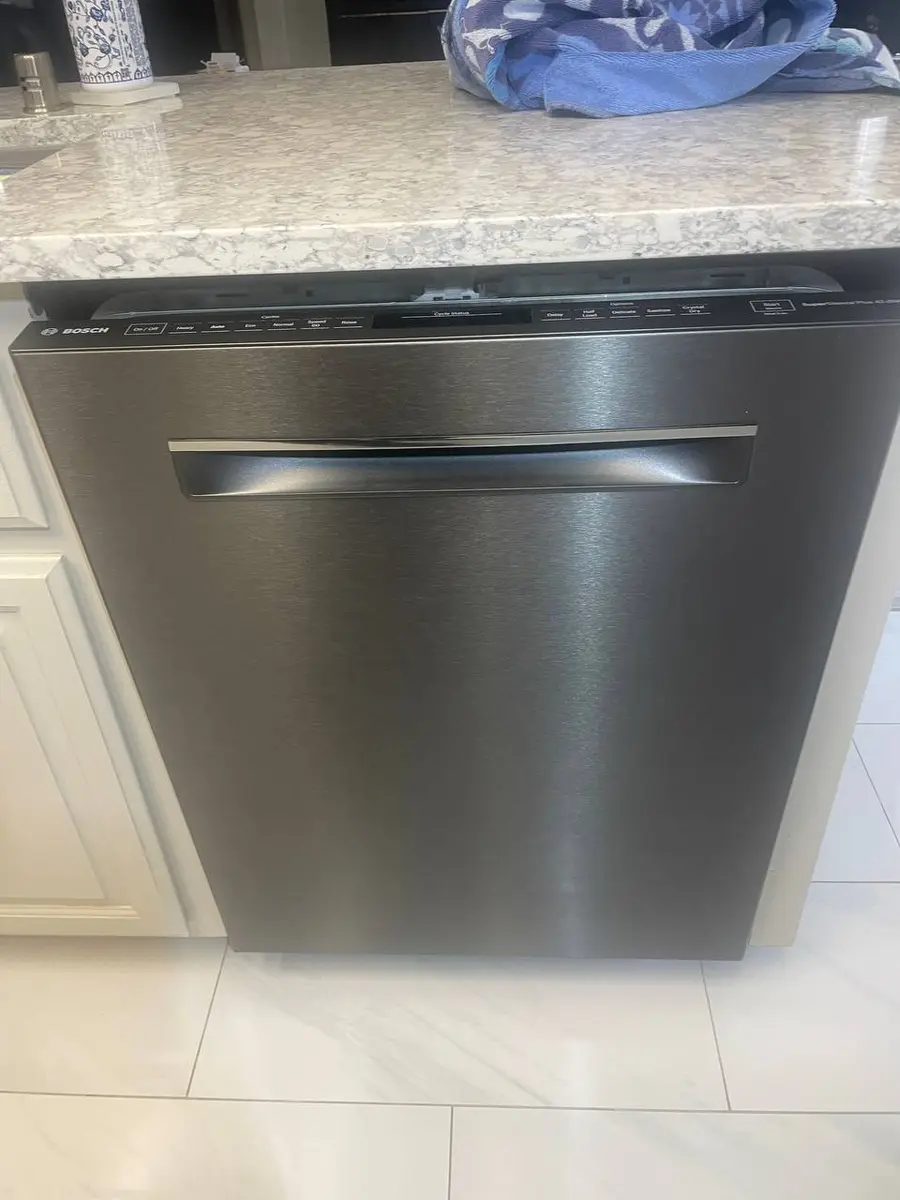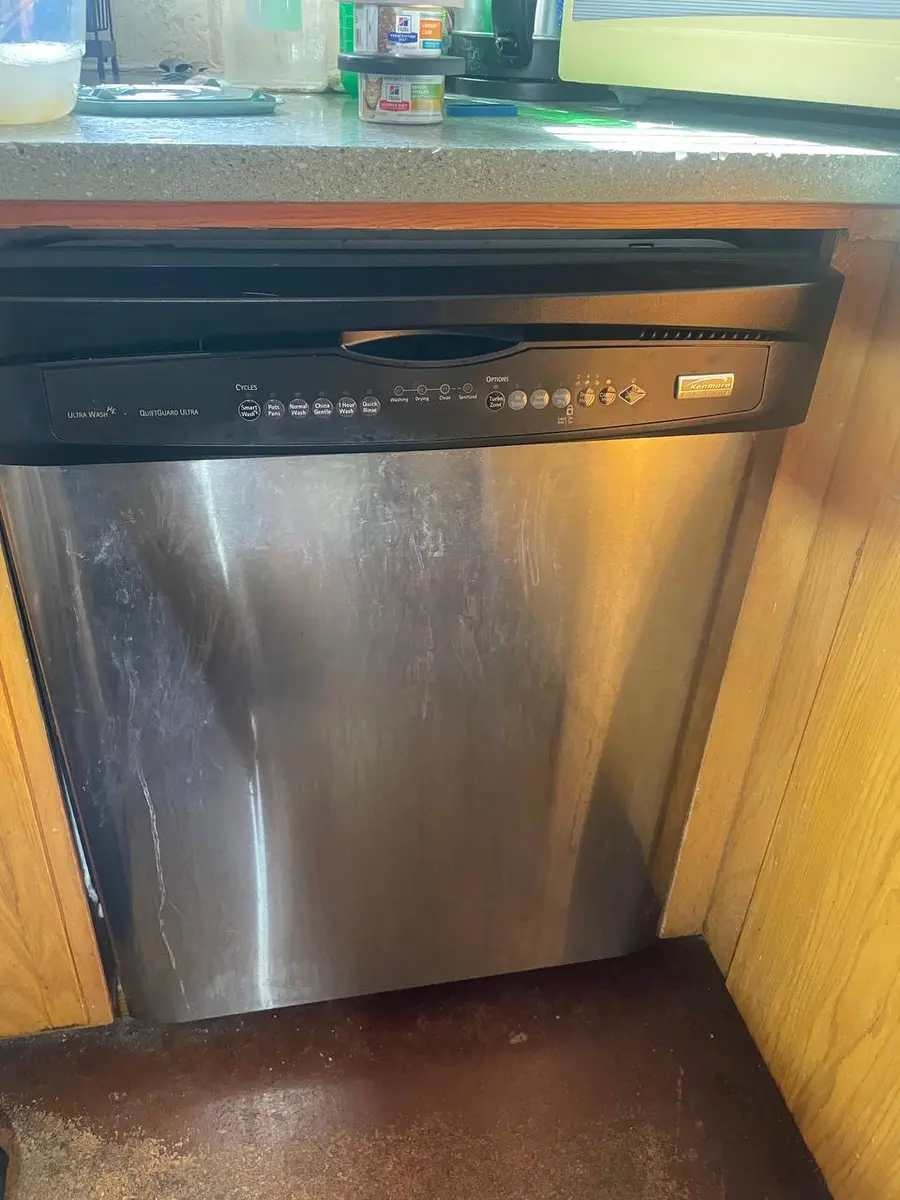
Whirlpool Dishwasher Filter
There are two filters down there, not one. The upper cylinder lifts straight out — no twist, no tools. The lower flat screen sits in a recessed track underneath and needs a quarter turn counterclockwise to release, and it is the one almost nobody cleans. Rinse both monthly, or fortnightly if you run the machine daily.
Why your dishwasher has a filter you have to clean#
Whirlpool moved away from self-cleaning chopper filters on most models after about 2010. The old design used a grinder — the W10083957 chopper blade — to pulverise food so it drained away, and it worked, but it was noisy. Trapping debris passively is what makes a modern machine quiet. The cost of that quiet is a monthly job.
Cleaning both pieces#
Current WDT and WDF machines all use the same two-piece arrangement at the centre of the tub floor, under the lower spray arm.
- Grasp the top ring of the upper cylindrical filter and lift straight up.
- Rotate the lower flat filter a quarter turn counterclockwise — there is an arrow moulded onto it — and lift it out.
- Rinse both under warm running water and work the mesh with a soft brush. An old toothbrush is ideal; scouring pads and abrasive cleaners destroy fine mesh.
- Hold the upper filter up to a light. You should see light coming through evenly. Dark patches mean embedded grease, which comes out with a fifteen-minute soak in warm water and a tablespoon of baking soda.
- Check the flat filter for tears, holes and deformed edges before it goes back.
- Refit the lower filter first, a quarter turn clockwise to lock, then drop the upper filter in.
Do You Have the Right Tools?
Water pressure gauge ($60), spray arm tester, float switch multimeter ($85), and drain inspection camera. Our technician arrives with $3,000+ in professional tools — your diagnostic is free.
Licensed & Insured · 90-Day Warranty · Same-Day Service
When cleaning is no longer the answer#
Replace the assembly — the numbers are W10872845 and WP10275108, with aftermarket sets available — when any of these are true:
- The mesh is torn or holed. Even a small tear passes food to the drain pump, where it can jam the impeller.
- The plastic frame is cracked or warped. A filter that will not seat properly leaves a gap, and water takes the gap rather than the mesh.
- The mesh stays discoloured after soaking. Permanently embedded grease and minerals cut flow even when the screen looks clear.
- The flat filter no longer locks. Worn locking tabs let it float, and a floating filter has no seal.
Swapping them takes under two minutes and no tools. Compare old and new side by side first — check the diameter and the locking tab positions match — then seat the lower filter in its track, lock it clockwise, and drop the upper one into the centre opening so it sits flush with the tub floor. Run a short rinse; rattling means the lower filter is not locked.
Most filters go 2-4 years before physical damage forces the issue.
If your machine still has a chopper#
On pre-2010 machines the W10083957 chopper blade sits on the wash motor shaft below the filter, grinding particles so they drain out. When food starts redepositing on dishes with one of these, the blade may be worn smooth or cracked, or the glass trap — the small screen around the chopper — may be packed with glass fragments. Reaching either means removing the lower spray arm and the filter plate, so it is a real repair rather than a two-minute swap.
Safety First — Know the Risks
Live 120V wiring in a wet environment is one of the most dangerous DIY scenarios. Water + electricity = serious shock risk. Our techs are licensed and insured — let them handle the risk.
Licensed & Insured · 90-Day Warranty · Same-Day Service
Four mistakes worth avoiding#
- Running a cycle with no filter fitted. Debris goes straight into the drain pump and can destroy the impeller.
- Treating tablet cleaners as a substitute. Affresh and similar products clean tub walls and spray arms; they do not lift debris out of filter mesh.
- Cleaning only the cylinder. The flat filter catches the smaller particles and clogs just as fast.
- Reaching for steel wool. It ruins the mesh permanently. Soft brushes, sponges or a soak, nothing harsher.
A sensible rhythm: rinse both pieces monthly, soak them in baking soda quarterly, inspect for tears and warping once a year, and check both filters plus the sump immediately after breaking a glass in the machine.
Dishes still dirty with genuinely clean filters? Clear each spray arm nozzle with a toothpick, check your tap water reaches at least 120 degrees F, and wipe the soil sensor lens in the sump with a soft cloth. If that fails, get started here.
Appliance Repair Technician · 8 years experience
Experienced technician with 8 years specializing in dishwasher repairs and European appliance brands including Bosch and Thermador.