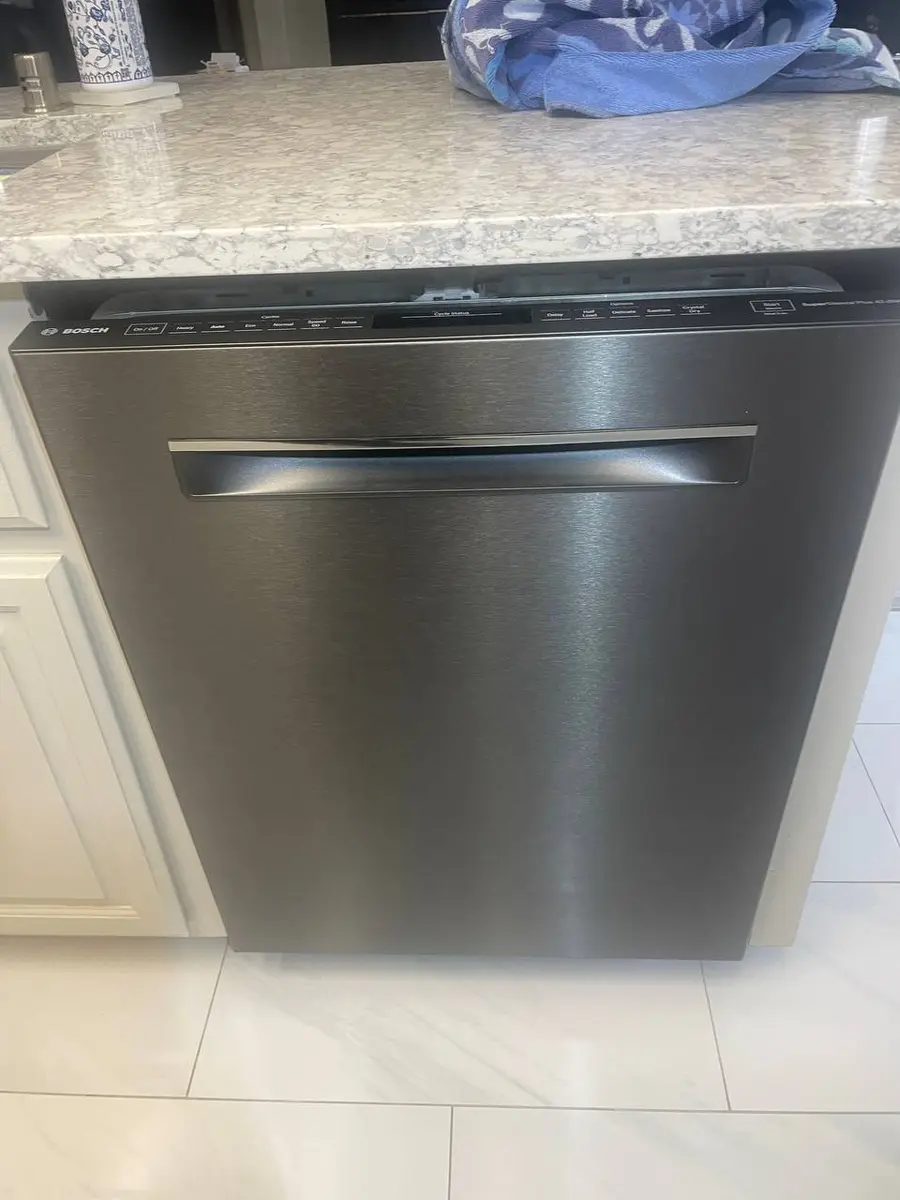
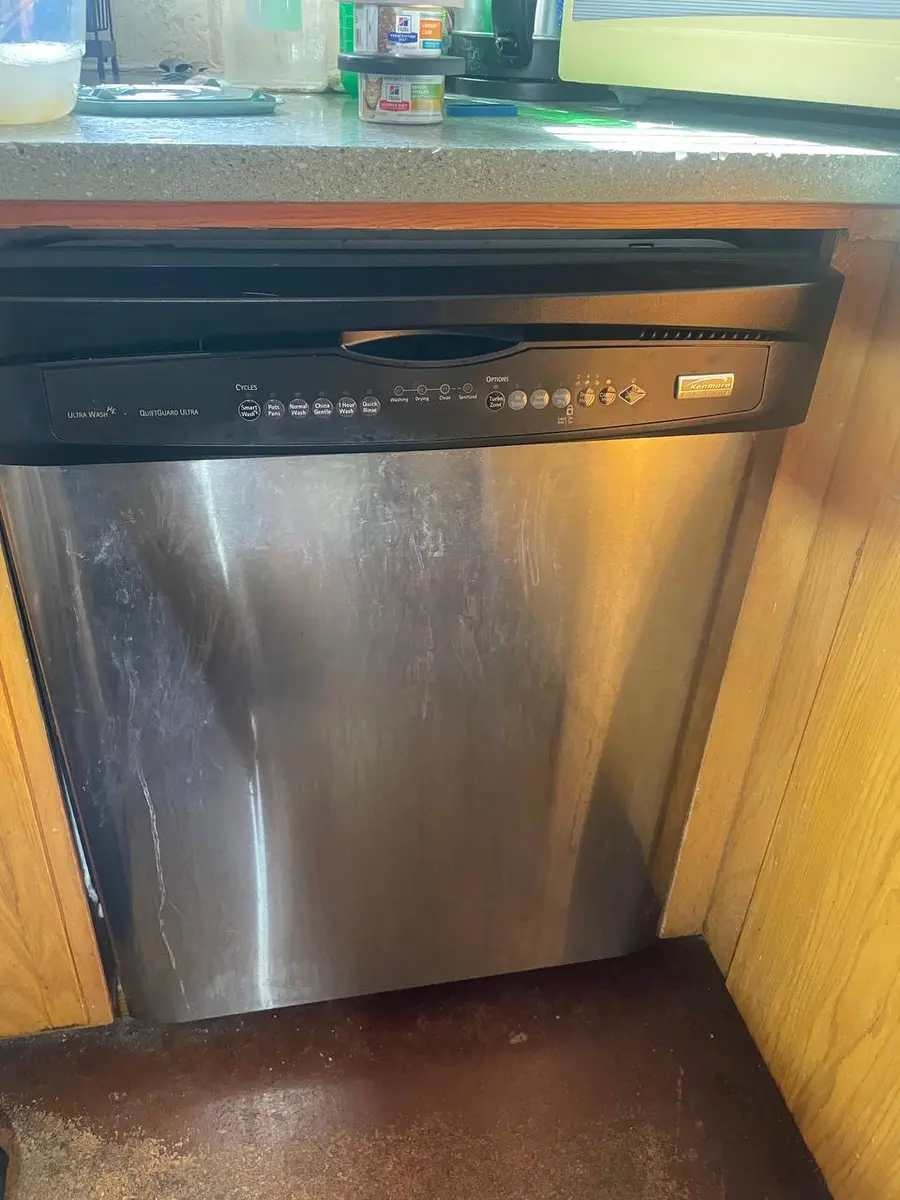
Dishwasher Leaving Cloudy Film on Glasses? Here's What's Happening#
You unload the dishwasher expecting sparkling clean glasses, and instead they're covered in a hazy, white film. You run them again — same result, or worse. This is one of the most common dishwasher complaints we hear from homeowners across the Bay Area and Sacramento, and it's almost always caused by one of two things: hard water mineral deposits or etching.
The fix depends entirely on which one you have. Here's how to tell the difference and what to do about each.
Hard Water Film vs. Etching: The Vinegar Test#
Before trying any fix, run this simple test to determine what you're dealing with:
- Take a cloudy glass from the dishwasher
- Soak a paper towel or cloth in white vinegar
- Press the vinegar-soaked cloth against the cloudy area for 5 minutes
- Remove and wipe the area dry
If the cloudiness disappears: You have hard water mineral deposits. This is fixable and preventable. Keep reading.
If the cloudiness remains: You have etching — permanent microscopic damage to the glass surface. Etching cannot be reversed, but it can be prevented from getting worse. Skip to the etching prevention section below.
Do You Have the Right Tools?
Water pressure gauge ($60), spray arm tester, float switch multimeter ($85), and drain inspection camera. Our technician arrives with $3,000+ in professional tools — your diagnostic is free.
Licensed & Insured · 90-Day Warranty · Same-Day Service
Understanding Hard Water in the Bay Area and Sacramento#
Hard water contains high concentrations of dissolved minerals — primarily calcium and magnesium. When water evaporates inside your dishwasher, these minerals are left behind as a white, chalky residue on your dishes, glasses, and the interior of the dishwasher itself.
Water hardness varies significantly across our service area. According to local water utility reports, Sacramento's water is moderately hard (75–150 ppm), while many Bay Area communities have moderate to hard water (100–200+ ppm). The San Jose Water Company reports some of the highest hardness levels in the region.
In our experience servicing dishwashers across both markets, hard water issues account for roughly 40% of "dishwasher not cleaning properly" calls — and the dishwasher itself is usually working perfectly. The water is the problem.
How to Remove Hard Water Film from Glasses and Dishes#
Method 1: Vinegar Rinse (Mild Buildup)#
For glasses with light film:
- Fill a basin with equal parts white vinegar and warm water
- Submerge glasses for 15–30 minutes
- Remove and hand-dry with a lint-free cloth
- Glasses should be clear
Method 2: Citric Acid Dishwasher Cycle (Moderate Buildup)#
For film on dishes and inside the dishwasher:
- Empty the dishwasher completely
- Place 1–2 tablespoons of citric acid powder (available at grocery stores in the canning section, or online) in the detergent cup
- Run the hottest, longest cycle
- This dissolves mineral deposits from the interior, spray arms, and heating element
Method 3: Commercial Dishwasher Cleaner (Heavy Buildup)#
For persistent film and visible mineral deposits inside the machine:
- Use a commercial dishwasher cleaner designed for hard water (Affresh, Finish Dishwasher Cleaner, or Glisten)
- Follow the package instructions — typically place the tablet or pour the liquid inside an empty dishwasher
- Run the hottest cycle
- Repeat monthly for maintenance
Safety First — Know the Risks
Live 120V wiring in a wet environment is one of the most dangerous DIY scenarios. Water + electricity = serious shock risk. Our techs are licensed and insured — let them handle the risk.
Licensed & Insured · 90-Day Warranty · Same-Day Service
How to Prevent Hard Water Film from Coming Back#
Use Rinse Aid — This Is Not Optional in Hard Water Areas#
Rinse aid is the single most effective tool against hard water film. It works by reducing the surface tension of water, causing it to sheet off dishes instead of forming droplets that evaporate and leave mineral spots.
How to use rinse aid:
- Open the rinse aid dispenser (next to the detergent dispenser on the door)
- Fill to the marked line
- Adjust the dispenser setting — in hard water areas, set it to the highest level (4 or 5 on most dishwashers)
- Refill when the indicator light comes on (typically every 1–2 months)
According to Consumer Reports dishwasher testing, using rinse aid improves drying performance by 30–40% and virtually eliminates water spots in hard water conditions.
If you're not using rinse aid in the Bay Area or Sacramento, this is likely your entire problem. Start here before changing anything else.
Switch to a Better Detergent#
Not all dishwasher detergents handle hard water equally. Our technicians consistently recommend:
Best for hard water (our top picks):
- Cascade Platinum Plus — contains built-in rinse aid and water softening agents
- Finish Quantum Ultimate — formulated for hard water with separate chambers for pre-wash and main wash
- Seventh Generation Ultra Power Plus — eco-friendly option that performs well in moderate hard water
Avoid in hard water:
- Powder detergents alone (they don't dissolve well in hard water)
- Gel detergents (least effective against minerals)
- Using too little detergent — contrary to popular advice, hard water requires the full recommended amount
Adjust Your Water Temperature#
The hot water entering your dishwasher should be at least 120°F for proper detergent activation and mineral dissolution. Test it:
- Run the hot water at your kitchen sink until it's fully hot
- Fill a glass and test with a cooking thermometer
- If it's below 120°F, increase your water heater setting
Note: The dishwasher's internal heater boosts water temperature during the cycle, but it starts from your supply temperature. If your supply is only 100°F, the dishwasher has to work much harder — and detergent may not fully dissolve.
Use the Dishwasher Salt Reservoir (If Your Model Has One)#
Many European-brand dishwashers (Bosch, Miele, Thermador) have a built-in water softener with a salt reservoir, usually located on the dishwasher floor. This is specifically designed for hard water areas.
- Open the salt reservoir cap (bottom of dishwasher, usually has a screw-off lid)
- Fill with dishwasher salt (not table salt — dishwasher salt is coarser and doesn't contain anti-caking agents that can damage the softener)
- Set the water hardness level in your dishwasher settings (check your manual — or look up your water hardness at your utility's website)
- The softener will automatically treat water during each cycle
If you have a Bosch or Miele dishwasher and have never added salt, this is likely why your glasses are cloudy. These dishwashers are designed to use salt — skipping it in hard water areas guarantees film buildup.
Preventing Etching (Permanent Glass Damage)#
If the vinegar test showed that your cloudiness is etching, here's what's happening and how to prevent more damage:
What Causes Etching#
Etching occurs when the glass surface itself is eroded by:
- Too-soft water combined with too much detergent — soft water + aggressive detergent = chemical attack on glass
- Pre-rinsing dishes too thoroughly — detergent needs some food residue to "work on." Without it, the alkaline chemicals attack the glass instead. The USGS notes that both extremes of water hardness can cause dishwasher problems.
- Excessively long or hot wash cycles — extended exposure to alkaline detergent and heat
- Phosphate-free detergents — since 2010, US dishwasher detergents can't contain phosphates, which previously protected glass surfaces
How to Prevent Further Etching#
- Don't pre-rinse — scrape food off, but leave some residue for the detergent to work on
- Use the appropriate detergent amount — don't overdose
- Select shorter cycles when dishes aren't heavily soiled
- Use a rinse aid — it reduces the time water sits on glass surfaces
- Hand-wash delicate or antique glasses — crystal, antique glass, and thin glass should never go in the dishwasher
The Real Cost of DIY
Average DIY attempt: $150-400 in tools you may use once, plus the risk of further damage. Our diagnostic visit costs $0 — we find the problem and give you an honest quote.
Licensed & Insured · 90-Day Warranty · Same-Day Service
Cleaning the Dishwasher Interior (Hard Water Maintenance)#
Hard water doesn't just affect your dishes — it builds up inside the dishwasher, reducing performance over time. In our service area, we see dishwashers with calcium-caked spray arms, mineral-blocked nozzles, and cloudy-coated heating elements that can't dry effectively.
Monthly Hard Water Maintenance#
- Clean the filter — remove, scrub under running water, reinstall. Hard water areas generate more buildup in the filter.
- Inspect spray arm holes — use a toothpick to clear any mineral deposits from the small spray holes. Hold the arm up to light to check.
- Run a vinegar cycle — place a cup of white vinegar on the top rack and run an empty hot cycle. This dissolves mineral deposits throughout the system.
- Wipe door gasket and edges — mineral buildup in the gasket can prevent proper sealing and lead to leaks.
Quarterly Deep Clean#
- Run a citric acid cycle (2 tablespoons in the detergent cup, hottest cycle)
- Clean the spray arms — remove them and soak in vinegar for 30 minutes
- Inspect the heating element (bottom of dishwasher) — white scale reduces drying performance. The vinegar/citric acid cycles should keep this clean.
When Hard Water Problems Indicate a Dishwasher Issue#
Sometimes the cloudy film isn't just a water quality problem — it's a symptom of a dishwasher malfunction:
- Rinse aid dispenser not releasing — the dispenser mechanism is stuck or the setting is too low. Open it and check that the mechanism moves freely. If it's stuck, a technician can replace it (varies by model and region).
- Water temperature too low — the dishwasher's internal heater may be failing. If dishes come out cold after a hot cycle, the heating element needs service (varies by model and region).
- Spray arms not rotating — mineral buildup in the spray arm bearings can freeze them. Remove, clean, and test. If they still don't spin freely, the bearing or spray arm mount needs replacement (varies by model and region).
- Water inlet valve partially blocked — mineral deposits can restrict the valve, reducing water flow into the dishwasher. You'll notice longer fill times and poor cleaning. Valve replacement cost varies by model and region.
According to Consumer Reports, regular maintenance extends the average dishwasher lifespan from 7–9 years to 12–15 years — and hard water areas benefit the most from consistent cleaning schedules.
Don't Void Your Warranty
Opening your appliance yourself may void the manufacturer warranty. Our repair comes with a 90-day guarantee, and we document everything for warranty compliance.
Licensed & Insured · 90-Day Warranty · Same-Day Service
Quick Decision Tree#
Cloudy glasses + vinegar removes the film → Hard water deposits → Use rinse aid + better detergent + monthly maintenance.
Cloudy glasses + vinegar doesn't help → Etching → Prevent further damage (less detergent, skip pre-rinse, shorter cycles).
Film on everything + dishwasher interior is scaled → Run citric acid cycle → Clean spray arms → Check heating element.
Film persists after all maintenance → Possible dishwasher malfunction (heater, inlet valve, dispenser) → Call a pro.
Appliance Repair Technician · 11 years experience
Experienced technician with 11 years specializing in Frigidaire and Electrolux refrigerator and dryer repair with a focus on safety.