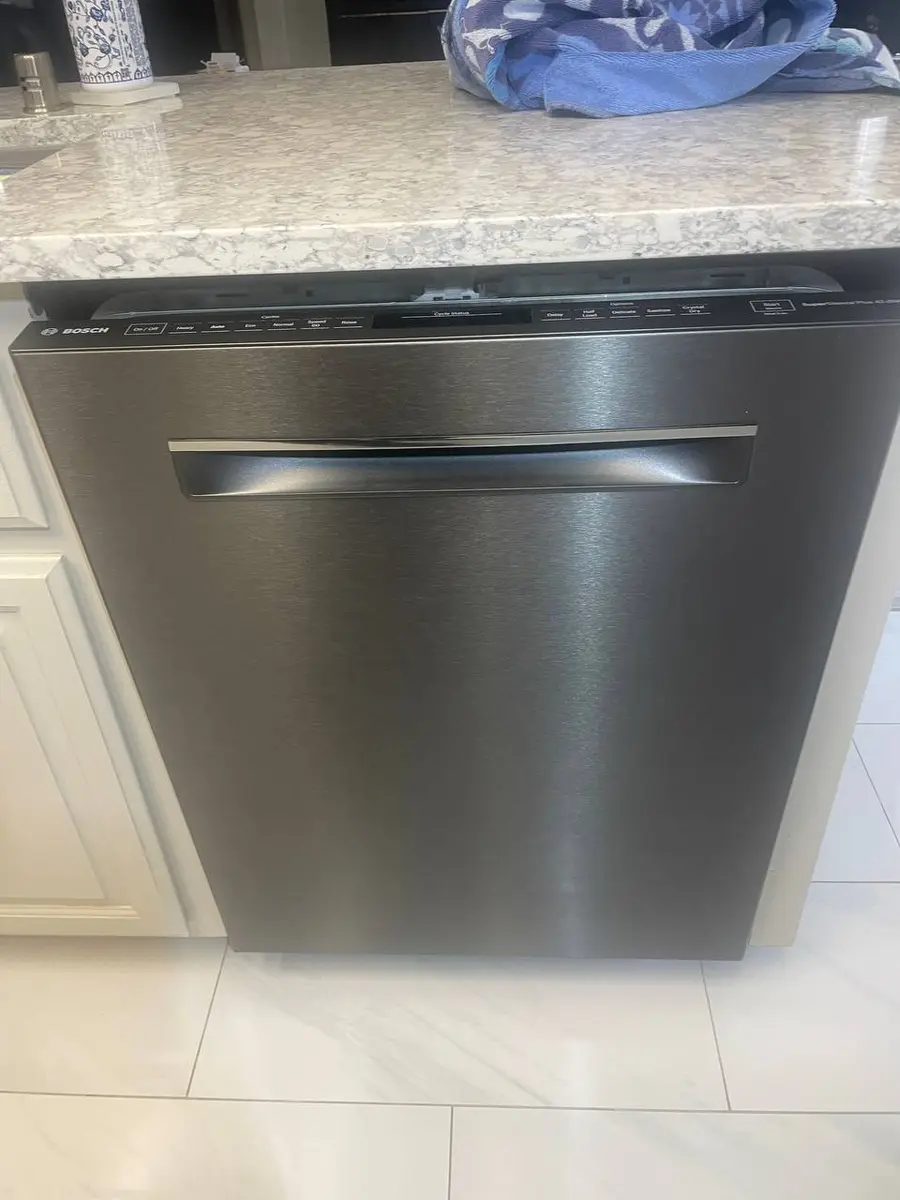
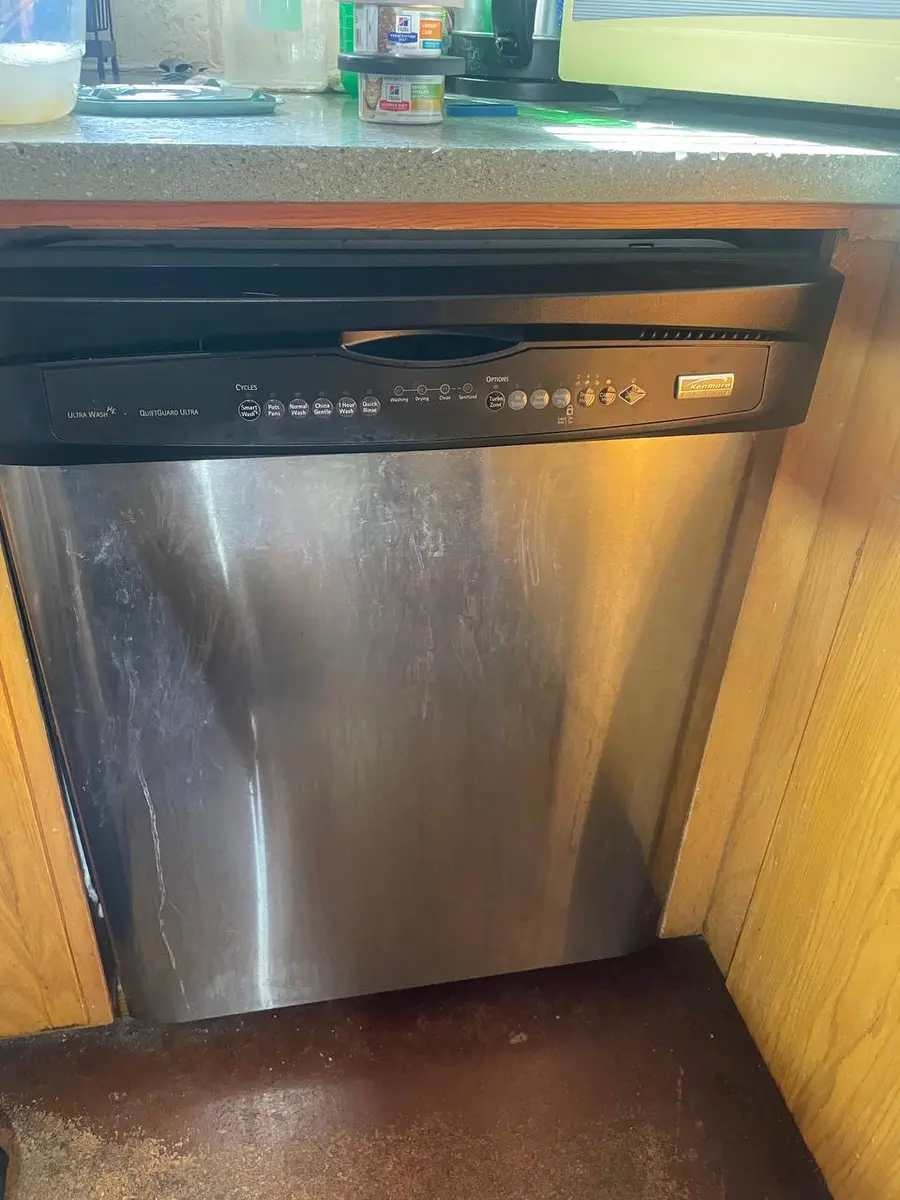
A GE dishwasher that will not drain leaves standing water in the tub, creates foul odors, and prevents you from running the next load. GE is one of the most common dishwasher brands in American kitchens, with models ranging from the basic GDF series to the GE Profile PDT series and the GE Cafe CDT series. Drain problems affect all models, and the good news is that the cause is almost always something accessible and fixable.
Here is a systematic approach to diagnosing and resolving a GE dishwasher that will not drain.
Step 1: Check the Drain Filter#
GE dishwashers manufactured after 2016 have a removable drain filter at the bottom of the tub. This is the first place to check, as it is the most common cause of drain failure.
How to Clean the Filter:
- Remove the lower dish rack to access the tub floor
- Locate the filter assembly at the center bottom of the tub. On GE models, it typically consists of an upper filter (cylindrical) that twists to remove and a lower filter (flat mesh) that lifts out
- Twist the upper filter counterclockwise and pull it out. Remove the lower filter
- Rinse both filters under running water and scrub with a soft brush to remove food particles, grease, and any mineral buildup
- Inspect the sump area beneath the filter for any debris, broken glass, or large food particles. Remove anything you find
- Reinstall the lower filter first, then the upper filter (twist clockwise to lock)
- Run a short cycle to test drainage
How Often: GE recommends monthly filter cleaning. Households that do not pre-rinse dishes should clean weekly.
Do You Have the Right Tools?
Water pressure gauge ($60), spray arm tester, float switch multimeter ($85), and drain inspection camera. Our technician arrives with $3,000+ in professional tools — your diagnostic is free.
Licensed & Insured · 90-Day Warranty · Same-Day Service
Step 2: Inspect the Garbage Disposal Connection#
If your GE dishwasher drains through a garbage disposal, the connection between them is a frequent source of blockage.
What to Check:
- Run the garbage disposal with water flowing for 30 seconds. If the disposal is partially clogged, it restricts the dishwasher's drain path as well
- If you recently installed a new garbage disposal, verify the knockout plug was removed from the dishwasher inlet port. This is a plastic disc inside the disposal's dishwasher connection that must be knocked out before connecting the drain hose. Leaving it in place completely blocks drainage
- Check the hose connection at the disposal for any kinking or compression
Step 3: Examine the Drain Hose#
The drain hose runs from the dishwasher to the sink drain or garbage disposal. Issues along this path can prevent drainage.
What to Check:
- Open the cabinet under the sink and trace the drain hose from the dishwasher to its connection point
- Look for kinks, sharp bends, or sections that are compressed by other items stored under the sink
- Verify the hose has a high loop (rising above the sink drain connection before descending to the disposal or drain). This prevents dirty water from siphoning back into the dishwasher
- If you have an air gap device on the sink, check it for blockage. Remove the cover and clean any debris inside
- Disconnect the hose at the disposal end and check for internal blockage. Blow through the hose to verify airflow
Safety First — Know the Risks
Live 120V wiring in a wet environment is one of the most dangerous DIY scenarios. Water + electricity = serious shock risk. Our techs are licensed and insured — let them handle the risk.
Licensed & Insured · 90-Day Warranty · Same-Day Service
Step 4: Test the Drain Pump#
If the filter is clean, the disposal connection is clear, and the hose is unobstructed, the drain pump is the next component to evaluate.
How to Diagnose:
- Start a drain cycle and listen at the lower-front of the dishwasher
- If you hear the drain pump humming but water is not moving, the pump impeller may be broken or the check valve is stuck. The pump has power but cannot move water
- If the pump is completely silent during the drain phase, the pump motor has failed or is not receiving power from the control board
- A grinding sound from the pump area indicates debris caught in the impeller. Small glass fragments, fruit pits, and bone chips are common culprits
Access the Pump:
- Turn off power to the dishwasher at the breaker
- Remove the kick plate at the bottom front
- The drain pump is typically located on the left side of the motor/pump assembly
- Check for any debris in the pump housing and verify the impeller turns freely
Part Cost: varies by part. Total Repair Cost: varies by part including labor.
Step 5: Check the Drain Solenoid (Older GE Models)#
Some older GE dishwashers (pre-2015) use a drain solenoid rather than a separate drain pump. The solenoid opens a drain valve during the drain phase. If it fails, water cannot exit the tub.
How to Diagnose:
- Listen for a click at the start of the drain cycle. The solenoid should make an audible click when it activates
- Test the solenoid with a multimeter for continuity (typically 40-80 ohms)
- If the solenoid reads OL (open line), it has failed and needs replacement
Part Cost: varies by part. Total Repair Cost: varies by part including labor.
The Real Cost of DIY
Average DIY attempt: $150-400 in tools you may use once, plus the risk of further damage. Our diagnostic visit costs $0 — we find the problem and give you an honest quote.
Licensed & Insured · 90-Day Warranty · Same-Day Service
Common GE Dishwasher Drain Error Codes#
Error Code C3 (on GE Profile models): Drain cycle timeout. The dishwasher attempted to drain but water level did not drop within the expected timeframe. Follow the diagnostic steps above.
Error Code PrS (on GE Cafe models): Pressure switch error related to water level detection. The machine thinks there is water in the tub even after draining. Check the pressure switch and its tubing for blockage.
Flashing Lights / Beeping (on models without displays): Many GE models without digital displays indicate drain errors by flashing the start or cycle-complete light a specific number of times. Count the flashes and consult the installation guide taped inside the door panel.
Preventing Future Drain Problems#
- Clean the filter monthly, or more often if you load dishes without rinsing
- Scrape large food pieces into the trash before loading. You do not need to pre-rinse, but bones, toothpicks, and large debris should not enter the dishwasher
- Run the garbage disposal before starting the dishwasher to clear the shared drain path
- Check under the sink periodically to ensure nothing is pressing on or kinking the drain hose
- Run a hot cycle with vinegar monthly to dissolve grease buildup in the drain path
Don't Void Your Warranty
Opening your appliance yourself may void the manufacturer warranty. Our repair comes with a 90-day guarantee, and we document everything for warranty compliance.
Licensed & Insured · 90-Day Warranty · Same-Day Service
When to Call a Professional#
Filter cleaning, disposal connection checks, and drain hose inspection are straightforward tasks for any homeowner. Drain pump replacement involves accessing components under the dishwasher, disconnecting water lines, and working with electrical connections. If you have identified that the pump is the issue and are not comfortable with the disassembly, professional service ensures the job is done correctly and leak-free.
EasyBear technicians carry GE drain pumps and can complete the replacement in a single visit. Our diagnostic is free, and we quote the full repair cost before any work begins.
Frequently Asked Questions#
Q: My GE dishwasher drains slowly but not completely. What is the most likely cause? A: A partially clogged filter, a slow garbage disposal, or a partially blocked drain hose. Clean the filter first, run the disposal, and check the hose for kinks. A drain pump that is losing efficiency can also cause slow drainage.
Q: Can I manually drain my GE dishwasher? A: You can scoop water out of the tub with a cup and soak up the remainder with towels. Some GE models have a drain hose that can be disconnected at the disposal end to drain by gravity into a bucket, but this is messy and should be a last resort.
Q: How much does it cost to replace a GE dishwasher drain pump? A: The pump part runs varies by model and region depending on the model. With labor, the total repair cost is typically varies by model and region. This is significantly less than replacing the entire dishwasher.
Q: My GE dishwasher is 12 years old and the drain pump failed. Repair or replace? A: GE dishwashers last 10-15 years. At 12 years, a $200 pump repair may get you another 2-3 years. If the machine has other issues (poor cleaning, leaking, frequent problems), replacement may be the better investment. If the pump is the only problem, repairing is reasonable.
Appliance Repair Technician · 8 years experience
Experienced technician with 8 years specializing in dishwasher repairs and European appliance brands including Bosch and Thermador.