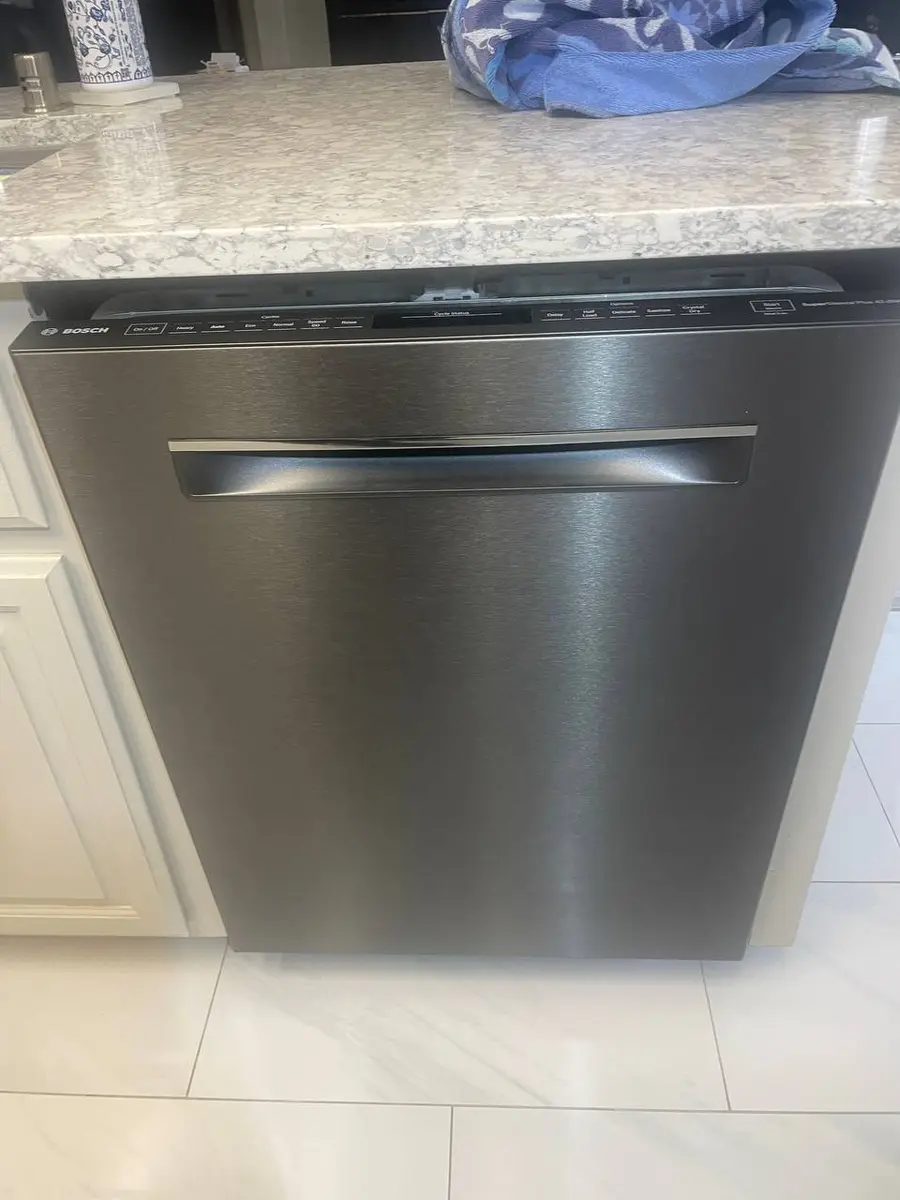
Maytag Dishwasher Rust and Corrosion — Causes, Repair & Prevention
Rust inside a Maytag dishwasher is not just cosmetic — it can contaminate dishes, clog the spray arms, damage the pump, and indicate that critical protective coatings have failed. Maytag MDB dishwashers use a stainless steel tub interior on most models (a key selling point of the brand's durability marketing), but the racks, hinge mechanisms, spray arm bearings, and miscellaneous hardware are made from coated steel that corrodes when the protective layer chips or wears through.
Maytag dishwashers are manufactured by Whirlpool Corporation and share the same platform as Whirlpool and KitchenAid dishwashers. This means parts are cross-compatible, and the same corrosion patterns affect all three brands. Maytag positions itself as the durability-focused brand with a 10-year limited warranty on racks, the stainless steel chopper blade, and the stainless tub — a warranty that specifically covers corrosion-related rack failure, which is unusual in the industry.
Where Rust Appears in Maytag Dishwashers
- Rack tines — the most common and most visible. The vinyl coating on rack tines chips from loading heavy pots and pans, exposing bare steel wire that rusts within days.
- Lower rack wheels and roller tracks — the wheel axle pins corrode, causing wheels to seize and racks to bind when sliding.
- Door hinge springs and pins — exposed steel components in the hinge mechanism rust from steam exposure every cycle.
- Spray arm pivot bearings — the center bearing where the spray arm mounts can corrode, causing the arm to wobble or stick.
- Chopper blade area — while the blade itself is stainless steel, the mounting hardware and surrounding sump components can corrode.
- Door latch mechanism — the mechanical latch components (springs, levers) can rust and become stiff.
- Exterior door handle and hinge covers — painted or stainless exterior components develop surface rust in humid kitchen environments.
Do You Have the Right Tools?
Water pressure gauge ($60), spray arm tester, float switch multimeter ($85), and drain inspection camera. Our technician arrives with $15K+ in professional tools — your diagnostic is free.
Licensed & Insured · 90-Day Warranty · Same-Day Service
Safety Precautions
- Stop using the dishwasher if you find rust flakes on dishes — ingestible rust particles are not dangerous in small amounts, but they indicate ongoing metal degradation that will worsen.
- Wear gloves when handling rusted racks — exposed wire tines are sharp.
- Disconnect power at the breaker before inspecting internal components (hinge mechanism, door latch, sump area).
Cause 1: Rack Tine Vinyl Coating Failure (40% of cases)
This is the most common rust problem in Maytag dishwashers and the reason Maytag specifically covers racks under their 10-year warranty. The vinyl coating on rack tines chips when heavy cookware is loaded and unloaded repeatedly. Sacramento-area hard water (8-12 grains/gallon) accelerates corrosion because mineral deposits accumulate under the vinyl at chip points, lifting more coating and expanding the exposed area.
Once a tine rusts, the orange-brown rust flakes into the wash water and can stain light-colored dishes, clog spray arm nozzle holes, and accumulate in the filter. Severe tine corrosion weakens the wire to the point of breaking, creating sharp protruding ends that can scratch dishes or cut fingers during loading.
Diagnosis:
- Pull each rack fully out and inspect every tine. Pay special attention to the front row (most heavily loaded) and the fold-down tines.
- Run a finger along each tine — rough spots under the vinyl indicate rust forming beneath the coating even where it appears intact.
- Check the 3rd rack utensil tray (if equipped) — the smaller-gauge wire on the 3rd rack tines chips more easily.
Repair Options:
- Rack tine cap repair kit — ReRack or similar vinyl caps push onto damaged tines, covering the exposed metal. Works for fewer than 10 affected tines.
- Vinyl touch-up paint — food-safe vinyl coating paint (available in appliance repair supply stores) applied to cleaned, sanded tine ends. Sand rust to bare metal first, then apply 2-3 coats with drying time between.
- Full rack replacement — when more than 20% of tines are affected, replacement is more practical. Check Maytag's 10-year rack warranty first — this specific coverage is one of Maytag's differentiators from the base Whirlpool line.
Maytag/Whirlpool Part Numbers:
- Lower rack: model-specific (W10727422 common for MDB series)
- Upper rack: model-specific (W10728863 common)
- Rack adjuster wheels: W10195416 (sold in pairs)
DIY Difficulty: Easy (caps/paint) to moderate (full rack replacement involves disconnect of rack rollers and water feed tube for upper rack). Parts Cost: $8-$15 (repair caps) or $80-$180 (full rack) Professional Repair Cost: Not typically a service call — rack replacement is DIY.
Safety First — Know the Risks
Live 120V wiring in a wet environment is one of the most dangerous DIY scenarios. Water + electricity = serious shock risk. Our techs are licensed and insured — let them handle the risk.
Licensed & Insured · 90-Day Warranty · Same-Day Service
Cause 2: Rack Wheel and Roller Corrosion (20% of cases)
The rack wheels (rollers) that allow racks to slide in and out mount on steel axle pins. These pins corrode from constant water exposure, causing the wheels to seize. Seized wheels make the rack difficult to pull out and push in, and the binding can crack the rack frame where the wheels attach.
Maytag's upper rack adjuster mechanism is particularly susceptible because it uses a lever-action height adjustment that applies lateral force on the wheel assemblies. When the wheel pins are corroded, the adjustment mechanism binds and can break the plastic lever.
Diagnosis:
- Pull each rack in and out. Smooth rolling = wheels are fine. Grinding, catching, or requiring force = wheels are seized.
- Remove a wheel assembly (usually clips or snap-fits onto the rack rail). Inspect the axle pin — any orange discoloration or rough surface confirms corrosion.
- Try spinning the wheel on its axle — it should rotate freely.
Repair:
- Replace the complete wheel assembly — attempting to clean corroded axle pins is temporary.
- On Maytag upper racks, replace the full adjuster kit (includes wheels, track, and adjustment lever).
Maytag/Whirlpool Part Numbers: W10195416 (lower rack wheels, pair), W10350376 (upper rack adjuster, common across Whirlpool platform).
DIY Difficulty: Easy — snap-fit or clip attachment. Parts Cost: $10-$35 per set Professional Repair Cost: Not typically a service call item.
Cause 3: Door Hinge and Spring Corrosion (15% of cases)
The door hinge mechanism on Maytag dishwashers includes steel springs, hinge pins, and cable pulleys that balance the door weight. These components are exposed to steam from every wash cycle. Over time, the springs lose their protective coating, rust develops, and the springs weaken or break. A broken door spring causes the door to fall open suddenly instead of lowering gradually.
Diagnosis:
- Open the door slowly — if it drops rapidly or feels heavier than normal at any point, a spring is weakened or broken.
- Remove the lower access panel. The hinge springs are visible at the bottom of each side of the door.
- Inspect springs for orange discoloration, surface pitting, or broken coils.
Repair:
- Replace both springs simultaneously — if one has corroded, the other is in similar condition.
- Lubricate the hinge pins with food-grade silicone spray after replacement.
- Inspect the hinge cables at the same time — a frayed cable combined with rusty springs creates a door-drop hazard.
Maytag/Whirlpool Part Numbers: Model-specific — consult your model number. Hinge kits typically include springs, cables, and bushings as a set.
DIY Difficulty: Moderate — springs are under tension. Use caution during removal. Parts Cost: $20-$50 (hinge spring kit) Professional Repair Cost: $120-$200
The Real Cost of DIY
Average DIY attempt: $150-400 in tools you may use once, plus the risk of further damage. Our diagnostic visit costs $0 — we find the problem and give you an honest quote.
Licensed & Insured · 90-Day Warranty · Same-Day Service
Cause 4: Spray Arm Bearing Corrosion (10% of cases)
The lower spray arm mounts on a center hub that sits in a bearing surface on the sump housing. This bearing rotates at high speed during the wash cycle while submerged in hot, mineral-laden water. Over time, the bearing surface corrodes and roughens, causing the spray arm to wobble, scrape against the tub floor, or stop rotating altogether. A stuck spray arm results in poor wash performance because water is not distributed across the full rack area.
Diagnosis:
- Remove the lower rack. Grasp the spray arm and spin it — it should rotate smoothly with minimal wobble.
- Lift the spray arm off its mount (twist counterclockwise on the center nut, then lift). Inspect the bearing surface — roughness, pitting, or visible rust confirms corrosion.
- Check the spray arm nozzles for rust particles that may have been carried from the bearing into the wash water.
Repair:
- Replace the spray arm bearing/hub assembly.
- If the spray arm itself has corroded nozzle holes (enlarged or irregularly shaped), replace it as well — clogged or misshapen nozzles reduce water pressure and spray coverage.
Maytag/Whirlpool Part Numbers: W10083957 (chopper blade/sump area components), spray arm model-specific.
DIY Difficulty: Easy — twist-off removal, no tools required. Parts Cost: $15-$40 Professional Repair Cost: $89-$160
Same-Day Appliance Repair
Fixed or It's Free
$89 → $0 Service Call & Diagnosis — offer ends May 25
Cause 5: Exterior Handle and Panel Rust (10% of cases)
Maytag dishwashers with stainless steel exterior panels use the Fingerprint-resistant stainless finish on most current models, which resists corrosion better than raw stainless. However, the door handle mounting points, hinge cover plates (painted steel, not stainless), and the control panel perimeter can develop surface rust. Kitchen environments with poor ventilation, steam from adjacent cooktops, and humid Bay Area winter conditions accelerate exterior corrosion.
Repair:
- For handles: remove (2 bolts inside door edge), sand with 220-grit, apply stainless touch-up or clear coat.
- For hinge covers: these are painted stamped steel — sand, prime with rust-inhibiting primer, and repaint with appliance spray paint.
- For severe cases: replacement handles and covers are available by model number.
DIY Difficulty: Easy Parts Cost: $15-$60 Professional Repair Cost: Not typically a service call item.
Don't Void Your Warranty
Opening your appliance yourself may void the manufacturer warranty. Our repair comes with a 90-day guarantee, and we document everything for warranty compliance.
Licensed & Insured · 90-Day Warranty · Same-Day Service
Cause 6: Tub Bottom Staining and Surface Corrosion (5% of cases)
Even Maytag's stainless steel tub can develop surface discoloration that resembles rust. This is typically not actual corrosion of the stainless — it is iron-oxide deposits from Sacramento's water supply or from rusted rack tines transferring particles to the tub surface. True stainless tub corrosion is rare and would indicate a manufacturing defect covered by Maytag's warranty.
Diagnosis:
- Wipe the discolored area with a cloth dampened in white vinegar. If the stain lifts, it is surface iron deposit, not tub corrosion.
- If the stain does not lift with vinegar, try a non-abrasive stainless cleaner like Bar Keepers Friend.
- If the stain remains and the surface feels rough or pitted to the touch, this is genuine tub corrosion — contact Maytag for warranty evaluation.
DIY Difficulty: Very easy (cleaning) Parts Cost: $0-$8 (cleaning products) Professional Repair Cost: N/A — warranty claim if true tub corrosion.
Prevention Tips
- Load racks carefully — avoid slamming heavy pots onto tines. The vinyl coating is the primary corrosion barrier.
- Inspect tines monthly — catch chips early before rust develops. A $3 tine cap kit prevents a $150 rack replacement.
- Use Maytag-recommended detergent amounts — excess detergent creates alkaline residue that accelerates metal corrosion.
- Run the hottest cycle monthly (sanitize or PowerBlast) with white vinegar in a cup on the top rack — dissolves mineral deposits that harbor moisture against metal surfaces.
- Lubricate door hinges annually with food-grade silicone spray.
- Clean the filter weekly — trapped food particles create an acidic environment in the sump that accelerates corrosion of nearby metal components.
Is It Worth Your Time?
Dishwasher issues overlap between drain pump, wash motor, inlet valve, and control board. DIY diagnosis averages 3-5 hours. Our technician diagnoses the issue in about 30 minutes — same-day appointments available.
Licensed & Insured · 90-Day Warranty · Same-Day Service
FAQ
Q: Does Maytag's 10-year warranty cover rusty racks? A: Yes. Maytag's 10-year limited warranty specifically covers the racks, stainless steel tub, and stainless steel chopper blade. Rack corrosion from normal use qualifies for warranty replacement. Contact Maytag/Whirlpool (1-800-344-1274) with your model number and purchase date.
Q: Are the orange stains on my dishes from a rusty dishwasher? A: Usually yes. Rust flakes from corroded rack tines are the most common source. Pull the racks and inspect each tine for chipped vinyl coating and bare metal. Fix or replace the affected rack to stop the contamination.
Q: Can I use a rust remover like CLR inside my Maytag dishwasher? A: CLR (Calcium Lime Rust) can be used for a one-time cleaning cycle — run an empty cycle with 1/2 cup CLR in the bottom of the tub. However, do not use it regularly as the acidic formula can accelerate degradation of rubber seals and gaskets with repeated exposure.
Q: My Maytag dishwasher door falls open suddenly. Is this related to rust? A: Almost certainly. The door balance springs are the most common internal corrosion point. Rusted springs weaken and eventually break, causing the door to drop. Replace both springs as a set.
Rust inside your Maytag dishwasher staining dishes? Our technicians diagnose the source — whether it is rack corrosion, bearing wear, or tub deposits — and repair it on-site. Schedule your repair →