Want a regional phone & address? Pick your area.
Washing Machine Repair & Troubleshooting Guides
Washing machine repair guides covering error codes, drum bearing noise, drainage failures, and DIY fixes for Samsung, LG, and Maytag models.
A broken washing machine stalls your entire household routine. Clothes pile up, trips to the laundromat burn time and money, and ignoring a small leak can cause hundreds of dollars in water damage to your subfloor. These guides help you diagnose the problem accurately — whether it is a drum bearing grinding, a drain pump failing to evacuate water, or an error code flashing on the control panel — so you can decide between a targeted repair and a full replacement.
Front-load washers dominate Bay Area homes and come with their own failure patterns: door boot seal tears that cause slow leaks, spider arm corrosion on the rear drum (especially in Samsung models manufactured 2011-2016), and mold buildup in the gasket that no amount of cleaning tablets fully prevents. Our guides for top-load machines cover the agitator-vs-impeller debate, lid switch failures that halt mid-cycle, and the common transmission issues on Maytag and Whirlpool direct-drive units.
Water hardness varies significantly across California — Sacramento averages 5-7 grains per gallon while parts of the East Bay exceed 15 — and this directly impacts detergent dosing, inlet valve scale buildup, and heater element lifespan. We factor these conditions into every troubleshooting guide.
912 articles
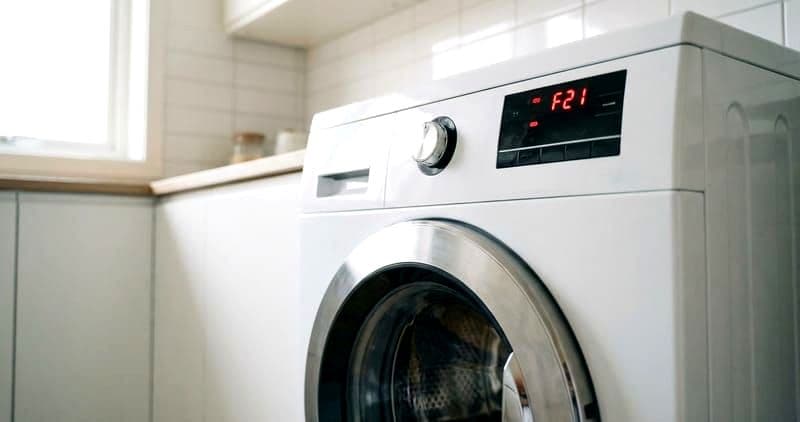
Whirlpool Washer Cycle Not Completing — Diagnosis
A Whirlpool washer that won't finish a cycle usually stalls at drain, on a marginal lid switch or door lock, or in a rebalance loop. Note which phase it hangs at, then use this ranked guide and the F-codes to pinpoint the part.
sarah-chen·6 min read
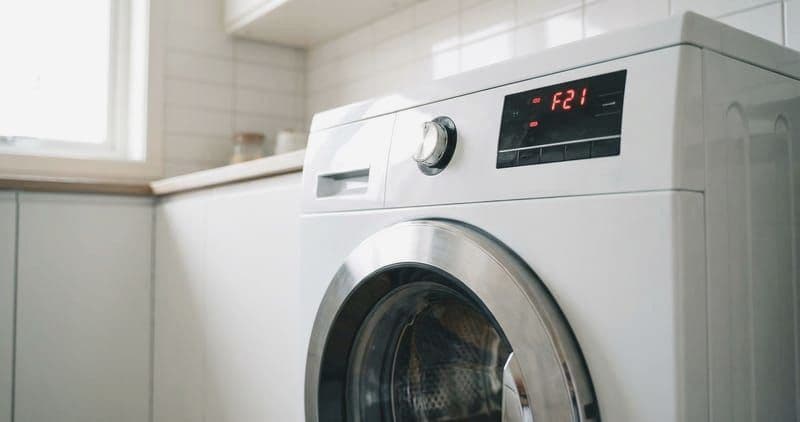
Whirlpool Washer Display Not Working? Causes
A dark Whirlpool washer display is most often just no power reaching it, or a failed UI board. The relay-click test tells you in seconds whether the main control board is still alive.
sarah-chen·6 min read
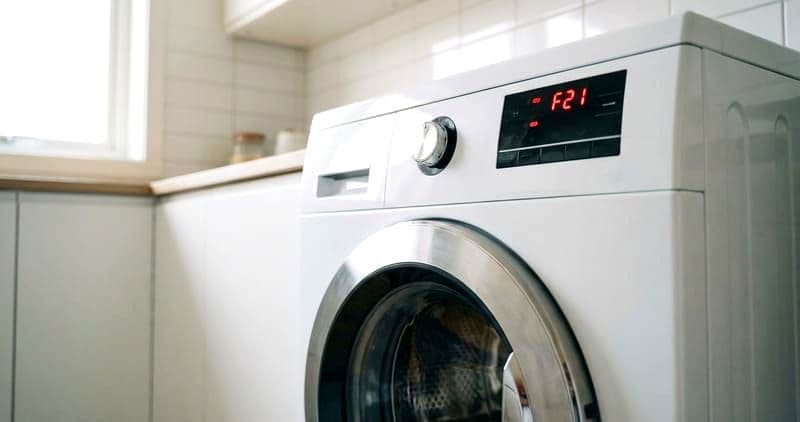
Whirlpool Washer Error Code Displayed: Causes
A Whirlpool washer error code uses an F number for the system and an E number for the fault — F0 is communication, F5 is the door lock, F7 is the motor, F8 is water, F9 is drain. This guide decodes the families and shows the fix for each.
sarah-chen·4 min read
Whirlpool Washer Filling When Not in Use? Causes
Most likely the water inlet valve can no longer seal, so supply pressure trickles past its diaphragm and the tub slowly fills. On Whirlpool WTW and WFW models this phantom filling is nearly always the valve. First move: shut both water supply valves behind the machine to stop the overflow, then diagnose.
sarah-chen·5 min read
Whirlpool Washer Won't Fill: Ask the Nearest Tap
Both sides trickling and one side dead are different faults with different cures. Two free observations — which temperature is affected, and how fast the nearest tap runs — cut a six-cause list down to one or two.
sarah-chen·12 min read
Whirlpool Washer Making Loud Noise — Causes & Fix
Whirlpool washer grinding, banging, or squealing? On WTW top-loaders and WFW front-loaders the sound points to the bearing, drive block, suspension rods, pump, shift actuator, or shocks.
sarah-chen·5 min read
Whirlpool Washer Burning Smell: Causes & Fix
A burning smell from your Whirlpool washer points to a slipping coupling, glazed belt, seized pump, or overheating motor. Diagnose by odor and location — EasyBear guide.
sarah-chen·7 min read
Whirlpool Washer Door Latch Failure: Causes & Fix
Whirlpool lock faults split by design: a front-loader's wax motor throws F5E2, a top-loader's reed switch fails silently. The symptom names the part. EasyBear guide.
sarah-chen·7 min read
Whirlpool Washer Leaking Repair Guide
Whirlpool washer leaking water? Diagnose door bellow tears, tub-to-pump hose failures, and Load & Go dispenser leaks on WFW and WTW models. Learn about...
sarah-chen·9 min read
Samsung Washer Won't Start — Causes & Fixes
Samsung washing machine won't turn on or start a cycle? Diagnosis of control board failures, door lock faults, and power supply issues on WF45/WF50/WA50...
mike-rodriguez·4 min read
Speed Queen Washer Making Noise: Causes & Fix
Speed Queen washer making noise? On these commercial-grade machines it's usually a tub bearing, drain pump, or belt. Diagnose by the sound and cycle phase.
sarah-chen·4 min read
Help! Speed Queen Washer Vibrating Excessively
Speed Queen washer vibrating excessively? Expert diagnosis of common causes, model-specific fixes, and repair costs for Speed Queen washers. Book same-day repai
sarah-chen·5 min read
What Causes Speed Queen Washer Won't Spin?
Speed Queen washer won't spin? Diagnosis of transmission gear failures, clutch assembly wear, and timer issues on Speed Queen TR/TC series commercial-grade...
sarah-chen·4 min read
Samsung Washer Won't Start? Causes & Fix
A Samsung washer that won't start is either a dead power chain or a machine waiting on the door lock. Sort which one you have, then work the ranked cause list.
mike-rodriguez·7 min read
Samsung Washer Won't Spin? Causes & Fix
A Samsung washer that won't spin is often spider-arm corrosion on WF front-loaders or a broken belt on WA top-loaders, plus a door lock that blocks spin. Know your drive system first.
mike-rodriguez·6 min read
Samsung Washer Cycle Not Completing: Causes & Fix
Samsung washer stuck mid-cycle? With no mechanical timer, the board stalls whenever a sensor reports out-of-range — so the number the display freezes at tells you which sensor. 1 minute means drain; time jumping back means rebalance; frozen fill means the pressure tube.
mike-rodriguez·8 min read
Samsung Washer Not Heating: Causes & Fix
A Samsung washer not heating starts with one question — does your model have an internal heater? If it does, an HE code points to the thermistor or element. EasyBear guide.
mike-rodriguez·5 min read
Samsung Washer Overflowing: Causes & Fix
A Samsung washer overflows when it can't sense water level — a third of the time it's just a kinked or clogged pressure tube. Then the inlet valve, transducer, or board. OE code explained.
mike-rodriguez·7 min read
Samsung Washer Burning Smell? Causes & Fix
A burning smell from a Samsung washer means something is overheating. Unplug it, read the odor, and use our ranked cause table to find the board, motor, belt, or pump at fault.
mike-rodriguez·7 min read
Samsung Washer Display Not Working? Causes & Fix
A blank Samsung washer display is usually a break between its two boards — a lost power feed, the communication cable, or the display sub-board. Here's how to isolate it.
mike-rodriguez·8 min read
Samsung Washer No Hot or Cold Water? Causes & Fix
A Samsung washer missing hot or cold water usually has a burned-out inlet-valve coil, a closed tap, or a clogged screen. First rule out a normal EcoBubble cold cycle.
mike-rodriguez·5 min read
Samsung Washer Wrong Temperature
A Samsung washer that seems to ignore your temperature setting is often EcoBubble washing cold by design. Here is how to tell that from a real fault — a dead solenoid, swapped hoses, or a bad thermistor.
mike-rodriguez·5 min read
Samsung Washer Making a Loud Noise — Diagnosis
A loud Samsung washer is usually a foreign object in the drain pump, a worn tub bearing, or a cracked spider arm. Use the noise character and timing to pinpoint the part, with a ranked cause table, the exact Samsung part numbers, and DIY checks.
mike-rodriguez·6 min read
Samsung Washer Tripping Breaker
Samsung washer tripping your circuit breaker or GFCI? Diagnose ground faults from water intrusion, motor winding shorts, and heater element leakage.
mike-rodriguez·6 min read
Samsung Washer Shaking and Walking? Causes & Fix
A Samsung washer that walks is telling you its VRT balance ring can't contain the spin — worn steel balls on an older machine, or shipping bolts left in on a new one. Leveling and shocks round out the list.
mike-rodriguez·5 min read
Samsung Washer Timer Stuck? Causes & Fix
A Samsung washer timer that won't advance is a stalled cycle, not a broken clock. The board freezes wherever a sensor check fails — most often an incomplete drain near the end that ends in 5E.
mike-rodriguez·5 min read

Samsung Washer Door Latch Failure: Causes & Fix
A Samsung washer that won’t lock or unlock is usually a failed wax-motor lock, then harness corrosion or a misaligned strike. Ranked causes, the lock part number, and safe checks before replacing the latch assembly.
mike-rodriguez·3 min read
Samsung Washer Filling When Not in Use: Causes
Most likely: mineral buildup on Samsung's small-orifice inlet valve seat lets water seep past even with the machine off. One test settles it — unplug the washer: if water still enters, the valve failed; if only when plugged in, a stuck control-board relay holds it open. Shut the supply valves first…
mike-rodriguez·4 min read
Samsung Washer Rust and Corrosion: What to Check
Most likely: spider arm corrosion inside a front-load WF Samsung washer — the aluminum spider (DC97-16509A) dissolves against the stainless drum and sheds rust onto your laundry. The boot-seal "rust" and cabinet spots most owners also see are cosmetic, so telling the three apart is the whole diagnosis…
mike-rodriguez·4 min read
Samsung Washer Drains but Won't Spin? Causes
A Samsung washer that pumps water out but won't spin points to the spin side, not the pump — a fractured spider arm, a failed hall sensor, a broken belt on top-loaders, or a door lock lost mid-cycle. The causes ranked for WF and WA models.
mike-rodriguez·6 min read