Diagnosing why a Whirlpool washer is leaking requires checking a few key areas — this guide walks through each one. [Sacramento](/sacramento/sacramento) homeowners deal with additional leak triggers from hard well water mineral deposits that degrade seals faster than national averages. This guide identifies the actual Whirlpool-specific leak sources our technicians encounter weekly.
Quick Answer#
Diagnosing why a Whirlpool washer is leaking requires checking a few key areas — this guide walks through each one. Sacramento homeowners deal with additional leak triggers from hard well water mineral deposits that degrade seals faster than national averages.
Do You Have the Right Tools?
Bearing puller set ($120), drum spider wrench ($85), multimeter ($85), and diagnostic software. Our technician arrives with $3,000+ in professional tools — your diagnostic is free.
Licensed & Insured · 90-Day Warranty · Same-Day Service
How Do You Identify the Leak Location?#
Before troubleshooting, determine where the water appears relative to the washer:
- Front of machine (WFW models): Door bellow/boot seal is the prime suspect
- Underneath center: Tub-to-pump hose or main tub seal
- Rear of machine: Supply hose connections or fill valve
- Dispenser area: Load & Go bulk dispenser seal or standard dispenser housing
- During spin only: Outer tub seal or bearing seal failure
Whirlpool Diagnostic Codes Related to Leaks#
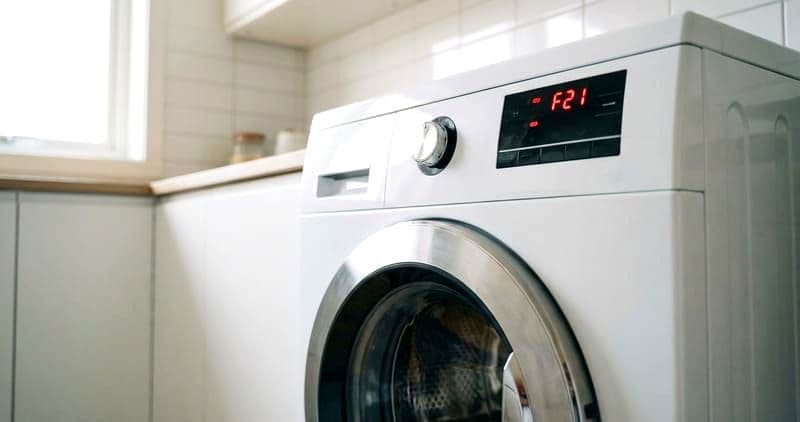
Whirlpool washers with Intuitive Touch Controls may display leak-related codes:
- F8E1: Water supply issue — could indicate overfill causing overflow
- F0E5: Unbalanced load — violent motion can dislodge hose connections
- Sud / F0E2: Excess suds pushing water past seals not designed for foam pressure
To read stored codes, enter diagnostic mode: turn cycle selector 3 clicks right, 1 click left, 1 click right within 6 seconds. All LEDs illuminate to confirm entry.
Safety First — Know the Risks
High-voltage components and pressurized water lines create flood and shock risk. A single loose fitting can cause thousands in water damage. Our techs are licensed and insured — let them handle the risk.
Licensed & Insured · 90-Day Warranty · Same-Day Service
What Are the Most Common Causes?#
1. Door Boot Seal / Bellow (30% of Front-Load WFW Leaks)#
The door bellow (Whirlpool part W10340443 for most WFW models, W11106747 for newer units) is the large rubber gasket between the door opening and the outer tub. It flexes thousands of times per cycle and is the most common leak source on any front-load Whirlpool washer.
Our repair teams consistently find wear on the primary failure component as the leading trigger for this issue on Whirlpool appliances.
How It Fails on Whirlpool Units: Foreign objects — coins, bobby pins, zipper pulls — get trapped in the bellow folds and slice the rubber during spin. Sacramento's hard water deposits calcium in the fold creases, making the rubber brittle and prone to cracking. The bellow has an inner and outer retaining band — if either loosens, water seeps during fill or wash.
Detection: Pull back the bellow folds and inspect the entire circumference with a flashlight. Look for small tears, holes, or areas where the rubber has hardened and cracked. Run a short wash cycle with an empty tub and watch for drips from below the door area.
DIY Difficulty: Moderate — requires spring-loaded band clamp tools Parts (OEM Whirlpool) Professional
Repair Steps:
- Unplug the washer from the electrical outlet.
- Open the door and locate the outer band clamp — a wire spring ring holding the bellow to the front panel.
- Use a flathead screwdriver or spring clamp tool to release the outer band. Work carefully to avoid tearing the new bellow.
- Peel the bellow lip off the front panel flange.
- Remove the front panel (2 screws top, 2 screws bottom on most WFW models) to access the inner band clamp on the tub.
- Release the inner band clamp — this is tighter and may require C-clamp pliers.
- Remove the old bellow completely, cleaning any residue from both mounting flanges.
- Apply a thin layer of liquid dish soap to the new bellow lips for easier installation.
- Seat the new bellow on the tub flange first, then secure with the inner band clamp.
- Stretch the outer lip over the front panel flange and install the outer band clamp.
- Verify the drain port on the bellow bottom points downward — water must drain, not pool.
2. Tub-to-Pump Hose (22% of Cases)#
The corrugated rubber hose connecting the outer tub to the drain pump develops cracks at the clamp points. On Whirlpool front-loaders, this hose runs from the tub sump at the bottom-rear to the drain pump at the bottom-left. Hard water mineral deposits crystallize at the hose ends, creating rough spots that eventually wear through.
Whirlpool-Specific: WFW models use a bellows-style corrugated hose rather than smooth rubber. The corrugations trap small debris and create stress points at each ridge. The OEM hose (WPW10358150) is reinforced, but aftermarket replacements often lack this reinforcement.
DIY Difficulty: Easy Parts Professional
Repair Steps:
- Unplug the washer and remove the rear access panel (4 Torx T20 screws).
- Place towels beneath the hose connection points — residual water will spill.
- Use channel-lock pliers to compress the spring clamps and slide them back from the connection points.
- Twist and pull the hose off both the tub fitting and pump inlet.
- Install the new hose, ensuring the corrugations are not kinked. Seat the spring clamps 1/4 inch from each hose end.
3. Load & Go Dispenser Leak (15% of Equipped Models)#
Whirlpool's Load & Go bulk detergent dispenser holds up to 20 loads of liquid detergent in an internal reservoir. The dispensing valve — a small solenoid-controlled gate — can become sticky from detergent residue buildup, causing it to drip continuously or dispense excess detergent that overflows the dispenser housing.
Sacramento Hard Water Factor: Mineral deposits from Sacramento's well water combine with detergent surfactants to form a crusty buildup around the Load & Go valve seal. This prevents the valve from closing completely between cycles.
DIY Difficulty: Easy Parts (cleaning) to (valve replacement) Professional
Repair Steps:
- Remove the Load & Go dispenser cartridge by lifting straight up.
- Flush the reservoir and valve area with hot water and white vinegar (50/50 mix).
- Use a small brush to remove mineral deposits from the valve seat.
- Inspect the rubber valve seal for deformation — if it does not seat flat, replace the valve assembly.
- Reinstall the cartridge, run an empty hot wash to flush the system.
4. Inlet Valve Failure (12% of Cases)#
The water inlet valve (Whirlpool part W10872255) controls hot and cold water flow into the washer. When the valve diaphragm wears or a solenoid fails partially open, water trickles into the tub even when the machine is off. You may notice the washer slowly filling overnight.
Detection: Unplug the washer and turn off both supply valves. If water stops entering, the inlet valve is leaking internally. Whirlpool's Adaptive Fill system on WTW models uses a flow meter to precisely measure water — if the valve leaks past the meter, the washer may overfill and leak from the top.
DIY Difficulty: Easy Parts Professional
Repair Steps:
- Turn off water supply valves and unplug the washer.
- Disconnect supply hoses from the inlet valve at the rear of the machine.
- Remove the rear panel or top panel (depending on model) to access the valve mounting screws.
- Disconnect the wiring harness connectors from the valve solenoids.
- Remove the 2 Phillips mounting screws and pull the valve assembly out.
- Transfer the hose fittings to the new valve if not included, install, and reconnect.
5. Outer Tub Seal / Bearing Seal (10% of Cases)#
On front-load WFW washers, the main tub bearing has a seal that prevents water from reaching the bearing. When this seal fails, water leaks from the rear of the outer tub during any cycle. This is often accompanied by a grinding or rumbling noise during spin — indicating the bearing itself has been water-damaged.
Whirlpool-Specific: The bearing and seal kit (W10435302) is a comprehensive repair that involves splitting the outer tub. On some WFW models, Whirlpool designs the tub as two halves bolted together, making bearing replacement possible without tub replacement. Older models with welded tubs require complete rear tub half replacement.
DIY Difficulty: Hard — 3-4 hour repair requiring tub disassembly Parts (bearing + seal kit) Professional
6. Dispenser Housing Gasket (6% of Cases)#
The standard detergent dispenser housing connects to the tub via a short hose. The rubber gasket where the dispenser meets the tub entry port degrades over time. During the rinse cycle when water flushes through the dispenser, a worn gasket allows water to drip down the front of the machine.
DIY Difficulty: Easy Parts Professional
7. Air Trap / Pressure Switch Hose (5% of Cases)#
Whirlpool washers use a pressure switch (connected via a small rubber hose to an air trap in the tub) to measure water level. If this hose cracks or disconnects, water can siphon through it. The air trap itself (a small dome on the side of the outer tub) can develop hairline cracks on older units, causing a slow, mysterious leak that is difficult to trace.
DIY Difficulty: Easy once located Parts Professional
Diagnostic Flowchart#
- When does it leak? During fill = inlet valve or dispenser. During wash/rinse = bellow, tub hose, or dispenser housing. During spin only = tub seal/bearing seal. When machine is off = inlet valve not closing.
- Where is the water? Front center = bellow. Left side = drain pump connection. Right side = inlet valve. Underneath center = tub hose. Dispenser area = Load & Go valve or housing gasket.
- How much water? Slow drip = seal degradation or hairline crack. Sudden puddle = hose disconnection or bellow tear. Continuous flow when off = inlet valve failure.
The Real Cost of DIY
Average DIY attempt: $150-400 in tools you may use once, plus the risk of further damage. Our diagnostic visit costs $0 — we find the problem and give you an honest quote.
Licensed & Insured · 90-Day Warranty · Same-Day Service
How Do Costs Compare?#
| Cause | DIY Parts | Professional Repair | Difficulty |
|---|---|---|---|
| Door Bellow | Moderate | ||
| Tub-to-Pump Hose | Easy | ||
| Load & Go Valve | Easy | ||
| Inlet Valve | Easy | ||
| Tub Bearing Seal | Hard | ||
| Dispenser Gasket | Easy |
How Can You Prevent This?#
- Inspect the bellow monthly. Fold back the rubber and wipe out trapped debris, coins, and hair. This prevents punctures and keeps the rubber supple.
- Flush the Load & Go system every 3 months with a hot water + vinegar cycle when the reservoir is empty.
- Replace supply hoses every 5 years. Braided stainless steel hoses withstand Sacramento's water pressure fluctuations better than rubber hoses.
- Use the correct detergent amount. HE washers require HE detergent — excess suds create back-pressure against seals. Whirlpool's Load & Go system is calibrated for HE liquid only.
- Run a Clean Washer cycle monthly using an Affresh tablet (Whirlpool's own product, designed for their gasket geometry) to dissolve residue that hardens seals.
Don't Void Your Warranty
Opening your appliance yourself may void the manufacturer warranty. Our repair comes with a 90-day guarantee, and we document everything for warranty compliance.
Licensed & Insured · 90-Day Warranty · Same-Day Service
FAQ#
Q: My WFW front-loader leaks only during spin — what causes this?
Spin-only leaks almost always indicate a failing tub bearing seal. The centrifugal force during high-speed spin pushes water past the compromised seal. You may also hear a rumbling noise during spin, confirming bearing deterioration.
Q: Why does my Whirlpool washer leak from the dispenser area?
On Load & Go equipped models, detergent residue buildup prevents the dispensing valve from closing fully. On standard dispenser models, the housing gasket where the dispenser connects to the tub degrades and allows water to escape during rinse.
Q: Is a door bellow replacement worth it on an older WFW washer?
If the washer is under 10 years old and the bearings are quiet, a bellow replacement ( professional) extends the machine's life significantly. Whirlpool parts remain available for 15+ years thanks to their vast distribution network.
Q: Can hard water cause washer leaks?
Yes. Sacramento-area hard water deposits calcium and lime on rubber seals, making them brittle. The bellow, dispenser gaskets, and hose connections all degrade faster in hard water areas. Monthly Affresh cycles help dissolve these deposits.
Your Whirlpool washer issue is likely a straightforward repair. Our Sacramento and Bay Area technicians can diagnose it today. Schedule your repair
Lead Appliance Repair Technician · 12 years experience
Experienced technician with 12 years specializing in washing machine and dryer repairs across all major brands.