Bottom line: replacing an oven door seal is almost always worth it — the gasket is inexpensive and the swap is quick. Only lean toward a new oven if the seal fix somehow reaches 50% of a new oven's price and the oven is already past eight years, which is rare for a part this cheap.
The door gasket is easy to overlook until the oven starts leaking heat around the edges. When it goes, the fix is one of the least dramatic decisions in appliance repair — but it is worth understanding why, and why a failing seal is more than a comfort issue on a self-cleaning oven.
Seal decision by oven age and repair size#
Find the oven's age, then the column for the size of the quote against a new oven. The bands come from the 50% rule, though a gasket almost never reaches the expensive end.
| Oven age | Low (under 25% of new) | Middle (25 to 50%) | High (over 50%) |
|---|---|---|---|
| Under 5 years | Repair | Repair | Repair |
| 5 to 8 years | Repair | Repair | Repair |
| 8 to 12 years | Repair | Repair | Weigh it |
| Over 12 years | Repair | Weigh it | Replace |
Reduced to a sentence: fix the seal whenever the job stays under 25% of a new oven, weigh it in the 25 to 50% band, and only replace the appliance if a quote clears 50% on an oven already past its prime.
Why a bad seal is worth fixing quickly#
A worn gasket does real damage to how the oven performs. It lets heat escape around the door, which wastes energy — up to 20% more — stretches preheat and cooking times, and can throw error codes on ovens with a self-cleaning cycle. The part is cheap and the replacement is straightforward, so there is little reason to live with a leaking seal. Beyond performance, there is a safety angle worth stating plainly: a failed seal on a self-cleaning oven can let the door lock fail during the 900 degrees F cleaning cycle, which is a safety hazard, so a bad gasket on a self-clean model should not be put off.
How to confirm the seal is the problem#
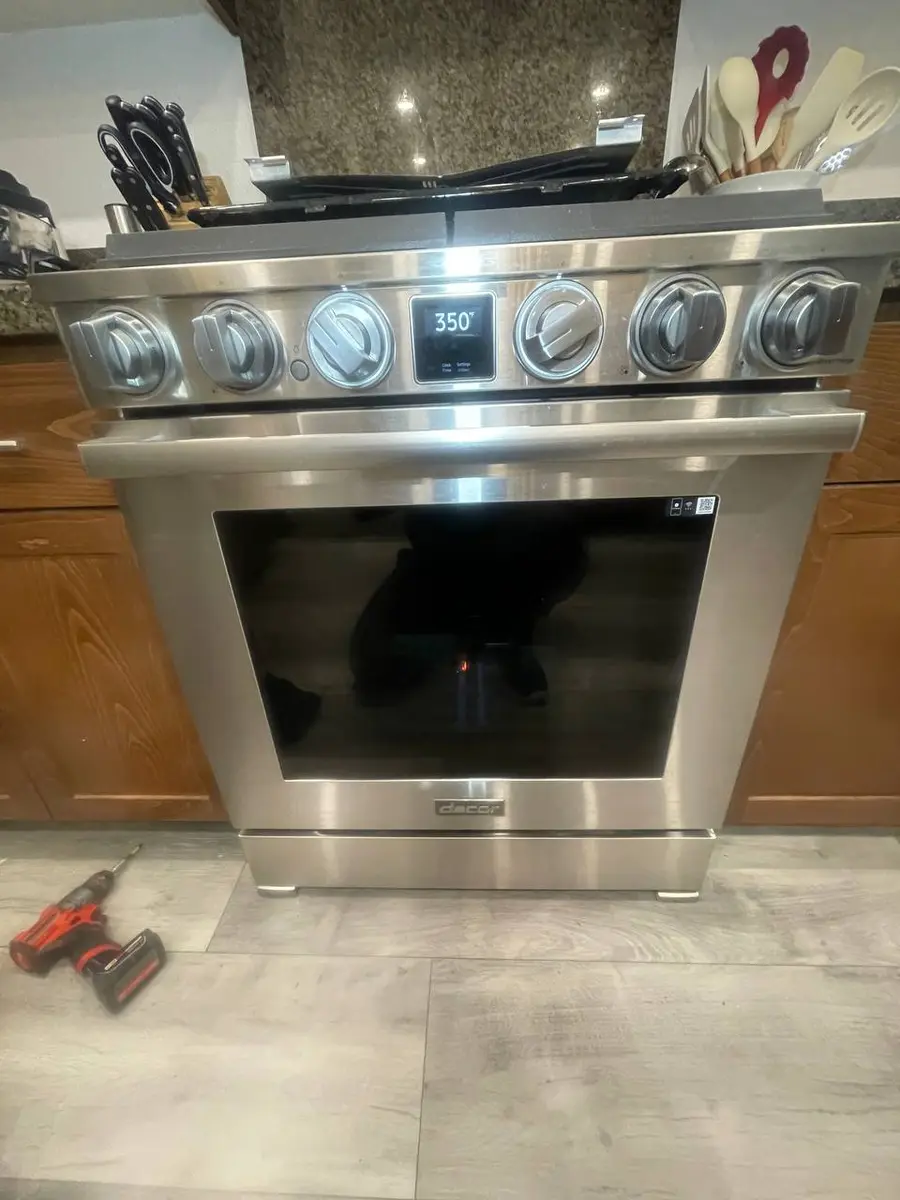
You can check the gasket yourself. Bring the oven to about 350 degrees F and hold your hand near the door edges — you should feel no heat escaping. Then inspect the fiberglass rope gasket for fraying, spots compressed flat, or gaps where it no longer meets the frame. An oven that struggles to hold temperature or preheats slowly, paired with a visibly tired gasket, has almost certainly lost its seal. Confirming it first avoids replacing a good part when the real fault is a hinge or sensor.
What the cost comparison leaves out#
Even for a cheap repair, the replacement side carries hidden weight. A new oven means delivery scheduling, possible cabinet, gas, or electrical modifications, disposal of the old unit, and a few hours of your day, versus a seal swap that takes an hour or two with no disruption to the kitchen. If the gasket failed because of restricted airflow or a deeper heat problem, a technician should find and fix that cause so the new seal is not chewed up the same way.
What the repair actually involves#
Part of why the seal wins on cost is how little the job disturbs. Most oven gaskets either clip into a channel around the door or hook into holes along the cavity frame, so a technician can usually swap one in about an hour with no cabinet, gas, or electrical work. There is no delivery to schedule and no old unit to haul away. The main task is matching the correct gasket to the model, since rope thickness and clip pattern vary between ovens, and then confirming the door still closes flush so the new seal seats properly against the frame.
Not sure the gasket is the culprit? A professional diagnosis confirms it and rules out a hinge or sensor before you spend.
Lead Appliance Repair Technician · 12 years experience
Experienced technician with 12 years specializing in washing machine and dryer repairs across all major brands.