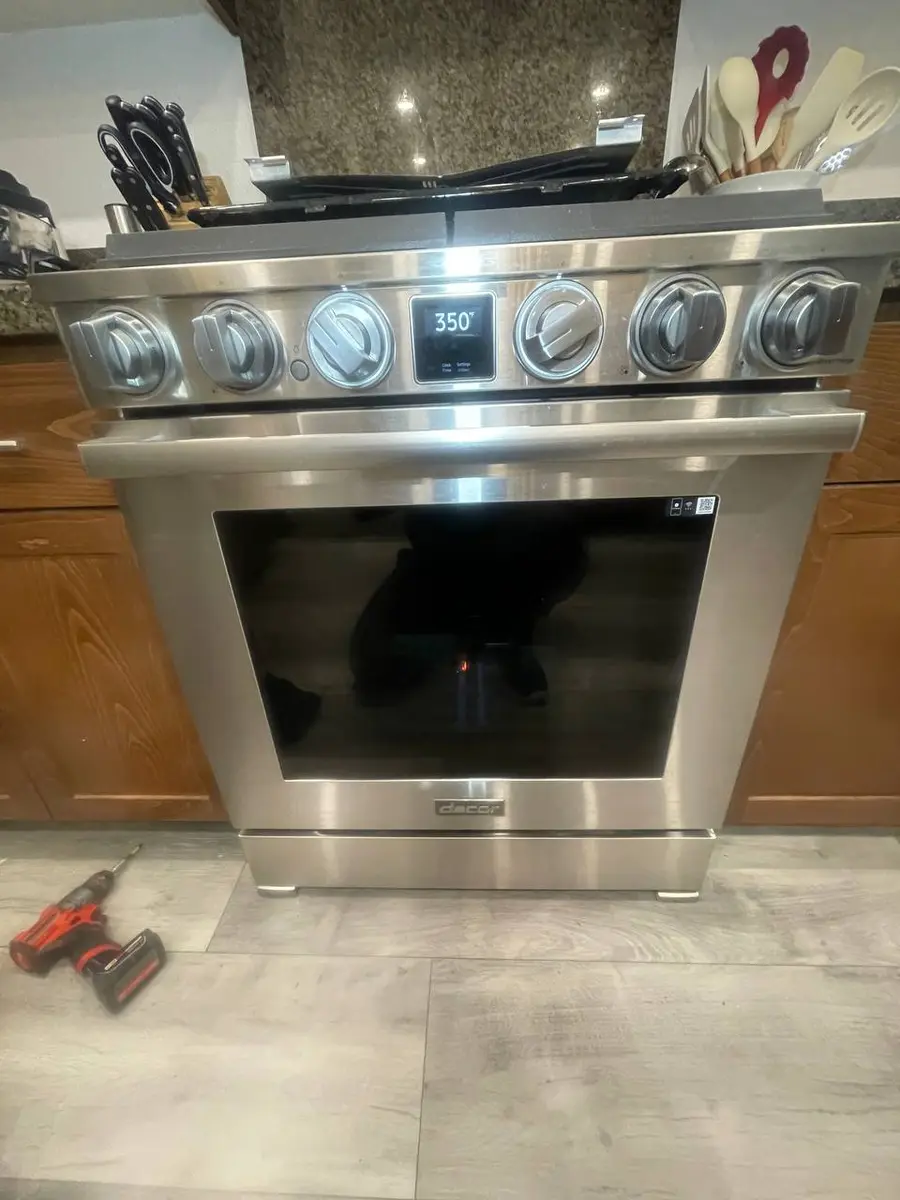
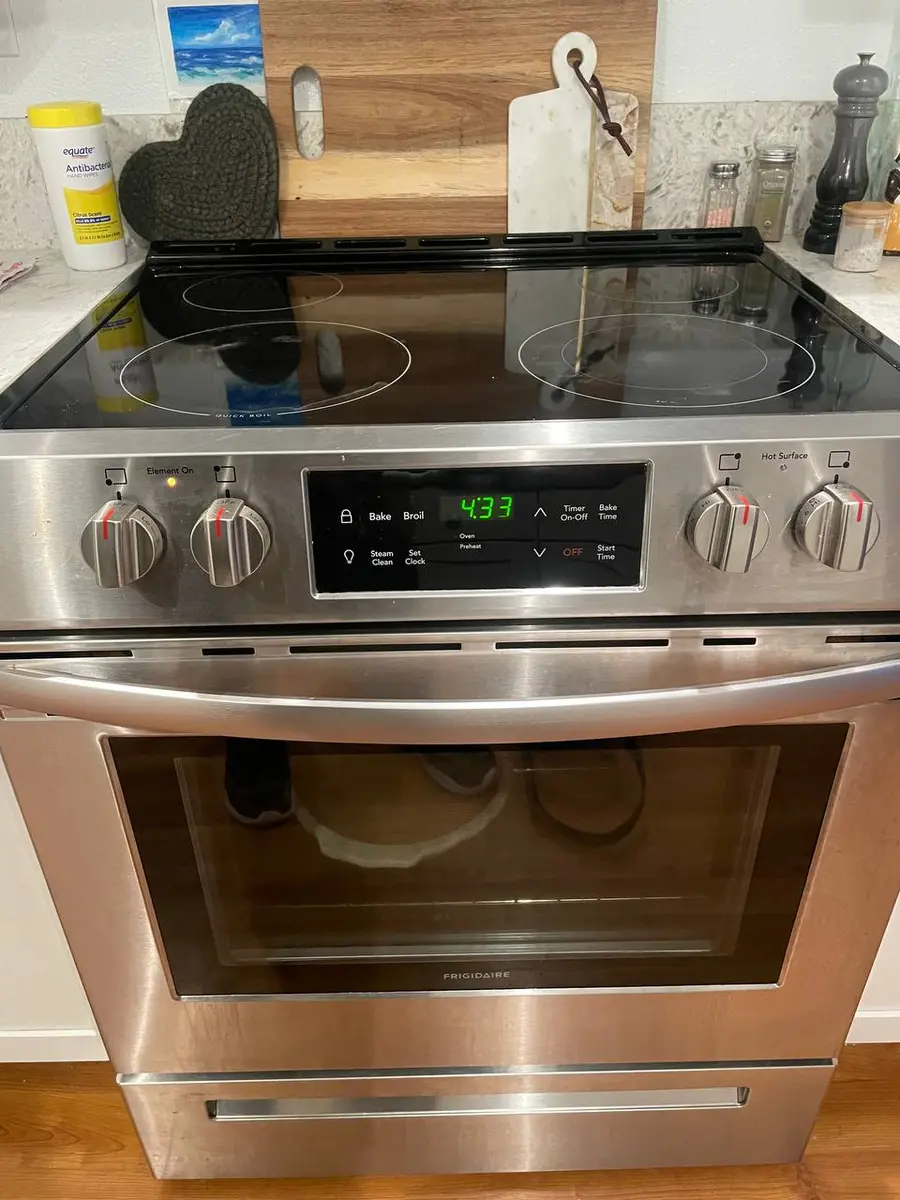
You set the oven to 350°F, preheat for 20 minutes, and your cookies come out raw in the middle. Or your casserole burns on top while the center stays cold. Inaccurate oven temperatures are one of the most common complaints we hear from Sacramento-area homeowners, and the problem is rarely what you expect. Most ovens are off by 25–50°F from factory, and that gap widens as components age. Here's how to figure out whether your oven needs calibration, a sensor replacement, or a more serious repair.
1. Oven Temperature Sensor (RTD) Failure#
The Problem: Modern ovens use a resistance temperature detector (RTD) — a thin metal probe mounted inside the oven cavity, usually at the top rear wall. The sensor's electrical resistance changes with temperature, and the control board converts that reading into an oven temperature. When the sensor drifts, develops a hairline crack, or its wiring degrades from heat exposure, the oven reads the wrong temperature.
What to Check:
- Locate the sensor probe inside the oven — it's a thin metal rod, typically 6–8 inches long
- Check for visible damage: bends, discoloration, or food residue coating the probe
- With the oven cold and unplugged, measure resistance across the sensor leads — it should read approximately 1,080–1,100 ohms at room temperature for most brands
DIY or Pro: The sensor itself cost varies by model and region and is held in place by one or two screws. You disconnect the wire harness from behind the oven (pull it away from the wall) and connect the new sensor. This is one of the easiest oven repairs.
Typical Cost: varies by model and region with a technician.
Do You Have the Right Tools?
Combustion analyzer ($300), igniter tester ($120), temperature calibrator ($150), and gas pressure manometer. Our technician arrives with $3,000+ in professional tools — your diagnostic is free.
Licensed & Insured · 90-Day Warranty · Same-Day Service
2. Temperature Calibration Offset#
The Problem: Every oven allows a calibration offset — you can adjust the displayed temperature up or down by 15–35°F without replacing any parts. Over time, ovens drift from their factory calibration. This is normal and not a defect, but most homeowners don't know the adjustment exists.
What to Check:
- Place a reliable oven thermometer (the $10 kind that hangs from the rack) in the center of the oven
- Set the oven to 350°F, wait 30 minutes, and check the thermometer
- Record the difference — if the oven reads 320°F when set to 350°F, you need a +30°F offset
DIY or Pro: This is a free fix. The calibration process varies by brand:
- GE/Whirlpool: Hold Bake button, then use arrow keys to adjust offset
- Samsung: Settings menu → Temperature Calibration
- LG: Hold Bake for 5 seconds, enter offset with number pad
- Check your owner's manual for the exact procedure
Typical Cost: $0 (DIY calibration).
3. Faulty Oven Control Board#
The Problem: The control board interprets the temperature sensor's signal and cycles the heating elements on and off to maintain the set temperature. If the board's relay contacts are burned or a capacitor has failed, the board may misread the sensor, overshoot the target temperature, or fail to cycle the element properly.
What to Check:
- If the oven temperature swings wildly (100°F+ variations), the board's relay is likely sticking
- Error codes on the display often point to control board issues
- Look for burn marks or bulging capacitors on the board (requires removing the back panel)
DIY or Pro: Board replacement is a professional repair. The part cost varies by model and region depending on brand (Viking and Wolf boards are notably expensive at varies by model and region). Incorrect installation can damage the sensor circuit or the heating element relay.
Typical Cost: varies by model and region including labor.
Safety First — Know the Risks
Gas ovens involve live gas lines — a loose connection creates explosion and carbon monoxide risk. Electric ovens run on 240V circuits. Our techs are licensed and insured — let them handle the risk.
Licensed & Insured · 90-Day Warranty · Same-Day Service
4. Weak or Failed Bake Element#
The Problem: Electric ovens use a bake element (bottom) and a broil element (top). If the bake element has a partial break in the coil — still glowing in spots but not across its full length — the oven heats unevenly and takes far longer to reach temperature. The thermostat reads the average cavity temperature, which may eventually reach the target, but hot and cold spots make cooking inconsistent.
What to Check:
- Turn on the bake cycle and watch the element — it should glow uniformly red-orange across its entire length
- Dark spots, blistering, or visible breaks indicate failure
- If one section glows brightly while another stays dark, the element has a partial short
DIY or Pro: Bake elements cost varies by model and region and are one of the most common oven replacements. They slide out from the back wall with two screws and a simple plug connector. Most homeowners can handle this repair.
Typical Cost: varies by model and region with a technician.
5. Convection Fan Motor Issues#
The Problem: Convection ovens use a rear fan to circulate hot air evenly. If the fan motor bearings are worn or the blade is damaged, airflow becomes uneven — one side of the oven runs hotter than the other. The temperature sensor (which is in one location) may read correctly, but the actual cooking temperature varies by position.
What to Check:
- Select convection mode and listen for the fan — it should run continuously and quietly
- Grinding, rattling, or intermittent running indicates motor bearing failure
- Open the oven door during convection mode — you should feel noticeable air movement
DIY or Pro: Fan motors cost varies by model and region. Accessing the motor requires removing the rear panel inside the oven cavity, which means removing oven racks and the rear cover plate. Professional repair recommended for wall ovens where access is limited.
Typical Cost: varies by model and region with a technician.
The Real Cost of DIY
Average DIY attempt: $150-400 in tools you may use once, plus the risk of further damage. Our diagnostic visit costs $0 — we find the problem and give you an honest quote.
Licensed & Insured · 90-Day Warranty · Same-Day Service
When to Call a Professional#
Start with calibration and a thermometer test — those are free. If calibration doesn't close the gap, the temperature sensor is the most likely and affordable fix. Call a professional if you're seeing error codes, if the oven overshoots by 75°F or more, or if the bake element doesn't glow uniformly. Gas oven temperature problems add the complexity of gas valve adjustment and igniter timing — those should always be handled by a licensed technician, especially under California gas appliance safety codes.
FAQ#
Q: How far off can a normal oven be? A: Brand-new ovens can be off by 25–35°F from factory. This is within manufacturer specifications. Use the built-in calibration offset to correct it. If your oven is off by more than 50°F, something has failed.
Q: My oven temperature swings up and down — is that normal? A: Yes, to a degree. All ovens cycle the heating element on and off to maintain temperature, which causes natural fluctuation of 10–25°F around the set point. Swings of 50°F+ suggest a sensor or control board problem.
Q: Can I use my oven if the temperature is off? A: Yes, as long as you know the offset. If your oven runs 30°F cold, set it 30°F higher than the recipe calls for. But get it fixed — cooking with an offset leads to inconsistent results, especially for baking.
Q: Does altitude affect oven temperature accuracy? A: Altitude affects baking results (leavening, moisture loss) but not oven temperature accuracy. Sacramento sits at about 30 feet elevation, so altitude is not a factor for most of our service area. Lake Tahoe customers at 6,200+ feet will notice baking differences but those are recipe adjustments, not oven problems.
Senior Gas Appliance Specialist · 18 years experience
AGA-certified gas appliance specialist with 18 years of experience in residential and commercial oven, range, and cooktop repairs.