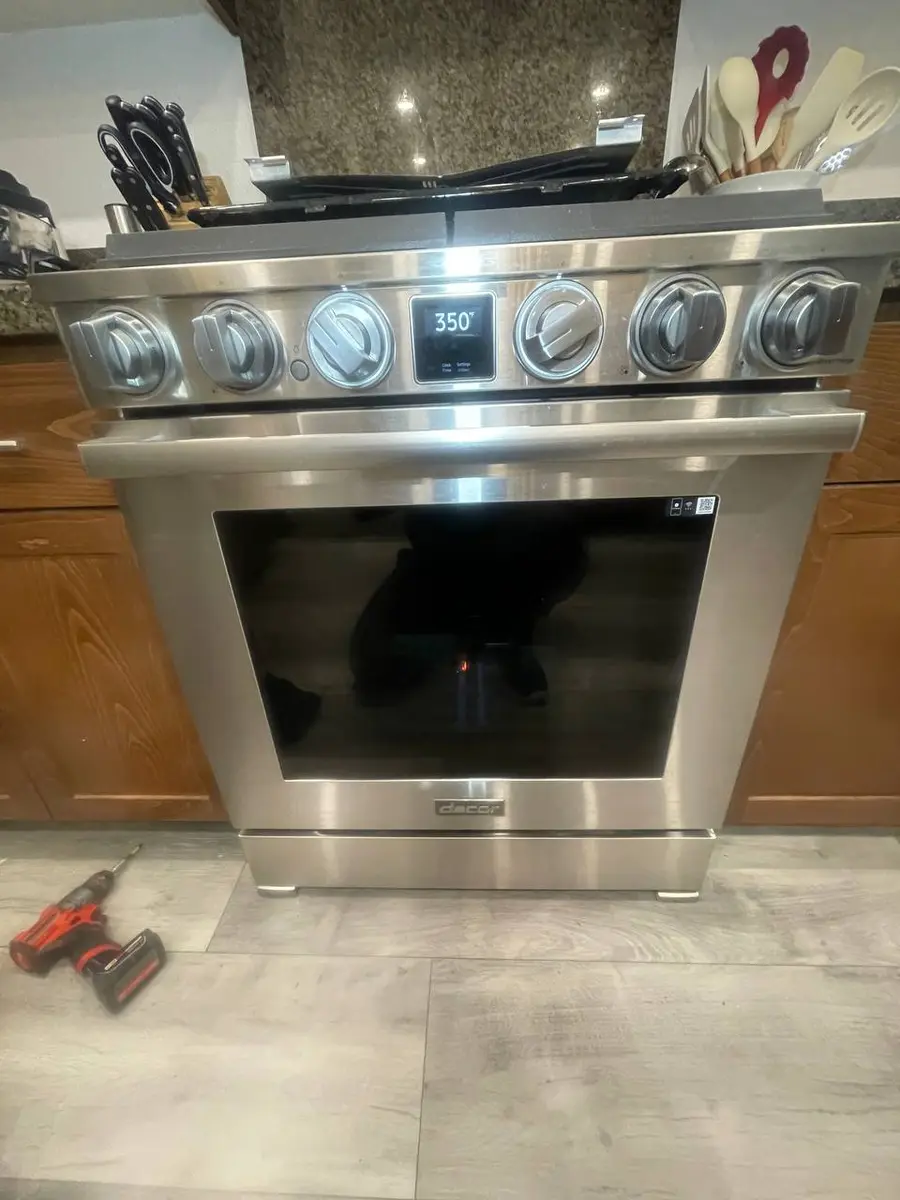
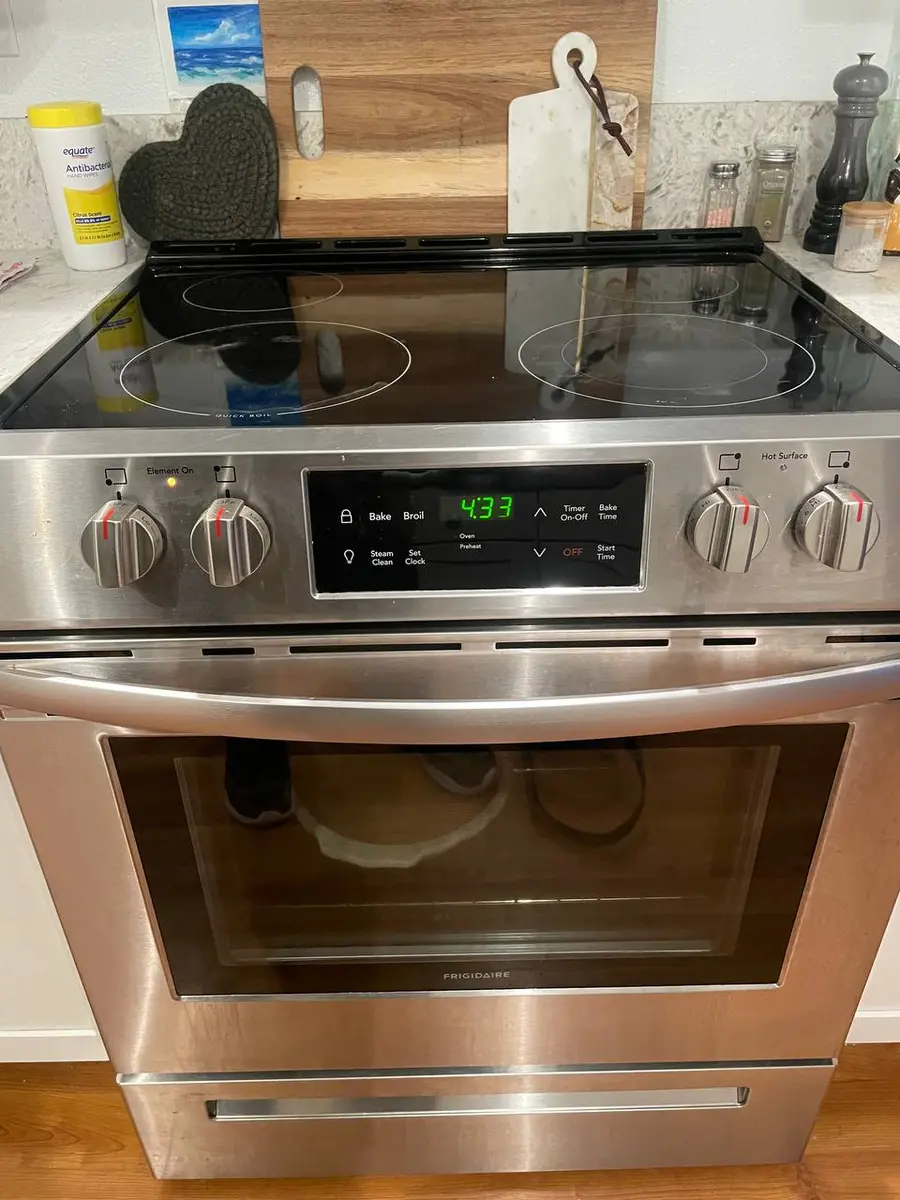
The self-clean cycle finished hours ago, the oven is cool, but the door won't budge. You pull the handle, try the latch, and nothing happens. A stuck oven door after self-clean is alarmingly common and happens across every major brand — GE, Whirlpool, Samsung, LG. The self-clean cycle subjects the lock mechanism to extreme temperatures (850–950°F) that can warp metal parts, melt plastic components, and fuse mechanisms in the locked position. Here's what's happening and how to get your oven door open safely.
1. Motor-Driven Lock Assembly Failure#
The Problem: Most modern ovens use a motorized lock that automatically engages before self-clean and disengages when the oven cools below a safe temperature (typically 550°F). The lock motor, worm gear, and position switch assembly is a single unit mounted behind the top front panel. When the motor burns out, the gear strips, or the position switch fails, the lock stays engaged.
What to Check:
- Wait at least 1 hour after the self-clean cycle ends — the door should unlock automatically
- Try turning the oven off at the breaker for 5 minutes, then turning it back on — this resets the control board and may trigger the unlock sequence
- Listen for the lock motor attempting to run when power is restored — clicking or humming means the motor is trying but the gear is stripped
DIY or Pro: If the power-cycle reset works, the lock assembly is failing intermittently and should be replaced before your next self-clean. The lock motor assembly cost varies by model and region and is accessible from the top front of the oven after removing the back panel or top cover. Moderate DIY difficulty.
Typical Cost: varies by model and region with a technician.
Do You Have the Right Tools?
Combustion analyzer ($300), igniter tester ($120), temperature calibrator ($150), and gas pressure manometer. Our technician arrives with $3,000+ in professional tools — your diagnostic is free.
Licensed & Insured · 90-Day Warranty · Same-Day Service
2. Stuck Manual Lock Lever#
The Problem: Some ovens (especially older models and ranges) use a manual slide lock on the front of the oven. These lever-type locks can bind due to grease contamination, thermal expansion, or misalignment of the lock tab with the frame slot.
What to Check:
- Locate the slide lever on the oven front, above the door
- Try sliding it gently with consistent pressure — don't force it
- Check if food debris or grease has accumulated around the lever track
DIY or Pro: Apply a small amount of high-temperature silicone lubricant to the lever track (never use WD-40 or cooking oil — they'll smoke at oven temperatures). If the lever is bent, you may need to remove it and straighten or replace it.
Typical Cost: varies by model and region DIY; varies by model and region with a technician.
3. Control Board Lock Signal Stuck#
The Problem: The electronic control board maintains the door lock state. If the board's lock relay is stuck in the "on" position, it continues sending the lock signal even after the oven has cooled. This is often caused by a power interruption during the self-clean cycle (common during PG&E or SMUD planned outages or summer brownouts in the Sacramento area).
What to Check:
- Does the oven display show "LOCK" or a lock icon even though the oven is cool?
- Try pressing Cancel or Clear/Off multiple times
- Disconnect power for 15 minutes (longer than a standard reset) to force the board to clear the lock state
DIY or Pro: If the extended power-off reset works, the board may be fine — the lock state was just stuck in memory. If the lock relay has physically welded shut (common after power surges), the board needs replacement. Control boards run varies by model and region depending on brand.
Typical Cost: $0 for successful reset; $200–$400 for board replacement.
Safety First — Know the Risks
Gas ovens involve live gas lines — a loose connection creates explosion and carbon monoxide risk. Electric ovens run on 240V circuits. Our techs are licensed and insured — let them handle the risk.
Licensed & Insured · 90-Day Warranty · Same-Day Service
4. Warped Door or Frame#
The Problem: The extreme heat of self-clean can warp the oven door slightly, especially on older models with thinner gauge metal. Even a 1/16" warp can prevent the lock tab from clearing the frame slot. This is more common on freestanding ranges than built-in wall ovens.
What to Check:
- Look at the door edges — is there a visible gap on one side but not the other?
- Try pressing firmly on the door from different angles while attempting to open
- Check the door hinges for signs of binding or misalignment
DIY or Pro: If the door is slightly warped, a technician can sometimes straighten it or adjust the hinges to compensate. If the warp is severe or the door glass seal has been compromised, the entire door assembly may need replacement (varies by model and region depending on model).
Typical Cost: varies by model and region for hinge adjustment; varies by model and region for door replacement.
5. Failed Door Lock Switch#
The Problem: The lock assembly includes a position switch that tells the control board whether the door is locked or unlocked. If this switch fails in the "locked" position, the control board believes the door is still locked and won't release the motor. The oven is actually unlocked mechanically, but the electronic system disagrees.
What to Check:
- After a power reset, does the display still show the lock icon?
- Can you hear the lock motor run and complete its cycle, but the door still won't open?
- This is a common failure point on Samsung and LG ovens
DIY or Pro: The position switch is part of the lock assembly and usually isn't sold separately — you'll replace the entire lock motor assembly (varies by model and region). Professional repair recommended because you'll need to access the lock while the door is stuck closed, which requires partial disassembly from above.
Typical Cost: varies by model and region with a technician.
The Real Cost of DIY
Average DIY attempt: $150-400 in tools you may use once, plus the risk of further damage. Our diagnostic visit costs $0 — we find the problem and give you an honest quote.
Licensed & Insured · 90-Day Warranty · Same-Day Service
When to Call a Professional#
If the power-cycle reset doesn't release the door within 15 minutes, call a technician. Do not attempt to pry the door open with tools — you'll damage the door seal gasket, scratch the finish, and potentially crack the door glass. Never use the self-clean function as a diagnostic test on a lock mechanism you suspect is failing — you'll lock the door again and repeat the problem. For gas ovens, a stuck door combined with any gas smell is an emergency — call your gas company before calling an appliance tech.
FAQ#
Q: How do I prevent the door from getting stuck during self-clean? A: Reduce self-clean frequency to 2–3 times per year. Clean major spills manually before running self-clean — less residue means less extreme heat stress. Avoid running self-clean during planned utility outages. If your oven is over 8 years old, consider skipping self-clean entirely and cleaning manually.
Q: Is it safe to break the door lock to get the oven open? A: Forcibly breaking the lock mechanism is not recommended. You can damage the door gasket (which then leaks heat during normal use), crack the glass, or break the lock in a way that makes future self-clean impossible. Patience and a power reset are safer.
Q: My oven door is stuck but I didn't run self-clean. What's going on? A: If the door locks without self-clean being active, the control board is sending an erroneous lock signal. This is almost always a control board failure. Disconnect power and call a technician.
Q: Can the self-clean cycle damage my oven? A: The extreme heat (850–950°F) stresses door gaskets, lock mechanisms, and control boards. It's the single biggest cause of oven repair calls. Modern ovens are designed to handle it, but older or heavily used ovens may develop problems after repeated cycles. Use it sparingly and always ensure good kitchen ventilation.
Senior Gas Appliance Specialist · 18 years experience
AGA-certified gas appliance specialist with 18 years of experience in residential and commercial oven, range, and cooktop repairs.