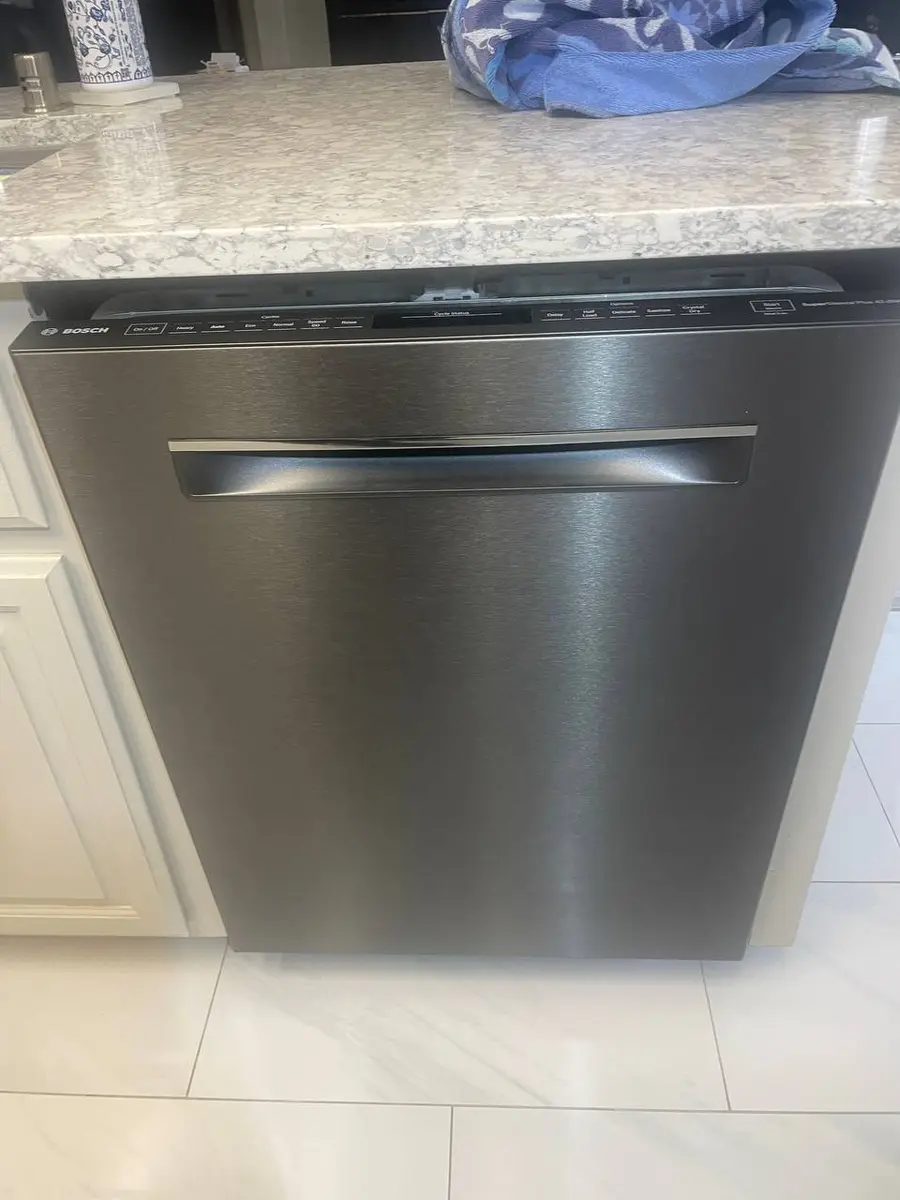
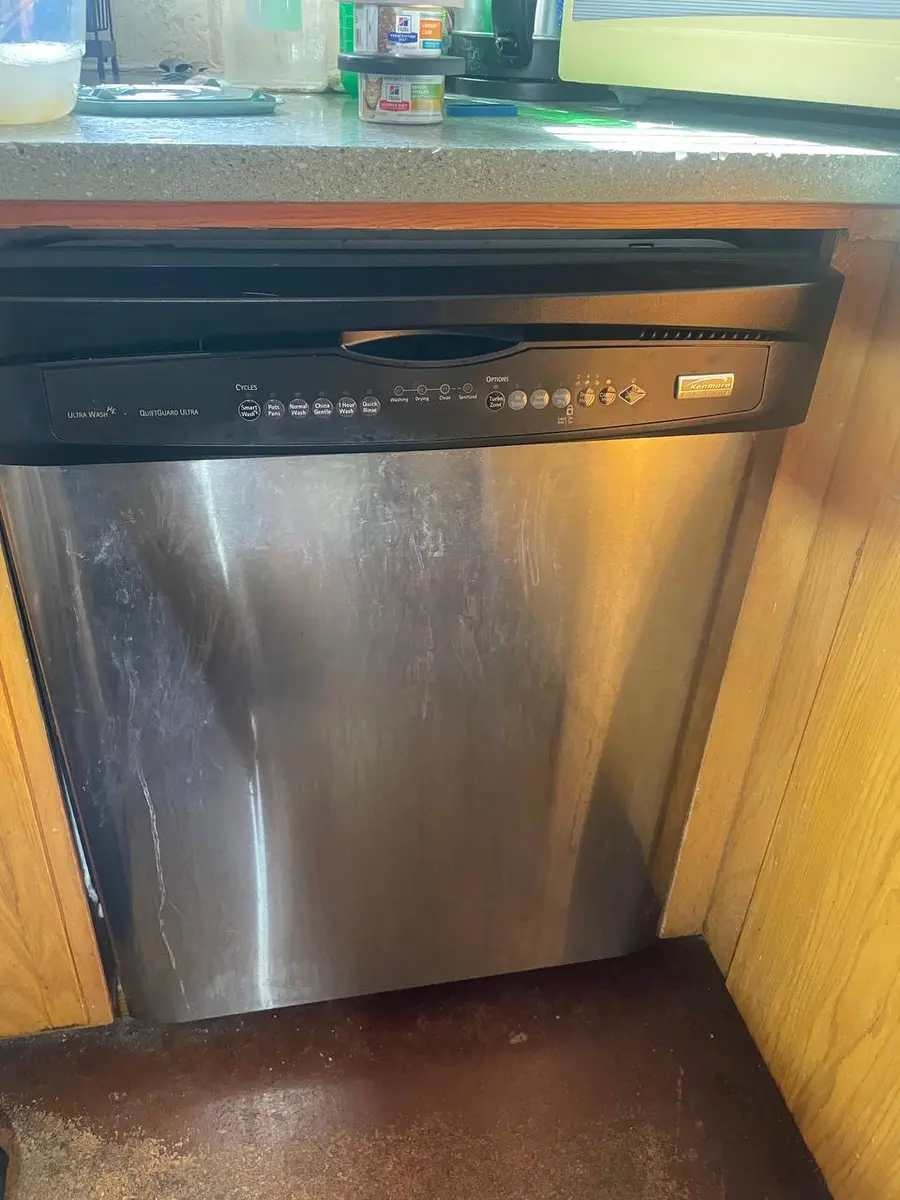
What is the Miele Dishwasher F02 error?#
F02 on a Miele dishwasher means the wash-water temperature sensor — the NTC — reads as an open circuit, so the control board has lost its temperature signal entirely and halts the cycle rather than heat blind. It is the mirror image of F01: where F01 is a short reading near zero, F02 is a broken path reading infinite. It is not a hazard, but the machine will not run a proper hot wash until it is repaired. The first thing I have owners do is a full power-down at the wall for a few minutes, because a one-off glitch can latch this code even when the sensor circuit is actually fine.
F02 on a Miele Dishwasher: likely causes and repair cost#
On a Miele Dishwasher, the F02 code signals: temperature sensor open circuit.
| Likely cause | Typical likelihood |
|---|---|
| NTC sensor disconnected | Most common |
| Broken wiring | Common |
| Connector corrosion | Less common |
Typical professional repair: $250–$450 · Difficulty: hard · usually a technician job
Symptoms that often accompany F02: Water never heats during the wash; Cycle aborts shortly after the fill; Dishes come out cold at the end of the cycle; Fault clears briefly after wiggling the door harness; Error returns intermittently as the door is opened
Technician diagnostic sequence for F02:
- Power off and unplug the dishwasher
- Locate NTC sensor connector on the control board side
- Check for loose or disconnected plug at both sensor and board ends
- Measure sensor resistance (open circuit = infinite/OL reading)
- Inspect wiring run for breaks, especially near hinges
Parts a technician may check or replace: Miele NTC temperature sensor; if corroded
Field note: F02 is the open-circuit twin of F01: where F01 (short) reads near 0 ohms, F02 reads OL/infinite on the multimeter because the NTC path is broken. That difference matters for the fix — an open is far more often a disconnected or corroded connector, or a wire fractured where the loom flexes past the hinge, than a failed sensor bead. Reseat and inspect the connector at both the sensor and board ends before ordering the proprietary Miele NTC, since a good sensor with a broken plug reads identically.
Safety note: Do not bypass the sensor to continue running — Miele heater elements can overheat without proper temperature feedback.
Do You Have the Right Tools?
Water pressure gauge ($60), spray arm tester, float switch multimeter ($85), and drain inspection camera. Our technician arrives with $3,000+ in professional tools — your diagnostic is free.
Licensed & Insured · 90-Day Warranty · Same-Day Service
How to troubleshoot the F02 error yourself#
Start with the safe, no-tool checks. Switch the dishwasher off at the wall or breaker for a couple of minutes and restart a short program — a transient fault often will not return, while a genuine open circuit brings F02 straight back. If it returns and you are comfortable easing the machine out, the causes in the table above point at the wiring and connector far more often than the sensor itself: look for an unseated or green-crusted plug at both the sensor and the board ends, and a wire chafed or fractured where the door loom flexes past the hinge. A telltale sign of an open is a code that flickers or clears when you wiggle that door harness. Reseat a loose plug and let a corroded one dry fully. Where I tell people to stop is at meter work: confirming an open NTC reads infinite rather than a board-side fault needs a multimeter, and Miele uses proprietary sensors, so if the code survives a reset treat it as a technician job.
Is the Miele Dishwasher F02 error worth fixing?#
Almost always worth fixing. A professional repair here runs $250 to $450, and because F02 is so often a broken connector or a fractured wire rather than the sensor bead, the common outcome sits at the low end of that band — nowhere near half the price of a comparable new Miele. These machines are built on a long service-life philosophy, so spending a few hundred dollars to restore correct heating and sanitising on an otherwise sound unit is easy math. I only steer owners toward replacement when F02 arrives on a very old machine alongside other unrelated failures, where the combined bill climbs past the sensible line. For a single open-circuit temperature sensor, repair wins comfortably.
Safety First — Know the Risks
Live 120V wiring in a wet environment is one of the most dangerous DIY scenarios. Water + electricity = serious shock risk. Our techs are licensed and insured — let them handle the risk.
Licensed & Insured · 90-Day Warranty · Same-Day Service
Miele Dishwasher F02: frequently asked questions#
What does the F02 error mean on a Miele Dishwasher?#
F02 means the wash-water temperature sensor (NTC) reads as an open circuit, so the control board has lost its temperature signal and stops the cycle instead of heating without feedback. It is the open-circuit counterpart to F01, which is a short.
Is it safe to keep using a Miele Dishwasher that shows the F02 error?#
It will not run a proper hot cycle, so dishes are not heated or sanitised until the fault is repaired. It is not dangerous to leave displayed, but do not bypass the sensor to force heat — the element can overheat without a temperature reading.
Can I clear the F02 error myself, or do I need a technician?#
Try one full power-down at the wall first, since a transient glitch can clear on its own. If F02 returns, it is a genuine open circuit and needs a technician, because confirming it means reading the NTC and its wiring with a meter.
How much does it cost to repair the F02 error on a Miele Dishwasher?#
A professional repair typically runs $250 to $450. A reseated or repaired connector lands at the low end of that range; the higher figures apply only when the sensor itself or a board-side circuit is involved.
Which parts usually fail when a dishwasher throws the F02 code?#
Most often it is not the sensor bead at all but its connector or wiring — an unseated or corroded plug, or a wire broken where the loom flexes at the hinge. The proprietary NTC sensor is replaced only when it truly tests open on the meter.
Why does ntc sensor disconnected trigger the F02 error?#
When the NTC path is broken, the board reads infinite resistance — an impossible temperature — so rather than fire the heater without feedback it stops the cycle and posts F02. Reseating a disconnected plug often restores a valid reading and clears the code.
Appliance Repair Technician · 8 years experience
Experienced technician with 8 years specializing in dishwasher repairs and European appliance brands including Bosch and Thermador.