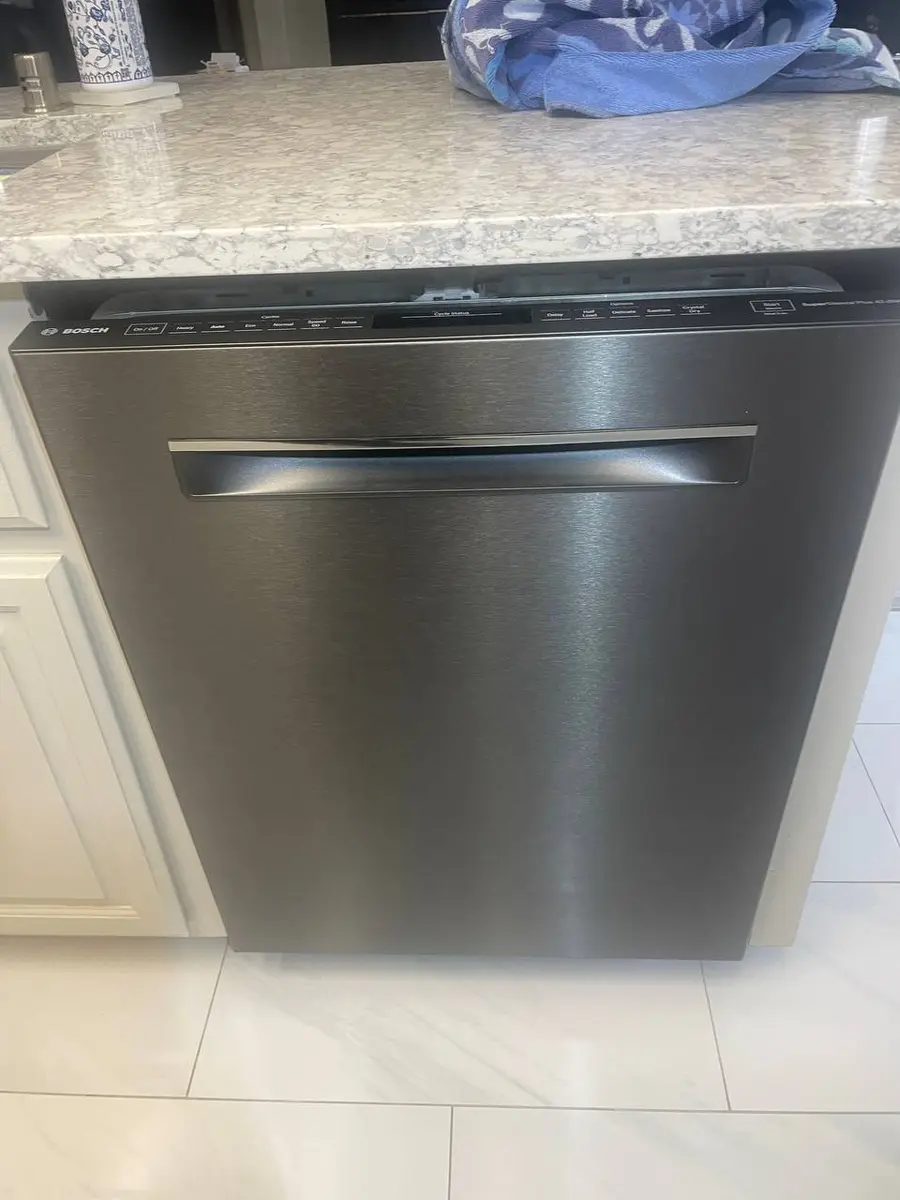
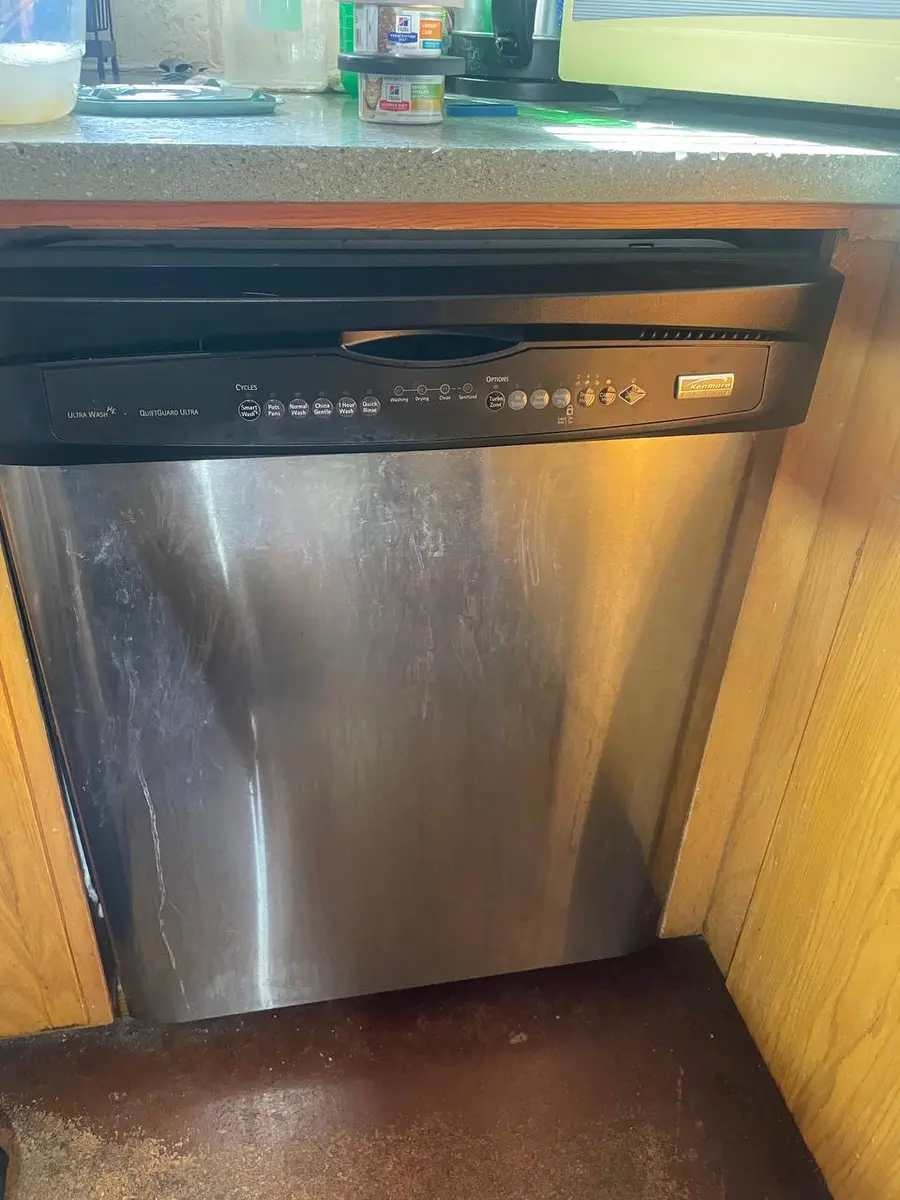
What do the GE Dishwasher error codes mean?
Complete list of GE dishwasher error codes with causes and fixes. Covers C1-C8, PF, and all diagnostic codes for GE, GE Profile, and Cafe models.
- C1 — Stuck key — a button on the control panel is jammed or shorted
- C3 — Pump pressure switch error — wash pump not building pressure
- C4 — Flood switch activated — water detected in the base pan
- C6 — Turbidity sensor error — water clarity sensor malfunction
- C8 — Water temperature too low — heater not reaching target temperature
- PF — Power failure — power was interrupted during a cycle
GE Dishwasher Error Codes — Quick Reference#
| Code | Meaning | Severity | DIY? |
|---|---|---|---|
| C1 | Stuck key — a button on the control panel is jammed or shorted | medium | Pro Only |
| C3 | Pump pressure switch error — wash pump not building pressure | high | Pro Only |
| C4 | Flood switch activated — water detected in the base pan | critical | Pro Only |
| C6(C7) | Turbidity sensor error — water clarity sensor malfunction | medium | Pro Only |
| C8 | Water temperature too low — heater not reaching target temperature | medium | Pro Only |
| PF | Power failure — power was interrupted during a cycle | low | DIY OK |
| FTD | Failure to drain — water not draining from the tub | medium | DIY OK |
| LF(LE) | Long fill — dishwasher not filling with water in the expected time | medium | DIY OK |
| CL | Control lock activated — buttons are locked to prevent accidental operation | low | DIY OK |
| ERR | General communication error between control board and UI | high | Pro Only |
| LEd | Door latch or switch not detecting closure | medium | Pro Only |
| FL | Flood protection activated — water detected in the base pan | critical | Pro Only |
| HE | Heater circuit failure — no continuity through heating element | high | Pro Only |
| IE | Water inlet error — inlet valve not operating correctly | medium | Pro Only |
GE Dishwasher Broken? Same-Day Diagnostic Available
Our certified technicians serve the Bay Area and Sacramento. Free diagnostic visit — we identify the problem, quote the repair, and fix it on the spot in most cases. No hidden fees.
Licensed & Insured · 90-Day Warranty · Same-Day Service
C1 — Stuck key — a button on the control panel is jammed or shorted#
Common Causes
- Keypanel membrane stuck from moisture or residue(common) — Steam and detergent residue accumulate on the control panel over time, causing one or more buttons to register as continuously pressed.
- Keypanel ribbon cable connection failure(occasional) — The ribbon cable connecting the keypad to the control board works loose from repeated door opening/closing vibration.
- Control board input circuit failure(rare) — The scanning circuit on the main board that polls button states has failed.
Professional Repair
Estimated Cost
$150-280
Repair Time
45 minutes
The keypanel is integrated into the inner door panel. Access requires removing the outer door panel to reach the ribbon cable and board. Diagnosis must determine keypanel vs. board failure.
C3 — Pump pressure switch error — wash pump not building pressure#
Common Causes
- Wash pump motor failure(common) — The main wash pump motor has failed or is running below the pressure threshold. The pump cannot move enough water through the spray arms.
- Pressure switch failure(occasional) — The switch that monitors pump pressure output has failed, unable to confirm the pump is running even though it may be operating normally.
- Blocked wash pump intake or spray arms(occasional) — Debris (glass, bones, food particles) has blocked the pump intake or spray arm nozzles, preventing proper water circulation.
Professional Repair
Estimated Cost
$200-380
Repair Time
1-1.5 hours
Wash pump replacement requires removing the dishwasher from under the counter, flipping it over, and accessing the pump assembly from the bottom. This is a labor-intensive repair.
C4 — Flood switch activated — water detected in the base pan#
Common Causes
- Door gasket leak(common) — The rubber gasket around the door has deteriorated or been displaced, allowing water to drip down into the base pan during wash cycles.
- Pump or hose connection leak(occasional) — A hose clamp has loosened or a pump seal has failed, dripping water into the base during operation.
- Tub crack or weld failure(rare) — The stainless steel or plastic tub has developed a crack, usually at a stress point near the pump mounting area.
Professional Repair
Estimated Cost
$150-350
Repair Time
1-2 hours
The technician must identify the exact leak source. Water in the base pan can damage the motor and electronics if not addressed quickly. The dishwasher must be pulled out to inspect the base.
GE Repair Tools Required
DIY tool investment: $0+ just for basics. Our technician arrives with $15,000+ in professional tools — your diagnostic is free.
C6 — Turbidity sensor error — water clarity sensor malfunction#
Common Causes
- Turbidity sensor contamination(common) — The optical sensor that measures water clarity is coated with grease or mineral deposits, unable to get accurate readings.
- Turbidity sensor failure(occasional) — The sensor LED or photodetector has failed, returning constant or no signal to the control board.
- Sensor wiring issue(rare) — The wire connection to the turbidity sensor has corroded or broken.
Professional Repair
Estimated Cost
$130-230
Repair Time
45 minutes
The turbidity sensor is located in the sump area under the wash tub. Access requires removing the lower spray arm and filter assembly. Cleaning the sensor may resolve the issue without replacement.
C8 — Water temperature too low — heater not reaching target temperature#
Common Causes
- Heating element failure(common) — The in-sump heating element has burned out or developed an open circuit. GE dishwashers heat the water to 140-155F for optimal cleaning.
- Water inlet temperature too low(occasional) — The household hot water supply is below 120F, and the dishwasher heater cannot compensate for the temperature gap within the time limit.
- Thermistor (temperature sensor) failure(rare) — The temperature sensor reads incorrectly, making the board think the water is colder than it actually is.
Professional Repair
Estimated Cost
$150-280
Repair Time
1 hour
The heating element is in the sump below the tub floor. Replacement requires disconnecting electrical connections under the unit. The technician should also test water heater output temperature.
PF — Power failure — power was interrupted during a cycle#
Common Causes
- Power outage during dishwasher cycle(common) — A power interruption occurred during operation. The dishwasher stores this code to inform the user.
- Circuit breaker trip(occasional) — The dedicated dishwasher circuit breaker tripped, interrupting the cycle.
DIY Fix
- Press Start/Reset to clear the code.
- Select a new cycle and press Start.
- If PF recurs, check the circuit breaker in your electrical panel.
- Ensure no other high-draw appliances share the dishwasher circuit.
Professional Repair
Estimated Cost
$0
Repair Time
N/A
PF is informational. No repair needed unless it recurs without power issues.
Licensed & insured technicians, a free in-home diagnostic, and a 90-day repair guarantee — with our no-fix, no-fee promise, you only pay if we fix it.
FTD — Failure to drain — water not draining from the tub#
Common Causes
- Clogged filter assembly(common) — Food particles, glass shards, and grease accumulate in the filter basket at the bottom of the tub, blocking water from reaching the drain pump.
- Blocked garbage disposal connection(common) — The drain hose connects to a garbage disposal, and the disposal knockout plug was never removed during installation, or the disposal is clogged.
- Kinked drain hose(occasional) — The corrugated drain hose under the sink is kinked or compressed, restricting water flow.
- Drain pump failure(rare) — The drain pump motor has failed or the impeller is broken.
DIY Fix
Warning
Check for broken glass in the filter — wear gloves when cleaning.
- Remove the lower dish rack.
- Scoop out standing water with a cup.
- Remove and clean the filter assembly (twist counterclockwise to remove).
- Check the drain hose under the sink for kinks.
- If connected to a garbage disposal, run the disposal to clear any blockage.
- Reassemble the filter and run a short rinse cycle to test.
Professional Repair
Estimated Cost
$150-260
Repair Time
45 minutes
If cleaning the filter and checking the drain path does not resolve the issue, the drain pump has likely failed.
LF — Long fill — dishwasher not filling with water in the expected time#
Common Causes
- Water supply valve not fully open(common) — The supply valve under the sink that feeds the dishwasher is partially or fully closed.
- Clogged inlet screen(common) — The mesh screen at the water inlet valve on the dishwasher is clogged with sediment, especially in hard water areas like Sacramento.
- Water inlet valve failure(occasional) — The solenoid valve that controls water flow into the dishwasher has failed and cannot open.
- Float switch stuck in the up position(rare) — The overfill float at the bottom of the tub is stuck in the raised position, signaling the dishwasher that it is already full.
DIY Fix
Warning
Have towels ready when disconnecting the water line.
- Check the water supply valve under the sink — it should be fully open.
- If the valve is open, turn it off and disconnect the supply line at the dishwasher.
- Inspect the inlet screen for sediment and clean if needed.
- Check the float at the bottom of the tub — it should move freely up and down.
- Reconnect and test with a rinse cycle.
Professional Repair
Estimated Cost
$130-220
Repair Time
30-45 minutes
If the valve and supply are fine, the inlet valve solenoid has failed and needs replacement.
CL — Control lock activated — buttons are locked to prevent accidental operation#
Common Causes
- Control lock intentionally engaged(common) — Someone pressed and held the Lock button (or Heated Dry on older models) to activate child lock. This prevents all button inputs.
DIY Fix
- Press and hold the Lock button (or Heated Dry on older models) for 3 seconds.
- The CL indicator will turn off and normal operation resumes.
Professional Repair
Estimated Cost
$0
Repair Time
N/A
CL is a user setting, not a fault. No repair needed.
DIY Risk: Wrong Diagnosis = Bigger Bill
Replacing the wrong part on your Dishwasher wastes money and time. A wrong diagnosis often turns a $150 repair into a $600+ problem. Our free diagnostic eliminates the guesswork.
ERR — General communication error between control board and UI#
Common Causes
- Communication cable failure(common) — The data cable between the main control board (under the tub) and the user interface board (in the door) is damaged or disconnected.
- Main control board failure(occasional) — The main board processor has stopped responding to communication requests from the UI board.
- User interface board failure(occasional) — The UI board in the door panel has failed and cannot send or receive data.
Professional Repair
Estimated Cost
$200-380
Repair Time
1-1.5 hours
Must trace the communication path from the UI board through the door hinge wiring to the main board under the tub. Identifying which component failed requires testing each one.
LEd — Door latch or switch not detecting closure#
Common Causes
- Door latch mechanism worn(common) — The door latch no longer engages the strike plate firmly enough to activate the door switch. Common after 5-7 years of daily use.
- Door switch failure(occasional) — The micro-switch that detects door closure has failed even though the latch engages properly.
- Door hinge sag(rare) — The door hinges have weakened, causing the door to sag and the latch to miss the strike plate.
Professional Repair
Estimated Cost
$100-200
Repair Time
30-45 minutes
Door latch access requires removing the inner door panel. The technician must determine if the latch, switch, or hinge is the root cause.
FL — Flood protection activated — water detected in the base pan#
Common Causes
- Pump seal leak(common) — The shaft seal on the wash or drain pump is leaking, allowing water to drip into the base pan where the float switch triggers a safety shutoff.
- Door gasket leak at bottom corner(occasional) — Water sprays past the bottom of the door gasket during wash cycles, particularly if the gasket has stiffened or been displaced.
- Tub-to-pump hose failure(rare) — The hose connecting the tub sump to the pump has developed a crack or loose clamp.
Professional Repair
Estimated Cost
$150-300
Repair Time
1-1.5 hours
Flood protection means active leaking. The dishwasher must be pulled out to inspect the base, identify the leak source, and repair. Running the dishwasher with a known leak risks water damage to cabinetry and flooring.
Repair vs Replace: The Math
Most Dishwasher issues are fixable at a fraction of replacement cost. Our free diagnostic tells you exactly what is wrong and gives you an honest quote — no obligation.
HE — Heater circuit failure — no continuity through heating element#
Common Causes
- Heating element burned out(common) — The in-sump heating element has developed an open circuit. Water will not reach sanitizing temperature.
- Heater wiring connection failure(occasional) — The wire terminal connection at the heating element has corroded or loosened from heat cycling.
- Control board heater relay failure(rare) — The relay on the main board that powers the heating element has failed open.
Professional Repair
Estimated Cost
$150-280
Repair Time
1 hour
The heating element is accessed from under the dishwasher. The technician must test continuity through the element, wiring, and board relay to identify the failure point.
IE — Water inlet error — inlet valve not operating correctly#
Common Causes
- Inlet valve solenoid failure(common) — The solenoid coil that opens the inlet valve has burned out, preventing water from entering the dishwasher even with full supply pressure.
- Inlet valve stuck closed from scale buildup(occasional) — Hard water mineral deposits have cemented the valve mechanism shut.
Professional Repair
Estimated Cost
$130-220
Repair Time
30-45 minutes
The inlet valve is typically at the left-front bottom of the dishwasher behind the kick plate. Replacement requires disconnecting the water supply line and electrical connector.
How to Enter GE Dishwasher Diagnostic Mode#
- Ensure the dishwasher door is closed and latched.
- Press the Start/Reset button to cancel any active cycle.
- Press the following buttons in rapid sequence: Heated Dry, Normal, Heated Dry, Normal.
- The status LEDs will illuminate in sequence, confirming diagnostic mode entry.
- The dishwasher will begin an automatic test cycle (fill, wash, drain, heat).
- Press Start/Reset at any time to exit diagnostic mode.
GE dishwashers display error codes as LED blink patterns on models without a digital display. Count the number of blinks: 1 blink = C1, 3 blinks = C3, etc. GE Profile models with a digital display show alphanumeric codes directly. For GE SmartHQ-connected models, error codes are also available in the app under diagnostics.
GE Dishwasher Broken? Same-Day Diagnostic Available
Our certified technicians serve the Bay Area and Sacramento. Free diagnostic visit — we identify the problem, quote the repair, and fix it on the spot in most cases. No hidden fees.
Licensed & Insured · 90-Day Warranty · Same-Day Service
GE Dishwasher Repair Cost Guide#
| Repair | Parts | Labor | Total |
|---|---|---|---|
| Water inlet valve | $25-55 | $80-120 | $105-175 |
| Heating element | $30-65 | $80-120 | $110-185 |
| Drain pump | $40-75 | $80-130 | $120-205 |
| Wash pump motor | $80-160 | $100-150 | $180-310 |
| Door latch assembly | $20-45 | $80-100 | $100-145 |
| Main control board | $100-200 | $100-150 | $200-350 |
| Door gasket | $25-50 | $80-100 | $105-150 |
| Turbidity sensor | $25-55 | $80-120 | $105-175 |
Frequently Asked Questions#
What does a GE dishwasher C code mean?
GE dishwashers use C-codes (C1 through C8) to indicate specific faults. On models without a digital display, these codes appear as LED blink patterns — count the blinks to identify the code. C1=stuck key, C3=pump pressure, C4=flood, C6/C7=turbidity sensor, C8=low temperature.
How do I reset a GE dishwasher error code?
Press the Start/Reset button twice. Wait 2 minutes for the dishwasher to drain. If the code persists, turn off the circuit breaker for 60 seconds. If the code returns when you start a new cycle, the underlying issue needs repair.
How do I enter GE dishwasher diagnostic mode?
Press Heated Dry, Normal, Heated Dry, Normal in rapid sequence. Status LEDs will illuminate confirming entry. The unit runs an automatic test cycle. Press Start/Reset to exit. GE Profile models with a display show alphanumeric codes directly.
Why is there standing water in the bottom of my GE dishwasher?
A small amount of water in the sump is normal — it keeps the pump seal lubricated. Standing water above the filter level indicates a drain issue (FTD code). Clean the filter, check the drain hose for kinks, and run the garbage disposal if connected. If it still does not drain, the drain pump may have failed.
Is a GE dishwasher C4 code serious?
Yes, C4 means water is in the base pan — there is an active leak. Stop using the dishwasher immediately. The most common causes are a worn door gasket or pump seal leak. Continuing to run the unit risks water damage to your cabinet and flooring. Repair costs $150-350.
Do GE dishwasher codes apply to GE Profile and Cafe models?
Yes, GE, GE Profile, and Cafe dishwashers all use the same C-code and alphanumeric error system since they share the same control platform. GE Profile and Cafe models display codes on the digital readout, while base GE models use LED blink patterns.
How often should I clean my GE dishwasher filter?
We recommend cleaning the filter every 2 weeks for households that run the dishwasher daily, or monthly for lighter use. A clogged filter is the most common cause of FTD (drain) errors and poor cleaning performance. Remove the lower rack, twist the filter assembly counterclockwise, and rinse under running water.
How much does GE dishwasher repair cost in Sacramento?
Based on our Sacramento service data, most GE dishwasher repairs range from $100-350. Simple fixes like inlet valves or door latches run $100-175. Heating elements and drain pumps cost $110-205. Complex wash pump or board repairs run $180-350. Our diagnostic visit is free with approved repairs.
Why does my GE dishwasher not dry dishes properly?
If accompanied by a C8 or HE code, the heating element has failed. Without the element, the rinse water does not reach the temperature needed for effective drying. Element replacement costs $110-185. If no error code shows, try using a rinse aid and the Heated Dry option.
What is the lifespan of a GE dishwasher?
GE dishwashers typically last 9-12 years with proper maintenance. In our service experience, the most common failure point is the heating element (8-10 years), followed by the wash pump motor (10-12 years). Regular filter cleaning and annual vinegar rinse cycles extend lifespan significantly.
GE Repair Tools Required
DIY tool investment: $0+ just for basics. Our technician arrives with $15,000+ in professional tools — your diagnostic is free.
Lead Appliance Repair Technician · 12 years experience
Experienced technician with 12 years specializing in washing machine and dryer repairs across all major brands.