How to Replace LG Refrigerator Ice Maker Assembly
Unplug the fridge, shut the water supply, and pull the ice bin. Disconnect the ice maker's wire harness, back out the single mounting screw, and lift the module off its bracket rails as the fill tube separates. Check the fill tube for an ice plug before you blame the module, then align the new unit's fill cup under…
How you approach an LG ice maker depends on the model. Standard models run a single ice maker in the freezer making crescent cubes; premium InstaView Door-in-Door units may pair that with a Craft Ice maker making large ice spheres. When the ice maker motor fails, the harvest arms freeze in place, or the mold heater burns out, replacing the whole assembly is the most reliable fix. This covers the standard module on LG French Door refrigerators (LRMVS3006S, LRFXS2503S, LFXS26973S series and similar). The Craft Ice module removes the same general way but mounts elsewhere and has extra connections for its sphere-forming mechanism.
Tools, Parts, and Safety First#
- Tools needed: Phillips #2 screwdriver, flat-head screwdriver, needle-nose pliers, towel for water drips
- Parts needed: LG ice maker assembly (AEQ73110212 for most French Door models, varies by model) (varies by model)
- Time required: 30-45 minutes
- Difficulty: Intermediate
- Safety warning: Unplug the refrigerator and wait 5 minutes. Shut off the water supply valve behind the unit. The ice maker area contains sharp metal edges and cold surfaces. Wear work gloves.
Do You Have the Right Tools?
Multimeter ($85), vacuum pump ($250), diagnostic software, and specialized hand tools. Our technician arrives with $3,000+ in professional tools — your diagnostic is free.
Licensed & Insured · 90-Day Warranty · Same-Day Service
Step-by-Step Instructions#
Step 1 — Remove the ice bin and reach the ice maker#
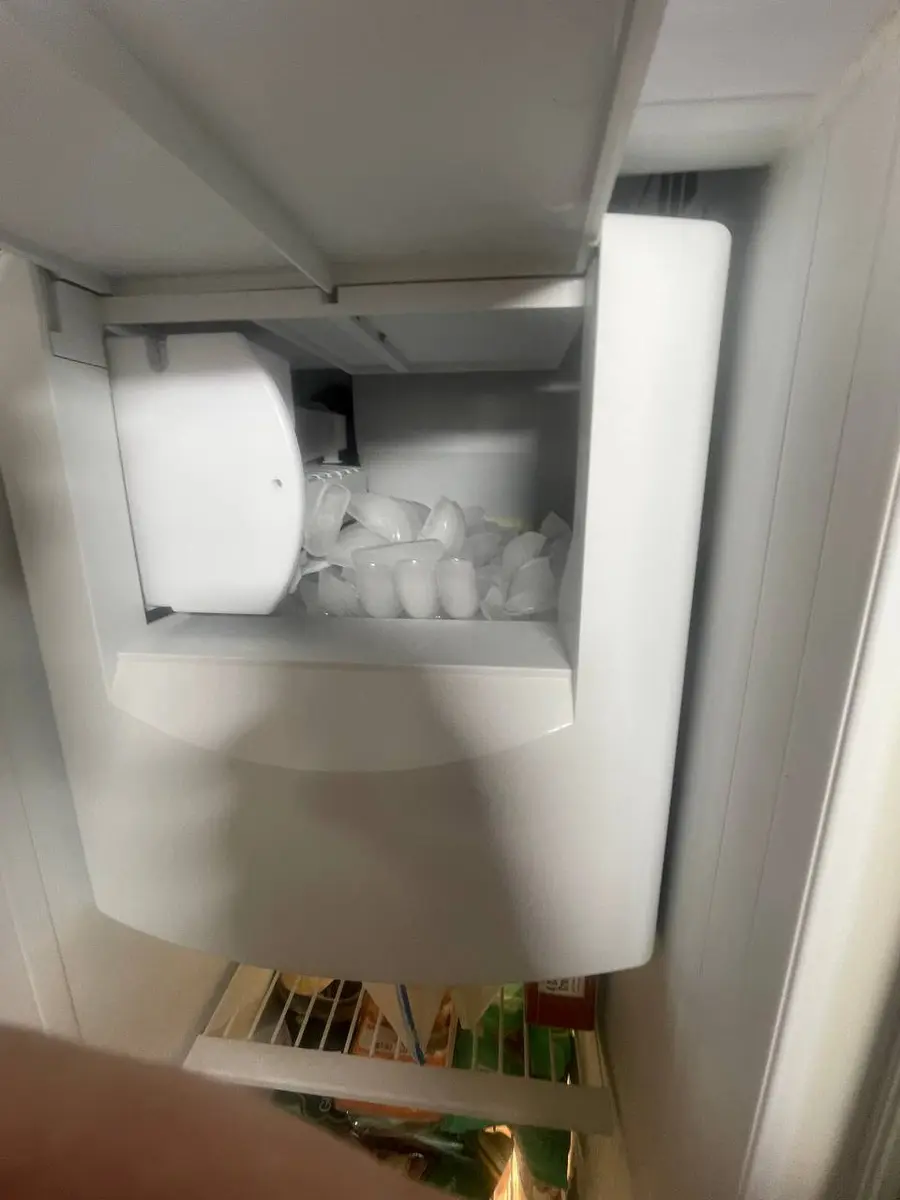
Open the freezer and lift the ice storage bin up and forward off its rails. On French Door models with the ice maker in the upper-left of the freezer, you may need to pull the upper freezer shelf for room; on ceiling-mounted designs, remove any shelf brackets in the way. The module is now visible, held to the rear or left wall by a single mounting plate. Take a moment before you go further to note how the existing module is oriented and where its wires run, because photographing this now saves guesswork when the new unit goes back in — LG routes the harness and the fill tube in a specific way, and getting the fill cup back under the tube is far easier when you have a reference shot of the original.
Step 2 — Disconnect the wire harness#
Find the connector feeding the ice maker motor and heater — on most LG models a white multi-pin connector on the housing or running to a junction behind the freezer wall. Press its locking tab and pull it straight apart, never by the wires. Some models add a second connector for the ice-level sensor (optical or mechanical); disconnect that too.
Step 3 — Remove the mounting screw#
The module is held to its bracket by a single Phillips screw on most models, on the right side or top of the housing. Remove it. Some units add a locking tab or clip alongside the screw. With the screw out, the ice maker slides to one side (usually right) and lifts off the bracket rails, and the fill tube — the small copper or plastic tube entering the top — separates as you draw the unit away from the wall.
Step 4 — Inspect the water fill tube#
With the module off, examine the fill tube protruding from the freezer wall; it carries water from the inlet valve to the mold. Shine a flashlight through it to check for an ice plug — a frozen fill tube is a common failure that gets misdiagnosed as a bad module, and swapping the ice maker without checking it just leaves you with the same no-ice symptom on a brand-new part. If it is clear, carry on. If frozen, thaw it with a hair dryer before fitting the new module, and look into why the fill-tube heater may have failed, because a tube that refreezes within days points at that heater or the defrost system rather than the ice maker itself.
Step 5 — Prep the new module#
Unpack the replacement and verify the part number matches your model, and that the connector type matches your original. Line the new module up with the bracket rails, making sure its fill cup — the funnel that catches water from the fill tube — will sit directly under the tube opening. Misalign it and water misses the mold, freezing on the bracket or dripping into the bin.
Step 6 — Mount the new ice maker#
Slide the module onto the rails and push it home until the fill cup sits right under the fill tube. Secure the mounting screw, reconnect the harness connector(s) until the locking tab clicks, and make sure no wires are pinched between the housing and the freezer wall. On models with an optical ice-level sensor, confirm the sensor window on the new module lines up with the emitter/receiver at the bin.
Step 7 — Restore water and power#
Turn the water supply valve behind the fridge back on and plug the refrigerator in. It will not start making ice right away — LG ice makers hold an 8-24 hour startup delay on initial power-up while the freezer reaches operating temperature (0 degrees F or below). Do not force a harvest during that window; the mold has to be at temperature for the ice to release cleanly, and forcing it early usually just jams a slug of unfrozen water into the mechanism. Patience here is what separates a clean install from a callback, so resist the urge to test it the same afternoon and let the freezer do its work overnight.
Step 8 — Verify the first harvest#
After 24 hours, check the bin for that first batch of crescent cubes. If there is none, press the Test/Reset button on the housing (a recessed button on the underside or side, needing a pen or small tool) to force one harvest — you should hear the motor run, the ejector arms turn, and water refill the mold. No response to the test button means recheck the harness connection. Ice that comes out small or hollow points to low water pressure or a fill-tube alignment that is off.
Troubleshooting Common Issues#
- No harvest after 24 hours and no test-button response: confirm the harness is fully connected with its locking tab engaged — a partly seated connector is the most common install error — and that the ice maker arm (if fitted) is in the down (on) position.
- Harvests but cubes are hollow or thin: water fill is short. Check supply pressure (minimum 20 PSI), verify the fill tube is not partly blocked, and on models with a fill-cup heater make sure its wire is connected so the cup does not ice over between fills.
- Cubes stick and will not eject: the mold heater may not be firing during harvest to warm the mold. That heater is built into the module, so a failure usually means the replacement unit itself is defective.
- Overfills the bin: the optical or mechanical arm sensor is not seeing the full condition. Check sensor alignment between the ice maker and bin, and clean the optical lenses with a dry cloth.
- Craft Ice specifically: the sphere maker needs 48 hours for its first batch, with a separate fill and a rotating mold. If it runs but makes only partial spheres, the internal mold heater is not cycling and the module should be exchanged under warranty if applicable.
Safety First — Know the Risks
Appliances involve high voltage (120-240V), pressurized water, gas lines, and chemical refrigerants. Over 400 DIY repair injuries are reported yearly. Our techs are licensed and insured — let them handle the risk.
Licensed & Insured · 90-Day Warranty · Same-Day Service
When Should You Call a Professional?#
EasyBear technicians serving Sacramento and the Bay Area carry LG-specific diagnostic tools and replacement parts on every service call. Ice maker swaps are simple, but some scenarios point deeper: a fill tube that keeps refreezing (new module stops within a week) means the tube heater or defrost system is failing and needs wiring access behind the freezer wall; a water inlet valve that never opens on fill (no buzz from the rear when ice is called for) means a failed solenoid or a board relay; a new module that makes bad-tasting ice points to an expired filter, a contaminated supply line, or a dirty bin; an LG Linear Compressor fridge whose freezer will not reach 0 degrees F will not make ice regardless (the 10-year Linear Compressor warranty may cover it); and ice-system error codes on the display (ER IS, ER IF, ER It) call for Smart Diagnosis through ThinQ to pinpoint the failed part.
Need Professional Help?#
Need help with this repair? Schedule a free diagnostic — our technicians handle LG refrigerator repairs same-day.
The Real Cost of DIY
Average DIY attempt: $150-400 in tools you may use once, plus the risk of further damage. Our diagnostic visit costs $0 — we find the problem and give you an honest quote.
Licensed & Insured · 90-Day Warranty · Same-Day Service
The startup delay, and how not to misread it#
The most common complaint after this repair is not a fault at all — it is the wait, and knowing its shape saves people from taking a working ice maker back out.
A freshly fitted module has to bring its mold down to freezing, fill, freeze a full harvest and then eject it, and it does that in a compartment whose temperature you have just disturbed by having the door open for the length of a repair. The published window is eight to twenty-four hours before first ice, and the long end of that is normal rather than a warning sign.
What is worth checking during the wait rather than after it: that the water supply was actually turned back on, since a module fitted correctly to a closed supply behaves exactly like a dead one; that the bin is seated far enough for its sensing to see it, because a bin sitting proud reads as full and stops production entirely; and that the fill cup is genuinely under the tube, because an alignment that looks close can still deliver water to the outside of the mold.
Those three take a minute between them and are the difference between a wait and a repeat repair. What is not worth doing is forcing repeated harvest cycles to hurry it along — the module will not produce ice faster than the compartment can freeze it, and cycling an empty mold achieves nothing except wear on the parts you have just fitted.
Senior Appliance Repair Technician · 15 years experience
EPA-certified technician with 15 years of experience specializing in refrigerator and cooling system repairs.