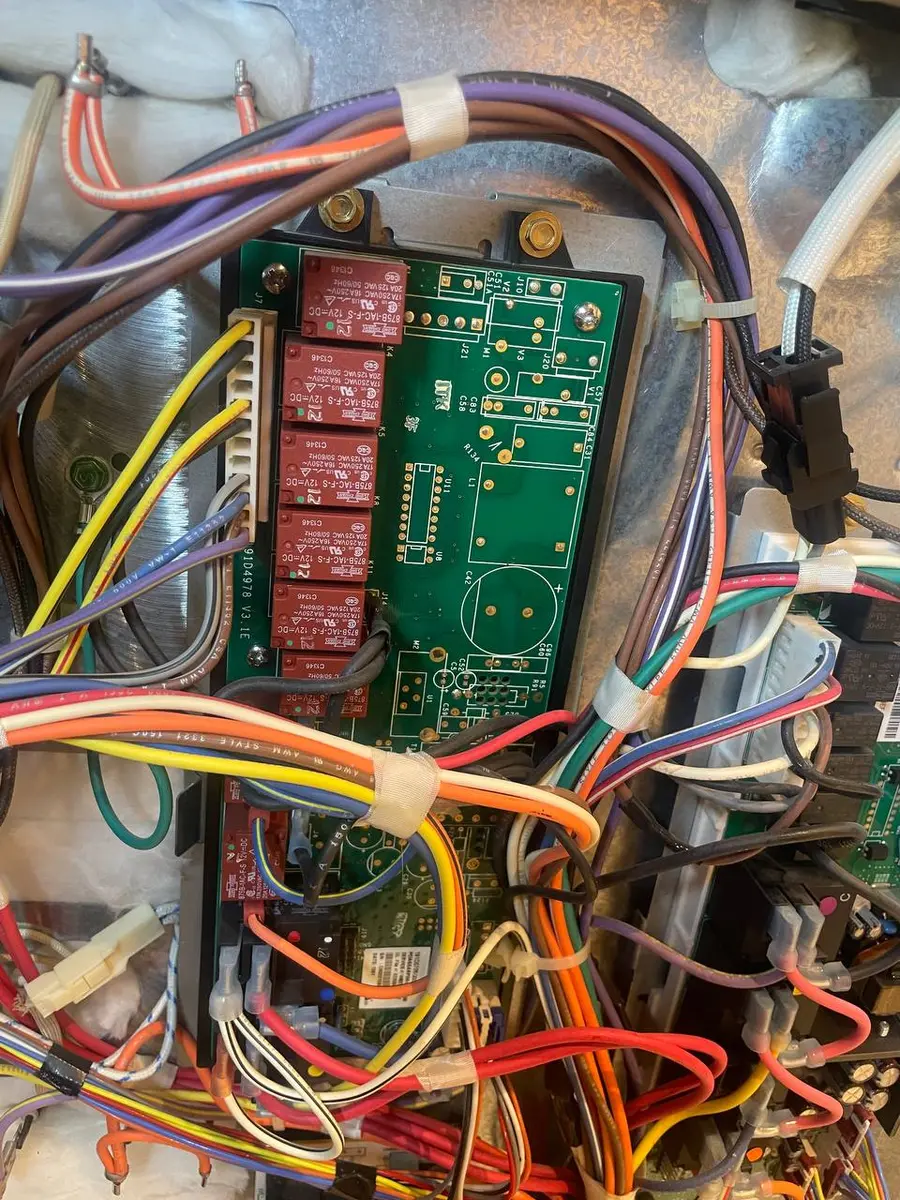
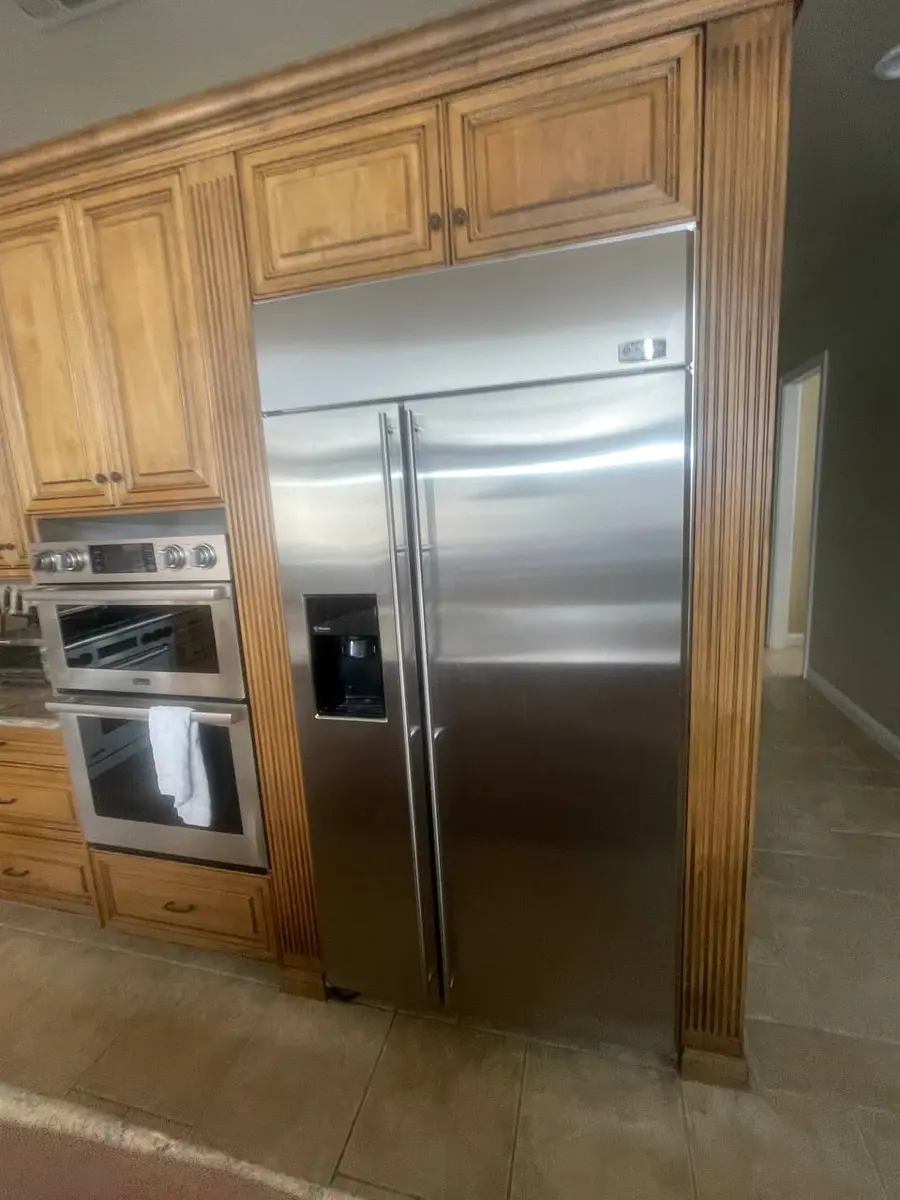
GE refrigerators are in more American kitchens than any other brand, and ice maker failure is the single most common service call we get for them. Whether you own a GE Profile (PFE28, PYE22), GE Cafe (CVE28), or a standard GE side-by-side (GSS25 series), the ice maker relies on a chain of components that must all function together. When any one link breaks, ice production stops.
Here is a systematic approach to diagnosing and fixing a GE refrigerator ice maker that has stopped working.
Step 1: Verify the Basics#
Before testing components, rule out the simple causes that account for about 30% of ice maker no-production calls.
Quick Checks:
- Confirm the ice maker is turned ON. The wire shutoff arm (on older models) should be in the down position. On newer models with a switch, verify it is set to ON
- Check that the ice bin is not overfull. When the bin is full, the shutoff arm or optical sensor stops production
- Verify the freezer temperature. The freezer must be at 0 degrees F or below for the ice maker to cycle. Check with a thermometer, not just the display setting
- Make sure the water supply valve behind the refrigerator is fully open
Do You Have the Right Tools?
Refrigerant gauges ($200+), vacuum pump ($250), leak detector ($150), and EPA-certified recovery equipment. Our technician arrives with $3,000+ in professional tools — your diagnostic is free.
Licensed & Insured · 90-Day Warranty · Same-Day Service
Step 2: Check the Water Filter#
GE refrigerators with built-in water filters (most models manufactured after 2010) restrict water flow to the ice maker when the filter is overdue for replacement.
What to Check:
- Look at the filter status indicator on the control panel. If it shows red or "Replace," install a new filter
- GE recommends filter replacement every 6 months
- Try removing the filter entirely and running the ice maker with the filter bypass plug. If ice production resumes, the filter was the restriction
- A new filter that was not properly seated can also restrict flow. Remove and reinstall, making sure it clicks fully into place
Filter Cost: varies by model and region for a genuine GE MWF or RPWFE filter.
Step 3: Inspect the Fill Tube#
The fill tube is a small plastic tube that delivers water from the inlet valve to the ice maker mold. On GE refrigerators, this tube is prone to freezing over, which blocks water from reaching the ice maker entirely.
How to Check:
- Open the freezer and locate the fill tube. It enters the freezer compartment through the rear wall, usually near the top or side
- Look for ice buildup around the tube opening. A frozen fill tube will have a visible ice dam
- If frozen, carefully thaw it with a hair dryer on low heat. Do not use boiling water or sharp tools
- A recurring frozen fill tube often indicates a faulty fill tube heater (on models equipped with one) or a water pressure issue causing dripping between fill cycles
Repair Cost: $0 for thawing; $80-$150 for fill tube heater replacement.
Safety First — Know the Risks
Refrigerant (R-134a/R-600a) requires EPA certification to handle. Improper discharge is a federal violation and health hazard. Our techs are licensed and insured — let them handle the risk.
Licensed & Insured · 90-Day Warranty · Same-Day Service
Step 4: Test the Water Inlet Valve#
The water inlet valve is an electromechanical valve at the back of the refrigerator that opens briefly to fill the ice maker mold with water. If it fails, no water reaches the ice maker.
How to Diagnose:
- Unplug the refrigerator and turn off the water supply
- Locate the inlet valve at the rear lower section of the fridge, where the water supply line connects
- Check the inlet screen for mineral deposits. Remove and clean if needed
- Test the valve solenoid with a multimeter for continuity. Most GE inlet valve coils read 200-500 ohms
- If the valve has power during a fill cycle (test with a voltmeter) but no water flows through, the valve needs replacement
- Minimum household water pressure of 20 PSI is required. Low pressure can prevent the valve from opening fully
Part Cost: varies by part. Total Repair Cost: varies by part including labor.
Step 5: Test the Ice Maker Module#
The ice maker module contains the motor, heater, and thermostat that control the harvest cycle: freeze, heat to release, eject, and refill. When the module fails, the ice maker either does not cycle at all or gets stuck mid-cycle.
Symptoms of Module Failure:
- Ice maker does not cycle even though water and temperature are correct
- Ejector arm does not rotate to push ice into the bin
- Ice remains stuck in the mold
- Module makes clicking sounds but does not complete a harvest cycle
How to Diagnose:
- Remove the ice maker from the freezer (usually held by 2-3 screws and a wire harness)
- With the ice maker removed, check the mold thermostat. At room temperature it should read approximately 16K ohms
- Check the mold heater for continuity (should read 60-90 ohms)
- If the module itself has failed, the entire ice maker assembly is typically replaced as a unit
Part Cost: varies by part for ice maker assembly. Total Repair Cost: varies by part including labor.
The Real Cost of DIY
Average DIY attempt: $150-400 in tools you may use once, plus the risk of further damage. Our diagnostic visit costs $0 — we find the problem and give you an honest quote.
Licensed & Insured · 90-Day Warranty · Same-Day Service
Step 6: Check the Dispenser Motor and Door#
If your GE refrigerator makes ice but does not dispense it, the problem is in the dispensing mechanism rather than the ice maker itself.
Common Dispenser Issues:
- Dispenser motor failure (auger does not turn to push ice forward)
- Door flap stuck closed due to ice buildup
- Dispenser switch failure (does not engage when you press the lever)
How to Fix:
- Listen for the dispenser motor when you press the dispenser lever. If you hear nothing, the motor or switch may have failed
- Check the door flap for ice buildup that prevents it from opening
- Dispenser motor replacement runs varies by model and region for the part plus labor
When to Call a Professional#
Checking the basics (temperature, water supply, filter, fill tube) is straightforward and resolves many cases. Inlet valve testing and ice maker module diagnosis require a multimeter and comfort working with refrigerator components. If you have verified temperature, water flow, and the filter but ice production has not resumed, professional diagnosis will pinpoint whether the issue is the valve, module, or wiring.
EasyBear technicians carry GE ice maker assemblies, inlet valves, and filters. We diagnose on-site at no charge and most ice maker repairs are completed in a single visit.
Don't Void Your Warranty
Opening your appliance yourself may void the manufacturer warranty. Our repair comes with a 90-day guarantee, and we document everything for warranty compliance.
Licensed & Insured · 90-Day Warranty · Same-Day Service
Frequently Asked Questions#
Q: How long does it take for a GE ice maker to produce the first batch of ice? A: After installation or reset, allow 24 hours for the first batch. Full ice production (the bin fills completely) typically takes 48-72 hours.
Q: My GE ice maker makes ice but the cubes are small or hollow. Why? A: Small or hollow cubes indicate insufficient water flow. Check the water filter, inlet valve screen, water pressure, and supply valve position. Any restriction in the water path reduces fill volume per cycle.
Q: Can I manually force my GE ice maker to cycle? A: On most GE models, you can initiate a test cycle by pressing and holding the feeler arm or test button for 3 seconds. The ice maker will run through one complete harvest cycle, which takes about 5-7 minutes. This helps diagnose whether the module is functional.
Q: Why does my GE refrigerator ice taste bad? A: The most common cause is an old water filter. Replace the filter and discard the first 2-3 batches of ice. Also check that no uncovered food in the freezer is transferring odors. Ice absorbs freezer odors readily.
Senior Appliance Repair Technician · 15 years experience
EPA-certified technician with 15 years of experience specializing in refrigerator and cooling system repairs.