How to Replace KitchenAid Fridge Ice Maker Module
First prove it is the module: confirm the shutoff valve is open, the fill tube is not frozen, and the arm or sensor is set to on, and listen for the fill buzz. If it is genuinely dead, shut off water and power, pull the ice bucket, unplug the harness, slide the module off its rail, and fit the replacement (KitchenAid…
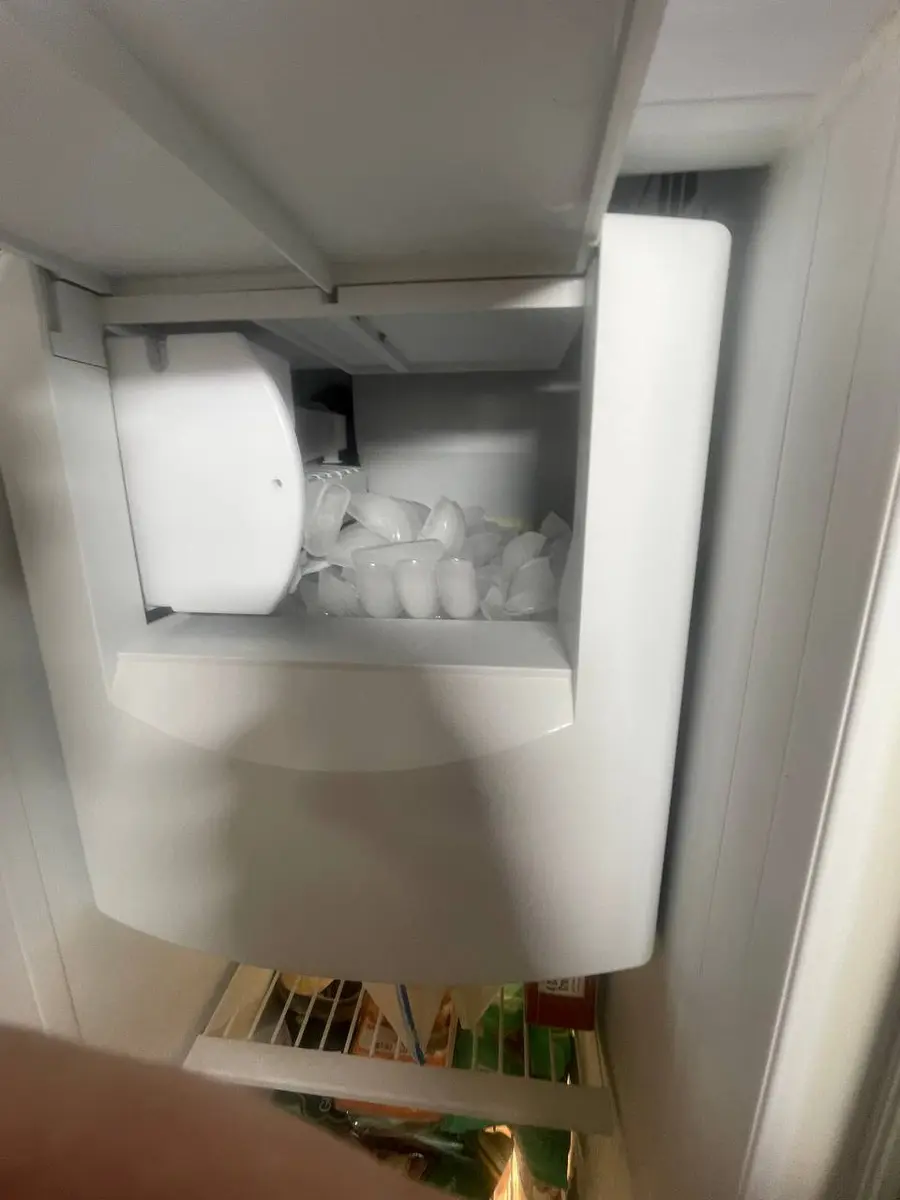
KitchenAid built its ice maker with defined service access points, and this follows that intended approach. The module is a self-contained unit that slides onto a mounting rail inside the freezer — mold, cube-release heating element, ejector motor, and thermostat all in one replaceable assembly — so when one internal part fails, you replace the whole module rather than repairing inside it.
Tools, Parts, and Safety First#
- Tools needed: Phillips #2 screwdriver, 1/4" nut driver, flat-blade screwdriver (for wiring connector), towel (for water drips)
- Parts needed: Replacement ice maker assembly (varies — KitchenAid and Whirlpool part numbers often cross-reference)
- Time required: 20-30 minutes
- Difficulty: Intermediate
- Safety warning: Turn off the water supply valve to the refrigerator before starting. Unplug the refrigerator or turn off its circuit breaker. Have towels ready — residual water in the fill tube will drip when disconnected.
Do You Have the Right Tools?
Multimeter ($85), vacuum pump ($250), diagnostic software, and specialized hand tools. Our technician arrives with $3,000+ in professional tools — your diagnostic is free.
Licensed & Insured · 90-Day Warranty · Same-Day Service
Step-by-Step Instructions#
Step 1 — Confirm the module actually failed#
Before buying a module, rule out a water-supply problem. Check the water supply: pull the fridge out, confirm the shutoff valve is fully open, inspect the copper or braided line for kinks, and verify flow by disconnecting the line at the back into a cup. Check the fill tube: inside the freezer, find the small plastic tube that dispenses water into the mold, and if it is frozen into an ice plug, thaw it with a hair dryer — if ice returns after thawing, the fill-tube heater or insulation is the issue, not the module. Check the arm or sensor: KitchenAid ice makers use either a wire bail arm (older — up is off, down is on) or an optical sensor (newer — an LED reads ice level), so confirm the arm is down or the sensor is not blocked. Then listen during a fill cycle: with the freezer door closed you should hear a buzz as the inlet valve opens, then water running into the mold, and if nothing happens when a fill is due (every 2-4 hours), the module is not signaling the valve and has likely failed. Running this checklist in order matters, because a water-supply or fill-tube fault produces the exact same no-ice symptom as a dead module — and a new module bolted in front of a frozen fill tube or a half-closed valve makes no more ice than the old one did. The single most common misdiagnosis on KitchenAid ice makers is condemning a perfectly good module when the real culprit is a clogged water filter starving the fill; when in doubt, swap the filter and give it a full day before you order a module, since a fridge that has just been moved for access often needs several hours to settle back to temperature anyway.
Step 2 — Turn off water and power#
Close the water supply valve (under the sink or behind the fridge at the wall) fully clockwise, then unplug the refrigerator or trip its dedicated breaker. Open the freezer, empty the ice bucket, and remove the bucket itself — on KitchenAid models it lifts up and pulls straight out of its slides.
Step 3 — Remove the old module#
The module mounts on a rail bracket on the freezer wall (left side on French door models, upper-left on side-by-side). Remove the mounting screws — usually 2-3 Phillips or 1/4" hex holding the module to the bracket or wall — and gently pull it forward off the rail. It is still tied by the wire harness (a multi-pin connector, usually white with 3-4 pins — press the locking tab and pull straight apart, never by the wires) and by fill-tube alignment (the fill cup slides off the tube, with no fastener). With both freed, the old module comes completely off.
Step 4 — Prep the new module#
Unbox the replacement and verify it matches — compare the connector pin count and shape, the mounting-hole pattern, and the overall dimensions to the old one. KitchenAid ice makers cross-reference heavily with Whirlpool (same parent company, roughly 70% parts commonality), so a Whirlpool-branded module with the same part number is physically identical. If yours came with a wiring adapter or mounting bracket, fit those per the included instructions first.
Step 5 — Install the new module#
Slide the module onto the rail, aligning the screw holes with the bracket, the fill cup with the fill tube from the freezer wall (the tube tip should sit inside the cup without touching the sides), and the harness connector with its mate. Connect the harness first, pushing until it clicks, and tug gently to confirm it is seated, then install the mounting screws snug — do not overtighten into the plastic freezer liner or you can crack it. Double-check the fill tube is centered in the cup: misalignment overshoots the mold and lays ice sheets on the freezer floor instead of cubes.
Step 6 — Restore water and power#
Reinstall the ice bucket, close the door, and open the water valve fully (counterclockwise), checking for leaks at the valve and along the line. Plug the fridge back in or restore the breaker. The ice maker runs an initial sensing cycle, and on models with Measured Water Fill it may take one full cycle (2-4 hours) to calibrate fill volume to the new module.
Step 7 — Verify ice production#
The first batch takes 2-4 hours as the freezer cools the new module and mold to temperature. After 4 hours, open the freezer and confirm the mold has filled with water; after 6-8 hours the first cubes should have ejected into the bucket; and full production (about 3-4 pounds per 24 hours on KitchenAid models) resumes within 24 hours. Discard the first 2-3 batches if the water line was disconnected, since idle plumbing can carry impurities. If there is still no ice after 24 hours, verify the freezer is at or below 0 degrees F (ice makers will not cycle above 5 degrees F) and that the inlet valve is getting the fill signal — listen for the buzz when a fill is due.
Troubleshooting After Replacement#
- Hollow or small cubes: water fill is too low. It may correct over 2-3 cycles as the module calibrates; if it persists, the inlet valve may be partly clogged or water pressure is low (minimum 20 PSI).
- Cloudy cubes: normal for the first few batches on new water in the line. If persistent, replace the water filter (KitchenAid uses the Whirlpool EveryDrop equivalents).
- Cubes stick together in the bucket: the freezer temperature is cycling (frequent door openings) or the ice is not used fast enough and sublimates then refreezes together — not a module fault.
- Water leaks onto the freezer floor: fill-tube misalignment — realign the tube to sit centered in the cup.
- Grinding noise: the ejector arm is hitting a cube jammed in the mold; check for one oversized cube blocking ejection and remove it by hand.
Safety First — Know the Risks
Appliances involve high voltage (120-240V), pressurized water, gas lines, and chemical refrigerants. Over 400 DIY repair injuries are reported yearly. Our techs are licensed and insured — let them handle the risk.
Licensed & Insured · 90-Day Warranty · Same-Day Service
KitchenAid Ice Maker Part Cross-Reference#
KitchenAid modules commonly cross-reference to Whirlpool: a KitchenAid W10 prefix maps to a Whirlpool WPW10 (often the same physical part). Search your model number on both the KitchenAid and Whirlpool parts databases and buy the less expensive listing — it ships the same component. Common KitchenAid French door ice makers include W10882923 and W10873791, which cross-reference to Whirlpool equivalents.
When Should You Call a Professional?#
EasyBear technicians serving Sacramento and the Bay Area carry KitchenAid-specific diagnostic tools and replacement parts on every service call. Call one if the water inlet valve will not open despite a confirmed signal from the new module (a valve replacement involving water-line work), if the fill tube keeps refreezing after thawing (a failed fill-tube heater needing freezer-wall access), if the new module immediately shows a solid or blinking error LED (a wiring issue or incompatible module), or if the supply line behind the fridge is leaking at a compression fitting (plumbing work).
The Real Cost of DIY
Average DIY attempt: $150-400 in tools you may use once, plus the risk of further damage. Our diagnostic visit costs $0 — we find the problem and give you an honest quote.
Licensed & Insured · 90-Day Warranty · Same-Day Service
Need Professional Help?#
Need help with this repair? Schedule a free diagnostic — same-day KitchenAid refrigerator repair across the Bay Area.
Appliance Repair Technician & Diagnostics Specialist · 10 years experience
Electronics and diagnostics specialist with 10 years of experience in modern smart appliance repair, specializing in LG and Samsung.