How to Replace Bosch Refrigerator Maker Assembly
A Bosch ice maker that makes no ice, makes small or hollow cubes, will not cycle, or leaks into the bin is a self-contained module you can swap without soldering, plumbing changes, or refrigerant work. Shut the water and power, pull the ice bin, disconnect the wire harness and the water tube, and remove the 2-3…
Replacing parts on a Bosch ice maker follows a sequence that differs from other brands because of its internal layout. Common failures are no ice despite a connected water supply, small or hollow cubes (partial fill), no cycling (a stuck harvest arm), or water leaking into the bin. The module mounts inside the freezer and connects via a water supply tube and an electrical harness — a straightforward mechanical swap.
Tools, Parts, and Safety First#
- Tools needed: Torx T15 and T20 drivers, Phillips PH2 screwdriver, 1/4" nut driver, adjustable wrench or pliers, towels, flashlight, level
- Parts needed: Replacement ice maker assembly — BSH part number specific to model (common: BSH 00649288 for B36 series, 00750057 for B20 series). Verify by E/Nr. Cost: varies. Also recommended: new water inlet valve if current one is suspected (BSH 00622058)
- Time required: 30-45 minutes
- Difficulty: Intermediate
- Safety warning: Turn off the water supply to the refrigerator before disconnecting any water lines. Unplug the refrigerator or turn off the circuit breaker. Have towels ready — residual water in the supply line will drip when disconnected.
Do You Have the Right Tools?
Multimeter ($85), vacuum pump ($250), diagnostic software, and specialized hand tools. Our technician arrives with $3,000+ in professional tools — your diagnostic is free.
Licensed & Insured · 90-Day Warranty · Same-Day Service
Step-by-Step Instructions#
Step 1 — Turn off water and power#
Find the refrigerator's water shutoff valve — usually under the kitchen sink, in the basement directly below, or behind the refrigerator — and turn it clockwise to close, then unplug the refrigerator or switch off the breaker. Wait 2-3 minutes for the ice maker to stop any active cycle; if it was mid-harvest when power was cut, you may need to rotate the harvest arm by hand to complete the cycle during reassembly.
Step 2 — Remove the ice bin#
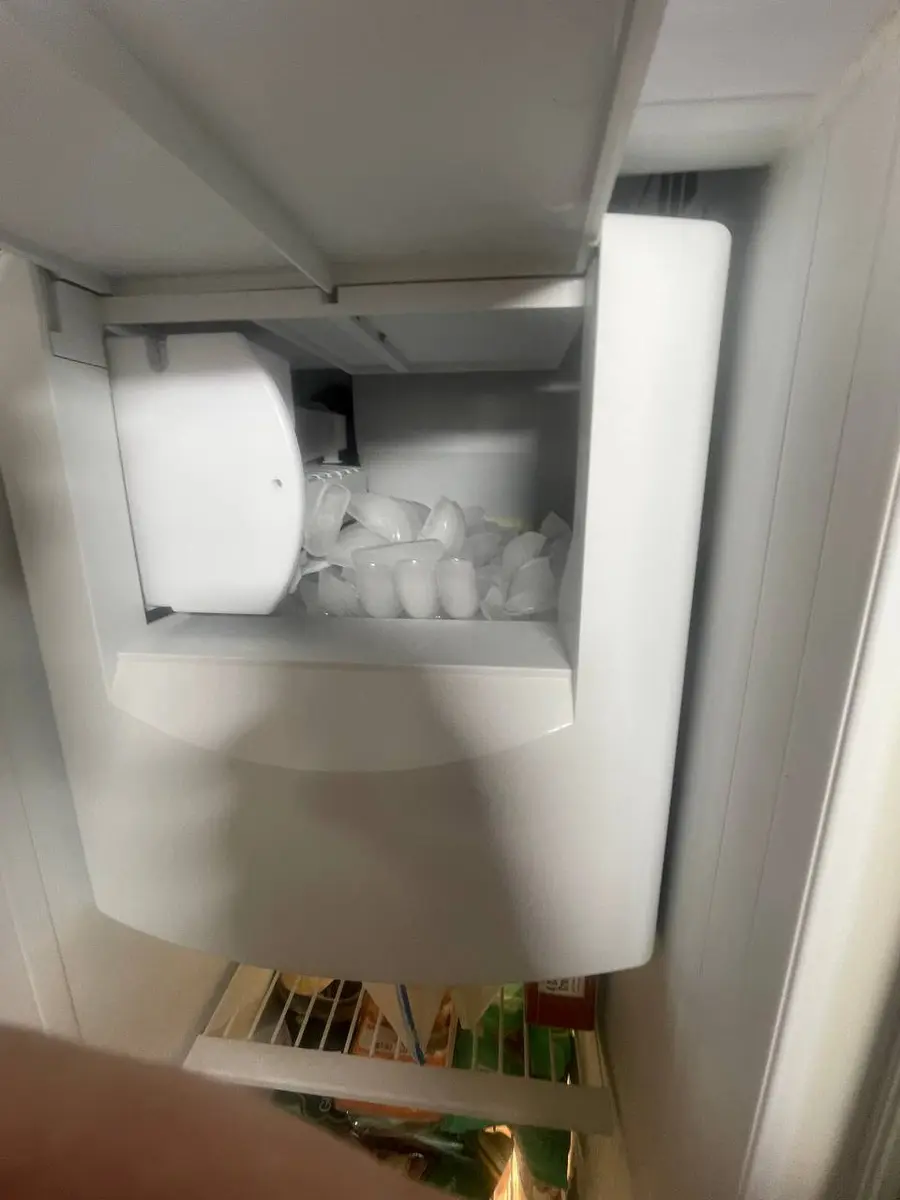
Open the freezer door (or pull the freezer drawer on French-door models) and find the ice bin below the ice maker. Lift the front slightly and pull it straight out — some Bosch models ride on rails with a tab release, so press the tabs inward while pulling. Set the bin aside and dump the existing ice, since old ice absorbs freezer odors and should be discarded.
Step 3 — Disconnect the wiring#
Find the ice maker's electrical connector — on Bosch refrigerators typically a white or blue multi-pin connector (3-4 wires) reachable from the front of the ice maker once the bin is out. Depress the release tab and pull the connector apart. Some models route the harness behind the freezer wall panel, so if you cannot find the connector with the ice maker visible, remove the freezer rear panel (4-6 Torx T20 screws) to reach the connection point.
Step 4 — Disconnect the water supply line#
The water tube (typically 1/4" OD) connects via a compression or push-to-connect fitting. For a compression fitting, loosen the nut with an adjustable wrench and pull the tube free (towel ready for drips); for push-to-connect, press the release collar in while pulling the tube out. Some Bosch models put the water connection on the ice maker itself, others at the rear freezer wall where the tube enters — identify which yours is before pulling.
Step 5 — Remove the ice maker mounting#
The assembly mounts to the freezer wall with 2-3 screws (Torx T15 or Phillips, depending on model year). Remove them, gently pull the ice maker toward you (it may have a locating tab that requires sliding before lifting), and feed the water tube and wiring through any routing clips as it comes off. Set the old ice maker aside, and inspect the mounting area for ice buildup, water staining, or damaged wire insulation that might reveal the cause of failure — a water leak damaging the electrical connections.
Step 6 — Install the new ice maker#
Reverse the removal: position the new module against the freezer wall aligning the mounting holes, install the screws finger-tight then snug (do not overtorque into the plastic liner), and connect the water tube — for compression, insert the tube and hand-tighten the nut then a quarter turn with a wrench; for push-to-connect, push firmly until it clicks and tug gently to confirm it locked. Reconnect the electrical harness until it clicks, and route the wires and tube neatly in the existing clips.
Step 7 — Restore water and power#
Open the water supply valve, check the connection at the ice maker for drips (tighten if needed), and plug the refrigerator back in. The ice maker needs 2-3 hours to reach operating temperature before its first cycle, and the first batch should appear within 4-6 hours. Discard the first 1-2 batches, since they may carry impurities flushed from the new water channels. Resist the urge to judge the repair the same evening: a freezer opened repeatedly during the swap can sit above harvest temperature for hours, and a module that looks dead at bedtime is often just waiting on the cabinet to pull back down to temperature overnight.
Step 8 — Verify operation#
After 24 hours, check that the bin is filling with well-formed cubes (not hollow, not fused), there are no leaks around the ice maker or the supply connection, the harvest arm cycles normally (a click-whir roughly every 90-120 minutes), and production is normal for Bosch — about 3-4 lbs per 24 hours (roughly 8 trays' worth). If cubes are hollow or small, water pressure may be too low (Bosch needs a minimum 20 PSI at the inlet valve) — check by disconnecting the supply at the valve and measuring flow into a cup, where you should get at least 6 oz in 10 seconds.
Troubleshooting After Replacement#
- New ice maker does not cycle at all: verify the connector is fully seated (click), and check that the freezer is below -8C, since the ice maker will not start if the freezer is too warm from being open during installation. Wait 4 hours.
- Water leaks from the ice maker into the bin: the fill-tube alignment is off and water is missing the mold — adjust the fill cup/tube so water enters the mold tray, not over the edge.
- Ice tastes bad: flush the water line by dispensing 2-3 gallons through the dispenser (if equipped) and replace the water filter if overdue; new components may have a slight plastic taste for the first few batches.
- Harvest arm stuck up (off position): it may have been bumped during installation — gently lower it to the down position, which signals the ice maker to begin producing.
Safety First — Know the Risks
Appliances involve high voltage (120-240V), pressurized water, gas lines, and chemical refrigerants. Over 400 DIY repair injuries are reported yearly. Our techs are licensed and insured — let them handle the risk.
Licensed & Insured · 90-Day Warranty · Same-Day Service
When Should You Call a Professional?#
EasyBear technicians serving Sacramento and the Bay Area carry Bosch-specific diagnostic tools and replacement parts on every service call. Call one if the water inlet valve is suspected (mounted behind the fridge, requiring pulling the unit out to reach the rear panel), if the water supply line behind the wall is leaking (plumbing work), if the new ice maker still makes no ice after 48 hours with all connections verified (a possible control-board issue on the main PCB), or if you notice refrigerant hissing or the freezer not holding temperature (unrelated to the ice maker but possibly disturbed during the swap).
Need Professional Help?#
Need help with this repair? Schedule a free diagnostic — same-day Bosch refrigerator service across the Bay Area.
Senior Appliance Repair Technician · 15 years experience
EPA-certified technician with 15 years of experience specializing in refrigerator and cooling system repairs.