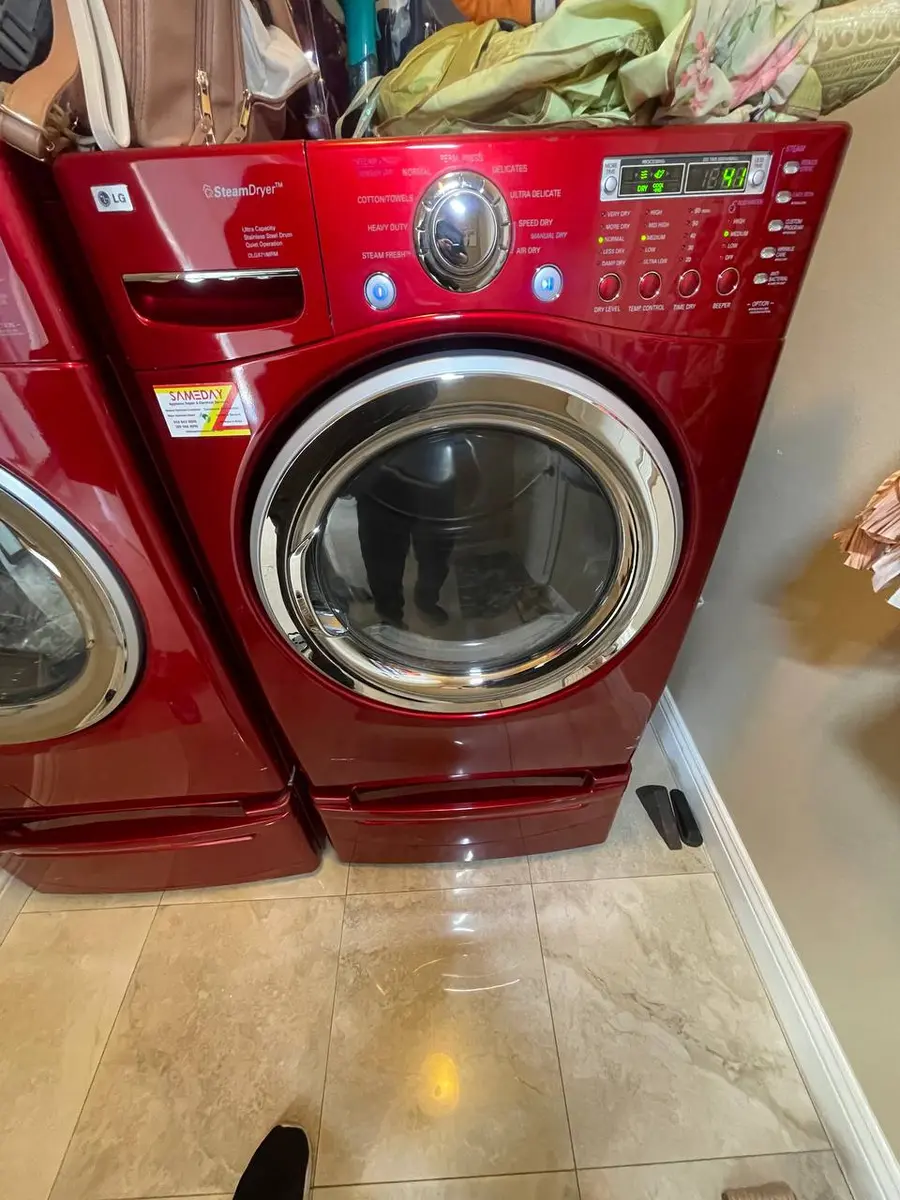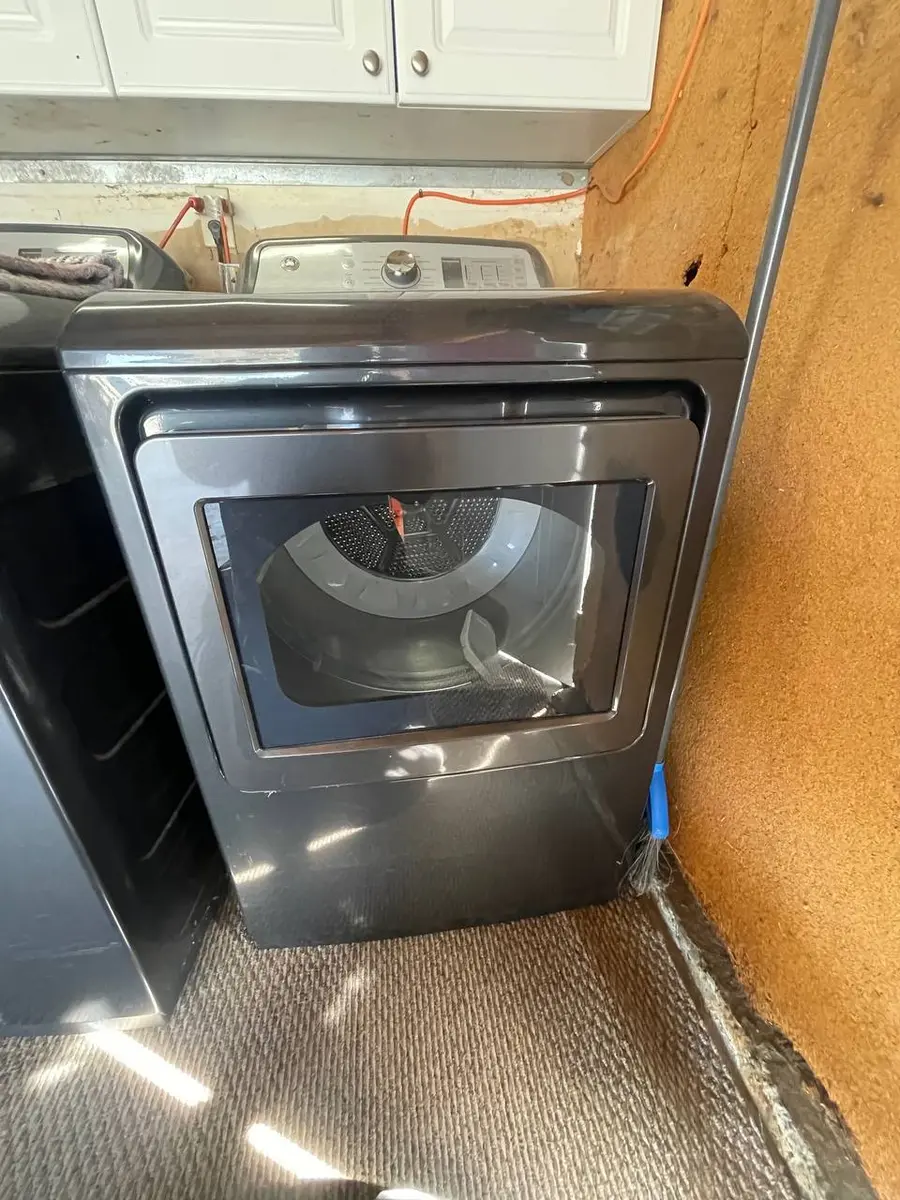
Short answer: a Frigidaire dryer usually lasts 10 to 14 years, sitting exactly on the 10 to 14 year category average.
A Steady, Mainstream Performer#
Frigidaire dryers deliver average reliability — comparable to most mainstream competitors, with no special precautions beyond ordinary care. What sets the failure pattern apart from other mid-market dryers is the heating element: on Frigidaire it is the standout wear item, showing up more often than usual in the middle years. Owners of Affinity models with steam features get one extra job, since those units add a water supply line that deserves an annual leak check.
Do You Have the Right Tools?
Gas leak detector ($130), thermal fuse tester ($95), belt tension gauge, and vent inspection camera ($180). Our technician arrives with $3,000+ in professional tools — your diagnostic is free.
Licensed & Insured · 90-Day Warranty · Same-Day Service
Failure Timeline#
| Age | Component | Frequency |
|---|---|---|
| 3 to 5 years | Thermal fuse | Common |
| 5 to 8 years | Heating element | Very common |
| 7 to 10 years | Drum rollers | Common |
| 10 to 13 years | Motor | Occasional |
The heating element carries the "very common" tag here — the one place a Frigidaire diverges from the pack. A weak element shows up as clothes that tumble but never fully dry, and while the fuse before it is cheap, both trace back to the same enemy: restricted airflow.
How to Reach Fourteen Years#
Airflow is the whole game on a dryer. Clean the lint filter after every single load, have the exhaust vent professionally cleaned once a year, and run rigid metal ducting rather than flexible vinyl or foil. Avoid overloading so the drum keeps its airflow, wipe the moisture-sensor strips with rubbing alcohol each quarter so auto-dry stays accurate, and on Affinity steam models glance at the water line annually for weeps or corrosion.
Safety First — Know the Risks
Gas dryers carry carbon monoxide and explosion risk. Even electric dryers involve 240V circuits that can deliver a fatal shock. Our techs are licensed and insured — let them handle the risk.
Licensed & Insured · 90-Day Warranty · Same-Day Service
What Shortens a Frigidaire Dryer#
Lint buildup tops the list, forcing the element to overwork and raising a fire risk — which is exactly why the element fails so often when airflow is neglected. Overloading strains the rollers, belt, and motor; a crushed or overlong vent hose traps heat; over-drying bakes the element and thermostats; and waxy fabric-softener residue films the lint screen and sensor until efficiency slips. Stay ahead of the lint and most of this never happens.
Repair or Replace#
| Age | Call it | Reasoning |
|---|---|---|
| 0 to 3 years | Repair | Well inside its life; check the warranty first. |
| 3 to 7 years | Usually repair | Worth it under half the price of a new dryer. |
| 7 to 11 years | Weigh it | Simple fixes yes; a motor failure leans toward replacing. |
| 11 years and up | Usually replace | Past the typical life; a newer dryer trims the power bill. |
The half-of-replacement line settles the close calls, and since the motor is the last common failure, a motor quote on an older Frigidaire usually points toward a new machine.
The Real Cost of DIY
Average DIY attempt: $150-400 in tools you may use once, plus the risk of further damage. Our diagnostic visit costs $0 — we find the problem and give you an honest quote.
Licensed & Insured · 90-Day Warranty · Same-Day Service
The Value Case#
Frigidaire lands in the affordable middle of the dryer market, and that shapes the smart repair strategy. Early and mid-life fixes — a fuse, a heating element, a set of rollers — are inexpensive and worth doing, because they buy years for very little. But once you reach the far end of the range and the motor or a second major part is involved, a modestly priced new dryer often wins outright. Knowing where that line sits keeps you from pouring money into a machine near the end of its life.
Signals to Watch For#
The tells track the timeline closely. No heat at all points at the fuse or the element. Clothes that come out warm but still damp usually mean a weakening element or a blocked vent. A growing thump or scrape is the rollers wearing flat, and a hum with no drum motion is the belt or the motor. Because nearly all of it starts with airflow, a clogged lint screen or vent is always the first thing to rule out.
Clothes coming out damp? Book a diagnostic — we will check the element and clear the airflow that so often causes it.
Appliance Repair Technician · 11 years experience
Experienced technician with 11 years specializing in Frigidaire and Electrolux refrigerator and dryer repair with a focus on safety.