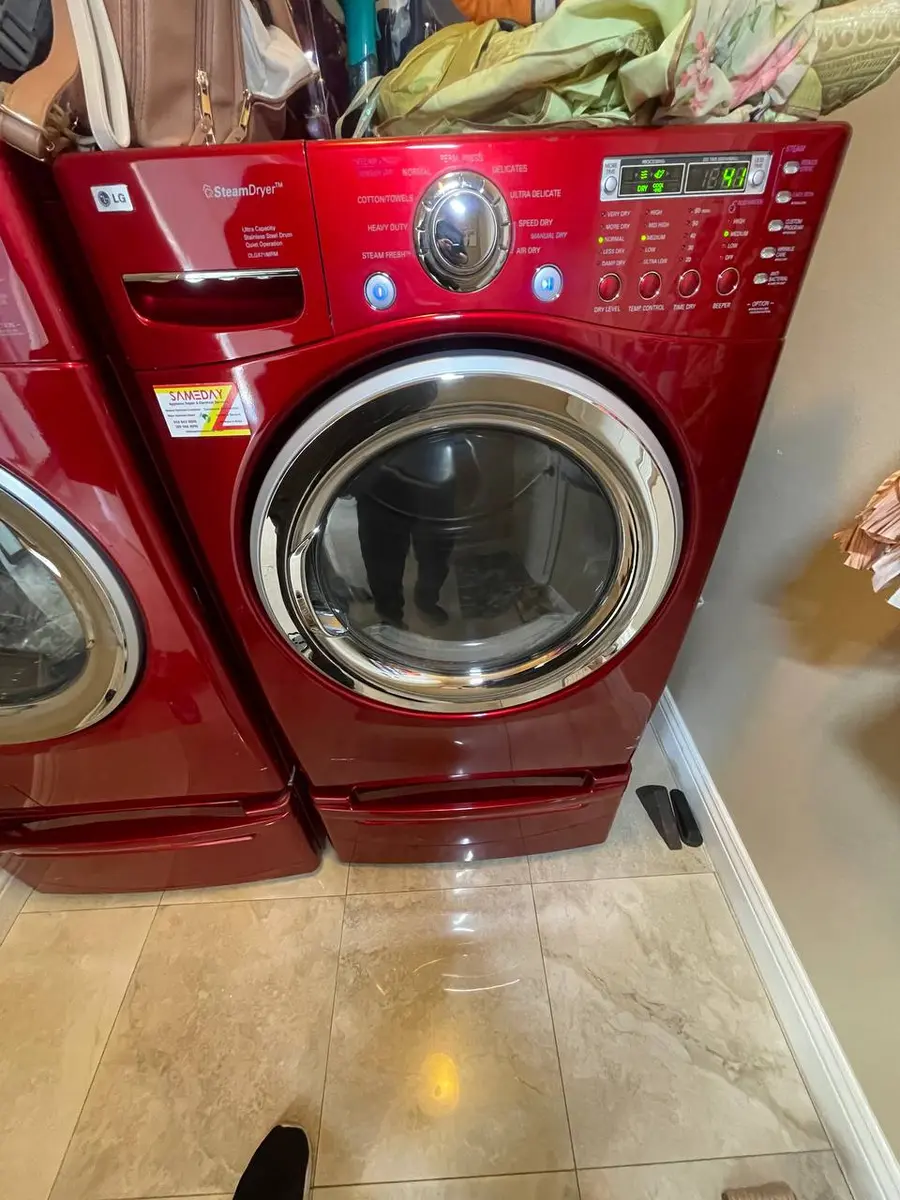
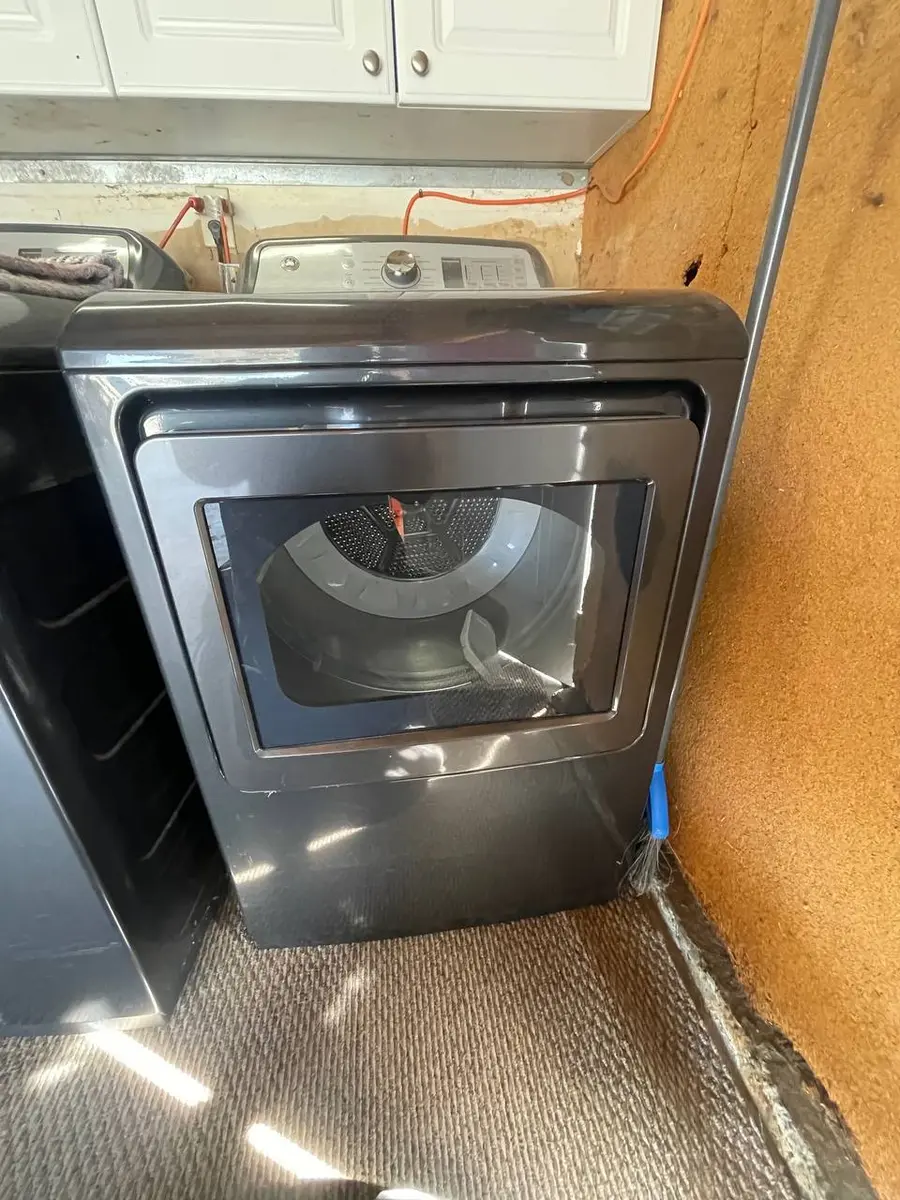
Your dryer used to finish a load in 45 minutes. Now it takes two hours and clothes still come out damp. Extended drying times are more than an inconvenience — they waste energy, drive up your PG&E or SMUD bill, and in the case of lint buildup, create a genuine fire hazard. The National Fire Protection Association reports that dryers cause an estimated 13,820 home fires per year, with failure to clean being the leading factor. Here are the seven most common reasons your dryer is taking too long and what each fix involves.
1. Clogged Lint Filter and Exhaust Vent#
The Problem: This is the number one cause of extended drying times and the most dangerous. The lint filter catches surface lint, but fine particles pass through and accumulate in the exhaust vent duct — the 4-inch aluminum or rigid pipe running from the back of the dryer to the outside wall. A vent that's 50% blocked doubles your drying time. A fully blocked vent can cause the dryer to overheat and shut off on the thermal fuse.
What to Check:
- Clean the lint filter before every load (this is baseline, not a fix)
- Go outside and check the vent hood — is the flap opening when the dryer runs? Can you feel strong airflow?
- Disconnect the vent from the back of the dryer and look inside with a flashlight — lint buildup will be visible
- Check the vent run length — California building code allows a maximum of 25 feet with deductions for each elbow
DIY or Pro: You can clean short, straight vent runs with a $20 dryer vent brush kit. For longer runs, vents with multiple elbows, or roof-exit vents, professional cleaning (varies by model and region) is safer and more thorough. Sacramento fire codes require accessible vent connections — if your vent is sealed behind drywall with no access panel, it needs modification.
Typical Cost: varies by model and region DIY; varies by model and region professional cleaning.
Do You Have the Right Tools?
Gas leak detector ($130), thermal fuse tester ($95), belt tension gauge, and vent inspection camera ($180). Our technician arrives with $3,000+ in professional tools — your diagnostic is free.
Licensed & Insured · 90-Day Warranty · Same-Day Service
2. Failed Heating Element (Electric Dryers)#
The Problem: Electric dryers use a coiled heating element that glows red-hot to produce heat. When the element develops a break in the coil, it stops producing heat entirely. The dryer still tumbles and runs the timer, but clothes come out damp after a full cycle. Some elements fail partially — one section of the coil breaks, reducing heat output by 30–50%.
What to Check:
- Run the dryer for 5 minutes, then open the door — is the air inside hot or just warm?
- If the air is room temperature, the element has failed completely
- If the air is warm but not hot, a partial element failure or a gas igniter issue (gas dryers) is likely
DIY or Pro: Heating elements cost varies by model and region and are accessible by removing the rear or front panel (varies by model). The element mounts in a housing with two wire terminals. This is a moderate DIY repair — the most difficult part is identifying which panel to remove for your specific model.
Typical Cost: varies by model and region with a technician.
3. Worn Drum Seals (Felt Gaskets)#
The Problem: Drum seals — felt strips that seal the gap between the rotating drum and the front and rear bulkheads — wear thin over time. When these seals deteriorate, cold ambient air leaks into the drum, mixing with heated air and reducing the effective drying temperature. You'll also notice lint accumulating inside the dryer cabinet instead of going through the lint filter.
What to Check:
- Open the dryer door and run your finger along the gap between the drum edge and the front panel — do you feel air leaking out during a cycle?
- Look under the dryer for accumulated lint — this indicates seal leakage
- Listen for a scraping or rubbing noise that wasn't there before
DIY or Pro: Felt seals cost varies by model and region per set. Replacement requires partial disassembly of the dryer — removing the top, front panel, and sometimes the drum itself. Moderate to difficult DIY depending on model.
Typical Cost: varies by model and region with a technician.
Safety First — Know the Risks
Gas dryers carry carbon monoxide and explosion risk. Even electric dryers involve 240V circuits that can deliver a fatal shock. Our techs are licensed and insured — let them handle the risk.
Licensed & Insured · 90-Day Warranty · Same-Day Service
4. Defective Gas Valve Solenoids (Gas Dryers)#
The Problem: Gas dryers use two or three solenoid coils on the gas valve assembly to control gas flow to the burner. These coils weaken with age and heat exposure, causing intermittent ignition failure. The dryer may light the burner initially, then fail to reignite after the thermostat cycles it off. Symptoms: the dryer runs for a long time, the first 10 minutes produce good heat, then it runs warm to cold.
What to Check:
- Start the dryer and wait for the burner to light (you'll see a glow through the lower vent)
- After the burner cycles off (15–20 minutes in), watch to see if it relights — if it doesn't, the solenoids are weak
- Listen for repeated clicking of the igniter without gas flow
DIY or Pro: Solenoid coils cost varies by model and region— two screws and wire connectors on the gas valve. However, any gas work in California requires verification that there are no gas leaks after repair (soap bubble test at minimum). Professional repair recommended.
Typical Cost: varies by model and region with a technician.
5. Faulty Moisture Sensor#
The Problem: Most modern dryers have moisture sensor bars inside the drum — two metal strips that detect when clothes are dry by measuring electrical conductivity. When these sensors are coated with fabric softener residue or have corroded contacts, they give inaccurate readings. On "auto-dry" cycles, a faulty sensor may shut the dryer off before clothes are dry, making it seem like the dryer "takes too long" because you have to run multiple cycles.
What to Check:
- Locate the sensor bars (usually on the inside of the front panel, near the lint filter opening)
- Clean them with rubbing alcohol and a soft cloth — dryer sheet residue leaves an invisible film
- Try running a timed cycle instead of auto-dry — if timed cycles dry clothes normally, the sensor is the issue
DIY or Pro: Cleaning the sensor bars is a free fix. If the sensor itself has failed (corroded or broken wires), replacement cost varies by model and region and involves removing the front panel. Most homeowners can clean the bars themselves.
Typical Cost: $0 for cleaning; $80–$140 for sensor replacement.
The Real Cost of DIY
Average DIY attempt: $150-400 in tools you may use once, plus the risk of further damage. Our diagnostic visit costs $0 — we find the problem and give you an honest quote.
Licensed & Insured · 90-Day Warranty · Same-Day Service
6. Overloaded or Improperly Sorted Loads#
The Problem: Dryers need airflow to work. An overloaded drum restricts tumbling and prevents hot air from reaching all garment surfaces. Mixing heavy items (jeans, towels) with lightweight items (t-shirts, underwear) means the light items dry quickly while the heavy items stay damp, and the moisture sensor or timer averages the result.
What to Check:
- Fill the drum no more than 3/4 full
- Separate heavy and lightweight items into different loads
- Shake out tangled or balled-up items before loading (especially fitted sheets)
DIY Fix: Free. Adjust your sorting and loading habits. This alone can reduce drying time by 20–30% for households that routinely overfill.
Typical Cost: $0.
7. Damaged Blower Wheel#
The Problem: The blower wheel pulls heated air through the drum and pushes it out through the exhaust vent. If the wheel is cracked, has broken fins, or has come loose on the motor shaft, airflow drops dramatically. You'll hear rattling or thumping, and the exhaust airflow at the outside vent will feel weak.
What to Check:
- Check the exhaust vent outside — is airflow noticeably weaker than it used to be?
- Listen for rattling, thumping, or vibration from inside the dryer cabinet
- If you've already cleaned the vent and airflow is still weak, the blower wheel is the next suspect
DIY or Pro: Blower wheels cost varies by model and region but accessing them requires significant disassembly — removing the drum in most models. Professional repair recommended unless you're experienced with dryer teardowns.
Typical Cost: varies by model and region with a technician.
Don't Void Your Warranty
Opening your appliance yourself may void the manufacturer warranty. Our repair comes with a 90-day guarantee, and we document everything for warranty compliance.
Licensed & Insured · 90-Day Warranty · Same-Day Service
When to Call a Professional#
If your dryer takes more than 60 minutes for a standard cotton load after cleaning the lint filter and checking the exhaust vent, an internal component has failed. Heating element, gas valve solenoids, and blower wheel repairs all require opening the dryer cabinet and working with electrical connections (or gas connections). Sacramento and Bay Area homeowners should schedule professional vent cleaning annually — it reduces fire risk and keeps drying times reasonable.
FAQ#
Q: Can a clogged vent cause a dryer fire? A: Yes. Lint is highly flammable. A clogged vent traps heat inside the dryer, and if the thermal safety devices fail or are bypassed, accumulated lint can ignite. The Sacramento Fire Department recommends professional vent cleaning annually and lint filter cleaning before every load.
Q: How much energy does a slow dryer waste? A: A dryer running 90 minutes instead of 45 uses roughly twice the energy per load. At California electricity rates ($0.30+/kWh for PG&E Tier 2), that adds $15–$30 per month for a household running 5–7 loads per week.
Q: Why does my dryer get hot but clothes stay damp? A: Hot air inside the drum but damp clothes means airflow is restricted — the hot air isn't moving through the clothes effectively. Check the exhaust vent first, then the blower wheel. If both are clear, the drum seals may be leaking.
Q: Should I use dryer sheets or liquid fabric softener? A: Liquid fabric softener added during the wash cycle is better for dryer health. Dryer sheets leave a waxy residue on the lint filter and moisture sensor bars, reducing airflow and sensor accuracy over time.
Appliance Repair Technician · 11 years experience
Experienced technician with 11 years specializing in Frigidaire and Electrolux refrigerator and dryer repair with a focus on safety.