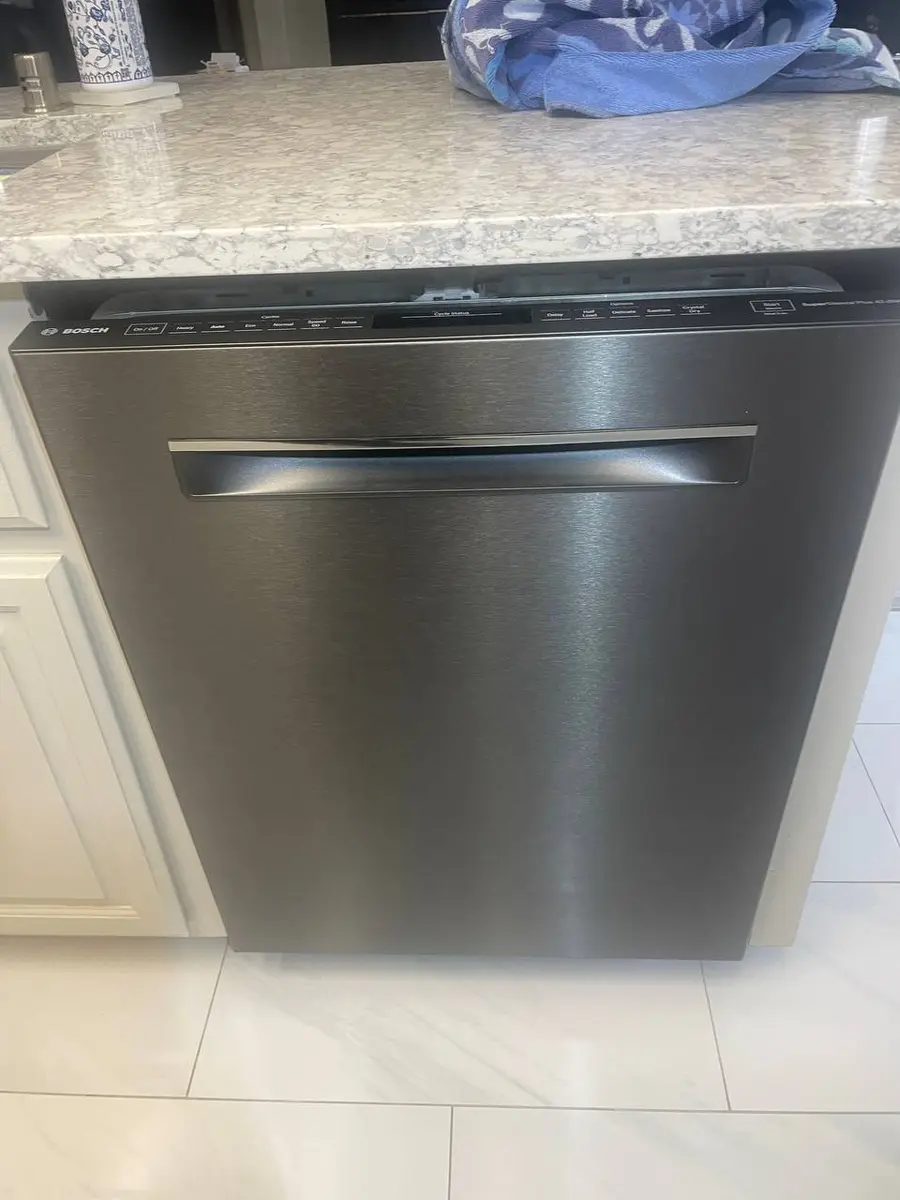
Bosch Dishwasher Door Gasket Replacement — Leak Prevention and E15 Error Resolution
The door gasket on a Bosch dishwasher is a multi-channel rubber seal that runs along the entire perimeter of the tub opening. Unlike the simple flat rubber strips used on many domestic dishwashers, Bosch's gasket design incorporates multiple sealing lips and a drainage channel that routes any water that penetrates the primary seal back into the tub rather than letting it drip down the front of the unit or into the base pan. This engineered drainage feature means small gasket imperfections that would cause visible leaks on other brands remain invisible on a Bosch — until enough water bypasses the secondary drainage to reach the base pan and trigger the E15 flood-protection code.
This delayed failure presentation is why gasket problems on Bosch dishwashers often surprise homeowners. The machine runs without visible leaks for weeks or months after the primary seal degrades, because the drainage channel catches the bypass water. Eventually, the volume exceeds what the channel can handle — typically during heavy-spray cycles like the Intensive program — and water reaches the base pan float switch. The result is a seemingly random E15 error on a unit that showed no prior signs of leaking.
Recognizing Gasket Failure
Bosch gasket failure follows a predictable progression:
- Stage 1: Moisture on the door exterior below the gasket line — barely noticeable dampness that dries quickly. Many owners never see this stage. Look for water marks or mineral deposits on the lower door panel as evidence of past dampness
- Stage 2: Occasional E15 error, clears after tilting — the drainage channel is occasionally overwhelmed, depositing small amounts of water in the base pan. Tilting the unit 45 degrees to the right drains the base pan and resets the float switch. If E15 returns within days, gasket degradation is the likely cause
- Stage 3: Persistent E15 after every cycle — the primary seal has failed significantly enough that the drainage channel cannot keep up. Water accumulates in the base pan with every use
- Stage 4: Visible water on the floor — both the primary seal and the drainage channel have failed. At this stage, water damage to cabinetry and flooring becomes a risk
Critical note: E15 does not always mean the gasket has failed. Other causes include a leaking AquaStop hose, a cracked sump housing, or residual shipping water in a new installation. Always inspect the gasket visually before ordering a replacement — look for cracks, hardening, deformation, or debris embedded in the sealing surface.
Do You Have the Right Tools?
Multimeter ($85), vacuum pump ($250), diagnostic software, and specialized hand tools. Our technician arrives with $15K+ in professional tools — your diagnostic is free.
Licensed & Insured · 90-Day Warranty · Same-Day Service
Cost Breakdown
| Component | Range |
|---|---|
| OEM door gasket | $30–$65 |
| Professional labor | $90–$160 |
| Total with professional service | $120–$225 |
The gasket is an affordable BSH OEM part, but proper installation matters more than on most components. A gasket seated with even a small misalignment creates a new leak path that triggers E15 within days. Professional installation makes sense for homeowners who are not confident in achieving uniform compression around the full tub perimeter.
Removing the Old Gasket
The gasket press-fits into a channel machined into the tub lip. It is not glued, screwed, or clipped — friction and compression hold it in place:
- Disconnect power at the breaker. This is a non-electrical repair, but working near the tub opening with water residue makes it prudent
- Open the door fully and remove both dish racks and the lower spray arm to provide clear access to the tub perimeter
- Starting at the bottom corner (the area most accessible with the door fully open), grip the gasket lip and pull it out of the channel. Work around the perimeter, pulling gently and consistently — forcing it risks tearing the gasket, leaving remnants in the channel that must be cleaned out before installing the new one
- After removing the gasket, inspect the channel for hardened detergent residue, mineral deposits, or old gasket fragments. Clean the channel thoroughly with a damp cloth and mild detergent
- Dry the channel completely before installing the new gasket — any moisture on the channel surface reduces the friction fit that holds the gasket in position
Safety First — Know the Risks
Appliances involve high voltage (120-240V), pressurized water, gas lines, and chemical refrigerants. Over 400 DIY repair injuries are reported yearly. Our techs are licensed and insured — let them handle the risk.
Licensed & Insured · 90-Day Warranty · Same-Day Service
Installing the New Gasket
Bosch gaskets are directional — the drainage channel must face inward (toward the tub) for the secondary water management to function. The gasket has a flat outer face and a channeled inner face. Orienting it backward eliminates the drainage feature entirely:
- Identify the inner face of the gasket — it has a visible groove or channel running the length of the seal
- Start installation at the top center of the tub opening. Press the gasket lip firmly into the channel until you feel it seat. Working from top center ensures symmetrical stretch on both sides
- Work down each side simultaneously — alternate pressing in 6-inch sections on the left and right to maintain even tension around the perimeter
- The bottom section is the most critical and most common failure point. Ensure the gasket sits fully in the channel across the entire bottom span, with no bulging or gaps
- After the gasket is fully seated, close the door slowly and check that the gasket compresses evenly against the door panel. There should be no bunching, gaps, or areas where the gasket appears to fold over itself
- Run a full wash cycle and inspect the door exterior for any moisture — check the lower panel corners specifically, as these are where misalignment leaks manifest first
Gasket vs. Tub Seal: Two Different Components
Bosch dishwashers have two distinct seals that are sometimes confused:
- Door gasket — the rubber perimeter seal visible when the door is open. This is what this guide covers. It seals the space between the tub opening and the inner door panel
- Tub-to-sump seal — a gasket inside the machine where the tub body connects to the sump assembly at the bottom. This seal is not visible from the tub interior and requires disassembly to access. A failed tub-to-sump seal causes water to drip directly into the base pan without passing through the door at all
If water appears in the base pan but the door gasket is in good condition, the tub-to-sump seal is the more likely failure point. This is a more involved repair that requires pulling the unit from the cabinet.
Same-Day Appliance Repair
Fixed or It's Free
$89 → $0 Service Call & Diagnosis — offer ends May 25
The Real Cost of DIY
Average DIY attempt: $150-400 in tools you may use once, plus the risk of further damage. Our diagnostic visit costs $0 — we find the problem and give you an honest quote.
Licensed & Insured · 90-Day Warranty · Same-Day Service
Gasket Lifespan and Degradation
Bosch dishwasher door gaskets last 8-15 years depending on usage and water conditions. Degradation factors:
- Detergent type — gel and liquid detergents coat the gasket surface. Over years, the chemical contact hardens the rubber, reducing flexibility. Powder detergent is less aggressive to rubber seals
- Hard water mineral deposits — calcium and lime embed in the rubber surface, creating hard spots that prevent uniform compression against the door panel
- Door slam force — repeated forceful closing compresses the gasket beyond its elastic range in the impact zone (usually bottom center), permanently deforming it
- High-temperature cycles — the Sanitize and Intensive programs expose the gasket to higher temperatures that accelerate rubber aging. Units that frequently run these programs see gasket degradation sooner
Preventive Maintenance
- Wipe the gasket surface monthly with a damp cloth to remove detergent residue and mineral deposits before they harden
- Inspect the gasket annually — run your finger along the entire perimeter feeling for hard spots, cracks, or areas where the gasket has pulled away from the channel
- Close the door with controlled force — let the hinge dampeners do the work rather than slamming
- If you notice any moisture on the door exterior below the gasket, investigate immediately — catching the issue at Stage 1 prevents water damage and the more complex E15 diagnostics at later stages
- Run a monthly cleaning cycle with Bosch dishwasher cleaner — this dissolves detergent and mineral buildup on the gasket surface and throughout the wash system
Don't Void Your Warranty
Opening your appliance yourself may void the manufacturer warranty. Our repair comes with a 90-day guarantee, and we document everything for warranty compliance.
Licensed & Insured · 90-Day Warranty · Same-Day Service
FAQ
What causes E15 on a Bosch dishwasher?
E15 means the float switch in the base pan detected water. Causes include a failed door gasket, a leaking AquaStop hose, a cracked sump, or residual shipping water on new installations. Tilt the unit 45 degrees right to drain the base pan. If E15 returns after the next cycle, investigate the gasket and AquaStop hose.
How do I know if my Bosch dishwasher gasket needs replacing?
Look for cracks, hardened sections, visible deformation, or the gasket pulling out of its channel. Water marks or mineral deposits on the lower door exterior indicate the primary seal is leaking even if no dripping is visible.
Can I use silicone sealant instead of replacing the gasket?
No. Silicone prevents the gasket from seating properly in the channel and blocks the integrated drainage feature. It also makes future gasket replacement much more difficult. Always replace with the OEM gasket.
Is the Bosch door gasket the same as the tub seal?
No. The door gasket is the visible rubber perimeter seal around the tub opening. The tub-to-sump seal is an internal gasket where the tub connects to the sump assembly. They serve different functions and require different replacement procedures.
Bosch dishwasher leaking or showing E15? Our technicians diagnose gasket-vs-sump seal failures and carry OEM replacement gaskets. Book a technician →