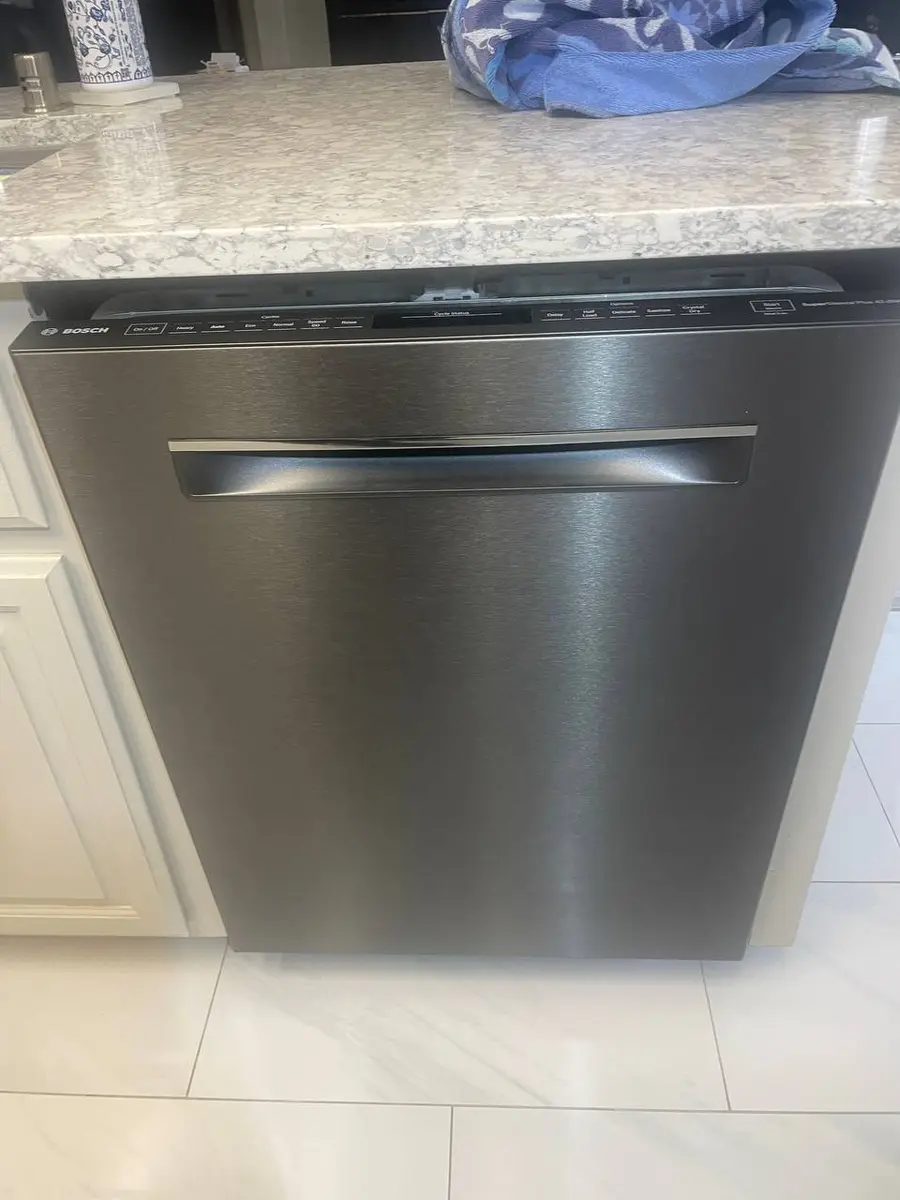
Samsung Dishwasher Heating Element Replacement
A Samsung dishwasher that leaves dishes greasy, throws an HE error, or never reaches its sanitize temperature usually has a failed sump heating element (OEM DD81-02176A). Before ordering it, rule out the cheaper causes — a failed thermistor and inadequate incoming hot water both mimic a dead heater.
What the Symptoms Point To#
| Symptom | Meaning |
|---|---|
| Water never gets hot, greasy dishes | Heater not reaching activation temperature |
| HE error code | Water did not hit target temperature in time |
| Sanitize cycle fails to reach 150F | Heater cannot make sanitization heat |
| Dishes wet after the dry cycle | Condensation drying needs hot tub walls |
| Cycle runs far longer than normal | Board waiting on a temperature it never sees |
Check the Cheap Causes First#
The HE error does not always mean the heater. Two other things produce the same complaint. First, the thermistor: a failed temperature sensor reading roughly 10-50k ohms at room temperature can leave the board blind to the water temperature, so test it before buying the pricier heater. Second, the incoming water: Samsung expects at least 120F at the inlet and boosts from there, so run the kitchen tap hot before starting a cycle. If the supply is lukewarm, the dishwasher is fighting a losing battle no new heater will fix.
Do You Have the Right Tools?
Water pressure gauge ($60), spray arm tester, float switch multimeter ($85), and drain inspection camera. Our technician arrives with $3,000+ in professional tools — your diagnostic is free.
Licensed & Insured · 90-Day Warranty · Same-Day Service
Where the Heater Lives#
Unlike older dishwashers with a visible coil in the tub, Samsung hides the heater in the sump beneath the tub floor, often integrated into the sump assembly. That is why this repair means working from underneath rather than reaching into the tub, and why some models require replacing the heater as part of the sump unit rather than as a standalone coil.
Replacing the Element#
- Turn off the breaker and the water supply — the heater carries full line voltage, so confirm the power is dead with a tester.
- Remove the kickplate and reach the sump beneath the tub floor.
- Disconnect the high-current leads from the heater terminals.
- Remove the mounting hardware; on many models the sump heater assembly (DD81-02176A) comes out as a unit.
- Fit the new heater and make the wire connections tight — a loose terminal arcs and is a fire risk.
- Restore power and water, run a wash, and open it mid-cycle to confirm the water is genuinely hot rather than lukewarm.
A Phillips #2, a multimeter to read the heater's resistance (about 10-30 ohms is normal) and the thermistor, pliers for the push-on terminals, and towels for the residual sump water cover the job. If you hit signs of electrical damage such as melting or burning, stop and call a professional.
Safety First — Know the Risks
Live 120V wiring in a wet environment is one of the most dangerous DIY scenarios. Water + electricity = serious shock risk. Our techs are licensed and insured — let them handle the risk.
Licensed & Insured · 90-Day Warranty · Same-Day Service
Why It Matters#
Without a working heater the water stays lukewarm, so detergent does not fully dissolve, grease is left behind, and cycle times stretch out as the board waits for heat that never arrives; on condensation-drying models cold water also means the dishes never dry. A severe case can even show up on the display as related fault codes — a 5E drain error where water is not clearing, or a 4E code pointing at the fill side — which is why reading the code before opening any panel narrows the search.
Lifespan and Care#
A Samsung dishwasher heater lasts about 8-12 years. Hard-water scale is the main enemy — mineral deposits insulate the element and force longer, hotter runs — followed by gel detergents that bake residue onto the surface and by frequent high-temperature sanitize cycles. Running a monthly citric-acid cleaner cycle to strip scale, setting the household water heater to 120F, and using powder or pod detergent instead of gel all extend its life. In a hard-water home, softening the supply does the most of all, since scale on the element is the single biggest driver of a shortened heater life.
Appliance Repair Technician · 8 years experience
Experienced technician with 8 years specializing in dishwasher repairs and European appliance brands including Bosch and Thermador.