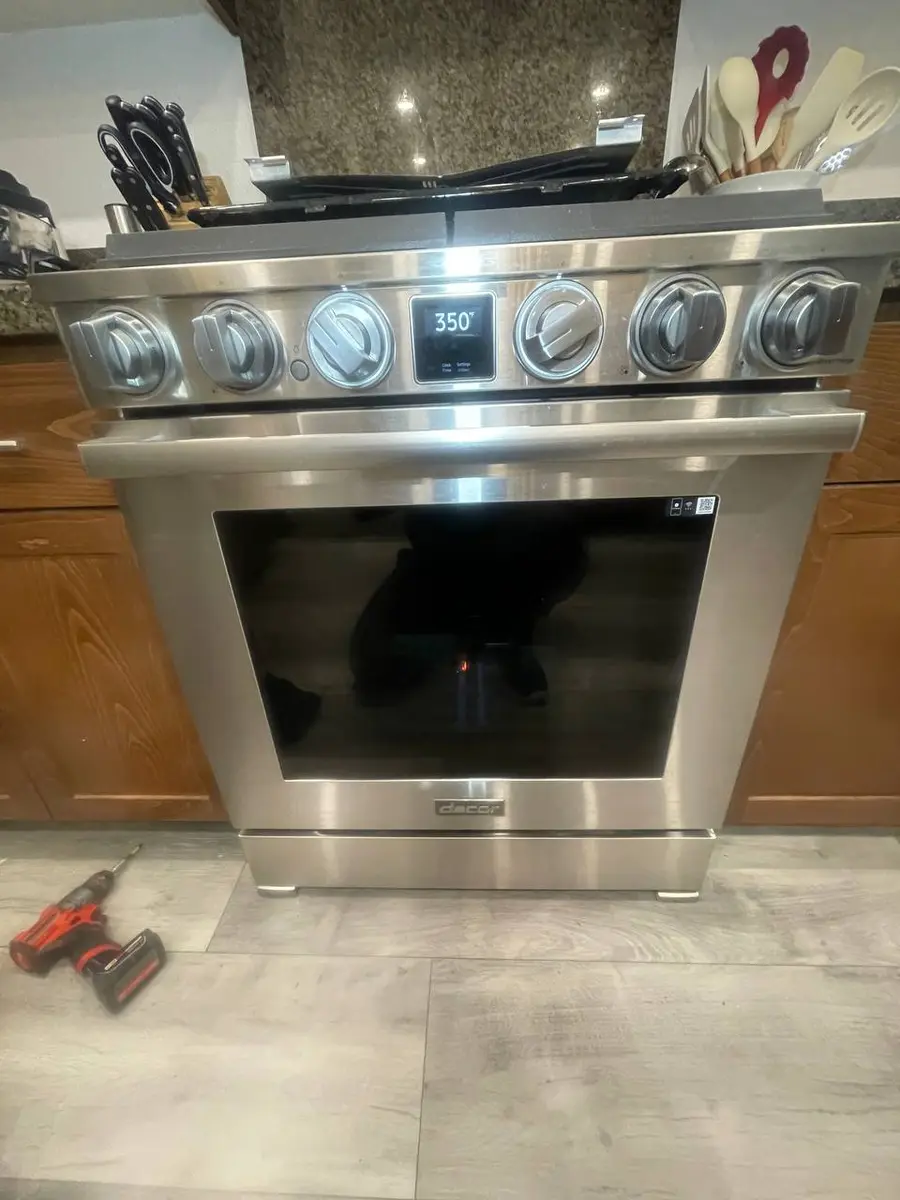
On a Viking oven, the difference between a fast fix and a wasted weekend is knowing the viking-specific weak points up front. This guide lays them out, shows what you can safely check, and sets a realistic $150–$400 repair expectation.
The short answer: Viking Oven not heating#
Nine times out of ten on Viking, not heating comes down to rTD temperature sensor resistance drift outside rather than the one-size-fits-all list the generic guides push. If that comes back clean, the next thing I look at is proFlow convection fan motor bearing failure. It is a design quirk, so the usual suspects are only worth chasing once this one is ruled out. A repair here normally lands inside the $150–$400 range in the table below, set by which part has actually failed.
The failure modes below are specific to Viking ovens — they are what set Viking apart from the generic not heating checklist.
| Likely Viking-specific cause | How often we see it | Typical repair |
|---|---|---|
| RTD temperature sensor resistance drift outside the 1080-1090 ohm room-temperature specification | Most likely | $150 |
| ProFlow convection fan motor bearing failure causing uneven heating and extended preheat times on professional ranges | Common | $400 |
| Control board bake relay welding closed, triggering F10 runaway-temperature safety cutoff | Common | $400 |
| Dual-solenoid door latch failure preventing self-clean initiation with F01 code | Possible | $150 |
| EEPROM firmware mismatch after board replacement causing F06 configuration error and complete heating lockout | Possible | $150–400 |
Do You Have the Right Tools?
Combustion analyzer ($300), igniter tester ($120), temperature calibrator ($150), and gas pressure manometer. Our technician arrives with $3,000+ in professional tools — your diagnostic is free.
Licensed & Insured · 90-Day Warranty · Same-Day Service
What you can safely check first#
Run these quick checks before spending on a call-out. Safety first — unplug the oven — then take each item in turn.
- RTD temperature sensor resistance drift outside. A quick visual tells you whether it is worn or just loose, and a loose fitting is often a five-minute fix.
- ProFlow convection fan motor bearing failure. Two minutes here can rule a whole repair path in or out, which is worth it before you open anything up.
- Control board bake relay welding closed. It is the cheapest thing to check and surprisingly often the answer, so start here rather than at the control board.
- Dual-solenoid door latch failure preventing self-clean. If this comes back clean you have narrowed the field a lot, and the remaining suspects get easier to isolate.
- EEPROM firmware mismatch. Owners miss it because the generic guides never mention it, yet it is one of the more common viking culprits.
- Confirm the model on the door or frame before ordering parts — the VGCC5366BSS, VGIC5366BSS, VDOF7301SS, RVGR33015BSS line each take slightly different components, so the number matters.
- Read the panel. A F01 or F02 or F03 or F06 or F10 or F30 code narrows things fast; note it before you clear it and hand it to your technician, as it points straight at the circuit.
Repair cost and when to call an EasyBear technician#
Why the $150–$400 gap? Because the fixes at each end are worlds apart. The low figure buys a quick job like dual-solenoid door latch failure preventing self-clean; the top of the range is a heavier repair with more teardown behind it. A confirmed diagnosis is worth more than it sounds, because it stops you paying twice for the same symptom. Still stuck after the checks? An EasyBear technician diagnoses it on site so the repair is done once, correctly.
Senior Gas Appliance Specialist · 18 years experience
AGA-certified gas appliance specialist with 18 years of experience in residential and commercial oven, range, and cooktop repairs.