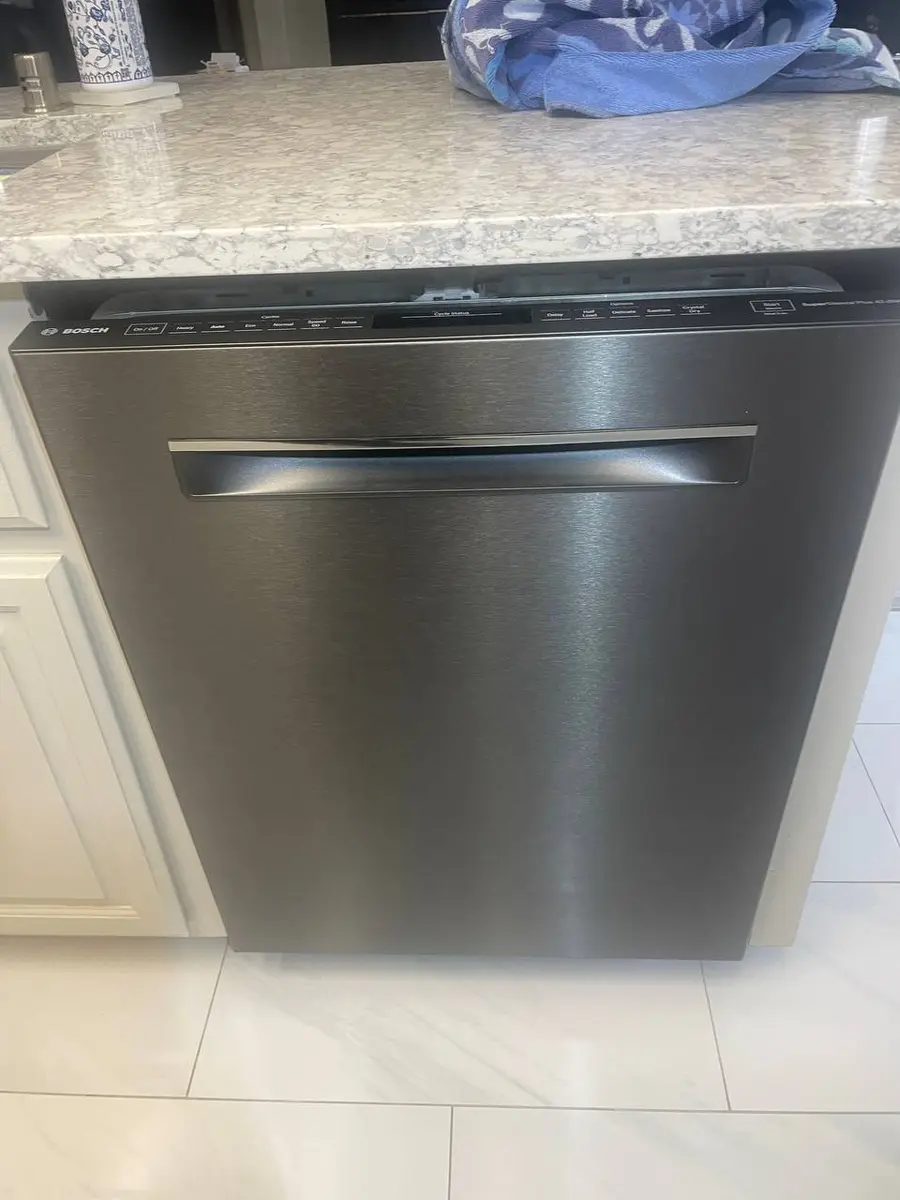
Samsung Dishwasher Noisy: Causes & Fix
The most common sources of noise in a Samsung dishwasher are the drain pump and a spray arm striking a tall dish, followed by debris caught in the sump or chopper area. A worn circulation (wash) pump bearing and a rattling door latch are the other causes. Most are mechanical, and the kind of sound and when it happens…
Match the Noise to the Part#
Some sound is normal — a dishwasher hums, sprays, and drains — but a grinding, buzzing, knocking, or rattling noise usually has a specific mechanical cause. Because the noise ties to a moving part and a phase of the cycle, listening carefully is most of the diagnosis.
Ranked Causes by Sound on Samsung Dishwashers#
| The sound you hear | Likely cause | How common | Fix path |
|---|---|---|---|
| Loud buzz or grind during the drain phase | Drain pump noise or debris | Most common | Clear the sump; service the drain pump |
| Rhythmic knock or clatter while washing | Spray arm hitting a dish | Common | Reload so nothing blocks the arms |
| Grinding or rattling from the tub floor | Debris or foreign object in the sump | Common | Remove the debris from the sump |
| Whine or hum that grows over time | Circulation (wash) pump bearing wear | Occasional | Service the wash pump |
| Rattle at the door during the cycle | Door latch assembly loose (part DD81-01629A) | Occasional | Secure or replace the door latch |
The drain pump leads because it works hard and is where debris ends up — a buzz or grind specifically during the drain phase points there, often from a bit of glass, a seed, or a chip caught near the impeller. A spray arm striking a tall item is the classic "it's louder with this load" noise: a pot or a cutting board leaning into the arm's path makes a rhythmic knock that disappears when you reload.
Debris in the sump grinds from the tub floor, a worn circulation-pump bearing whines and grows louder over weeks, and a loose door latch — on Samsung models often the DD81-01629A assembly — can rattle against the door during the cycle. Samsung's DW80-series dishwashers share this general layout, so the checks are the same across the family.
Do You Have the Right Tools?
Water pressure gauge ($60), spray arm tester, float switch multimeter ($85), and drain inspection camera. Our technician arrives with $3,000+ in professional tools — your diagnostic is free.
Licensed & Insured · 90-Day Warranty · Same-Day Service
What You Can Safely Check#
Start with the free checks. Open the dishwasher and spin each spray arm by hand to confirm it turns freely and clears the racks; then reload so no tall item leans into an arm's path. Next, remove the lower rack and check the sump and filter at the tub floor — clear any food, glass, or foreign object, since debris near the pump is a leading noise source. Run the machine and listen for whether the worst noise is during wash or drain, which localizes it.
If the noise is a growing whine from the wash pump, or a persistent grind from the drain pump after clearing the sump, that's an internal pump repair a technician handles. A rattling door latch can often be secured, but a failed latch assembly is replaced.
Timing the Noise to the Cycle Phase#
The most powerful clue for a noisy dishwasher is when in the cycle the noise happens, because each phase drives a different part. A dishwasher fills, then washes by recirculating water through the spray arms with the wash pump, then drains with the drain pump, and repeats. A loud buzz or grind that coincides specifically with the draining phase points at the drain pump — the part most likely to have caught a fragment of glass or a seed near its impeller. A rhythmic knock or clatter during the wash phase, while water is spraying, points at a spray arm striking a dish rather than any pump. A steady whine that's present throughout the wash and has grown louder over weeks points at the wash pump's bearing wearing out. Listening for whether the worst noise is at fill, wash, or drain turns "it's loud" into a specific part, and it's the difference between a free reload and knowing exactly which pump needs service.
Safety First — Know the Risks
Live 120V wiring in a wet environment is one of the most dangerous DIY scenarios. Water + electricity = serious shock risk. Our techs are licensed and insured — let them handle the risk.
Licensed & Insured · 90-Day Warranty · Same-Day Service
Getting It Fixed#
Reloading and clearing the sump quiet most cases; a worn pump needs service. Book a diagnostic and we'll match the sound to the part and fix the real source of the noise.
Senior Appliance Repair Technician · 15 years experience
EPA-certified technician with 15 years of experience specializing in refrigerator and cooling system repairs.