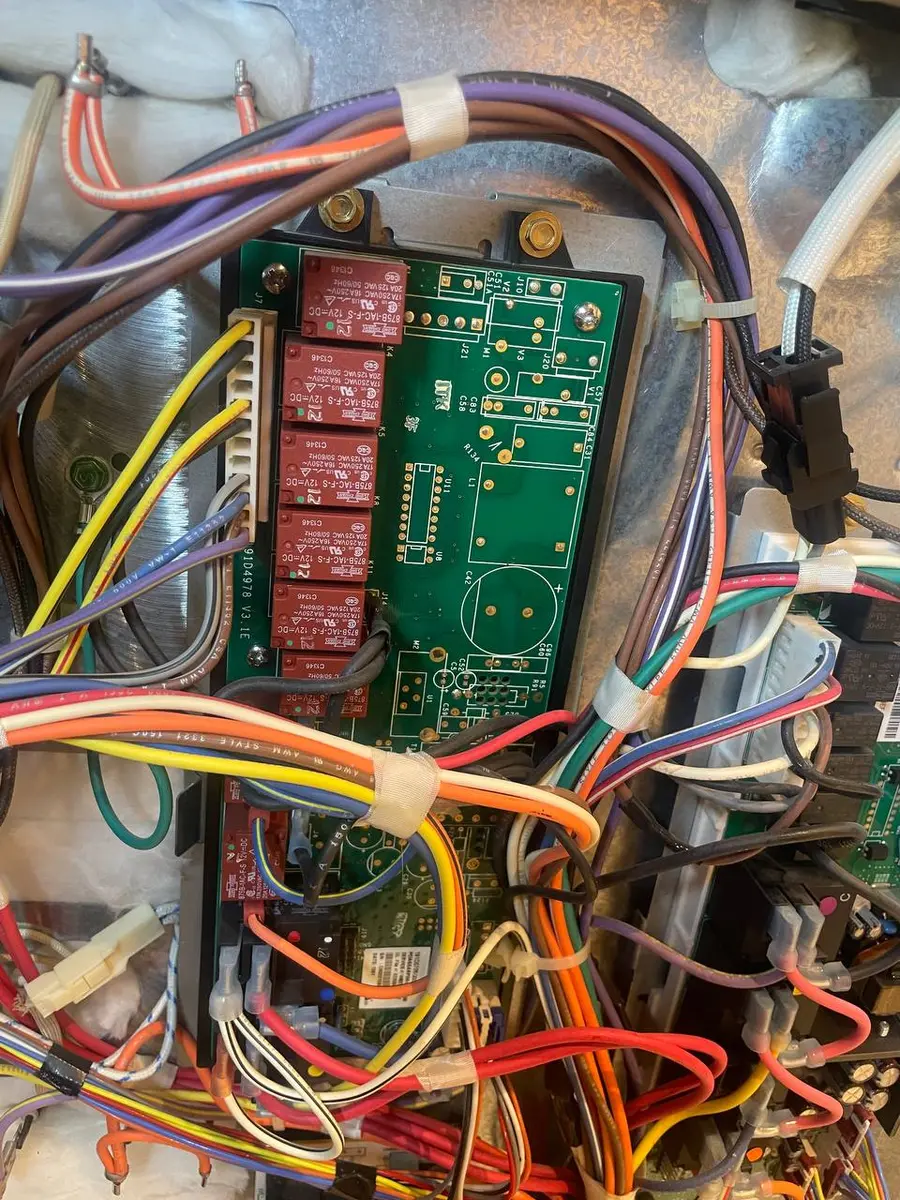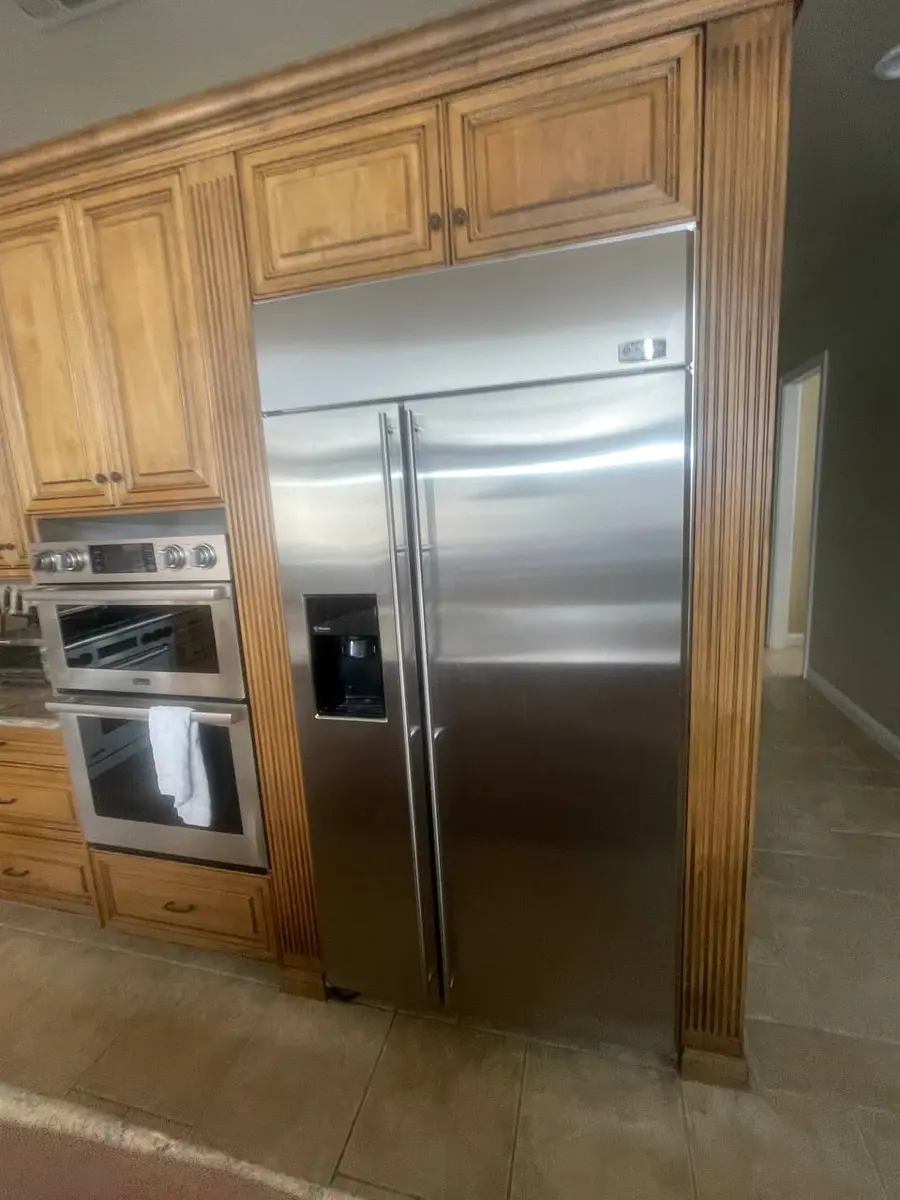
What is the LG Refrigerator Er HS error?#
Er HS on an LG refrigerator is a humidity-sensor fault — the sensor that monitors interior moisture is misreading, so the fridge cannot manage condensation and you see droplets on the walls, produce wilting fast, or moisture on the door. It is not a safety problem, though the excess moisture is bad for food storage. The first thing I check is the sensor element itself, because a condensation film fouling the humidity sensor is the usual reason Er HS appears.
Er HS on a LG Refrigerator: likely causes and repair cost#
On a LG Refrigerator, the Er HS code signals: humidity sensor error.
| Likely cause | Typical likelihood |
|---|---|
| Condensation film fouling the humidity element | Most common |
| Failed sensor module | Common |
| Missing 3.3-volt reference at the sensor connector | Less common |
Typical professional repair: $120–$210 · Difficulty: moderate · usually a technician job
Symptoms that often accompany Er HS: Excessive condensation inside refrigerator; Produce wilting quickly in crisper; Water droplets on interior walls; Moisture on exterior door surface
Technician diagnostic sequence for Er HS:
- Locate the humidity sensor inside the fresh food compartment — typically mounted near the crisper drawer air vent
- Remove the sensor and inspect for moisture film or condensation on the sensor element that could cause false readings
- Gently clean the sensor element with isopropyl alcohol and a lint-free cloth, allow to dry completely before reinstalling
- Test the sensor connector at the main board for proper voltage — LG humidity sensors require a 3.3V reference signal
- If cleaning does not resolve the error, replace the humidity sensor module
Parts a technician may check or replace: Humidity Sensor; Sensor Assembly
Field note: Sacramento and Bay Area homes with higher humidity levels can trigger Er HS more frequently. The sensor controls the moisture retention system in LG crisper drawers — a failed sensor defaults to maximum dehumidification, causing produce to dry out faster.
Do You Have the Right Tools?
Refrigerant gauges ($200+), vacuum pump ($250), leak detector ($150), and EPA-certified recovery equipment. Our technician arrives with $3,000+ in professional tools — your diagnostic is free.
Licensed & Insured · 90-Day Warranty · Same-Day Service
How to troubleshoot the Er HS error yourself#
Er HS gives an owner a couple of things to try before a service call. Wipe down the interior thoroughly and make sure the door is sealing — a gasket that is not closing lets in humid room air and can push readings out of range, mimicking a sensor fault. A hard reset by unplugging the fridge briefly sometimes clears a transient humidity-sensor glitch. If condensation keeps building and Er HS returns with a good door seal, the humidity sensor has a film fouling it or has failed outright, and replacing the sensor assembly means accessing it inside the cabinet, which is where I bring in a technician rather than keep wiping up water.
Is the LG Refrigerator Er HS error worth fixing?#
Er HS is generally worth fixing because the sensor is inexpensive and lingering condensation spoils food and can invite mold. A professional Er HS repair runs $120–$210 to replace the humidity sensor or its assembly, which is easy to justify on a sound refrigerator against a new one. I only lean toward replacement when the fridge is already old and failing in other systems and the quote climbs toward half the price of a new unit. For most owners, clearing the moisture problem for $120–$210 is well worth it.
Safety First — Know the Risks
Refrigerant (R-134a/R-600a) requires EPA certification to handle. Improper discharge is a federal violation and health hazard. Our techs are licensed and insured — let them handle the risk.
Licensed & Insured · 90-Day Warranty · Same-Day Service
LG Refrigerator Er HS: frequently asked questions#
What does the Er HS error mean on a LG Refrigerator?#
Er HS is a humidity-sensor error — the sensor reading interior moisture is misreading, so the fridge cannot control condensation. You get droplets on the walls and produce wilting quickly.
Is it safe to keep using a LG Refrigerator that shows the Er HS error?#
Yes, it is safe, though the extra moisture is hard on stored food. There is no electrical or cooling hazard from Er HS itself.
Can I clear the Er HS error myself, or do I need a technician?#
You can wipe the sensor area, confirm the door seals, and try a reset yourself. If Er HS returns, replacing the humidity sensor inside the cabinet is a technician job.
How much does it cost to repair the Er HS error on a LG Refrigerator?#
A professional Er HS repair typically runs $120–$210 to replace the humidity sensor or its assembly.
Which parts usually fail when a refrigerator throws the Er HS code?#
The humidity sensor or its sensor assembly is the usual failure, often with a condensation film fouling it. Cleaning the element sometimes helps before replacement.
Is a LG Refrigerator with the Er HS error worth repairing?#
Yes — $120–$210 stops the condensation problem and is well under a new fridge. Only an aging unit with other faults tips toward replacing.
Why does condensation film fouling the humidity element trigger the Er HS error?#
A film of condensation fouls the humidity element so it can no longer read moisture accurately, and the control posts Er HS. A poor door seal letting in humid air produces the same drift.
Lead Appliance Repair Technician · 12 years experience
Experienced technician with 12 years specializing in washing machine and dryer repairs across all major brands.