LG Microwave Turns On By Itself — Troubleshooting Guide
An LG microwave that activates without user input is both alarming and dangerous. Whether it begins cooking spontaneously, starts the fan unprompted, or shows signs of phantom operation, this issue requires immediate investigation. LG NeoChef Smart Inverter microwaves and ThinQ-enabled models have multiple potential trigger sources that conventional microwaves lack.
Immediate Safety Assessment
Before troubleshooting, determine what exactly is activating:
- Magnetron/cooking activating — extremely dangerous, unplug immediately
- Exhaust fan activating — may be normal auto-start feature on over-the-range models
- Display/lights activating — concerning but not immediately dangerous
- Turntable rotating — indicates control board sending unintended signals
If the magnetron is generating heat without user input, unplug the microwave and do not reconnect until repaired. This is the only true emergency scenario.
Do You Have the Right Tools?
High-voltage capacitor discharge tool ($90), magnetron tester ($200), microwave leakage detector ($150). Our technician arrives with $15K+ in professional tools — your diagnostic is free.
Licensed & Insured · 90-Day Warranty · Same-Day Service
Normal LG Functions That Appear to "Turn On By Itself"
Before assuming a fault, eliminate these normal LG features:
-
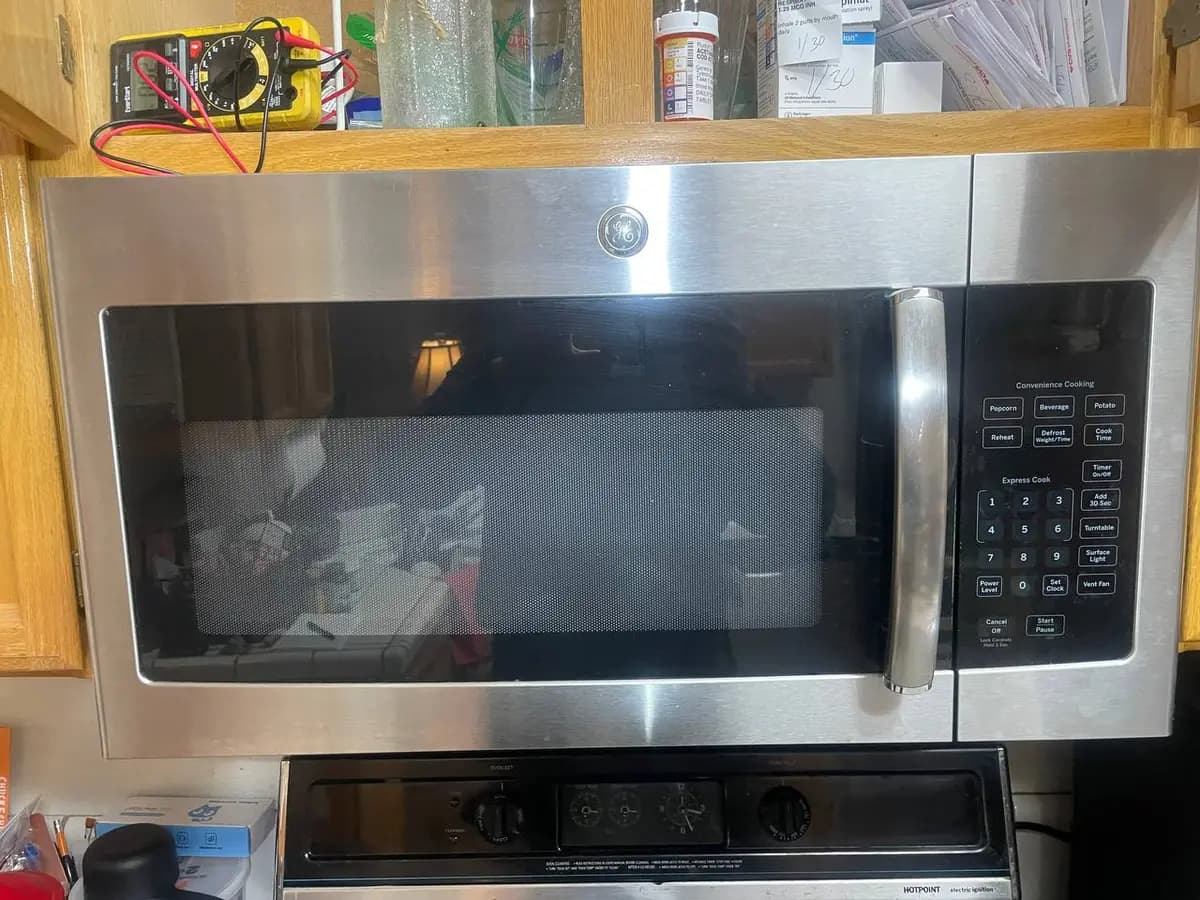
Auto-start exhaust fan (over-the-range models): LG microwaves detect cooktop heat and automatically activate the exhaust fan. This is normal operation when you're cooking on the range below.
-
Demo/display mode: Some LG NeoChef models have a display demo mode (activated at retail) that cycles through features automatically. Check if microwave is in demo mode (display shows "d" or "demo").
-
ThinQ remote start: If someone in your household has the LG ThinQ app connected, they may have activated remote start from their phone. This is a designed feature.
-
Delayed start: LG microwaves offer delayed start cooking — a previously set delay timer may be triggering the start.
Most Common Causes (Ranked by Likelihood)
1. Touchpad Membrane Short Circuit (35% of cases)
When moisture infiltrates the membrane switch layers, it creates conductive paths that mimic button presses. On LG over-the-range microwaves exposed to cooking steam, moisture bridges between traces on the upper conductive layer can randomly trigger Start or cooking functions.
This is the most common cause of "phantom operation" in LG microwaves. The conductive moisture bridge may appear and disappear with humidity changes, making the problem intermittent.
Symptoms: Microwave starts random functions (not always cooking), occurs more on humid days or after cooking on stovetop, different buttons seem to "press" at different times, display shows various functions activating.
LG-Specific Fix:
- Unplug the microwave immediately when phantom operation occurs
- On over-the-range models, moisture is entering through the bottom edge of the control panel — inspect for gaps in the panel seal
- Remove the inner door panel to access the membrane. If moisture is visible on the membrane surface, dry thoroughly with compressed air
- If the problem recurs, the membrane assembly needs replacement — moisture damage permanently corrodes traces
- Order model-specific touchpad/panel assembly
- Prevent recurrence: ensure exhaust fan runs during all stovetop cooking to divert steam
Parts Cost: $80–$200 (panel assembly) Professional Repair Cost: $200–$350 DIY Difficulty: Moderate
2. Stuck Control Board Relay (25% of cases)
If the relay on the control board that powers the magnetron/inverter circuit welds shut, the magnetron will energize the moment the microwave is plugged in (or the moment the door closes, depending on which relay is affected). This is the same welded relay issue that causes "won't shut off" but presenting differently — here it manifests as immediate activation rather than failure to stop.
Symptoms: Microwave begins cooking the instant the door closes (no Start pressed), operates continuously until door opened, or begins cooking immediately after being plugged in.
Critical Safety Note: This is dangerous — unplug immediately. A welded relay means the magnetron energizes whenever the circuit is complete (door closed), regardless of user commands.
LG-Specific Diagnosis:
- Unplug, then plug back in with door open — if you hear the cooling fan or turntable activate, the relay is welded
- This requires control board replacement — the relay is soldered to the board
- Do not use the microwave in this condition under any circumstances
Parts Cost: $120–$280 (control board) Professional Repair Cost: $250–$450 DIY Difficulty: Moderate (but must be repaired before use)
3. Control Board Logic Failure (20% of cases)
The microcontroller on the LG control board can develop erratic behavior from age, heat stress, or corrupted firmware. This manifests as the board sending random output signals — activating the relay, motor, or fan at inappropriate times.
On LG ThinQ-enabled models, communication errors between the Wi-Fi module and the main controller can generate spurious start commands.
Symptoms: Random, unpredictable activations that don't follow a pattern, display shows commands being entered that no one pressed, clock resets or displays unusual characters between phantom activations.
LG-Specific Fix:
- Power cycle reset: unplug 5 minutes, reconnect — if phantom activation continues, firmware corruption is likely permanent
- On ThinQ models: disconnect the Wi-Fi module (small board connected to main board via cable) — if phantom operation stops, the Wi-Fi module is sending erroneous commands. Try firmware update via ThinQ app before replacing
- If power cycle and Wi-Fi isolation don't resolve: control board replacement needed
Parts Cost: $120–$280 (control board) or $40–$80 (Wi-Fi module only) Professional Repair Cost: $250–$400 DIY Difficulty: Moderate
4. Power Line Interference (15% of cases)
Voltage spikes and electrical noise on the power line can trigger the control board's input circuits, mimicking button presses. This is especially common in homes with older wiring, where large motor loads (HVAC, refrigerator compressor) create significant line noise when they cycle on.
LG Smart Inverter control boards are more sensitive to line noise than conventional microwave transformers because the inverter board and control board share a power supply with less built-in filtering.
Symptoms: Phantom activation correlates with other appliances turning on (furnace blower, fridge compressor), happens at specific times of day (when HVAC cycles), more common during voltage-unstable periods.
Fix:
- Install a quality surge protector/line filter between the outlet and microwave (minimum 1800W rated)
- If on a shared circuit, move the microwave to a dedicated circuit
- An EMI/RFI filter on the power cord can reduce line noise sensitivity
Parts Cost: $30–$60 (surge protector/filter) Professional Repair Cost: $100–$200 (if electrician needed) DIY Difficulty: Easy
5. Exhaust Fan Auto-Start Sensor Malfunction (5% — over-the-range only)
The cooktop temperature sensor in LG over-the-range microwaves activates the exhaust fan automatically. A failed sensor reading incorrect temperatures can trigger the fan when no heat is present, making it appear the microwave is activating on its own.
Symptoms: Only the exhaust fan activates (not cooking function), happens regardless of cooktop activity, fan runs at varying speeds unpredictably.
Fix: Replace the auto-start temperature sensor — typically mounted on the bottom panel facing the cooktop.
Parts Cost: $20–$50 Professional Repair Cost: $120–$200 DIY Difficulty: Easy to Moderate
Same-Day Appliance Repair
Fixed or It's Free
$89 → $0 Service Call & Diagnosis — offer ends May 25
Safety First — Know the Risks
Microwave capacitors store lethal voltage (4,000V+) even when unplugged. This is the single most dangerous DIY appliance repair. Our techs are licensed and insured — let them handle the risk.
Licensed & Insured · 90-Day Warranty · Same-Day Service
Prevention Tips
- Use the exhaust fan during stovetop cooking to prevent steam from reaching the touchpad membrane
- Install a surge protector/line conditioner to reduce electrical noise triggering
- If the microwave is unused for extended periods, unplug it — eliminates phantom activation risk and reduces energy consumption
- On ThinQ models, remove microwave from the app if you don't use remote start — eliminates one trigger source
- Address any intermittent touchpad responsiveness immediately — it may progress to phantom activation
FAQ
Q: Is a microwave that turns on by itself dangerous? If the magnetron activates, yes — extremely dangerous. An unattended operating microwave can overheat, damage itself, ignite nearby flammables, or emit radiation if the door seal is compromised. Unplug immediately.
Q: My LG over-the-range microwave fan turns on by itself — is that normal? Often yes. LG over-the-range models have an automatic fan that activates when the cooktop below generates heat. This is a safety/convenience feature, not a malfunction. Only a concern if the fan activates with no heat source present.
Q: Could my LG ThinQ app be causing the microwave to start? Possible. Check the ThinQ app for scheduled operations or accidental remote start. Also check if other household members have access to the app. Disable remote start in app settings if unwanted.
A microwave activating on its own requires urgent diagnosis. Our technicians carry LG control boards and panel assemblies for same-day repair. Schedule emergency service →