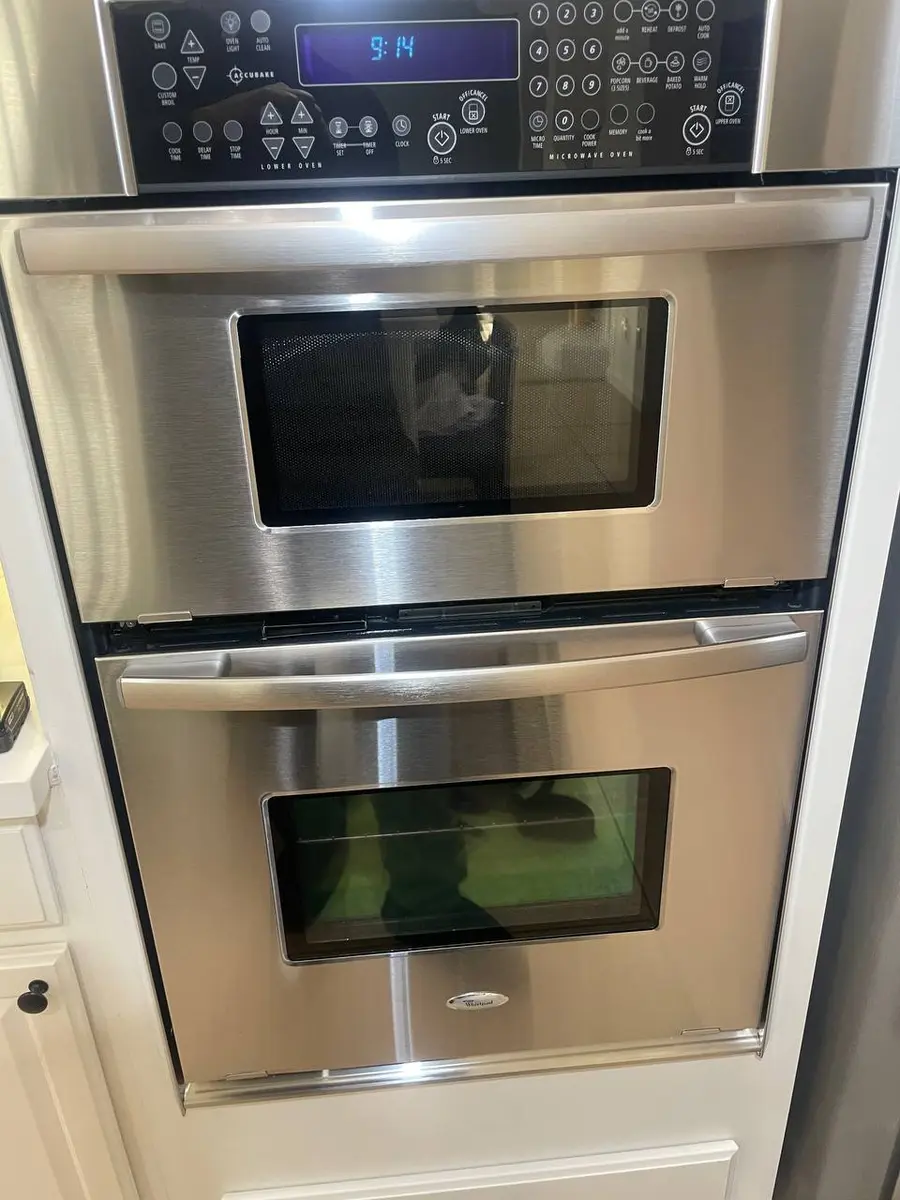
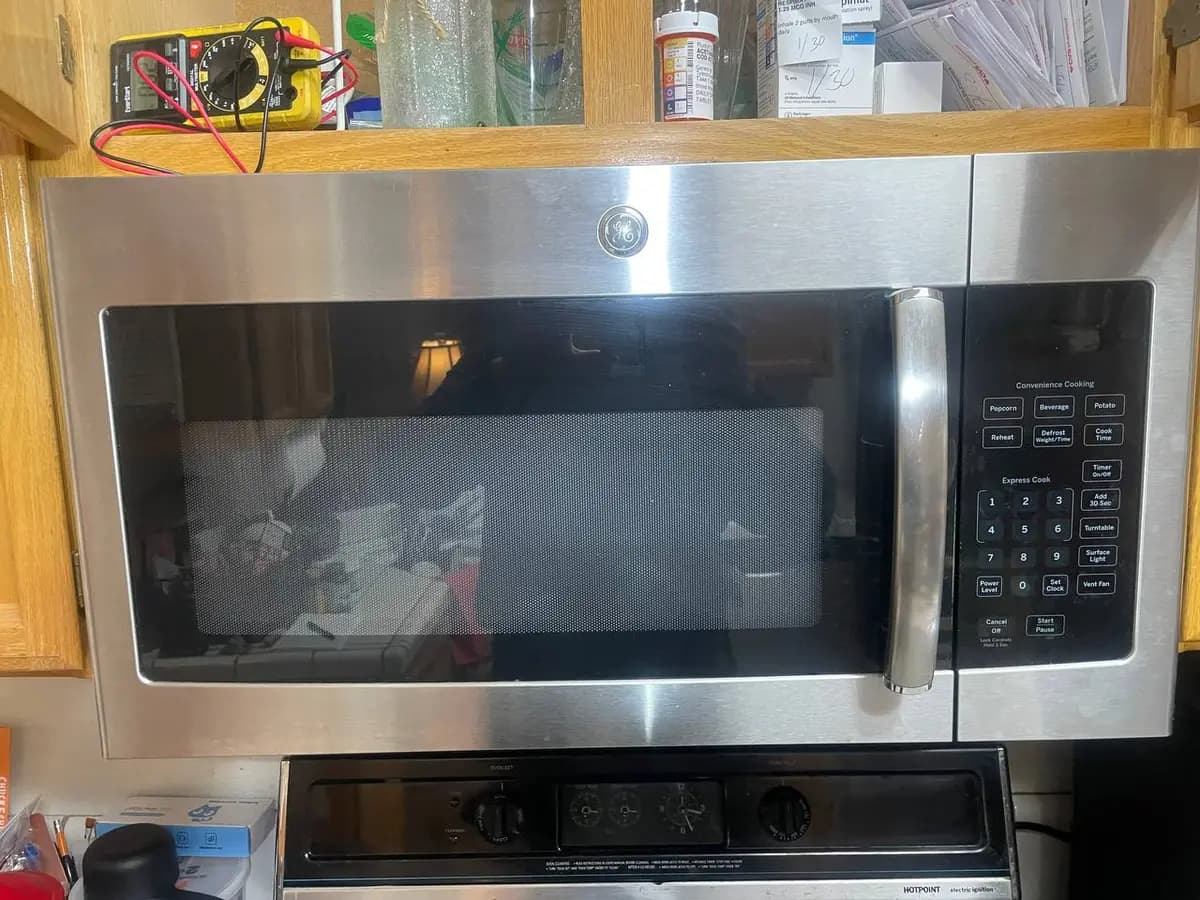
The microwave door swings shut but won't latch, or it latches and then pops open, or it won't close completely. A microwave with a door that doesn't seal is completely unusable — the interlock switches prevent operation, and for good reason. Microwave radiation at 2.45 GHz is contained by the sealed door and its embedded metal mesh. A properly functioning door system is a safety requirement, not a convenience feature.
1. Broken Door Latch Hook#
The Problem: The door latch uses two or three plastic hooks that extend from the door and engage with corresponding switches and receptacles in the microwave body. These hooks are thin plastic fingers that absorb the impact of thousands of door closings. Over time, they crack, break, or bend. When a hook breaks, the door may appear to close but doesn't engage the interlock switches, or it pops open under the spring tension.
What to Check:
- Open the door and look at the latch mechanism on the door edge — are all hooks intact?
- Compare the hooks — a broken hook will be visibly shorter or missing entirely
- Close the door slowly and watch the hooks engage with the body — do they all enter their receptacles?
- Check for broken plastic pieces inside the door frame area
DIY or Pro: Latch hook assemblies cost varies by model and region depending on brand. On many models, the latch is a single assembly held by two screws on the inside of the door panel. Replacement requires removing the inner door panel — moderate DIY difficulty. No high-voltage components are in the door, making this safer than other microwave repairs.
Typical Cost: varies by model and region with a technician.
Do You Have the Right Tools?
High-voltage capacitor discharge tool ($90), magnetron tester ($200), microwave leakage detector ($150). Our technician arrives with $3,000+ in professional tools — your diagnostic is free.
Licensed & Insured · 90-Day Warranty · Same-Day Service
2. Worn or Broken Door Spring#
The Problem: The door spring provides the tension that holds the door closed after latching. Most microwaves use a torsion spring at the hinge point. When this spring weakens, breaks, or detaches from its anchor point, the door doesn't hold against its own weight or the seal gasket pressure. The door may close and latch momentarily, then slowly open under gravity, especially on over-the-range microwaves with drop-down doors.
What to Check:
- Close the door and let go — does it hold firmly, or does it slowly drift open?
- Listen for a clicking or snapping sound when opening/closing — this may indicate a loose or broken spring
- Open the door fully and look at the hinge area — the spring should be visible and under tension
DIY or Pro: Door springs cost varies by model and region. Accessing the spring requires removing the door from the microwave — this varies by model but typically involves removing hinge pins or lifting the door off its mounts. Moderate DIY difficulty. Be careful with torsion springs under tension — they can snap and cause injury.
Typical Cost: varies by model and region with a technician.
3. Misaligned or Bent Door#
The Problem: A door that's been pulled, yanked, or caught on something can bend or shift on its hinges. Even a slight misalignment prevents the latch hooks from engaging their receptacles cleanly. Common on over-the-range microwaves where the door is opened with one hand while the other holds a hot dish — the uneven force torques the door on its hinges.
What to Check:
- Close the door and look at the gaps around all four edges — they should be uniform
- If one corner has a larger gap than the others, the door is misaligned
- Check the hinges for visible bending, looseness, or excessive play
- Shake the door gently — any rattling or movement beyond normal indicates worn hinge pins
DIY or Pro: Hinge adjustment is sometimes possible by loosening the hinge screws, realigning the door, and retightening. If the hinges are bent, replacement hinges cost varies by model and region per set. Hinge replacement requires removing the door completely.
Typical Cost: varies by model and region with a technician.
Safety First — Know the Risks
Microwave capacitors store lethal voltage (4,000V+) even when unplugged. This is the single most dangerous DIY appliance repair. Our techs are licensed and insured — let them handle the risk.
Licensed & Insured · 90-Day Warranty · Same-Day Service
4. Damaged Door Seal Gasket#
The Problem: The door has a rubber or foam gasket around its perimeter that creates a seal against the microwave body when closed. If this gasket becomes compressed, torn, or falls off, it doesn't prevent the door from closing — but it can interfere with the latch engagement and, more importantly, compromise the microwave's radiation seal.
What to Check:
- Run your finger around the door seal — is it continuous, or are there gaps, tears, or compressed sections?
- Close the door and look for light leaking around the edges — the seal should be complete
- Check for food debris stuck to the gasket that might prevent full door closure
DIY or Pro: Door seal gaskets cost varies by model and region and are typically press-fit or adhesive-backed. Replacement is straightforward — peel off the old gasket, clean the channel, and press in the new one. This is an easy DIY repair.
Typical Cost: varies by model and region DIY; varies by model and region with a technician.
5. Latch Receptacle or Body Damage#
The Problem: The latch hooks engage with receptacles (slots or switch plungers) on the microwave body. If these receptacles are cracked, widened from wear, or if the body frame around them is damaged, the hooks can't engage securely. This is common on older microwaves and on units that have been bumped or moved while the door was open.
What to Check:
- Look at the receptacle openings on the microwave body where the hooks enter
- Check for cracks, chips, or widening of the slots
- Inspect the interlock switch plungers — they should move freely when pressed
- If a switch plunger is stuck in the depressed position, it won't engage with the hook properly
DIY or Pro: If the body receptacle area is damaged, the repair may not be cost-effective — the body frame is not a replaceable part on most models. If only the switch plunger is stuck, switch replacement is varies by model and region each. Professional assessment recommended to determine if the damage is repairable.
Typical Cost: varies by model and region for switch replacement; potential replacement of the unit if body is damaged.
The Real Cost of DIY
Average DIY attempt: $150-400 in tools you may use once, plus the risk of further damage. Our diagnostic visit costs $0 — we find the problem and give you an honest quote.
Licensed & Insured · 90-Day Warranty · Same-Day Service
When to Call a Professional#
A microwave with a door that doesn't seal properly should not be used — period. While the interlock switches prevent the microwave from operating in most failure scenarios, a door that latches improperly or has a damaged seal could theoretically operate while leaking radiation. Check the latch hooks and gasket yourself, as these are safe, external repairs. For hinge, spring, or body damage, professional assessment is recommended to ensure the door seal meets safety standards. Built-in and over-the-range microwaves in Sacramento kitchens add installation complexity — the unit may need to be removed from the cabinet or mounting bracket for door repair.
FAQ#
Q: Is it safe to use a microwave with a slightly damaged door seal? A: No. Even a small gap in the door seal can allow microwave radiation leakage. The FDA requires that microwave leakage not exceed 5 milliwatts per square centimeter at 5 centimeters distance. A damaged seal may exceed this limit. Replace the seal before using the microwave.
Q: My microwave door latch is fine but the door doesn't stay closed. Why? A: The door spring is likely worn or broken. The latch mechanism engages properly, but without spring tension, the door slowly opens under its own weight. This is especially noticeable on drop-down doors on over-the-range units. Replace the door spring.
Q: Can I superglue a broken latch hook? A: Temporarily, but it's not recommended as a permanent fix. Superglue is brittle and will fail again quickly under the repeated impact of door closing. The latch hook must withstand thousands of closing cycles at full force. Replace the entire latch assembly — it's a varies by model and region part.
Q: My microwave makes a loud click when the door closes but won't run. Is that the latch? A: The loud click is the interlock switches engaging, which means the latch is working. The problem is likely a failed fuse, a secondary interlock switch, or a control board issue. The door mechanism is fine — the problem is downstream.
Appliance Repair Technician & Diagnostics Specialist · 10 years experience
Electronics and diagnostics specialist with 10 years of experience in modern smart appliance repair, specializing in LG and Samsung.